UK Eurovision 2026 Entry: Look Mum No Computer and the German-Language Gamble
In just over three weeks, the United Kingdom will walk into the Wiener Stadthalle with the most unusual Eurovision entry it has sent in a generation. Look Mum No Computer, the Kent-based experimental musician better known on YouTube than on Radio 1, will perform “Eins, Zwei, Drei” at the Grand Final on 16 May – a synth-pop song sung partly in German. It is the first UK entry in 68 years not to be performed entirely in English, and the first time in a long while that the conversation around our entry has been about the music rather than the voting politics.
In This Article
That is worth paying attention to. The UK has had a miserable decade at Eurovision, with Sam Ryder’s second-place finish in 2022 looking more and more like a lovely anomaly surrounded by a long run of bottom-of-the-leaderboard results. Remember Monday finished 19th last year. Mae Muller came second from bottom in 2023. Picking an artist from the genuinely strange end of the UK electronic scene – rather than another competent radio-friendly vocalist – is either a clever reset or a category error, and we will not really know which until the scoreboards start filling in.
Who is Look Mum No Computer?
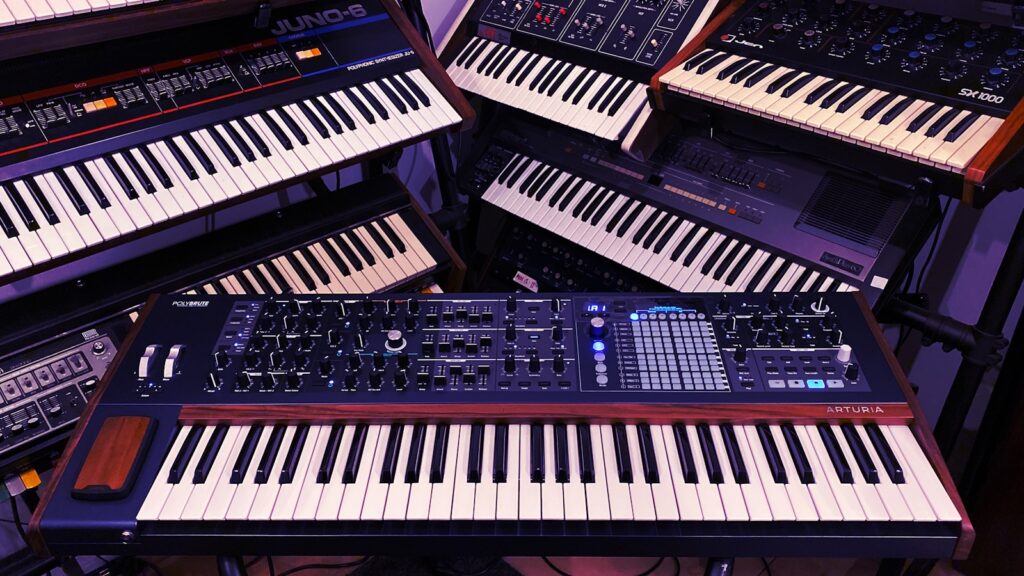
Sam Battle, the musician behind the Look Mum No Computer name, has spent the last decade building an online audience that has very little to do with the traditional UK pop pipeline. His YouTube channel is essentially a long-running documentary about a man building his own synthesisers in a workshop on the Kent coast, and his combined audience across platforms now runs well over a million. The big, obsessive projects – a Bicycle-powered organ, a Furby Organ built from dozens of hacked toys – have made him a cult figure in the global synth community.
He is not, in the usual Eurovision sense, a vocalist. Before Look Mum No Computer, Battle fronted the indie band ZIBRA, who had a brief moment of A&R interest in the mid-2010s before dropping off the radar. Everything about his public profile since then has been closer to a maker-culture YouTuber than a pop star: explainers on voltage-controlled oscillators, a shopfront museum of old keyboards in Ramsgate called This Museum Is (Not) Obsolete, and a steady stream of live-electronics performances at places like EMF Camp and Moogfest rather than Wembley Arena.
That is exactly why his selection is interesting. The BBC’s internal selection process, led by Andrew Cartmell and David May, has been openly hunting for something that felt less like a stage-school ballad and more like a recognisable British cultural export. Whether Europe will read him the same way is another question.
“Eins, Zwei, Drei”: the song itself
The song, released on 6 March, is a three-and-a-half-minute lurch through several decades of synth-pop history. The production team around Battle is notably heavy on Eurovision pedigree: Thomas Stengaard co-wrote Denmark’s 2013 winner “Only Teardrops”, Julie Aagaard records as Kill J, and Lasse Midtsian Nymann (Nylan) has Danish pop credits going back years. It is the sort of writing room that knows exactly how a Eurovision chorus needs to land.
What they have come up with sits somewhere between Lipps Inc.’s “Funkytown”, Kraftwerk at their most playful, and the first wave of early-’80s British synth acts – Soft Cell, Thomas Dolby, a faint trace of Pet Shop Boys. The chorus hook is the German numbers “eins, zwei, drei”, chanted over a bouncing bassline and a pile of analog pads. The verses, sung in English, are loose and chatty rather than soaring; the bridge is all hardware-synth solo, which is presumably where Battle’s live show will earn its Eurovision keep.
NME described it as a “’80s synth-pop-tinged tune” that channels “Funkytown”, which is about right. It is not the kind of song that will dominate the UK charts, but as Eurovision material it is genuinely designed for the room. The German-language chorus, in particular, feels calculated: a nod to the host country and an instantly singable hook for the live audience inside the Stadthalle.
Breaking the UK’s English-only streak
The most-cited fact about “Eins, Zwei, Drei” is that it is the first UK Eurovision entry in 68 years not performed entirely in English. That stretches back to 1957, when Patricia Bredin sang “All” – a trivia-book milestone that has become, in 2026, a small piece of cultural signalling.
It is hard to overstate how English-language our Eurovision history has been. Even during the long period when the contest required countries to sing in a national language, Britain’s entries stayed in English, and every winner from Sandie Shaw to Katrina and the Waves sang in English. The decision to include German here is partly a gesture to Vienna and partly, I suspect, a bet that a little bit of linguistic playfulness will cut through the wall of polished English-language pop that now dominates the contest.
It lands at an interesting moment for European pop generally. The last five Eurovision winners have been performed in Ukrainian, non-verbal vocalisations, Swedish, Swiss-French and German respectively. The dominance of English is weaker than it has been in a decade. An English act leaning into another language is less novel than it would have been in 2015; it is also, arguably, the first time the UK has tried to read the room.
Can Look Mum No Computer break the UK’s Eurovision curse?
The question most of the UK commentariat is asking is whether Battle can reverse the UK’s slide. The pessimistic read is simple: no matter what we send, we finish near the bottom, so the quality of the song is almost beside the point. The optimistic read is that when we actually send something distinctive – Sam Ryder in 2022, Katrina and the Waves in 1997 – we do fine. The middle-of-the-road ballad era is the one that consistently failed.
On paper, “Eins, Zwei, Drei” has more in common with the distinctive-act strategy than the middle-of-the-road one. It has a clear visual identity (a man with a wall of self-built modular synths), a hook designed for drunken singalongs, and a tone – warm, slightly silly, not trying to be cool – that tends to travel well at Eurovision. ESC Insight’s pre-season betting markets currently have the UK in the mid-table of qualifiers, which would already be an improvement on recent finishes.
There are risks. Battle is not a natural vocalist, and Eurovision live broadcasts are unforgiving of singers who drift flat under stage-light heat. The staging will need to do an unusual amount of work to sell the “mad-scientist synth wizard” angle without tipping into novelty-act territory – a line the UK has historically been terrible at walking. And the German chorus will live or die on whether the live audience joins in; if they do, it will look like a triumph, and if they don’t, it will look like a miscalculation.
Vienna 2026: the wider context
This year’s contest is back in Austria for the first time since Vienna 2015, after Austria’s JJ took the trophy in Basel last May with “Wasted Love”. The Wiener Stadthalle is one of the largest indoor venues on the Eurovision circuit, with a capacity of around 16,000, and the production team has already trailed a stage design that leans heavily into lighting rigs rather than oversized set pieces – useful news for an act whose appeal is essentially a keyboard and a lot of cables.
The semi-finals run on 12 and 14 May, and the final on Saturday 16 May. As one of the Big Five contributor nations, the UK is pre-qualified for the final and does not need to survive a semi. The BBC will broadcast the final live on BBC One and BBC iPlayer, with Graham Norton back in the commentary chair. The Eurovision hub on the BBC has been running previews since early April.
It is also worth watching the Eurovision ecosystem around the event itself. The pre-season fan circuit – the promo shows in London, Amsterdam, Madrid and Warsaw – has been reacting cautiously positively to Battle, and “Eins, Zwei, Drei” has been placing consistently in the upper half of fan polls. Those polls are a notoriously poor predictor of the actual scoreboard, but they do tend to flag the songs that “work” in a live room.
What to watch for on finals night
If you are coming to the UK entry fresh on 16 May, a few things are worth watching. The first is the staging choice: the BBC has been hinting at a setup built around Battle’s own modular hardware, which is a departure from the usual choreographed dancer-and-wind-machine treatment. It will either look like the most specific and memorable UK entry in a decade, or like a Radiophonic Workshop tribute gone slightly wrong.
The second is the jury-versus-public split. Synth-pop with a comic edge tends to do better with televoters than with music-industry juries, and Battle’s strange appeal is an easier sell to the home viewer than to the professional panellists who vote first. A big televote score with a mediocre jury score is the most likely shape of a UK night, and it would be a significant rebuke to the BBC’s previous strategy of chasing jury-friendly ballads.
The third, and honestly the most fun, is the chorus itself. If the Stadthalle crowd is shouting “eins, zwei, drei” back at Battle by the final chorus, the UK will probably finish inside the top fifteen. If they aren’t, we are in trouble. Either way, this is the first UK Eurovision entry in years that feels like it has been made with a real creative idea behind it rather than a focus group.
That alone is worth showing up for. For more on where UK pop is heading this spring, see our recent review of Jessie Ware’s Superbloom, and for a sense of the wider state of British telly going into this Eurovision weekend, our piece on why British TV drama keeps getting shorter sets the stage. If you want something calmer to watch once the bloc voting kicks in, our guide to the quiet golden age of British documentary is a reliable off-ramp.
So: does a synth-builder from Ramsgate, singing partly in German and flanked by self-made hardware, finally get the UK back into the Eurovision conversation – or does “Eins, Zwei, Drei” become another exhibit in our long museum of near-misses?

I actually like this as a gamble. We’ve been sending polished vocalists into Eurovision for a decade and finishing near the bottom, so sending someone with a genuine musical identity feels like the first interesting decision the BBC have made in years. That said, is a German-language chorus from a UK act going to read as clever or as pandering to the audience? Wondering if the jury vote will be kinder than the public one.
Agree the jury will probably reward it more than the public. The problem with UK entries for years has been that they were designed to not lose rather than to win – which is why they lose. Sending someone with an actual point of view feels like the only way back. German-language chorus is a gamble but at least it is a memorable one, and the juries do reward musical identity.