
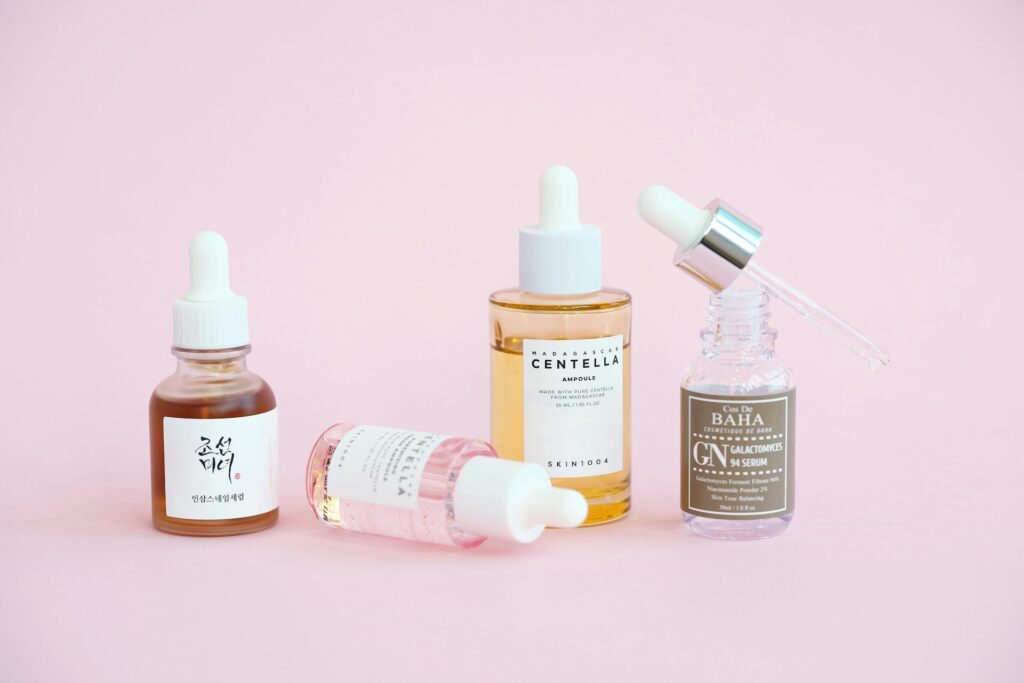
Azelaic Acid UK: The Quiet Skincare Multi-Tasker Worth Another Look
If your skin has spent the British winter cycling between central-heating dryness and cold-wind redness, now is a sensible time to reassess the active you lean on. Retinol gets most of the column inches, vitamin C has the influencer budget, but the ingredient worth a second look as we move into a brighter, warmer UK spring is the quietly brilliant azelaic acid. It is one of the few actives that works for rosacea, adult spots, post-inflammatory pigmentation and general uneven tone without wrecking the barrier in the process – which is exactly why dermatologists keep recommending it.
In This Article
Below is a clinic-eye view of what azelaic acid is actually doing, who tends to see the biggest gains from it, how to use it sensibly alongside the rest of your routine, and where UK buyers should look if they want either a prescription strength or a well-formulated off-the-shelf version.
What Azelaic Acid Actually Is
Azelaic acid is a dicarboxylic acid produced naturally by yeast that lives on healthy skin. In a formulated product it is doing several jobs at once: calming the inflammatory pathways that drive rosacea flushing and papules, gently encouraging cell turnover, dampening the overproduction of keratin that clogs pores, and interfering with the enzyme tyrosinase that produces excess pigment. That last point is why it helps fade the flat brown marks left behind after a spot has healed.
Unlike AHAs or BHAs, it is not an exfoliant in the classical sense. You do not get that tingle-then-flake cycle. It works more slowly and more politely, which is part of why it has such a good safety record on sensitive, reactive and darker skin tones – where stronger exfoliating acids can easily trigger rebound pigmentation.
Who Tends to See the Biggest Difference
Four groups benefit the most, in my experience as someone who spent years applying these ingredients under clinic supervision.
People with rosacea, particularly the papulopustular subtype with visible small bumps, are often prescribed 15% azelaic acid gel as a first-line treatment. The NHS guidance on rosacea lists it alongside ivermectin and metronidazole as a standard option, and it is one of the few actives that genuinely reduces flushing rather than merely concealing it.
Adults with hormonal breakouts along the jaw and chin often respond well too. Azelaic acid is antimicrobial against the bacteria involved in acne, but it does not destroy the skin barrier the way benzoyl peroxide can, which makes it a sensible long-term maintenance ingredient rather than a short-term sledgehammer.
Anyone dealing with post-inflammatory hyperpigmentation – the stubborn brown or grey marks left after a spot or after a patch of eczema – will often see gradual fading over eight to twelve weeks of consistent use. This is where azelaic acid quietly outperforms hydroquinone for most people, because it can be used long term without the risk of ochronosis.
Finally, people with reactive skin who cannot tolerate retinoids sometimes use azelaic acid as their anti-ageing workhorse instead. It will not do everything a retinoid does, but it covers tone, texture and surface congestion with very little irritation.
Prescription Versus Over-the-Counter in the UK
This is where UK readers have an advantage worth knowing about. Prescription azelaic acid comes at 15% (Finacea gel) or 20% (Skinoren cream), and your GP can prescribe it on the NHS if you have a diagnosis of rosacea or acne. If you have been quietly paying for a private course, it is worth asking.
Over-the-counter formulas top out at 10%, which sounds weaker but is often perfectly adequate for mild rosacea, tone correction and general prevention. The Ordinary’s Azelaic Acid Suspension 10% remains the cheapest entry point at under a tenner, though the thick, silicone-heavy texture is not universally loved. Paula’s Choice 10% Azelaic Acid Booster is a lighter, more elegant formulation that layers under moisturiser without pilling, and Facetheory’s Azaclear Serum is a reliable British-made option at a middle price point.
If you tried the prescription version years ago and found it drying, the newer cosmetic formulas are genuinely better vehicles – lighter, more humectant-heavy, and less likely to leave that chalky film.
How to Introduce It Without Wrecking Your Barrier
A quiet truth about azelaic acid is that most people who report “it did nothing” were using it for three weeks and most people who report irritation were using it twice a day on a skin that was already compromised. Both outcomes are avoidable.
Start with three evenings a week for the first fortnight, applied to clean, dry skin before your moisturiser. Dry skin matters here – applying to damp skin intensifies the characteristic mild tingle and can tip sensitive users into stinging. After two weeks of comfortable use, build up to every other night, and then nightly if your skin is content.
A pea-sized amount covers the full face. More does not work faster; it just pills under moisturiser and wastes product. If you want to treat the neck and chest, mix a second pea with a drop of your moisturiser to thin it.
Sunscreen is not optional with any active, but it is particularly not optional if you are using azelaic acid for pigmentation. SPF keeps melanin production in check, and without it you are effectively fading marks during the day while laying down new ones. A good UK broad-spectrum formula is a non-negotiable companion – our roundup of daily SPF face creams under £25 covers the ones that actually feel wearable under makeup.
What to Pair It With, and What to Avoid
Azelaic acid plays well with most of your routine, which is another reason it earns its place. It layers happily under niacinamide, hyaluronic acid and ceramide-rich moisturisers. It is compatible with gentle vitamin C derivatives in the morning, and with peptides at night.
The one pairing to handle carefully is retinoids. Both can be mildly stimulating to the skin, and using them on the same night, particularly on drier skin, is usually too much. Alternate nights is the simple fix: retinoid one evening, azelaic acid the next. If you have historically struggled with retinol, our guide to bakuchiol serums as a gentler alternative covers what to swap in.
Strong AHAs and BHAs are also best used on separate nights from azelaic acid rather than stacked. You do not need all three acids; pick the one your skin most needs and let it work.
Active ingredient aside, watch your cleanser. A foaming sulphate-based cleanser followed by an active serum is a reliable way to irritate even hardy skin. A gentle cream or milk cleanser before azelaic acid keeps the barrier happy, and that is where most results come from.
Realistic Timelines for Results
The honest answer is that this is not an ingredient that rewards a two-week trial. Expect the following rough schedule based on four-week review cycles, which is how I tested it in clinic:
In the first four weeks, most people notice that redness feels calmer and the skin is less reactive generally. Papules and pustules, if you have them, begin to reduce in frequency. Pigmentation looks unchanged at this stage, and that is normal.
Between weeks four and eight, tone starts to even out, post-spot marks begin to fade at the edges, and texture improves. This is also the point where most people decide whether to continue. If you are seeing nothing by week eight, it is reasonable to conclude your skin is not a responder and move on.
From twelve weeks onward, the cumulative benefits are what keep people loyal to azelaic acid. Rosacea flares are less intense and less frequent, pigmentation has meaningfully lifted, and the overall tone is more uniform. For maintenance, three to four nights a week long term is plenty.
Common Questions From UK Readers
Can you use it while pregnant? Azelaic acid is generally considered one of the safer actives during pregnancy and breastfeeding, but as with any skincare decision in those stages, confirm with your GP or midwife before starting.
Does it bleach skin? No. It works by slowing excess pigment production in hyperactive melanocytes – it does not lighten baseline skin tone, and it does not cause the patchy depigmentation that hydroquinone occasionally does.
Is it safe for darker skin tones? Yes, and it is often preferred for exactly that reason. Azelaic acid has one of the best safety profiles for tackling pigmentation on Fitzpatrick IV to VI skin without triggering rebound marks. The British Skin Foundation has useful patient leaflets on pigmentation management across skin tones if you want further background.
Can you layer it with vitamin C? Yes – generally vitamin C in the morning and azelaic acid at night works best, giving each ingredient its own shift. If your skin is on the sensitive side, our vitamin C serum guide for sensitive skin is the starting point to pick a compatible morning partner.
If you have been chasing results with increasingly aggressive actives and your skin is starting to complain, azelaic acid is worth a measured trial. It is not flashy, it does not deliver overnight transformation, and it will not replace a well-fitted prescription if you have moderate to severe rosacea or acne. What it will do is quietly reduce the day-to-day reactivity of UK skin – the kind that flushes on the Tube, tightens in air-conditioned offices and breaks out after a long-haul flight – without taking your barrier with it.
Over to you: which of the four groups above best describes what your skin is currently doing, and would you rather take the prescription route through your GP or build a 10% formula into your own routine first?
If you’re weighing this against another mainstay, our piece on retinal vs retinol for UK skin covers the actives most worth pairing – or alternating – with azelaic acid.



Useful piece. I’ve been on The Ordinary’s 10% azelaic suspension for about four months and it’s the thing that finally got me off the retinol treadmill. One thing I’d add is that it pills quite badly under SPF if you layer it too thick – pea-size is really the cap. Has anyone actually tried prescription Skinoren alongside a normal routine and noticed it’s meaningfully stronger, or is the 10% OTC basically doing the same job?
Seconding the pilling issue. Had the same problem with the 10% until I started spacing it and moisturiser further apart – about 15 minutes now and it behaves fine under SPF50. I’m three months in and my redness is notably calmer, which I didn’t expect at all.
Pingback: Foods for Better Skin UK 2026: Supermarket Staples Worth Eating - Lifestyle Reviewer
Pingback: Best Daily SPF Face Cream UK 2026: Tested Under £25 - Lifestyle Reviewer
Pingback: Polyglutamic Acid UK: The Quiet Hydrator Quietly Outperforming Hyaluronic Acid - Lifestyle Reviewer
Pingback: Perimenopause Skincare UK: How to Rebuild Your Routine When Oestrogen Drops | Lifestyle Reviewer