
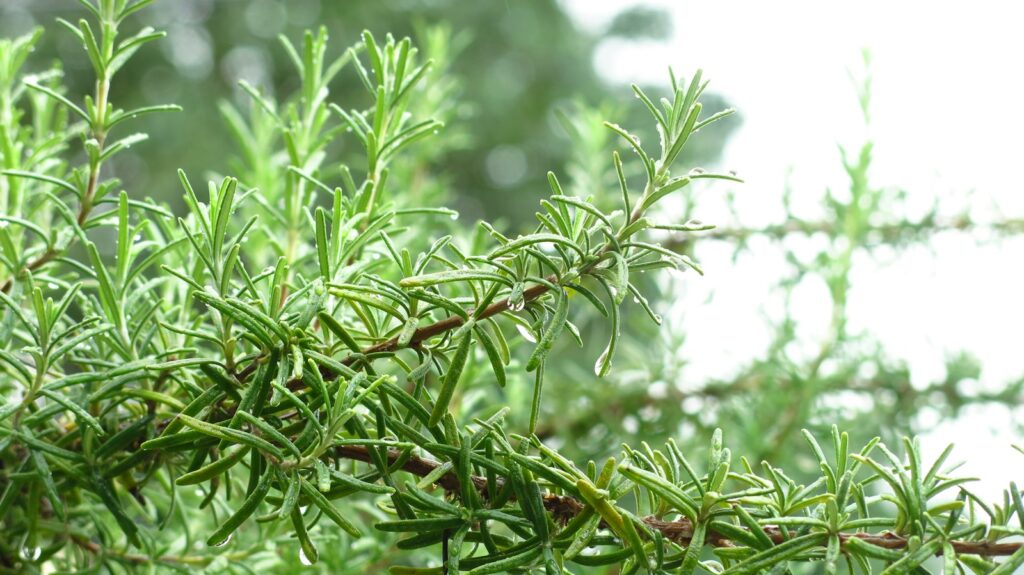
Rosemary Oil for Hair Growth in 2026: One 100-Man Trial, No Placebo Group and a Result Nobody Has Repeated
Three months into the trial that every “rosemary oil beats minoxidil” headline leans on, nothing had happened. Hair counts hadn’t moved in either group. That detail rarely makes the caption, and neither does the fact that the study had 100 men, no placebo group, and hasn’t been repeated since it was published in 2015.
In This Article
- Rosemary oil for hair growth: what the one human trial measured
- The three-month problem
- "Beats minoxidil" is the wrong headline
- What the mouse studies do and don't tell you
- Oil, water or shampoo: which one did the trial test?
- What the 2025 review concluded
- First work out why your hair is thinning
- How to read a hair-growth claim in thirty seconds
- If you're going to try it anyway
- The verdict
It’s the only human trial of rosemary oil for hair growth that anyone keeps citing, and it’s carrying a very large amount of weight. TikTok and Instagram are full of scalp-oiling routines, rosemary water sprays and shampoo bars that name the herb on the label, all pointing back to the same single piece of research. So what did it actually find, and is it enough to justify pouring anything on your head?
Rosemary oil for hair growth: what the one human trial measured
The study, published in the journal SKINmed in 2015 and led by Panahi, randomised 100 men with androgenetic alopecia (the medical name for pattern hair loss) to use either rosemary oil or minoxidil for six months. Hair counts were taken at the start, at three months and at six months, from standardised photographs of a fixed patch of scalp.
The minoxidil comparator was the 2% solution, which is the weaker of the two strengths you can buy over the counter. The rosemary was a prepared formulation used under medical supervision rather than a splash of essential oil from a dropper bottle.
Both groups ended up with significantly higher hair counts than they started with, and there was no significant difference between them. The only clear gap was scalp itching, which was reported more often in the minoxidil group. The authors concluded that rosemary oil compared well with minoxidil (dermatologist Dr Leslie Baumann’s summary).
That’s the whole human evidence base. One trial.
The three-month problem
Go back to that three-month check. Neither group had improved by then. Hair counts only rose between month three and month six, in both arms.
Hair growth is slow, so a delay isn’t suspicious in itself. Minoxidil is known for taking months to show anything. But a result that shows up late in both groups, with no comparison group left untreated, is exactly the pattern you’d expect from a trial where something other than the treatment is helping. People who join a study tend to be more consistent with their routine, and hair counts naturally rise and fall with the growth cycle. Without a placebo arm there’s no way to separate those effects from the oil.
A fair summary of the design: it tells you rosemary oil probably isn’t dramatically worse than 2% minoxidil in this group of men over this period. It doesn’t tell you either of them beat doing nothing in this particular trial. That distinction gets lost in about the first line of every article on the subject.
“Beats minoxidil” is the wrong headline
Here’s my view, and it’s a blunt one. The idea that rosemary oil is a natural alternative that rivals the pharmacy product is the most overstated claim in the hair care aisle.
Equal isn’t better. The trial found no difference, and it was never built to show that rosemary oil does more. It also pitted the herb against the weaker version of minoxidil, in men only, for six months. Women with thinning hair, who are the main audience for rosemary oil marketing, weren’t in it. Neither were people whose shedding comes from something other than pattern baldness.
The itching gap deserves a footnote too. One analysis of the trial suggests it may partly reflect the alcohol-based solution that traditional minoxidil comes in, rather than the drug, and a foam might narrow it. That wasn’t tested, so treat it as a plausible explanation rather than a finding.
What the mouse studies do and don’t tell you
When the human data is this thin, the sales copy borrows from animal and lab work. The usual reference is a 2013 study by Murata and colleagues in mice, in which rosemary leaf extract helped hair regrow in animals whose follicles had been suppressed with testosterone. The most active compound was 12-O-methylcarnosic acid, and in the lab it blocked 5-alpha-reductase, the enzyme finasteride also targets.
It’s a neat mechanism story. It’s also a mouse, a short experiment and a purified extract. A rosemary oil from a shop is a different thing, and nobody has shown that enough of the active compound gets through human scalp skin to do the same. I’d treat the mouse work as a reason someone might run a proper trial, not as a reason to expect results.
There’s a pattern worth spotting here. A compound that does something interesting in a dish or a rodent is a very common starting point in medicine, and the large majority of those leads never become treatments. Plenty of plant extracts block 5-alpha-reductase in a test tube. Far fewer survive the trip through human skin, the jump to a proper dose and a trial with enough people to be convincing. Rosemary hasn’t completed that journey yet, and one decent human study is where it begins, not where it ends.
Oil, water or shampoo: which one did the trial test?
Only the oil. That’s worth stating plainly, because the products people actually buy are mostly something else.
The shelves are full of rosemary water sprays, rosemary-infused shampoos and conditioners, gummies and “growth serums” with a few drops of extract somewhere down the ingredients list. None of those is what the 2015 trial tested. A shampoo spends a couple of minutes on your scalp before it goes down the plughole, and a diluted water spray carries a fraction of the active material a prepared oil does. I’m reasoning from the design of the study here rather than quoting a trial, since I haven’t found one on these products, but it would be strange to assume the result transfers.
So if the headline claim is “rosemary matches minoxidil”, the honest reading is narrower: one oil preparation, applied to the scalp for six months, under supervision, in men with pattern hair loss. Anything that stretches that to a rinse-off shampoo is borrowing credibility it hasn’t earned. And a brand that cites the minoxidil comparison to sell you a conditioner is telling you something about its standards.
What the 2025 review concluded
A more recent paper pulled the herbal remedies together. Ahmed and colleagues reviewed them in Skin Appendage Disorders in 2025, searching studies up to March 2024. They described rosemary oil as potentially useful for pattern hair loss and “an attractive option” for people wanting something more natural, citing the 100-man trial and the mouse work.
Read the rest of the paper, though, and the tone shifts. The authors say the evidence behind herbal treatments is uneven, with small samples, short durations and little long-term follow-up, and they call for further well-designed randomised trials with larger sample sizes, rosemary included. That’s the same gap the 2015 study left (Karger). I couldn’t find a second human trial of rosemary oil for hair loss while writing this, and the pieces I did read cited the same one. If one exists, I haven’t seen it.
First work out why your hair is thinning
Before choosing a treatment, it helps to know which kind of hair loss you have, because oils are aimed at one type only.
The NHS says losing 50 to 100 hairs a day is normal. Male and female pattern baldness are permanent and usually run in families. Temporary hair loss can follow illness, stress, cancer treatment, weight loss or iron deficiency, and that’s a completely different problem with a different fix (NHS). If your shedding started a few months after a bout of flu, a crash diet or a rough patch at work, an oil isn’t addressing the cause. Our piece on iron supplements and tiredness covers one of the commonest culprits, and the seasonal shedding guide explains why a fortnight of hair in the plughole isn’t always a crisis.
For pattern loss, the NHS names finasteride and minoxidil as the main treatments for men, with minoxidil also used for women and finasteride not suitable for women. It adds that no treatment is 100% effective and that both only work while you keep using them. If you’re worried, it suggests a GP visit before a commercial hair clinic. Our broader guide to what actually works for hair loss goes into the options in more detail.
How to read a hair-growth claim in thirty seconds
The rosemary story is a useful template for judging the next trend, because the same gaps turn up again and again. Ask these questions before spending anything.
Was there a placebo or untreated group? If not, any improvement could be the hair cycle, seasonal changes or simply people looking after their hair more carefully because they’re being watched. How long did it run, and when did the change appear? Hair takes months, so a study that ends at six weeks proves very little in either direction. Who was in it? A trial of 100 men with pattern baldness says almost nothing about a 45-year-old woman whose hair dropped after a stressful year, and the marketing is rarely aimed at the men.
Has anyone repeated it? A single study, however neat, is a lead, not a conclusion. And is the product on your bathroom shelf the thing that was tested? In this case the answer to the last two questions is no, and that should lower your expectations by a fair margin.
If you’re going to try it anyway
I’m not going to tell you it’s dangerous, because the evidence we have doesn’t say so. The trial reported itching as its main difference, and that was less common with rosemary. But I’m guessing a little here on safety: the study used a prepared formulation under supervision, and I haven’t seen data on neat essential oil applied to the scalp. Sensible practice, as far as I can tell, is a diluted product and a patch test first, rather than undiluted oil straight from the bottle.
Give it a proper run. The trial’s hair counts didn’t move until after the three-month mark, so judging it at week four is pointless. Take a photo of your parting in the same light on day one and again at six months, because memory is a poor judge of hair density.
And keep the expectations small. Think of it as a low-risk experiment with no better than modest odds, not a replacement for a treatment with decades of trials behind it. Don’t swap it in for minoxidil or finasteride without a conversation with your GP or pharmacist, and don’t pay a premium for a bottle that makes big claims. The thing that decides whether it works is the plain herb and a lot of patience, not the packaging.
The verdict
There’s an opportunity cost that rarely gets mentioned. Pattern hair loss is progressive, which means the months you spend on a six-month experiment with an unproven oil are months in which the follicles keep miniaturising. Nobody can say how much of that is recoverable, and I wouldn’t pretend to. But if you’re in your twenties or thirties and your hairline is moving, waiting half a year to find out whether a herb works is a gamble with your own hair as the stake. Some people will happily take it. Others, once they’ve done the sums, would rather book the GP appointment first, start something with decades of data behind it, and add the rosemary as an extra if they still fancy it.
Rosemary oil is plausible, cheap-ish and probably harmless when used sensibly. That’s a lower bar than “proven”, and the gap between the two is where most of the marketing lives.
One trial, 100 men, no placebo, nothing at three months and no repeat in eleven years is not nothing. It’s also not enough to tell you the oil works. If your hair loss is the pattern kind, the better move is to see someone who can name it, and then decide whether the herb has a place alongside a treatment that has the evidence.
Have you tried rosemary oil on your scalp for a full six months, and did you track the difference with photos or just hope?