100ml Liquid Rule at UK Airports This Half-Term: Why a 2-Litre Bottle Clears Heathrow and Gets Binned in Manchester
A two-litre bottle of shampoo is, in theory, legal in your hand luggage at Heathrow this week. It is also, in theory, a fine way to lose £14 of shampoo at Manchester. Same country, same week, same family holiday, and two completely different answers.
In This Article
- The 100ml liquid rule at UK airports: who has dropped it
- Why every airport list you've seen is slightly different
- The return leg is where the bottle gets binned
- What the government rule actually says
- Exemptions that apply everywhere
- The things the new scanners still catch
- My advice: pack for the strictest airport on your trip
- The family problem nobody mentions
- A five-minute check before you leave the house
- What else to sort before half-term starts
- The honest summary
That’s the real story behind the 100ml liquid rule at UK airports this half-term. The headlines said it was gone. It isn’t. It’s gone at some airports, on some lanes, for some flights, and it comes straight back the moment you land somewhere with an older scanner and a tired security officer.
Half-term starts on Monday for a lot of schools, so here’s what’s actually safe to pack, which airports have changed, where the published lists disagree with each other, and why I’d still pack as if nothing had changed.
The 100ml liquid rule at UK airports: who has dropped it
The change comes from CT scanners, the same technology used in hospitals, now fitted to security lanes. They build a 3D picture of the inside of a bag, which means staff can see what’s in a bottle better than they could with the old X-ray machines. Once an airport has the scanners working and approved, it can let you carry containers of up to 2 litres and leave laptops in the bag.
Which? reported in January that Heathrow, Gatwick, Edinburgh, Birmingham, Bristol, Belfast International and Belfast City had scrapped the 100ml limit. It named Luton and Manchester as the two still enforcing it. And it added the sentence that matters most: “most, but not all” airports now allow 2 litres, so check your own.
Heathrow’s own wording is blunt: “You can now keep liquids and large electronic items in your cabin bag.” No small print in that sentence. The small print is everything around it.
Why every airport list you’ve seen is slightly different
I looked at four published lists while putting this together and no two matched. One round-up updated on 5 October, ahead of half-term, put eight airports in the “scrapped it” column: Belfast International, Belfast City, Birmingham, Bournemouth, Bristol, Edinburgh, Gatwick and Heathrow. It then put eighteen in the “still 100ml” column, including Stansted, Luton, Manchester, Glasgow, Cardiff, Leeds Bradford, Liverpool and Newcastle.
Bournemouth appeared in both. That’s not a typo on my part, it’s what the source printed, and it tells you how fast this is moving and how much the lists are being copied from each other.
A separate report on Manchester says it’s keeping the 100ml limit through half-term, but that you no longer need to take liquids or electronics out of your bag or use a clear plastic bag. So even “still 100ml” doesn’t mean the old routine. Half the faff has gone. The size cap hasn’t.
So treat this as a working table, not gospel. The first group is backed by Which?, the second by the half-term reports. I’m guessing at nothing here, but I’d also be wary of anyone who tells you their list is final.
| Airport | Status reported | What to do |
|---|---|---|
| Heathrow, Gatwick, Edinburgh, Birmingham, Bristol, Belfast International, Belfast City | Up to 2 litres (Which?, January; 5 October round-up agrees) | Check the airport website the night before |
| Manchester, Luton | 100ml cap stays; no clear bag needed at Manchester | Pack 100ml containers |
| Stansted, Glasgow, Cardiff, Liverpool, Newcastle, Leeds Bradford and others | Listed as 100ml in the October round-up | Assume 100ml unless the airport says otherwise |
| Bournemouth | Listed in both columns by one source | Ring or check before you go |
The return leg is where the bottle gets binned
Here’s the bit the headlines skip. The higher limit applies at the checkpoint you’re standing in, not to your trip.
Which? warned that your destination may not have the new scanners, so a 2-litre bottle allowed on the way out may not be allowed on the way home. Many European airports have them. Some in popular holiday spots don’t. The same piece didn’t name the ones that don’t, and I can’t either from a source I trust, so I won’t pretend to.
A travel round-up from late August, which I’d treat as a guide rather than an authority, had Rome Fiumicino, Milan Linate, Bologna and Dublin on 2 litres, parts of Germany mid-rollout, and Madrid, Barcelona, Paris Charles de Gaulle, Athens, Lisbon and Amsterdam Schiphol still on 100ml. Schiphol’s own security page, quoted in that piece, says liquids “may only be carried in containers holding max. 100ml”. If you’re heading to Spain or Portugal this week, that matters more than anything your departure airport has just done.
And if you’re flying to the US, the TSA’s 100ml-in-one-bag rule still applies whatever the airport you left from does.
This is the whole argument for what I’ll say later. Whatever you pack has to survive the worst airport on your itinerary, not the best one.
What the government rule actually says
The gov.uk page hasn’t caught up with the headlines. It still says “at most airports” you can’t take liquids in containers larger than 100ml through security, and that this applies even if the container is only part full. A half-empty 250ml bottle is still a 250ml bottle.
It also says some airports may allow up to 2 litres, but it doesn’t list which ones. It says some may still ask for liquids in a single resealable bag, no larger than one litre and about 20cm by 20cm. And it tells you to check the rules for any airport you’ll pass through, including on the return.
That last line is the one nobody reads.
Exemptions that apply everywhere
Two groups are covered at every UK airport, regardless of scanner. Containers of up to 2 litres are allowed if they hold essential medical liquids, and if they hold baby food or baby milk. Bring proof for the medical ones: a prescription or a note from a doctor, and only the amount you need for the journey.
Duty free is different. Anything bought airside is fine if it’s sealed in a security bag with a visible receipt, and you leave it sealed until your final destination. Open it at a connecting airport and you can lose it.
The things the new scanners still catch
CT scanning doesn’t mean “anything goes”. Four things keep tripping people up.
Vacuum flasks and insulated bottles. Which? says they have to be poured out, because the scanner can’t see through the double wall. Metal bottles generally need emptying before screening, and you can refill them once you’re through. Check the water fountains airside before you buy a £3 bottle of water.
Squishy toys. Children’s stress balls and squishies contain liquid or gel, and there’s no volume printed on them, so officers have to guess. The Manchester guidance says to pack them in the hold. I’d go further and leave them at home, because a child losing a toy at security is a worse half-term memory than any toy you’ll buy at the other end.
Food. Which? notes that some ordinary items, certain bottles and food products among them, can trigger a manual bag search. Jam, hummus, yoghurt and soft cheese all count as “pourable or spreadable”. Ask staff what sets the scanners off if you’re unsure, and expect to open the bag.
Your coat and belt. You still take off your coat and any belt with a big buckle before the metal detector. The scanner changed what’s allowed in your bag, not what happens at your body.
My advice: pack for the strictest airport on your trip
Here’s the position I’ll defend. Don’t buy a big bottle because the rule changed. Pack as if it hadn’t.
The saving from carrying a 500ml shampoo through Heathrow is small. The cost of having it confiscated at Faro or Barcelona on the way home is the whole bottle plus the time it takes to decant everything into a bag at the gate. It’s a bad trade, and it only looks like a good one if you’re thinking about one airport.
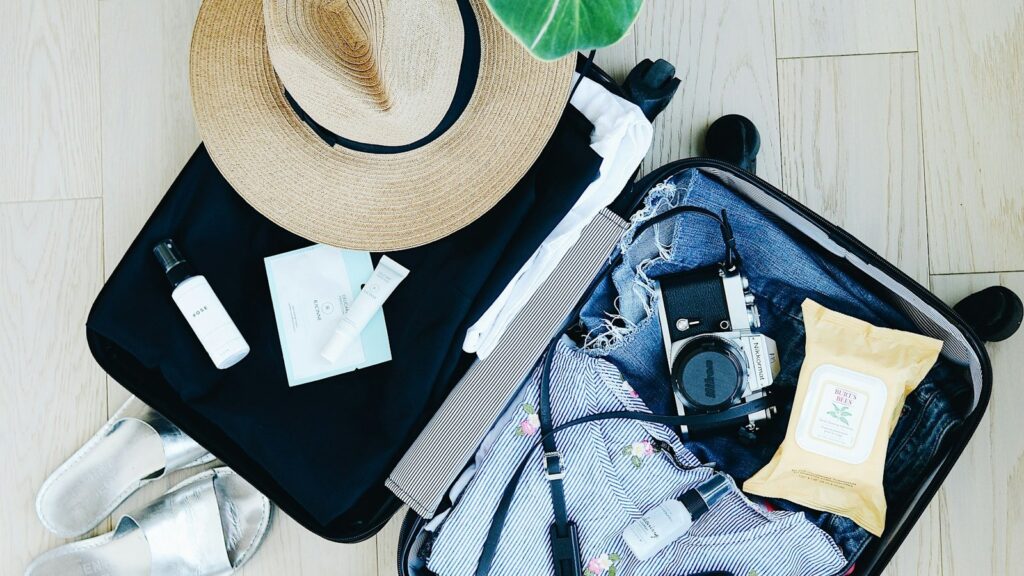
So what do you pack? Refillable 100ml bottles, filled from your normal bottles, are the obvious answer, and they cost a few pounds for a set. I’m guessing at the price here, it’ll vary by shop. One for shampoo, one for conditioner or shower gel, one for moisturiser, one for sun cream if you’re heading south. That’s four, and you’ll rarely need more for a week.
If you’re going for ten days, buy the second bottle of the thing you actually use. It’ll be on the shelf in any pharmacy.
I’d also quietly swap a couple of liquids for solids. Shampoo bars, solid deodorant, a cleansing balm in a tin. They’re not a breakthrough, they’ve been around for years, but they don’t need a bag and there’s nothing in them for a scanner to argue about. I’d skip the “travel size” gift sets sold in front of the airport shops, though. Those are usually pricier per millilitre than the full-size bottle and the plastic’s single-use.
For skiers, there’s a related problem with deodorant and sprays, which we covered in our guide to ski-trip deodorant. Aerosols are the one category that gets the most attention at any airport, scanner or not.
The family problem nobody mentions
Four people and 100ml limits is where this falls apart. Every adult wants their own shampoo, someone needs sun cream for Tenerife, and a child’s cough medicine counts as a medical liquid only if you can show it’s needed for the trip. It adds up fast.
The sensible way round it is to share. One 100ml bottle of shampoo does a family of four for a long weekend, and you won’t miss a second bottle of conditioner. Put the big bottles in the hold if you’re checking a bag, and keep only what you’d need if the suitcase turned up a day late. That’s a toothbrush, one moisturiser, any medication and a change of clothes. Everything else is replaceable at a Boots near the hotel.
And if you’re not checking a bag at all, which is most budget-airline families, be ruthless. The airport rule is one thing. The 40 x 30 x 20cm under-seat bag is a tighter limit than any liquid cap.
A five-minute check before you leave the house
Do these in order. It takes less time than reading this article did.
First, search the name of your departure airport plus “liquids”. The airport’s own page is the one that counts, not a news article and certainly not a forum post from March. Second, do the same for your destination airport, and the airport you’re connecting through if there is one. Third, look at your return flight’s date, not just the outbound.
Then pack the bag so the liquids sit at the top. If you do have to open it at security, you don’t want to be emptying a week’s worth of washing in front of a queue.
And one more thing. If you’ve bought something at the airport and it doesn’t fit in your bag, don’t argue with the officer about it. They’d rather you finished your coffee than lost the argument.
What else to sort before half-term starts
Liquids are only one part of the airport routine this week. If you’re using a phone as a boarding pass, the power bank rules have tightened and the 100Wh limit is another one to check before you leave. The hand luggage size limits are a separate trap with Ryanair, easyJet and Jet2. And if your bag goes missing, a cheap luggage tracker at least tells you which airport it’s sitting in.
If you haven’t picked a destination, we’ve rounded up October half-term breaks that don’t involve a plane at all, which is the only way to avoid the liquids question completely. And if you’re flying to Europe, it’s worth knowing how the EU Entry/Exit System affects queue times at the other end.
The honest summary
The 100ml rule has loosened at a handful of big UK airports, and that’s good news if you’re flying from Heathrow with a laptop and a toddler. But the rule hasn’t gone. It’s now a patchwork, the published lists contradict each other, and the bit that catches people out is the airport on the way back.
Pack to 100ml, keep the medicines and baby milk in the bag you can open quickly, and treat any 2-litre allowance as a bonus you didn’t plan on. If the airport lets you through with more, you’ve lost nothing.
Which airport are you flying from this half-term, and what’s the one liquid you’d least like to lose at the security tray?