
Hair Loss Treatment UK 2026: What Actually Works (and What’s a Waste of Money)
[toc]
Hair loss treatment UK 2026 has finally caught up with the science. Walk into a Boots in spring 2026 and you can buy minoxidil over the counter, ask your GP for a finasteride prescription on the same morning, or book a private microneedling appointment in most British cities for under £150 a session. The flip side is that the marketing has expanded just as fast: caffeine shampoos, scalp gummies and “clinically proven” red light combs are everywhere, and most of them do nothing useful for your hairline.
In This Article
- Why hair loss treatment UK 2026 looks different from a few years ago
- The proven medications that still work in 2026
- In-clinic treatments worth considering
- What doesn't work (and why you keep seeing it advertised)
- Lifestyle factors that genuinely move the needle
- Where to start: a UK-specific roadmap for 2026
- Frequently asked questions
- Can the NHS help with hair loss?
- How much does hair loss treatment cost in the UK in 2026?
- At what age does hair loss typically start?
- Is hair loss reversible?
- The bottom line
This guide is a practical, evidence-based read for anyone in the UK trying to work out where to actually spend their money in 2026. It covers what works, what doesn’t, and what is realistic to expect over the next six to twelve months – whether you’re dealing with male pattern baldness, postpartum thinning, perimenopause shedding or the kind of seasonal hair fall that turns up on every brush this time of year (more on that in our spring hair shedding UK piece).
Why hair loss treatment UK 2026 looks different from a few years ago
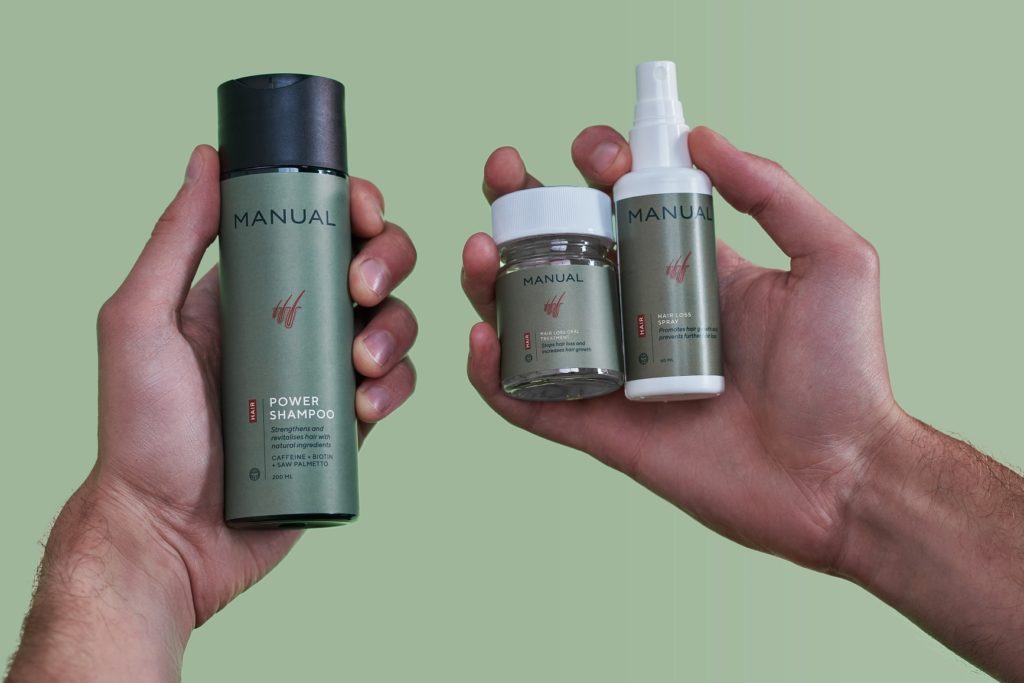
Two things changed the British landscape between 2023 and 2026. First, the MHRA reclassified minoxidil 5% as a pharmacy product, which means you can buy it without a prescription – the same Regaine you’d have ordered online from a US pharmacy a few years back is now sitting on the shelf in Superdrug. Second, telehealth providers like Manual, Numan and Hims have made finasteride accessible without an in-person GP visit, with monthly subscriptions usually under £25. The result is that genuine, NHS-recommended treatments are now cheaper and faster to access than the placebo-grade products people were buying instead five years ago.
What hasn’t changed is the underlying biology. Hair loss treatment UK 2026 still rewards the same thing it always has: starting early. Once a follicle has miniaturised past a certain point, no oral or topical drug brings it back. So the practical message is to act when you first notice a change, not when you can already see scalp through the parting.
The proven medications that still work in 2026
If you only read one section of this hair loss treatment UK 2026 guide, make it this one. The evidence-based options for both men and women remain a short list:
Minoxidil 5% (topical or oral). Topical minoxidil applied twice a day has thirty years of clinical evidence behind it. Around 60 to 70% of users see meaningful regrowth or stabilisation within four to six months. The 2026 update is that low-dose oral minoxidil (typically 1.25mg to 2.5mg) prescribed off-label has become the default at most UK private hair clinics for users who don’t tolerate the topical – it’s once-a-day, doesn’t make your hair greasy, and works for women too.
Finasteride 1mg (men only). Still the gold standard for male pattern baldness, blocking the DHT conversion that miniaturises follicles. Studies put efficacy at around 80 to 90% for stabilising loss and 50 to 60% for visible regrowth. Sexual side effects affect a small minority – around 2 to 4% of users – and almost always resolve when the drug is stopped. UK telehealth subscriptions land at £15 to £25 per month in 2026.
Spironolactone (women). An anti-androgen used off-label for female pattern hair loss, particularly post-perimenopause. It needs blood pressure monitoring but is genuinely effective for hormonally driven thinning. Worth raising with your GP rather than self-prescribing through a pharmacy.
Dutasteride. A stronger DHT blocker than finasteride, sometimes used when finasteride hasn’t done enough. Only available privately in the UK and only worth considering after twelve months on finasteride without progress.
In-clinic treatments worth considering
The drug list does the heavy lifting; in-clinic treatments are the multiplier. The two that have genuine evidence behind them in 2026 are:
Microneedling. Rolling a 1.5mm dermaroller across the scalp once a week, ideally in combination with topical minoxidil, has decent randomised trial evidence for amplifying regrowth. UK private clinics charge £80 to £150 per session, but a home dermaroller costs £20 once a year and produces similar results if you’re consistent. The same logic applies to your skin barrier elsewhere – if you’re new to actives, our perimenopause skincare UK guide covers the scalp–skin overlap.
Platelet-rich plasma (PRP). Your blood is drawn, spun in a centrifuge, and the platelet-rich layer is injected back into the scalp. Most UK clinics charge £300 to £500 per session and recommend three sessions over six months, then top-ups annually. The evidence is mixed but trending positive; worth considering for users who’ve plateaued on medication.
Hair transplants. FUE transplants in the UK have come down to £4,000 to £8,000 in 2026, and Turkish clinics will do the same procedure for under £2,500 – although the recovery and aftercare logistics are real. A transplant is not a cure: you still need to be on finasteride or minoxidil afterwards to protect the donor area, otherwise the surrounding hair carries on thinning around the new graft and the result looks odd within five years.
What doesn’t work (and why you keep seeing it advertised)
The wellness industry’s biggest hair-loss profit margins sit on products with the weakest evidence. The honest list:
Caffeine shampoos. Alpecin and similar products. The active ingredient does penetrate the scalp in lab conditions, but you’d need to leave the shampoo on for two hours twice a day to approach a meaningful dose. A two-minute shower lather isn’t doing what the adverts imply.
Most hair vitamins. Unless you have a documented deficiency in iron, vitamin D, B12 or zinc, taking biotin gummies or multi-vitamin hair supplements has almost no effect on hair loss. The exception is a recent randomised trial showing some benefit from Nutrafol’s specific formulation in women with shedding – but it’s expensive (around £45/month in the UK) and not a substitute for medication if pattern baldness is the underlying cause.
Red light combs and helmets. Low-level laser therapy has weak but non-zero evidence. The home devices are often £300 to £1,000 and the marketing implies regrowth comparable to minoxidil. The real-world effect is closer to marginal.
Scalp massagers and rosemary oil. Pleasant, harmless, won’t reverse androgenic hair loss. The viral 2024 rosemary oil study had real methodological issues that don’t get mentioned on TikTok.
Lifestyle factors that genuinely move the needle
Medications and clinic procedures do most of the work, but a handful of lifestyle factors are worth getting right alongside them:
Iron and ferritin. Low ferritin (under 70 ng/mL) is one of the most common contributors to diffuse hair shedding in British women. Get tested via your GP – a basic full blood count won’t catch it, you need ferritin specifically. Supplementing iron when low can produce visible improvement in three to six months.
Protein intake. Hair is keratin and keratin is protein. The British average sits around 65g a day; aim for 1g per kg of body weight if you’re losing hair, especially if you’ve recently lost weight or moved to a plant-based diet.
Stress and sleep. Telogen effluvium – sudden diffuse shedding three months after a stressful event – is the cause behind a surprisingly high number of “my hair is falling out” posts. Often resolves on its own. The trigger could be anything from a viral illness to a job change.
Scalp care. A clean, well-exfoliated scalp absorbs topical treatment better. A weekly scalp scrub or chemical exfoliant (salicylic acid based) can help, especially if you’re prone to dandruff. Worth pairing with sun protection too – see our scalp sunscreen UK piece for the summer angle.
Where to start: a UK-specific roadmap for 2026
If you’re noticing hair loss for the first time, the most efficient British path through hair loss treatment UK 2026 is:
- Book a GP appointment and ask for blood tests – ferritin, vitamin D, vitamin B12, full thyroid panel, and full blood count. This is free on the NHS and rules out the easy-to-fix causes.
- If those come back normal and the loss is patterned, start topical or oral minoxidil. Both are pharmacy-accessible without prescription.
- For men, add finasteride via a UK telehealth provider. Numan and Manual both offer trial subscriptions.
- Add weekly home microneedling once you’ve been on minoxidil for at least two months.
- Reassess at the six-month mark with photos. Hair takes time – progress before three months is unusual; nothing visible by twelve months means the regimen needs revisiting.
Frequently asked questions
Can the NHS help with hair loss?
The NHS will run blood tests and treat underlying medical causes (thyroid issues, iron deficiency, alopecia areata) but does not generally prescribe finasteride or minoxidil for cosmetic hair loss. You’ll typically need to go private or use a telehealth subscription for those.
How much does hair loss treatment cost in the UK in 2026?
A realistic monthly budget for evidence-based treatment is £30 to £60 – minoxidil, finasteride and a yearly dermaroller. In-clinic options like PRP push that significantly higher; FUE transplants are a one-off in the thousands.
At what age does hair loss typically start?
Male pattern baldness commonly begins in the late twenties, although the speed varies. Female pattern hair loss tends to accelerate around perimenopause, between 40 and 55, although postpartum and stress-related shedding can hit any age.
Is hair loss reversible?
Recently miniaturised follicles can be partially or fully reversed with medication. Long-dormant follicles – a shiny, fully bald scalp area – cannot be brought back without a transplant. Acting early is the single biggest determinant of the result.
The bottom line
Hair loss treatment UK 2026 doesn’t need to be expensive or complicated. The four interventions with the strongest evidence – minoxidil, finasteride (men), spironolactone (women) and microneedling – cover the vast majority of patterned hair loss. Skip the caffeine shampoos and the gummies. Get the GP blood tests done first. And take the photos at month zero, because progress is gradual enough that you won’t notice it without a baseline.
What’s your current hair loss routine – are you on minoxidil, finasteride, both, neither? Drop your experience in the comments below, particularly if you’ve tried something this guide has dismissed and you think the evidence is more positive than I’ve credited.