
Slow Cooker Spring Recipes UK: Weeknight Dinners That Mostly Cook Themselves
Slow cooker spring recipes UK cooks tend to overlook entirely – the appliance gets shoved back in the cupboard the moment the clocks change. That is a mistake in 2026. April evenings are still cool enough that a long, low braise feels right, the first proper British vegetables are hitting the shops, and energy bills have not magically dropped just because the daffodils are out. A slow cooker uses a fraction of the electricity of an oven and, crucially, needs no attention between the morning faff and the evening serve – which is the whole point on a school night.
In This Article
- Why slow cooker spring recipes UK still earn their place in April
- Spring ingredients that actually suit the slow cooker
- Slow cooker spring recipes UK: 3 weeknight winners
- The timing problem – and how to make slow cooker spring recipes UK work on a weekday
- Cuts and pulses that reward the long, low approach
- Small tweaks that make slow cooker spring recipes UK actually shine
- Is it actually worth it versus the oven?

This guide to the best slow cooker spring recipes UK home cooks can actually pull off on a Tuesday covers what to put in the pot, when to start it, which cuts and pulses reward the long cook, and the small habits that separate a brilliant weeknight dinner from a sad beige stew. Nothing here needs a specialist ingredient or an hour of prep.
Why slow cooker spring recipes UK still earn their place in April
There is a lingering idea that slow cooker spring recipes UK do not exist – that the appliance is strictly a winter tool, which does not really hold up. A standard 3.5-litre model uses roughly 150-300 watts on low, which over eight hours works out at far less than running an oven at 180°C for even forty-five minutes. Which? rates slow cookers as one of the cheapest appliances to run for a full meal, comfortably under 20p a session at current unit rates for most households.
The other argument for slow cooker spring recipes UK is practical. British weather in April does not commit. You will get a bright Monday followed by a cold, damp Tuesday, and the slow cooker handles both – a lemony chicken and leek stew on the warm days, a deeper pork and cider braise on the cold ones. It also frees the oven for whatever else you are doing: a tray of roasted new potatoes, a quick focaccia, a late batch of rhubarb crumble.
Most importantly, it removes the 6pm decision. You have already done the thinking at 8am.
Spring ingredients that actually suit the slow cooker
The biggest mistake with slow cooker spring recipes UK is lobbing delicate produce – asparagus, peas, wild garlic – straight into the pot at the start. Eight hours later, it is sludge. Treat slow cooker spring recipes UK as a base layer and add the bright, seasonal stuff at the end.
What does go in at the start: leeks, onions, carrots, celeriac, maincrop potatoes, fennel, dried beans, pearl barley, chicken thighs, shin of beef, pork shoulder, lamb neck, cheap white wine, a tin of tomatoes, good stock. These are happy to sit for hours and get better for it. Jersey Royals, the season’s standout new potato, are an exception – they want a quick boil and a slick of butter rather than a long braise, and we have covered them properly in our Jersey Royals weeknight recipes guide.
What goes in at the end, in the last fifteen to twenty minutes: asparagus, peas (frozen is fine and often sweeter than out-of-season fresh), spring greens, spinach, wild garlic, fresh herbs, lemon zest, a splash of cream or crème fraîche. You want their colour and snap to survive. The first British asparagus is in the shops now, and a tip-in at the end of a chicken stew is one of the simplest ways to mark the season – more on what to do with the rest of the bunch in our British asparagus weeknight recipes.
If you have not used wild garlic before, it has a short window – roughly now until mid-May in most of the UK – and it lifts a finished slow-cooked chicken stew more than any amount of dried herb. We have covered how to find and cook it properly in our wild garlic weeknight recipes guide.
Slow cooker spring recipes UK: 3 weeknight winners
These slow cooker spring recipes UK home cooks can have on the table by 7pm are loose recipes, not lab protocols. Trust your pot – some run hotter than others, and older models especially can be aggressive on low.
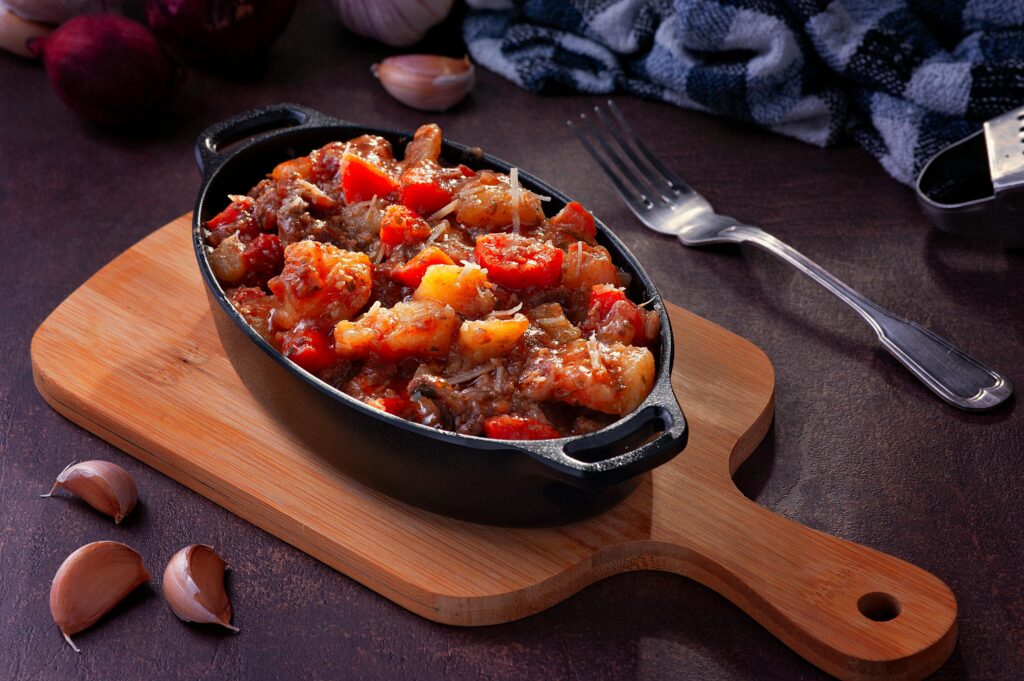
Chicken, leek and tarragon. Six bone-in chicken thighs, skin removed, browned briefly in a frying pan if you can be bothered (worth it, but not essential). Into the pot with two large leeks sliced, two crushed garlic cloves, 300ml chicken stock, 100ml white wine, a bay leaf and a good pinch of salt. Low for six to seven hours. Ten minutes before serving, stir through a tablespoon of Dijon, a handful of chopped tarragon, 100ml crème fraîche and a squeeze of lemon. Serve over mash or with crusty bread. If you want to do more with cheap chicken thighs across the week, our chicken thigh weeknight recipes covers seven other quick dinners.
Spring lamb and flageolet. 600g diced lamb neck or shoulder, tossed in seasoned flour and browned. Into the pot with a chopped onion, two carrots, three garlic cloves, a tin of flageolet beans (drained), a tin of chopped tomatoes, 200ml stock, a sprig of rosemary. Low for seven to eight hours. Finish with a handful of chopped parsley and a squeeze of lemon. It is essentially a weeknight version of a French navarin, cheap and very forgiving.
Smoky cannellini and greens. No meat, no fuss. Two tins of cannellini, drained, with a chopped onion, two sliced garlic cloves, a tin of chopped tomatoes, a teaspoon of smoked paprika, a pinch of chilli flakes, 200ml veg stock, a squeeze of tomato purée. Low for four to five hours. Stir through a bag of spring greens in the last fifteen minutes until they wilt. Finish with olive oil and parmesan. Costs roughly £3 to feed four.
The timing problem – and how to make slow cooker spring recipes UK work on a weekday
The awkward truth about slow cookers is that most of us are not home for slow cooker spring recipes UK for the six-to-eight-hour window that most recipes assume. There are three workable patterns for slow cooker spring recipes UK weekdays demand.
The morning-start approach. Prep the night before – everything chopped, meat browned, in a bowl in the fridge. In the morning, tip it into the pot, set low, and leave. This adds about ten minutes to your morning and saves you the entire evening. If you are out longer than nine hours, use a model with an auto-switch to warm, or put it on the lowest setting you have.
The lunchtime-start approach, if you work from home or pop back. Four to five hour recipes on low work here – most bean stews, fish stews (added later), a simple pulled chicken. You start at noon and eat at six.
The evening-before approach. Cook it the night before while you are doing something else – dinner, bath, bedtime. Cool, fridge, reheat on the hob the next night. A lot of stews are better on day two anyway, and you have effectively batch-cooked without trying. If genuinely fast cooking is what you need on the busier nights, our 15 minute weeknight dinners UK guide handles those evenings instead.
Whichever you pick, use a timer plug if your cooker does not have a built-in timer. They cost about eight quid and remove the anxiety of leaving an appliance on while you are out.
Cuts and pulses that reward the long, low approach
Slow cooker spring recipes UK are not kind to lean, expensive cuts. A chicken breast will be dry and stringy after four hours. Lamb leg turns woolly. What you want is connective tissue – collagen that breaks down over time into silkiness.
For meat, head to the back of the butcher’s counter: shin of beef, ox cheek, pork shoulder, pork belly, lamb neck, lamb shoulder, chicken thighs on the bone. These are often half the price of the premium cuts and will absolutely sing after six hours. BBC Good Food has a solid collection of slow cooker recipes organised by dish type if you want a reference point.
For pulses, dried beans soaked overnight cost a fraction of tinned and hold their shape much better over a long cook – butter beans, cannellini, borlotti, chickpeas. Red and green lentils do not need soaking. Pearl barley adds body to a broth without turning gluey. Whole spelt grains are underused and work beautifully with lamb.
If you have shifted to more plant-forward weeknight cooking in general, our cabbage-led budget dinners share a lot of the same logic – cheap, seasonal, hands-off.
Small tweaks that make slow cooker spring recipes UK actually shine
A few habits separate good slow cooker spring recipes UK from the bland, watery version people remember from the 90s.
Brown your meat first. It is tempting to skip and yes, you can, but those caramelised edges add a depth to the finished dish that nothing else replicates. Five minutes in a hot pan is worth it.
Use less liquid than you think. Slow cookers do not lose much moisture through evaporation, so a stew recipe written for the oven or hob will be swimming if you use the same volume. Halve it to start. You can always add more.
Season at the end, not the start. Salt concentrates as the dish reduces, and a pot that was perfectly seasoned at 8am will be aggressive by dinner. Taste at the end, adjust then.
Avoid lifting the lid. Every time you do, you add around twenty minutes to the cook. If you are a compulsive checker, set a single check point and leave it alone otherwise.
And keep a stash of fresh, sharp finishes in the fridge: lemons, parsley, chilli, good olive oil, grated parmesan, a pot of capers. A long, soft cook needs something bright on top to stop it feeling muddy.
Is it actually worth it versus the oven?
For most weeknight stews and braises, yes, on both cost and outcome. The oven will get you there faster if you are home – a 90-minute braise at 150°C is perfectly possible – but you have to be in and attending. The slow cooker is the tool for the version of the day where you are not.
There are also dishes that are genuinely better slow-cooked than oven-cooked. Pulled pork shoulder for sandwiches. Any bean-heavy stew where you want the beans to absorb the stock rather than sit in it. Daal. Chilli, given eight hours, is transformed. The oven version is perfectly fine. The slow cooker version is better.
Where the oven wins: anything where you want crisp skin, caramelisation or a crust. A slow cooker cannot roast a chicken in any meaningful sense. If you want roast potatoes and a tray of something next to them, keep it out of the pot.
For a properly efficient spring week, pair one slow cooker night with a one-tin option on a different evening – we ran through the best spring traybakes for UK weeknights recently, and the two approaches complement each other almost exactly. One night is hands-off all day; the other is thirty minutes and done.
If you have been leaving the slow cooker in the cupboard because it felt like a winter tool, this is the time to change that. The best slow cooker spring recipes UK home cooks reach for – chicken with leeks, lamb with flageolet, a smoky white bean pot – are cheaper, easier and often better than the equivalent oven dinner, and the evening arrives with the work already done.
Which slow cooker spring recipe in this list would actually earn a regular Tuesday slot in your week – and what’s stopping you from making it the default?



Never occurred to me to use the slow cooker in spring, I’d completely written mine off as a winter appliance. The energy figures are what’s going to get me reaching for it again honestly, our gas/electric bill this March was ridiculous. Any particular cuts of lamb you’d recommend for April other than shoulder?
Lamb neck’s a great spring slow-cook, cheaper than shoulder and it breaks down beautifully over four hours with a bit of stock and rosemary. Butchers will often trim it for you. Also worth looking at lamb breast if you can get it, even cheaper and surprisingly good shredded.
Pingback: Jersey Royals Recipes: Easy Weeknight Dinners for Peak British New Potato Season | Lifestyle Reviewer