Best Luggage Tracker Under £30 Before Half-Term: Europe Loses 10.5 Bags in Every 1,000 Passengers – and a Tracker Won’t Bring Yours Back
Europe’s airlines mishandled 10.5 bags for every 1,000 passengers in 2025, more than double the global rate of 4.9, according to SITA figures reported in June. Put a family of four on a half-term flight and, by my rough arithmetic, there’s about a one-in-24 chance that one of your bags goes astray. That’s why the best luggage tracker under £30 is a sensible thing to buy this month.
In This Article
- What a luggage tracker can and can't do when the bag doesn't appear
- The best luggage tracker under £30 depends on your phone, and that's the whole decision
- What 14 bags on eight airlines showed, and what the test couldn't
- Skip the £8 no-name trackers
- Are trackers allowed in the hold? The row that fizzled out
- Setting one up before you leave the house
- The first hour at the carousel when nothing comes round
- Batteries, and the thing everyone forgets in October
- The half-term buying call
But there’s a catch the packaging won’t mention.
A tracker tells you where your bag is. It doesn’t make the airline deliver it, and it doesn’t get you a penny of compensation on its own. What it does is end an argument with the baggage desk, and that’s worth more than it sounds. More on that below.
What a luggage tracker can and can’t do when the bag doesn’t appear
SITA counted roughly 24 million mishandled bags worldwide in 2025, down from about 30 million in 2024. “Mishandled” covers delayed, damaged and lost, so it’s a broad bucket. Most of those bags eventually turn up. The question for a family on the first night of a week in Tenerife is where yours is right now, and whether anyone at the airline knows.
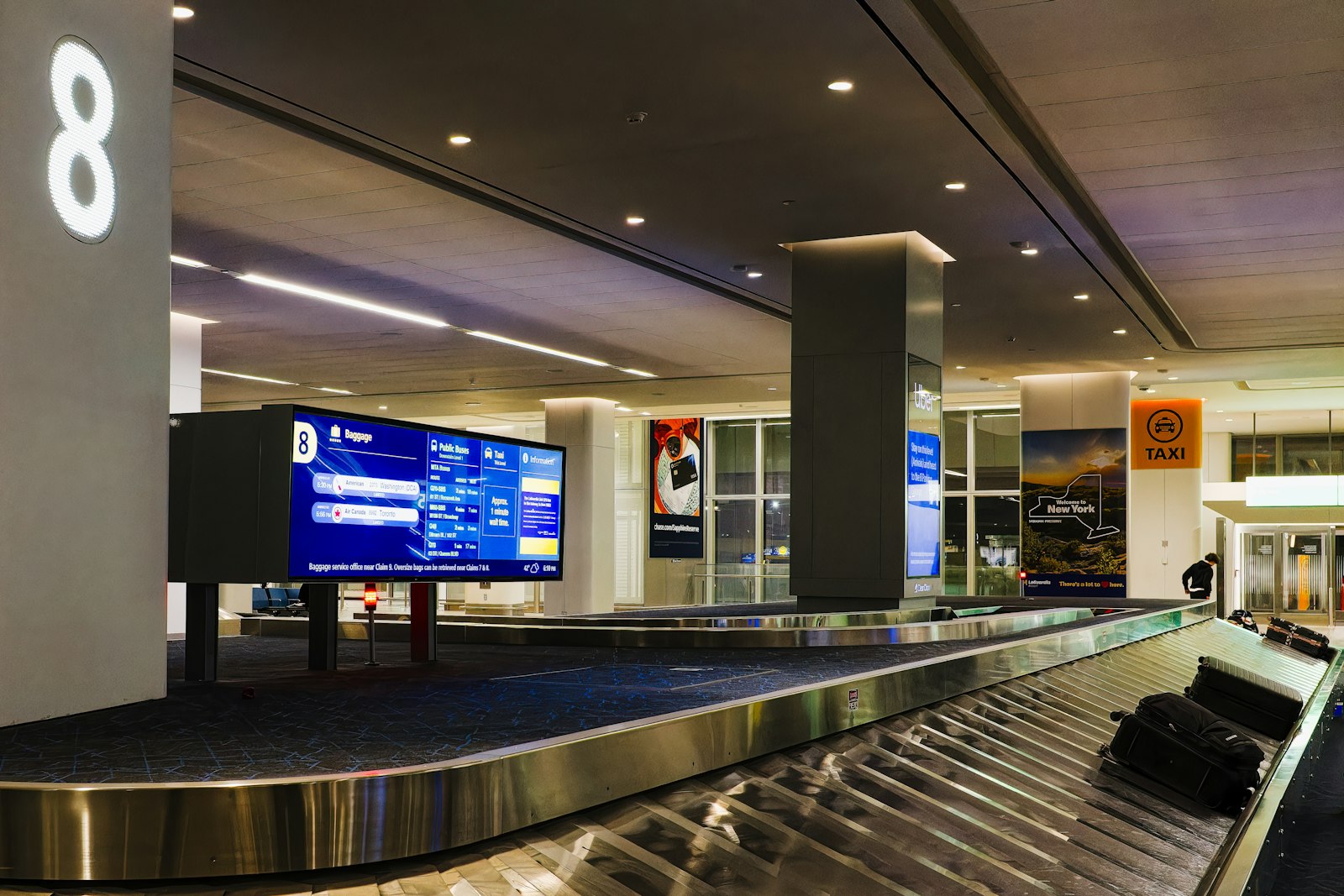
A tracker answers that. If the map shows your bag still sitting in the departure airport’s baggage system, you can tell the desk agent so, with a screenshot. Without it you get “the system says it’s not been scanned”, and that’s the end of the conversation.
What it won’t do is justify a trip to the airport’s back rooms. Don’t go looking for the bag yourself. File the delayed baggage report at the airport before you leave the arrivals hall (you’ll be given a reference number), then pass the tracker location to the airline’s baggage team and let them go and get it.
And that’s where the tracker earns its £29. Not by finding the bag. By turning a vague claim into a specific one.
The best luggage tracker under £30 depends on your phone, and that’s the whole decision
The spec sheets look different, but the real split is which network the tracker borrows. An AirTag uses Apple’s Find My network and needs an iPhone. Samsung’s SmartTag2 uses SmartThings Find and needs a Galaxy phone for setup. Chipolo’s POP works with either Apple’s or Google’s network, which you choose when you set it up.
Here’s how the three sub-£30 options and the one that just misses the cap compare, using the prices and notes from a reviewer who tested them across 14 checked bags (his prices are in dollars, so I’ve given the UK ballpark separately).
| Tracker | Works with | Test price (US) | UK ballpark | Notes |
|---|---|---|---|---|
| Apple AirTag | iPhone only | $29, or $99 for four | about £29 each | CR2032 battery lasted 13 months in the reviewer’s testing; precision finding needs an iPhone 15 or newer |
| Samsung Galaxy SmartTag2 | Galaxy phones | $27 | about £25-£30 | Claimed 700 days in power-saving mode; reviewer reported over 500 |
| Chipolo POP | iPhone or Android | $28 | about £25-£30 | Replaceable battery, 120 dB speaker; precision finding “not as slick” as the UWB units |
| Tile Pro | iPhone or Android | $34.99 | just over the cap | Optional paid tier for smart alerts ($44.99 a year); thinner network |
I couldn’t confirm this week’s exact UK shelf prices, so treat the pound figures as list-price ballparks and check Argos, Currys or Amazon before you buy. None of the three need a subscription to do the basic job.
One more difference matters in Britain. Apple and Samsung phones are everywhere in a UK airport, so in practice either network gets a reading most of the time at Heathrow, Manchester or Edinburgh. The weak patches are the places with few phones and long gaps between flights, which is why I’d rather have a tracker that’s slightly slower to update than one that’s cheap and silent.
My view: iPhone households should buy the AirTag and stop reading. Samsung households should buy the SmartTag2. A mixed household, or anyone on a Pixel, should pay the extra pound or two for the Chipolo POP because it doesn’t lock you to one brand’s phone.
The AirTag four-pack at £99 is the one I’d argue with. It works out at roughly £25 a tag against £29 for a single, so you save about £4 each. That’s only a bargain if you’ve got four bags to track, and most families check two.
What 14 bags on eight airlines showed, and what the test couldn’t
The most useful independent test I found is a write-up on Beyond Baggage, where the reviewer put trackers in 14 checked bags across eight airlines over about eight months, including British Airways, Ryanair, Iberia, Lufthansa and Emirates. All of them survived the flights physically. The AirTag wasn’t an automatic winner.
Two findings stuck with me. The SmartTag2 matched the AirTag in Samsung-heavy cities, but went dark for about six hours in Portugal. And the Tile Pro was the only tracker to ping during a 36-hour Iberia loss, despite Tile’s network being the thinnest of the lot in smaller cities.
So no tracker is reliable everywhere, and the weak spot is the gap between hubs, where few phones are nearby to relay a signal. That’s worth knowing before you panic over a map that hasn’t updated for a few hours.
Be careful with this test, though. It’s one reviewer, not a lab. Airport phone density wasn’t controlled, there are no per-tracker success rates, and the article contradicts itself on whether each bag carried three trackers or six. I’d treat it as useful colour from someone who flew a lot, not as proof of a ranking.
Skip the £8 no-name trackers
You’ll see them everywhere, usually in that annoying clamshell packaging, at a third of the price of an AirTag. The same reviewer tried two unbranded Amazon trackers and dismissed both. One went silent after 48 hours. The other never paired reliably.
That’s a sample of two, so it isn’t a verdict on the whole category. But it’s a fair warning. A luggage tracker has exactly one job, and it’s to work on day three of a trip when the bag has gone missing. Saving £15 on something that might stop reporting after two days is a false economy, and it’s the one place on this list where I’d say don’t bother.
Are trackers allowed in the hold? The row that fizzled out
In October 2022, Lufthansa told passengers that trackers in checked bags were a dangerous-goods problem because of their batteries. The row ran for a while. Chipolo’s own account says the European Union Aviation Safety Agency said the decision was up to each airline, while the US FAA and TSA confirmed trackers were allowed in flight luggage. Lufthansa has since backed down, and the Beyond Baggage reviewer says its dangerous-goods page now confirms them.
The practical reading is that coin-cell trackers like the AirTag, SmartTag2 and Chipolo POP are treated as fine, while larger rechargeable GPS trackers are where restrictions bite. The reviewer cites confiscations in Dubai second-hand, so I’d treat that one cautiously. I haven’t checked every UK airline’s baggage page, so look at yours before you fly. And if you’re also packing a power bank, the 100Wh rule we covered in our best power bank for flights piece is a far more likely thing to get stopped at security than a coin-cell tracker.
Setting one up before you leave the house
Four jobs, all doable on the sofa the night before.
- Pair the tracker at home and name it something useful, like “Blue case – hold”. When you’ve got three cases on the carousel map, you’ll be glad of it.
- Put it deep inside the case, in the lining or under the clothes, not in the external pocket where the airline tag lives. A tracker that’s easy to see is easy to remove.
- Photograph the case, its tag and your bag receipt at check-in. If you do have to claim, you’ll want all three in one place.
- Look into your phone’s sharing options. As far as I know, Apple has added a way to share an AirTag’s location with participating airlines through a link, but I’m guessing at which carriers take part, so check yours.
If you’re travelling with children and a lot of kit, our guide to family travel tech covers what else is worth packing, and our travel gadgets list is the shorter version.
The first hour at the carousel when nothing comes round
This is the bit nobody rehearses. You’ve stood at the belt until the last bag has gone round twice, the screen has stopped listing your flight, and the other passengers have drifted off. Now what?
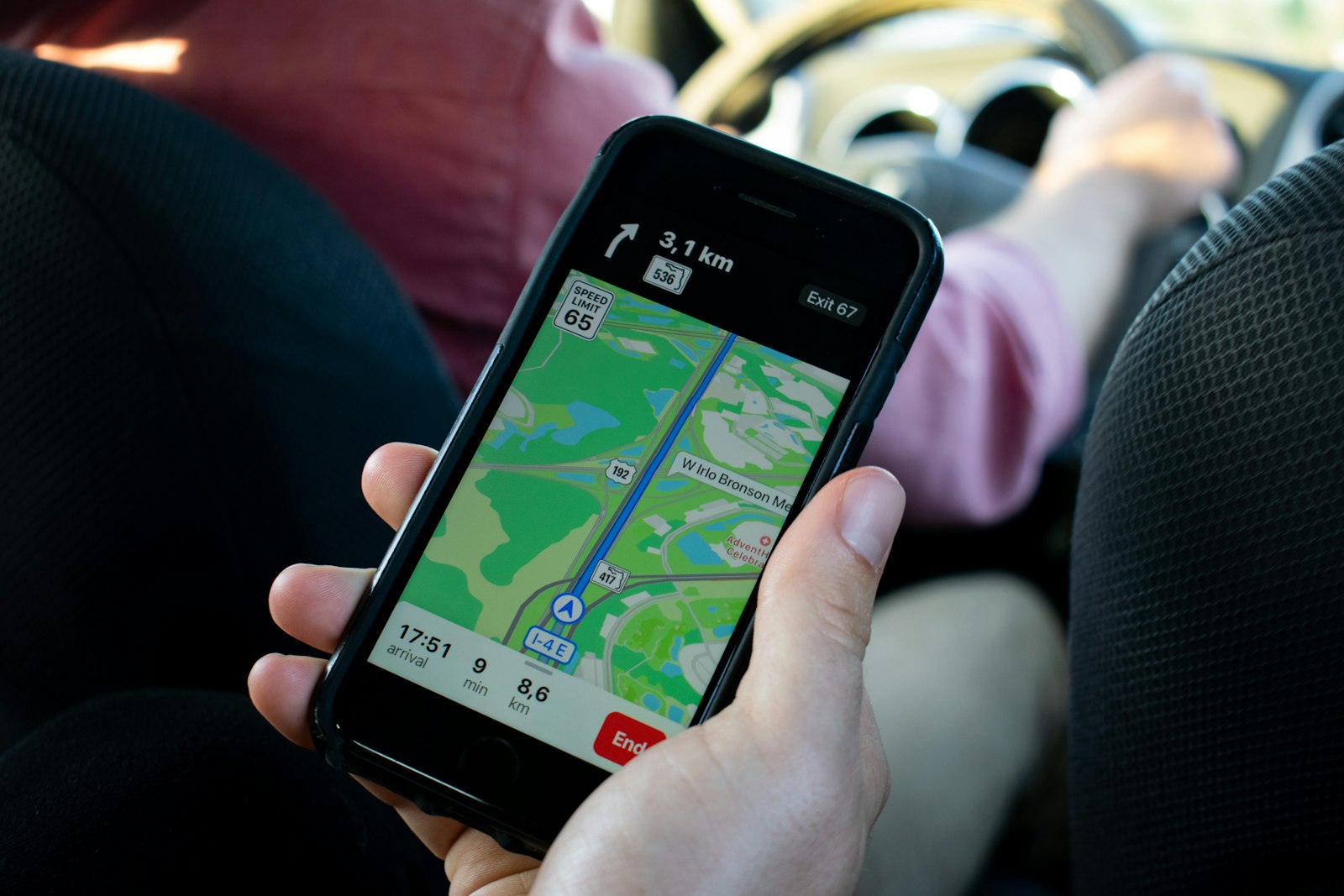
Open the tracker app before you do anything else. If the map shows the bag in the building, tell the desk agent exactly which area it’s in and show them. If it shows the bag still at the airport you left, that’s the airline’s problem to solve and you’ve just saved a day of “we’ll scan the system again”. If it shows nothing at all, say so too, because a bag that’s gone quiet for hours is useful information for the tracing team.
Then file the report there and then, before you leave the arrivals hall. Get the reference number and a name, and keep both. Buy any basics you need for the next day or two (toothbrush, phone charger, a change of clothes for the children) and keep every receipt. Whether you’re reimbursed depends on the airline and on your travel insurance, so read the policy before you go rather than after.
And charge the phone. It sounds daft, but a dead phone is the commonest way to lose the one advantage you paid £29 for.
Batteries, and the thing everyone forgets in October
All three of these trackers run on a CR2032 coin cell, the same flat battery that lives in car key fobs. That’s good news, because you can swap one in a minute for under a pound. Apple’s AirTag lasted 13 months in the Beyond Baggage reviewer’s testing, which is a single data point, not a promise.
The point is that a tracker you bought last Christmas and left in the suitcase in the loft has been running all year. Open the app before you pack, check the battery warning, and replace the cell if it’s low. A flat tracker in a hold bag is exactly the situation you bought it to avoid, and it’s an easy one to fix with a £1 battery from the corner shop.
It’s also worth taking a second to check the tracker still pairs to your current phone, especially if you’ve upgraded since last summer. Pairing takes under a minute at home, and a lot longer on a platform at Gatwick at 5am.
The half-term buying call
One tracker per checked bag. Not one per family, and not one in the hand luggage you’ll never let out of your sight anyway. If you’ve got two cases, that’s two trackers, and it’s the one sensible argument for the four-pack, because the other two will find a use on your keys and your child’s school bag.
If you’re flying hand luggage only to somewhere like Faro for four nights, skip it. There’s nothing in the hold to lose.
The other place I’d think twice is if you’re counting on a tracker to rescue a trip. It won’t. A tracker is a £29 witness, not a rescue service, and the people who get the best out of it are those who’ve set it up properly and know what to do with the map when things go wrong. If you’re heading for the sun, as in our winter sun holidays under £600 round-up, or a wet weekend in the Lakes, the sums are the same. About £29 against a week without your kit.
Which bag in your pile would hurt most to lose on day one, and does it have a tracker in it yet?