
Best Power Bank for Flights Under £75: The New 100Wh Rule Every Half-Term Traveller Should Know in 2026
An easyJet flight from Hurghada to London Luton was diverted to Rome earlier this year after cabin crew found a power bank charging away inside a passenger’s checked luggage. Nobody was hurt. But it’s the kind of story that makes an airline rewrite its rulebook, and in the past twelve months, that’s exactly what’s happened across the industry.
In This Article
If you’re packing for an October half term break this year, the power bank in your hand luggage is now covered by rules that didn’t exist eighteen months ago. Finding the best power bank for flights in 2026 isn’t just about capacity any more – it’s about a number most people have never checked. Some of these rules are genuinely new. Some are old ones airlines have simply started enforcing. Either way, turning up with the wrong device, or the right one packed in the wrong place, can now mean confiscation at the gate.
The rule that changed in January
The trigger was a fire on an Air Busan Airbus A321 at Gimhae Airport in January last year. A power bank stored in an overhead locker caught fire while the aircraft was still on the ground, and the resulting blaze injured around two dozen people during the evacuation. Nobody died, but the footage travelled fast, and so did the regulatory response.
The European Union Aviation Safety Agency revised its guidance on lithium battery devices soon after, and airlines started falling in line through 2025 and into this year. Lufthansa Group, which covers Lufthansa, Swiss, Austrian and Eurowings, brought in a fresh set of restrictions from January this year: no charging a phone through the seatback infotainment system, no power banks left in overhead lockers, a maximum of two devices per passenger, and anything over 100Wh needs the airline’s sign-off before you fly.
That 100Wh figure now shows up everywhere. It’s not arbitrary – it’s roughly where a lithium battery starts to pose a fire risk that airlines aren’t willing to underwrite without paperwork. Below it, you’re generally fine. Above it, you’re into approval forms and, in some cases, a flat no.
What British Airways, Ryanair, Jet2 and easyJet are actually saying
Coverage of the new rules has run in Euronews and elsewhere, but the detail that matters is what your own airline does, and it’s not the same everywhere.
British Airways and Ryanair have both banned storing power banks in overhead lockers and recharging them from a seat’s own power socket – keep it in the seat pocket or your bag under the seat in front, not stuffed above your head. Jet2 has gone further and prohibits using a power bank in flight at all, full stop, whatever its size. TUI’s position sits closer to BA and Ryanair’s.
None of this is unique to Britain. Singapore Airlines and Cathay Pacific ban in-flight power bank use entirely, and Emirates allows just one device under 100Wh with no locker storage either. Japan is bringing in a nationwide in-flight ban from April next year. The direction of travel, if you’ll forgive the phrase, is the same everywhere: fewer power banks, smaller ones, kept close and never charging unattended.
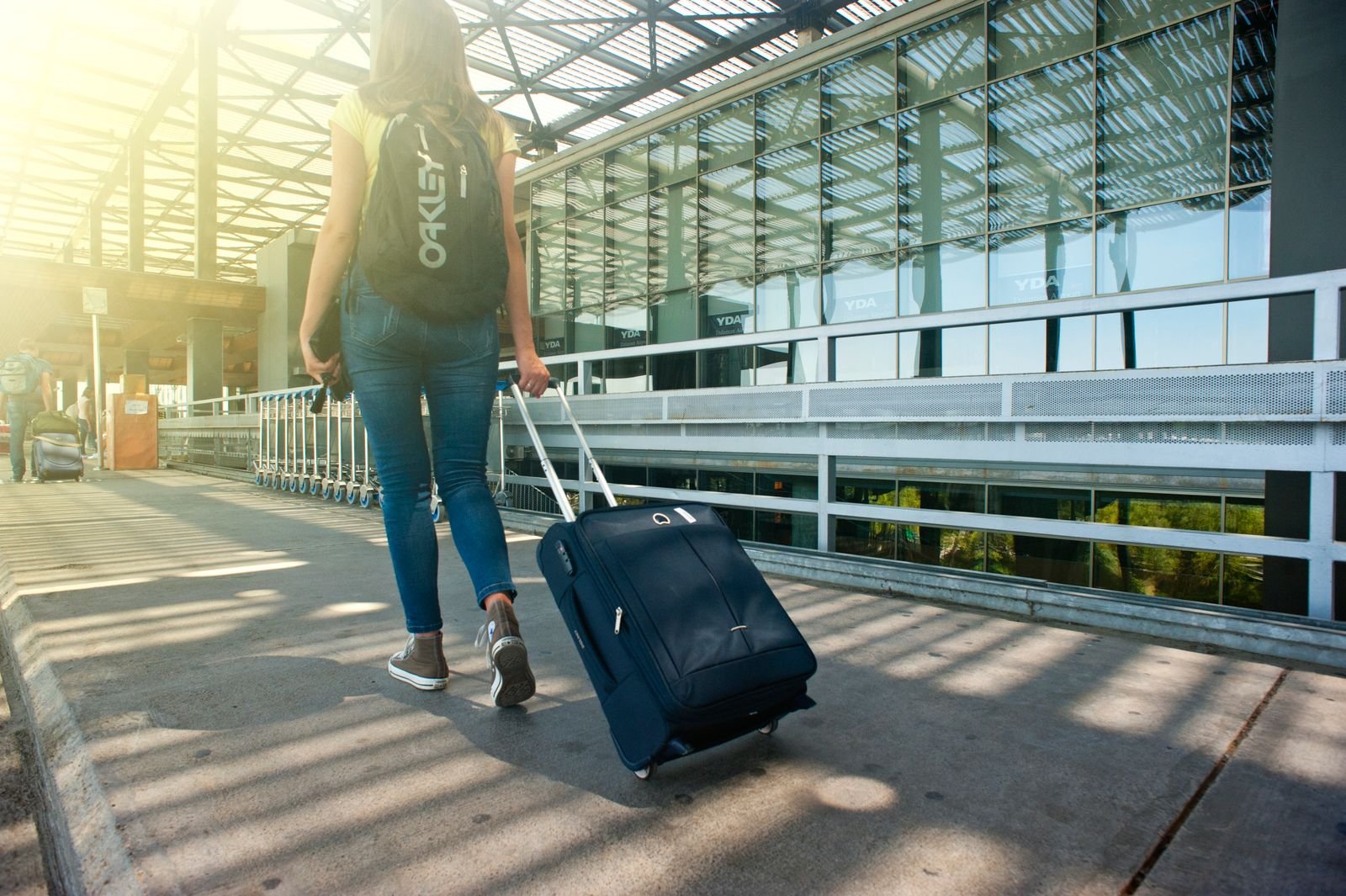
Skyscanner’s UK travel advice sums up where the wider rule has landed since March this year: a maximum of two power banks per passenger, hand luggage only, never in the hold, and each one needs to be individually protected in a pouch or its original box so the terminals can’t short against a set of keys or another battery at the bottom of your bag.
Worth saying: none of this bans power banks. It just narrows what you can carry and where you can leave it. A lot of the panic doing the rounds online overstates it.
Doing the maths on watt-hours
Every power bank has a capacity printed in milliamp-hours, usually somewhere in the 5,000 to 30,000 range. Almost none of them print the watt-hour figure that actually governs what you can fly with, which is annoying, because that’s the number airlines and the rules above actually care about.
The conversion is rough but workable: multiply the mAh figure by the battery’s voltage (3.7V for most lithium-ion cells) and divide by 1,000. A 10,000mAh power bank comes out at roughly 37Wh – nowhere near the limit. A 20,000mAh bank, the size most people actually buy, lands around 74Wh. Still comfortably under.
But a 27,000mAh power bank sits right at 100Wh, and that’s not a hypothetical number – it’s close to what the market’s biggest mainstream chargers now offer. Buy something bigger than that without checking the label, and you might find it needs airline approval you didn’t know to ask for.
None of the airlines actually check with a calculator at the gate. What they check is the label. If the Wh figure isn’t printed anywhere on the device, expect more questions, not fewer – and a small but real chance it gets left behind.
Finding the number that’s never on the retail box
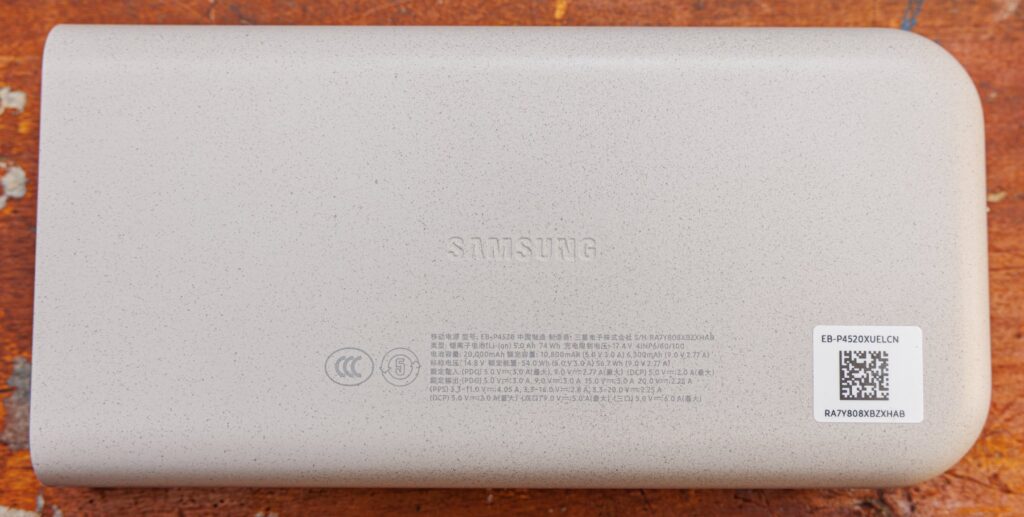
Here’s the annoying bit nobody tells you: the Wh figure is almost never on the box the power bank came in. It’s usually stamped in tiny print on the base or side of the unit itself, sometimes next to a CE mark, sometimes buried in a spec sheet on the manufacturer’s website rather than anywhere you’d see it in a shop.
I test a lot of this gear, and my habit now is boring but useful: the moment a new power bank arrives, I photograph the underside sticker before it goes anywhere near a drawer. Takes ten seconds. Saves you standing at a security tray trying to read tiny grey text on a black plastic case while a queue builds behind you.
A few brands do you the favour of printing the Wh figure clearly on the front – Anker mostly does this now, UGreen sometimes does. Cheaper own-brand banks from supermarkets and pound shops are far more hit and miss, which is one more reason to be a bit wary of the £8 charger on a garage forecourt rack. It’ll probably be fine. But “probably” isn’t much use if you’re the one holding it up at the gate.
The best power banks for flights under £75
I’ve been testing a stack of these since the new rules landed, cross-checking my own numbers against Expert Reviews’ current picks, and the honest answer is that most people are overbuying. You don’t need a 26,000mAh brick to get through a week away; you need enough to top a phone up twice and a capacity that won’t raise an eyebrow at security.
The Anker A1695, part of Anker’s laptop-charging range, is the one I’d actually put in a carry-on this half term. It’s a 25,000mAh unit at around £75, fast enough to charge a laptop as well as a phone, and it sits safely under the 100Wh mark without you having to think about it. It’s not cheap, but it’s the one I’d trust not to cause a conversation at the gate.
If £75 feels like a lot for a battery, the Cuktech 10 Mini does the basic job for about £25. Ten thousand milliamp hours, no wireless charging, no fuss – it’ll get a phone through a long-haul flight and a day at the other end, and it’s small enough to live in a jacket pocket rather than a bag. Nothing to write home about, but it does the job.
The Iniu SnapGo Air, around £55, sits between those two: a 10,000mAh MagSafe wireless bank that snaps to the back of an iPhone and tops it up without a cable. It’s the one I’d actually recommend for a teenager on a half-term flight who’ll lose any cable within an hour of boarding. Just don’t expect it to keep up with a tablet – wireless output tops out well below what a cabled bank can push.
The UGreen Nexode PB771 is the more interesting middle option at around £100 – it’s over my price cap here, but it comes with a built-in MagSafe wireless pad, which is genuinely useful if you’re the sort of person who loses cables. I’ll say the unfashionable thing: wireless charging on a power bank is convenient and inefficient in equal measure. You lose real charge to heat every time you use it, so treat the wireless pad as a nice-to-have for topping up at the gate, not your main charging method on the plane.
And skip the biggest banks entirely if you’re a nervous flyer about the whole process. The Anker Prime A110A, at 26,250mAh and around £180, is a genuinely impressive bit of engineering with a 300W output and its own screen. It’s also sitting at roughly 97Wh – a hair’s breadth under the cap that triggers approval forms. For a fortnight at home charging a laptop, fine. For a half-term flight where you’d rather not explain watt-hours to a gate agent, it’s the wrong tool.
None of this is really about the power bank on its own. It’s one item in a small pile of travel tech that’s worth checking before half term rather than at the departure gate – the same goes for whatever’s charging your noise cancelling earbuds in the seat pocket next to it. A drained power bank on day one of a week away is a much smaller problem than a confiscated one.
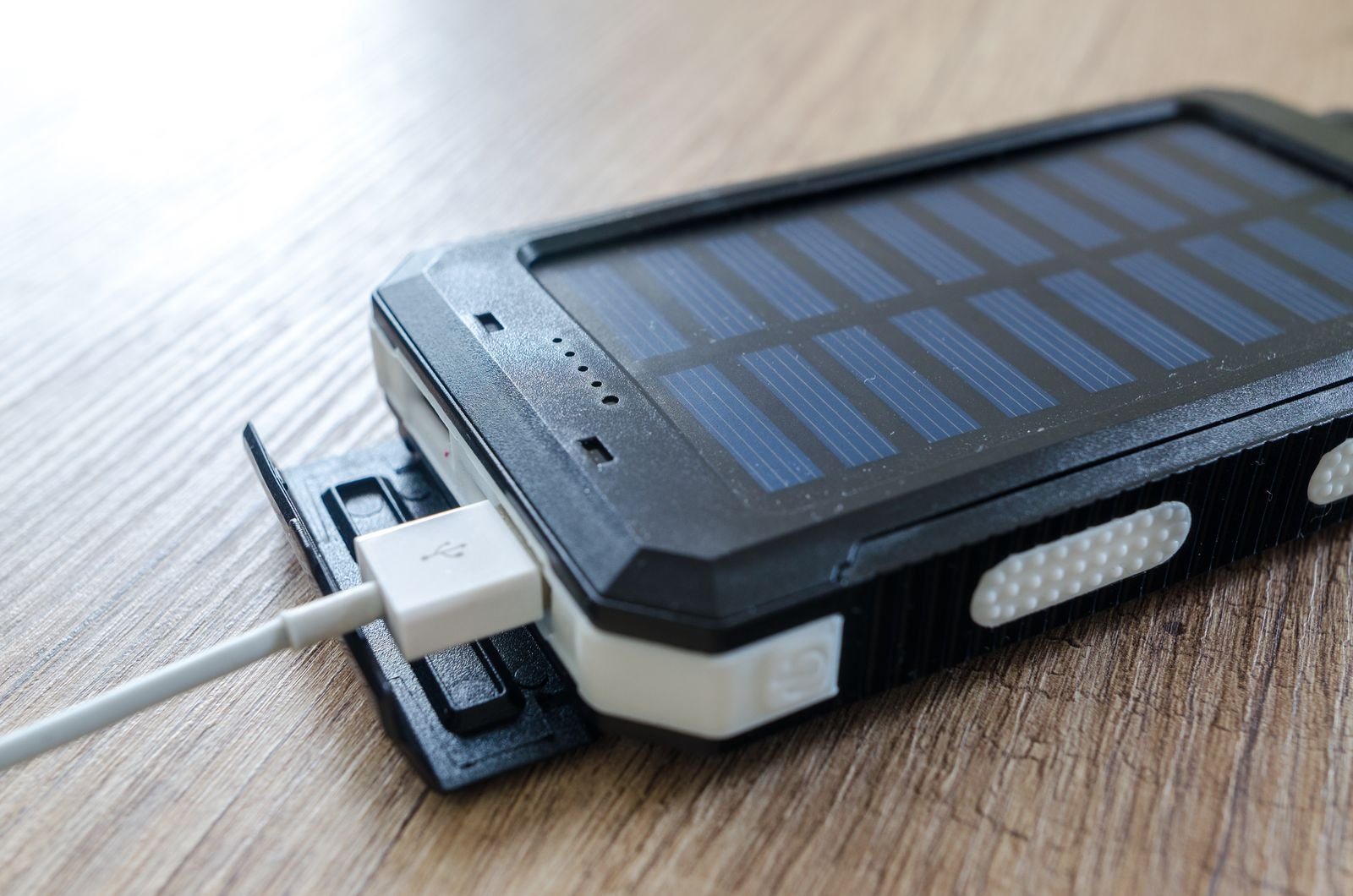
One more thing before you add anything to a basket: check the drawer you already own. Most households have at least one power bank knocking about from a previous trip, a conference goody bag or a well-meaning Christmas stocking, and plenty of them will already sit comfortably under the 100Wh line without you spending a penny. Find the sticker, do the sums above, and only reach for your card if what you’ve got genuinely won’t do the job.
Where the bigger battery stops making sense
There’s a wider point here that goes beyond power banks. British travellers have spent the last few years buying bigger of everything – bigger suitcases, bigger battery packs, bigger everything-proof gadgets – on the assumption that more capacity is always the safer bet. The new rules are the first real pushback on that instinct, at least for anything with a lithium cell in it.
It’s worth pairing your power bank check with a look at your bag itself. Underseat cabin bag rules have also quietly tightened this year, and the two problems compound each other: a bag that’s the wrong shape and a battery that’s the wrong size is a bad combination at a gate with a queue behind you.
If you’re travelling to Europe rather than staying in the UK, it’s also worth sorting your data out before you go rather than relying on airport wifi to charge your devices between flights – an eSIM set up in advance means less time hunting for a socket in the first place.
What happens if you get it wrong
In practice, getting it wrong rarely means the dramatic version. Security will usually just ask you to move a power bank from your checked bag to your hand luggage, which is a minor faff but not a disaster, or ask for proof of the watt-hour rating if it isn’t printed on the device, which you generally can’t produce on the spot. The dramatic version – confiscation – is reserved for anything clearly over 160Wh, a threshold almost no consumer power bank actually reaches.
The Hurghada-Luton diversion is the extreme version of what happens when nobody catches the problem at all. That’s rare. But it’s also completely avoidable, and it cost easyJet a diverted flight, a night in Rome for however many passengers were on board, and a fair bit of bad publicity for something a five-minute pre-flight check would have caught.
Most school half terms run from Monday 26 October to Friday 30 October this year, though Leicester and a handful of other councils break up a week earlier, on 19 October. Whichever week you’re travelling, check your power bank’s Wh rating before it goes anywhere near your case – not the night before, when the only option left is buying something overpriced from the airport.
If you’ve already had a power bank confiscated under the new rules, or found one that survives the 100Wh line without turning into an ornament you carry for nothing, it’s worth comparing notes with whoever you’re travelling with before you both turn up at security with the same problem.