BBC Proms 2026: Why The American-Themed Season Is The Boldest Bet Radio 3 Has Made In Years
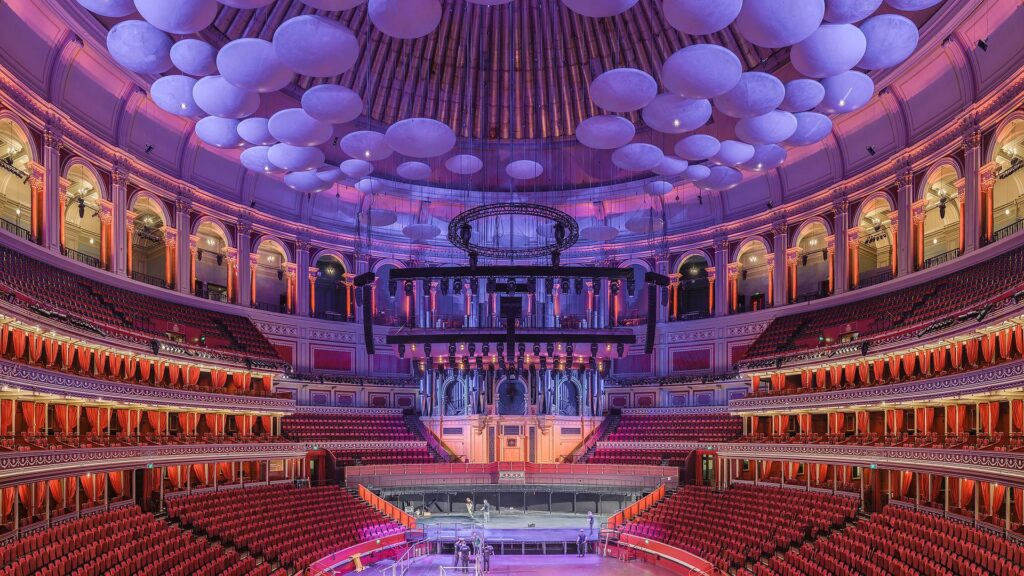
Every summer, a curious thing happens to British classical music. For eight weeks at the Royal Albert Hall, an art form that spends the rest of the year apologising for itself behaves like the most confident genre on earth. The BBC Proms 2026 season, announced in April and running from 17 July to 12 September, leans into that confidence harder than any edition in recent memory. Eighty-six concerts. A season-long pivot towards American music. Yuja Wang playing Barber on the Last Night. A Miles Davis Prom on the centenary of his birth. Sakari Oramo conducting the singalongs. Whatever you think of classical music’s place in 2026, this is not a programme drawn up by an organisation in retreat.
In This Article
- How the BBC Proms 2026 season took shape
- The First Night sets out the argument
- The Last Night quietly does something interesting
- Miles Davis at 100 is the Prom I will be queuing for
- The American orchestras turn London into a transatlantic festival
- The politics will not stay quiet
- What the audience figures actually tell us
- The criticism the season has already attracted
- Where the BBC Proms 2026 fits in a bigger British summer
- The eight concerts I am marking in my calendar
It is also, depending on how you squint at it, either the BBC’s most ambitious cultural project of the year or its most politically awkward. Possibly both at once.
How the BBC Proms 2026 season took shape
The headline theme – a season-long celebration of American music marking 250 years since the signing of the US Declaration of Independence – is the kind of programming idea that sounds straightforward on paper and unravels the moment you look at the calendar around it. Proms director and Radio 3 controller Sam Jackson has been candid about this. The concerts, he told BBC Music Magazine when the season was launched in April, were planned two years in advance. “What we didn’t know then was the way in which world events – particularly those relating to the USA – would take an, at times, unprecedented course.”
Translated from BBC-speak, that is a man telling you he committed to a Bernstein-and-Copland season before any of us knew what 2026 would feel like. The result is a festival that has to do two things at once: deliver an artistically coherent celebration of a national tradition, and refuse to let that celebration be hijacked by any single reading of America in the news cycle. It is a tightrope and you can see Jackson and his team walking it across the programme.
The season runs across 86 concerts in total, 72 at the Royal Albert Hall and 14 at venues elsewhere around the UK, including the residencies in Bristol and the North-East that have quietly become some of the most important things the Proms now does. The American thread runs through it but does not dominate it. There are Britten tributes, world premieres from European composers, late-night chamber recitals, and the usual constellation of Bach, Beethoven and Brahms keeping the architecture together. If you came to this programme cold, you might not immediately notice the American angle. That is, I suspect, the point.
The First Night sets out the argument
The opening concert on 17 July is the cleanest distillation of what Jackson and his team are trying to do. Dalia Stasevska conducts the BBC Symphony Orchestra and Chorus, with the BBC Singers, tenor Thomas Atkins and the South Korean pianist Yunchan Lim – the 2022 Van Cliburn winner who has become one of the most-watched young soloists in the world.
The programme is unusually direct about its intentions. It opens with Copland’s Fanfare for the Common Man, follows with Gershwin’s An American in Paris, and gives Lim Ravel’s Piano Concerto in G Major – a piece written by a Frenchman saturated with American jazz idiom. Three works, three different angles on the same conversation about what American music sounded like to itself and to Europe in the early twentieth century.
The second half opens with a BBC-commissioned world premiere from Josephine Stephenson before culminating in Finzi’s For St Cecilia, a rarely heard British choral work dedicated to the patron saint of music. The pivot is deliberate. The First Night ends not in America but in a particularly English corner of the choral tradition, as if to remind the audience that this is still a British festival looking outwards rather than an American festival visiting London.

The Last Night quietly does something interesting
Last Nights of the Proms are, by tradition, the part of the festival that least rewards close reading. The flag-waving, the Rule Britannia singalong, the slightly self-conscious nationalism – it is a piece of British ritual television more than it is a concert. On 12 September 2026, all that will still happen. Sakari Oramo, the BBC Symphony Orchestra’s Chief Conductor, leads the BBC SO and Chorus alongside the BBC Singers and the Scottish tenor Nicky Spence.
But before the singalongs, something more substantial. Yuja Wang returns to the Proms after three years to give the first-ever Proms performance of Samuel Barber’s Pulitzer Prize-winning Piano Concerto. The concerto is a serious piece of mid-century American writing that does not get programmed often – virtuosic, angular, harmonically restless – and Wang is one of the very few pianists currently working who can make it land in a 5,000-seat hall. Pairing the festival’s most populist evening with one of its least-played American masterworks tells you something about how the programmers are thinking. The rest of the night includes Dukas and world premieres from Camille Pépin and Rachel Portman, the latter of whom is best known to British audiences for film scores including Emma and Chocolat.
The structural choice – using the Last Night as the season’s biggest American statement rather than its biggest British one – is the kind of thing classical music people will be arguing about for months.
Miles Davis at 100 is the Prom I will be queuing for
Of all the events in the 2026 season, the one I find hardest to talk about with restraint is the Miles Davis Prom on 20 August. The trumpeter and bandleader would have turned 100 in May 2026, and the Proms have built a centenary concert around his music. Jazz Proms have been a near-annual feature for a decade now, but a dedicated Davis night sits in a different category. His work effectively rewrote the rules of jazz orchestration three times – Birth of the Cool, Kind of Blue, Bitches Brew – and there is no obvious way to do justice to that arc in a single evening. Whether the Prom attempts a chronological journey or commits to one period will define the concert.

What makes the booking culturally interesting is that the Proms have, for years, been gently teased for treating jazz as a Friday-night sideshow rather than a tradition deserving the same critical weight as European art music. Putting Davis on a weekday and treating his centenary as a flagship event – rather than a late-night curiosity – is a small editorial signal worth registering. If you only attend one event in this year’s season because of the American theme, this is the one I would queue for.
The American orchestras turn London into a transatlantic festival
The other thing the BBC Proms 2026 has done, more quietly than the headline theme, is import a serious chunk of American orchestral firepower. The Los Angeles Philharmonic plays two Proms. The Met Orchestra plays two Proms. American conductors lead several other evenings – Marin Alsop, who has done as much as any single figure to popularise American music in Britain, conducts an American Classics Prom on 24 August featuring Bernstein’s Symphonic Dances from West Side Story, his On the Town – Three Dance Episodes, and Copland’s Appalachian Spring.
Two world premieres anchor the contemporary side. Wynton Marsalis’s Concerto for Orchestra, co-commissioned by the BBC, receives its UK premiere on 13 August. Jessie Montgomery’s new Cello Concerto, a co-commission between the BBC and Lincoln Center, gets its UK premiere on 20 July. Co-commissions like these are how the Proms keep their finger in the global new-music conversation rather than just hosting the international touring circuit, and the fact that both works are by living American composers fits the theme without feeling like a stunt.
The cumulative effect is unusual. For around eight weeks of summer, the Royal Albert Hall becomes something close to a transatlantic festival, where the New York Philharmonic shows up in the same fortnight as the Hallé, and a UK orchestra plays Copland in the afternoon while a US one plays Britten in the evening. That kind of programmatic balance is hard to engineer and easy to underestimate.
The politics will not stay quiet
Any pretence that an American-themed Proms in 2026 could be a politically neutral cultural event collapsed before the brochures had been printed. GB News reported in April that the Proms were “bracing for anti-Trump protests after announcing a pro-American programme for 2026”, noting that the programming arrived as the US President was suing the BBC for $10 billion in a Florida court over the Panorama editing controversy.
It is worth being precise about what this controversy is and is not. The Proms programme is not pro-Trump or anti-Trump – it is a celebration of American composers, almost all of them dead, and most of them politically inconvenient to the current US administration in one way or another. Copland was investigated during the McCarthy hearings. Bernstein was on the FBI’s watchlist for decades. Davis was beaten by a New York policeman outside his own gig in 1959. These are not figures who fit neatly into a triumphalist national narrative.
But the optics are the optics. A “pro-American” Proms season landing in the same year as a $10bn lawsuit between the President and the BBC is not a position you choose, it is a position you find yourself in. Jackson’s defence – that the season was planned long before any of this was foreseeable – is true but also slightly beside the point. The work for the BBC over the next eight weeks is to let the music argue for itself, which is easier said than done when the audience arrives carrying its own headlines.
What the audience figures actually tell us
One of the quiet underreported stories about the Proms is that, in an era of supposed cultural fragmentation, the festival’s numbers are going up rather than down. The 2025 Proms welcomed nearly 300,000 people in person across the season, with 41 sold-out concerts and an average evening attendance above 90 per cent. More than half of the audience at the Royal Albert Hall were attending a Prom for the first time. Twenty per cent of attendees were under 30, and 40 per cent were under 40. Nearly 11,000 under-18s came across the season.
The broadcast numbers are even more striking. Over 10.7 million people watched the 2025 Proms on television and 6.1 million streams were logged across BBC iPlayer and BBC Sounds – a digital audience that has grown by almost a third in a single year. The Last Night alone drew a peak TV audience of 3.7 million, up from 3.3 million in 2024.

It is worth pausing on those figures. The Last Night of the Proms outperforms most original BBC drama in any given week. The total Proms digital audience now sits at the level of a moderately successful Netflix UK series. A festival that spends much of the rest of the year being patronised as a niche pursuit pulls broadcast numbers that would have any commercial TV executive in tears of gratitude. For an example of why that broadcast strength matters, see our piece on why BBC Sounds audio drama has quietly become the UK’s most undervalued entertainment offering.
The Proms is also more regionally distributed than it gets credit for. The 2025 Bristol Beacon residency drew over 6,500 attendees across six performances, with 46 per cent being first-time visitors. The North-East residency drew over 6,000, of whom more than 4,500 had never been to a Prom before. These are not the numbers of a festival quietly dying.
The criticism the season has already attracted
Not every reviewer was won over by the launch. One described the American theme as “a necessary if slightly awkward nod to 250 years since American independence” – polite for “we get it, but did it have to be quite so obvious”. Another critic raised a more structural concern: that the Proms have been leaning increasingly on populist genre programmes (jazz nights, film score evenings, video game music galas) which boost short-term attendance but eat into the slots that could go to riskier classical programming.
That second criticism is the more serious one, and it is not new. The accusation that the Proms have been gently softening their definition of classical music to keep the seats filled has been live since the Doctor Who Prom days. The defence – that an audience that comes for Hans Zimmer might come back for Sibelius – is, like all defences in this vein, partly true and partly self-serving. The 2026 programme is, in fairness, harder to attack on this front than recent editions. The American theme has given the schedulers cover to programme a serious amount of difficult mid-century repertoire that might otherwise have struggled to land. The Barber concerto on the Last Night is the strongest example. So is the Marsalis premiere.
Where the BBC Proms 2026 fits in a bigger British summer
Stand back from the programme and the Proms 2026 looks less like an isolated festival and more like one panel in a wider summer of British cultural ambition. Glastonbury is fallow this year, and the gap it leaves has been visibly redistributing energy across the rest of the calendar – to the smaller summer festivals, to the West End, and now to the Proms. West End summer 2026 is the most ambitious slate London has put on stage in years, and the Proms have effectively positioned themselves as the orchestral counterpart to that surge.
You can read the booking choices in that light. A Yuja Wang Last Night is, in commercial terms, the Proms saying yes, we want a piece of the cultural-event summer that the West End and the festival circuit are also chasing. The American theme, whatever its political baggage, is a story big enough to give the season a centre of gravity that previous editions sometimes lacked. And the regional residencies position the Proms as a national rather than London-centric event – the only major British classical festival that operates at that scale.
It is also worth saying out loud: the music itself is genuinely interesting. Spring 2026 was a strong season for British album releases, and the Proms picks up that momentum and translates it into the live concert hall in a way no other British institution can. For an art form constantly being told it is too niche, too elite, too old, the 2026 season is the most confident reply the Proms have given in years.

The eight concerts I am marking in my calendar
If you only have time for a handful of evenings across the season, these are the ones I am flagging now. First Night on 17 July for the Yunchan Lim Ravel. The Jessie Montgomery Cello Concerto UK premiere on 20 July, because BBC/Lincoln Center co-commissions are usually worth catching. The Wynton Marsalis Concerto for Orchestra UK premiere on 13 August. The Miles Davis centenary Prom on 20 August. Marin Alsop’s American Classics Prom on 24 August for the Bernstein and Copland alone. At least one of the LA Philharmonic Proms. At least one of the Met Orchestra Proms. And the Last Night on 12 September for Yuja Wang playing Barber – a once-in-a-decade booking that has the potential to be the concert people are still talking about at Christmas.
None of these are conventional choices. None of them are the safe Beethoven-Brahms evenings the Proms used to be associated with. That, in itself, tells you most of what you need to know about where the BBC Proms 2026 thinks classical music sits in British culture right now. It is a festival that is finally arguing for its own relevance with the confidence the music has always deserved.
For those of us who watch the season through the broadcast as much as in person, the practical question is what the BBC’s coverage will look like – and whether Radio 3 and iPlayer can carry the political weight of an American-themed season without flinching. The signs from previous years are encouraging. The Proms broadcast operation is one of the BBC’s quiet competencies, and there is no other UK cultural institution that can put 10.7 million people in front of an orchestra without seemingly trying. For more on how UK arts institutions are quietly reinventing themselves for a hybrid audience, see our piece on why UK indie cinemas are reshaping their model in 2026.
Whether the BBC Proms 2026 ends up being remembered as the season that recentred classical music in British cultural life, or the season that ran into political headwinds it could not control, is genuinely an open question. Which Prom are you marking in the diary?