
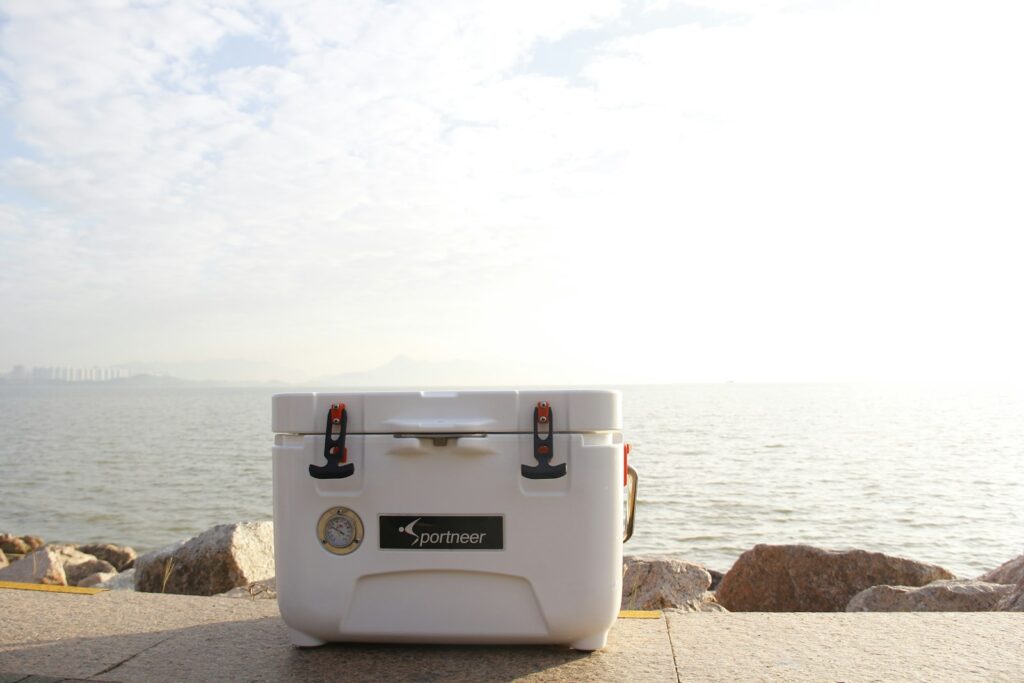
Best Cool Box for Camping 2026: Ice-Retention Claims Are Made in a Lab, Not an August Car Park
The number moulded into the lid of nearly every cool box sold in Britain – “keeps ice for up to five days” – was earned in a climate-controlled test chamber, with the box pre-chilled, packed entirely with ice and never opened once. Your August looks nothing like that. Your August is a black car boot on the M5, a campsite pitch with no shade until 4pm, and a seven-year-old opening the lid every twenty minutes to check on the Frubes. Which is why the best cool box for camping is rarely the one with the biggest number printed on it, and why some of the £200 boxes are solving a problem most British campers don’t have.
In This Article
- Where the five-day ice claim actually comes from
- The £250 rotomoulded box is overkill for a British summer
- The best cool box for camping under £100: four that hold up
- Electric boxes: read this before you're seduced
- The litre rating is nearly as optimistic as the ice one
- Buy it in September, not July
- How to make a £45 box perform like a £150 one
- What this means for festival season
- The verdict
I’ve spent a chunk of this summer – the hottest on record, if the Met Office’s running tally holds through August – watching cool boxes fail in real conditions. Here’s what the marketing leaves out, and what £30 to £100 buys you.
Where the five-day ice claim actually comes from
Ice-retention ratings are produced in lab conditions that flatter the box. The standard industry test runs at a fixed ambient temperature, usually around 20°C, with the box pre-cooled overnight, filled to capacity with ice, taped shut and left alone. Under those rules, a decent rotomoulded box will keep some ice frozen for five, six, even ten days, and the number on the lid is technically true.
But a British campsite in August isn’t a test chamber. A car boot in direct sun can pass 50°C. Every lid opening dumps the cold air out – cold air falls, warm air pours in – and a half-empty box performs far worse than a full one because air warms much faster than ice melts. Real-world testing by Wirecutter, who leave their coolers outdoors and actually open them, consistently finds ice life at roughly a third to a half of the printed claim. A “five-day” box, used the way families actually use one, is a two-day box.
And that’s fine. Most camping trips are two or three nights. You just shouldn’t pay for ten lab-days of retention you’ll never see.
The £250 rotomoulded box is overkill for a British summer
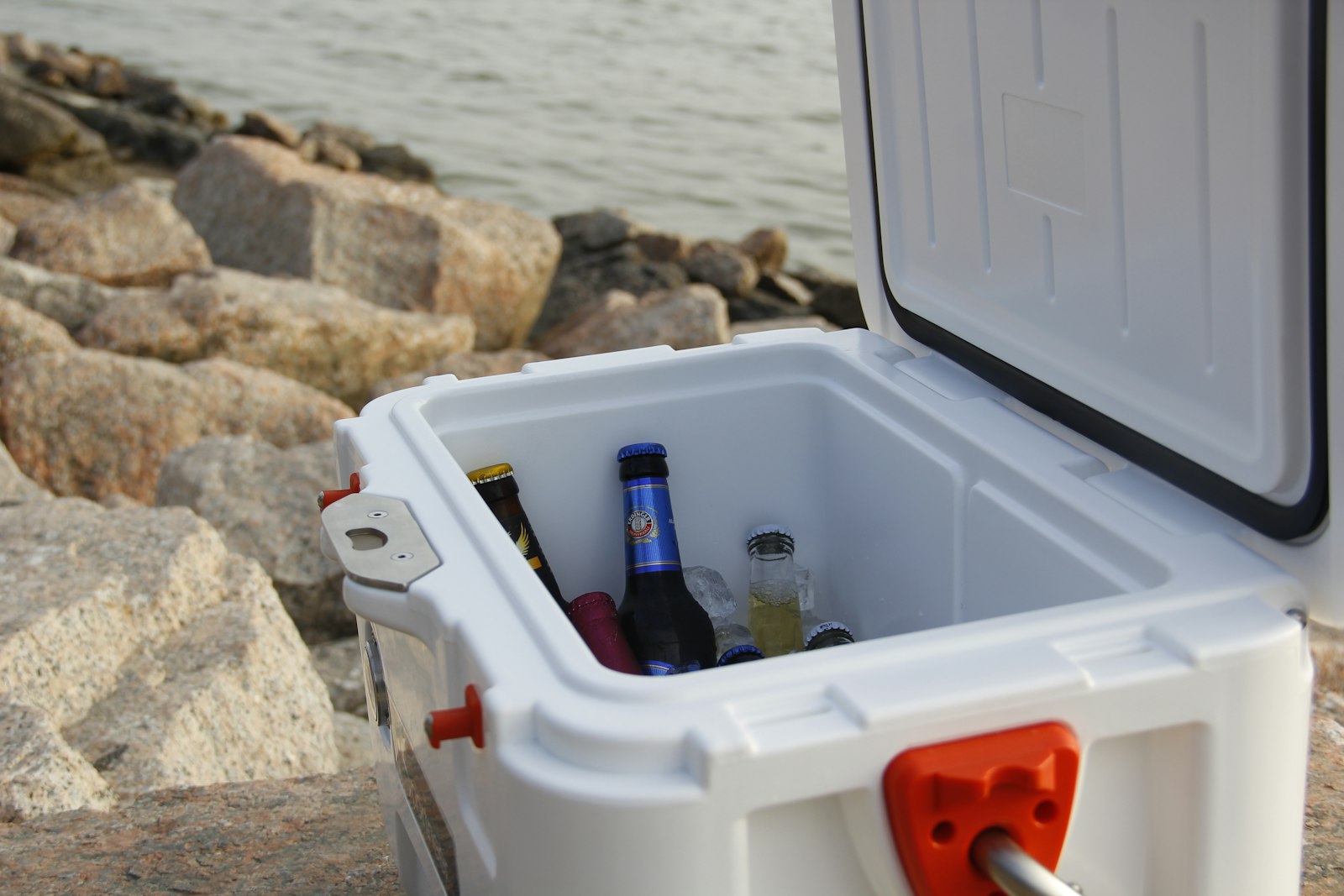
Here’s the opinion that’ll annoy the bushcraft forums: the Yeti-style rotomoulded cooler – and the dozen cheaper imitators that have flooded in since – is the wrong purchase for almost every UK camper. These boxes are built for Arizona tailgates and week-long fishing trips, with 5cm of insulation, bear-proof latches and a price tag between £180 and £350. They’re also monstrously heavy. A 45-litre rotomoulded box weighs 10-12kg before you put anything in it, which matters when the walk from the car park to your pitch is 200 metres of rutted field.
British camping is different. It’s two nights near Hay-on-Wye, a family tent that cost less than £200, and a Tesco Express ten minutes away where you can buy a fresh bag of ice on Saturday morning for £2. In that context, spending £250 on ice retention is like buying a Land Rover for the school run. A well-prepped £45 box covers the same weekend, and the £200 you save covers the campsite fees for the whole trip.
The exception: if you’re doing four-plus nights somewhere genuinely remote – parts of the Highlands, say – the premium box starts earning its keep. Almost nobody reading this is doing that.
The best cool box for camping under £100: four that hold up
These picks come from watching what actually survives a hot weekend in a field, not from a spec sheet. Prices are typical as of late July and bounce around, so check before you buy.
Coleman Xtreme 50QT (about £60). The default answer, and for good reason. It’s a big 47-litre American-style chest with thick insulated walls and a lid that takes an adult’s weight, which doubles as the campsite stool nobody admits to needing. Kept below 8°C for a full three-day weekend in June’s heat when packed properly. The negatives are real, though: the latches feel cheap, the drain plug weeps if you overtighten it, and it’s bulky enough that in a small hatchback it’s the boot, full stop.
Igloo MaxCold 40 (about £45). Lighter and slimmer than the Coleman, easier to carry across a field solo, and the one I’d pick for a couple rather than a family. Gives up maybe half a day of ice life against the Coleman. The lid isn’t sit-proof, and the handles are moulded plastic that digs into your fingers when it’s fully loaded – a folded tea towel fixes that, glamorously.
Halfords 40L Wheeled Cool Box (about £38). The budget pick, and the wheels are the point. Loaded with food, drinks and ice, any 40-litre box is pushing 20kg, and wheels beat handles the moment the car park is more than fifty metres from the pitch. Insulation is a step below the Igloo – this is a one-to-two-night box, not a three-night one. At this price, that’s an honest trade.
Outwell ECOcool 35L (about £95). The only electric box under £100 that makes sense. It’s a thermoelectric cooler, so it drops the internal temperature roughly 16-18°C below ambient while plugged into a 12V socket – brilliant on the drive down, keeping everything cold with zero ice while the car runs. Unplugged, it behaves like a mid-tier passive box. Buy it if your trips involve long drives; skip it if your campsite is an hour away.
What’s missing from this list is anything soft-sided. Soft cool bags are picnic kit. For anything beyond a day in the park, the insulation just isn’t there.
Electric boxes: read this before you’re seduced
Thermoelectric coolers like the Outwell have one dirty secret: that “16°C below ambient” figure. In a 22°C car, that’s a 5°C fridge. In a 35°C tent porch – and tents run hotter than the air outside, as anyone who’s camped through this summer knows – it’s a 19°C food-safety incident. They also draw 45-60 watts continuously, which will flatten a car battery overnight and will chew through a portable power station’s capacity embarrassingly fast.
Proper compressor fridges (Dometic, Alpicool and friends) solve this – they hold a true fridge temperature whatever the weather – but you’re into £250-£400 territory, plus a battery to run them from. That’s van-life kit, not weekend-camping kit.
But the 12V thermoelectric box on the drive, swapped to ice in a passive box on site? That combination works, and it’s how I’d spend £100 if I camped more than three times a summer.
The litre rating is nearly as optimistic as the ice one
Capacity numbers deserve their own small scandal. A “40-litre” cool box is measured brim-full with the lid off, as if you’d fill it with water. In practice you lose a chunk of that to ice – a proper amount of ice, the kind that actually does the job, wants a quarter to a third of the space – and more to the awkward geometry of real food. Nobody packs a cool box with neat one-litre cubes of matter. They pack it with a chicken in a roasting tray someone insisted on bringing.
So here’s what 40 litres holds for a real weekend: two frozen two-litre bottles, a weekend’s meat and dairy for four, butter, milk, a bag of salad that will get crushed regardless, and perhaps eight cans. That’s it. The 25-litre boxes that look like a bargain at £25 are day-trip kit dressed up as camping kit, and the number one regret I hear from first-time family campers is buying too small, then balancing a warm bag-for-life of overflow food on top of the box it wouldn’t fit inside.
Families of four: buy 40 litres minimum, 50 if the car takes it. Couples can live with 30. And if you’re torn between two sizes, the bigger one packed full performs better than the smaller one packed full anyway, because you’ll take the extra space in frozen bottles.
One caveat on going big: check your boot. The Coleman’s footprint is 60cm by 40cm. In a Fiesta, that’s a lifestyle decision.
Buy it in September, not July
If you can limp through this summer with whatever you’ve got, do. Cool boxes follow the same brutal seasonal pricing as barbecues and paddling pools: peak price from May half-term to the August bank holiday, then slashed by 30-50% the moment the schools go back and the retailers need the shelf space for Halloween tat. Last September, Go Outdoors and Halfords were both clearing summer stock within a fortnight of term starting, and the Igloo that’s £45 today was hovering around £30.
Facebook Marketplace runs on the same calendar. September is full of once-used cool boxes from households who did one camping trip, hated it, and want the garage back. A cool box has no moving parts, no battery to degrade and nothing to wear out except hinges you can inspect in ten seconds – it’s about the safest second-hand purchase in the outdoor world. Give it a wash with bicarb to shift the previous owner’s questionable sausage decisions and it’s as good as new.
Buying for a trip that’s already booked for mid-August? You’ve no choice, pay the summer price. But everyone else is shopping at the wrong end of the season.
How to make a £45 box perform like a £150 one
Technique moves the needle more than spend does. The gap between a badly packed premium box and a well-packed budget one is smaller than any manufacturer wants you to believe.
Pre-chill the box the night before – a couple of sacrificial ice cubes or frozen bottles inside, lid shut, in the coolest room you’ve got. A box that starts at 25°C spends its first day using your ice just to cool its own walls.
Freeze two-litre bottles of water instead of buying bagged ice cubes. Block ice melts far slower than cubes because there’s less surface area, the bottles don’t flood your bacon in meltwater, and they become drinking water as they thaw. Bagged cubes are for topping up gaps, not for doing the main job.
Pack it full, keep it in shade, and ration the lid. A full box holds cold dramatically longer than a half-empty one – pad spare space with a rolled towel if you must. And the Food Standards Agency’s chilled-food guidance is blunt on the bit that matters: perishable food should be kept below 8°C, and once it’s been sitting above that for a few hours, it’s a gamble. Meat and dairy live at the bottom, against the ice. Anything for day three should ideally go in frozen.
One more, learned the sweaty way: at the campsite, the shadiest spot moves. The box that started under the picnic table at 9am is in full sun by noon.

What this means for festival season
A quick word for the Reading and Leeds contingent, since the £325 weekend is now under a month away: most major festivals ban glass and some ban large hard coolers from campsites, so check before you lug a 20kg Coleman across three fields. A mid-size soft bag with frozen bottles gets your Friday and Saturday sorted, and after that you’re on warm cider like everyone else. Spend the gear budget on a decent power bank instead – your phone dying on Sunday is a bigger problem than your drinks being warm.
For families doing the August campsite run on a budget – and £1,000 still covers a proper week away if you’re canny – the cool box maths is simple. £45 on the box, £5 on freezing your own bottles, and the difference goes on fish and chips.
The verdict
Buy the Coleman Xtreme if you camp as a family, the Igloo if you don’t, the Halfords wheeled box if £40 is the ceiling, and the Outwell only if your holidays start with a three-hour drive. Ignore the five-day claims entirely and plan around two honest days of cold, topped up with a £2 bag of ice from the nearest shop.
And maybe the more interesting question, as British summers keep breaking their own records: how long before the cool box stops being camping kit and becomes something we all keep by the back door, the way half the country now owns a fan they’d never heard of three summers ago?