

Headphone Dodger Fines in 2026: Nobody Can Fine You £100 on a Bus Yet – and the £35 Sennheisers That Make It Irrelevant
Read this week’s headlines and you’d think a £100 headphone dodger fine is already waiting on the 7.40 bus. It isn’t. As far as I can tell, not one council in England has actually adopted the byelaw that would let anyone issue it.
In This Article
- What the headphone dodger fine actually is (and isn't)
- Why the fine barely matters to your wallet
- The four pairs worth knowing about, with honest caveats
- Noise cancelling is the wrong thing to pay for on a bus
- The cheapest fix of all: use what you already own
- Wired versus wireless for a daily bus journey
- Spending up to £100: is the over-ear pair worth considering?
- Three spec-sheet claims to ignore at this price
- Where the rule could go next
- What to do this week
That gap between the announcement and the enforcement is the whole story, and it changes what you should spend money on. So before any product talk, here’s where the rule genuinely stands.
What the headphone dodger fine actually is (and isn’t)
On 19 October the Department for Transport put out guidance on nuisance behaviour on buses, and the coverage that followed used the same shorthand: play music or videos out loud, risk up to £100. The power behind it comes from the Bus Services Act 2025, and IanVisits’ write-up of the announcement says that power came into force on 5 August 2026.
But a power isn’t a rule. Each local transport authority still has to write its own byelaw banning music on buses, and each one needs sign-off from the Transport Secretary before anybody can enforce it. The same report is clear that this applies outside London, because Transport for London already has its own bylaw covering buses, trams and rail.
Then there’s the money. Up to £100 is the bus figure. Trains are a different regime: existing powers already allow a passenger who won’t stop to be removed, or fined up to £1,000, according to EDMTunes’ report of the same announcement. So the headline number most people have in their heads belongs to the one mode of transport where nothing is enforceable yet.
Enforcement won’t fall to drivers. Both reports say it will be authorised officers, including transport safety officers and the police, working on a stepped approach: a word first, an explanation second, a penalty only if needed. Transport Secretary Heidi Alexander’s quote is the sort of thing you’d expect: it’s frustrating when “the actions of an inconsiderate few spoil journeys for the rest of us”.
One more wrinkle. A TechRadar piece published on 21 October said the fines start “from next Monday”. I couldn’t square that with the byelaw process described above, and I couldn’t find a single council that’s adopted one. I’m not saying that report is wrong about some local scheme. I’m saying I can’t confirm it, and you shouldn’t buy anything in a panic on the strength of it.

Why the fine barely matters to your wallet
Here’s my slightly awkward view: if £100 is what’s pushing you to buy headphones, you’ve misread the problem. The fine, if it ever reaches your local route, will land on a small number of people who were already being antisocial. Nobody’s going to ask you for proof of purchase.
But the nudge is still useful, because it exposes how many of us treat a phone speaker as a perfectly acceptable audio system. You haven’t got headphones in your bag because the last pair died, or the cable frayed, or you lent them to someone. The cost of replacing them has always been tiny compared with the cost of putting up with it.
So think of £100 as the ceiling and £35 as the floor. The interesting question is where between those two numbers you stop getting better value.
The four pairs worth knowing about, with honest caveats
I’m working from published reviews here, not from a pile of boxes on my desk, and I’d rather say so than pretend otherwise. The prices below come from TechRadar’s cheap headphones roundup, published on 21 October, so check the shelf price before you pay.
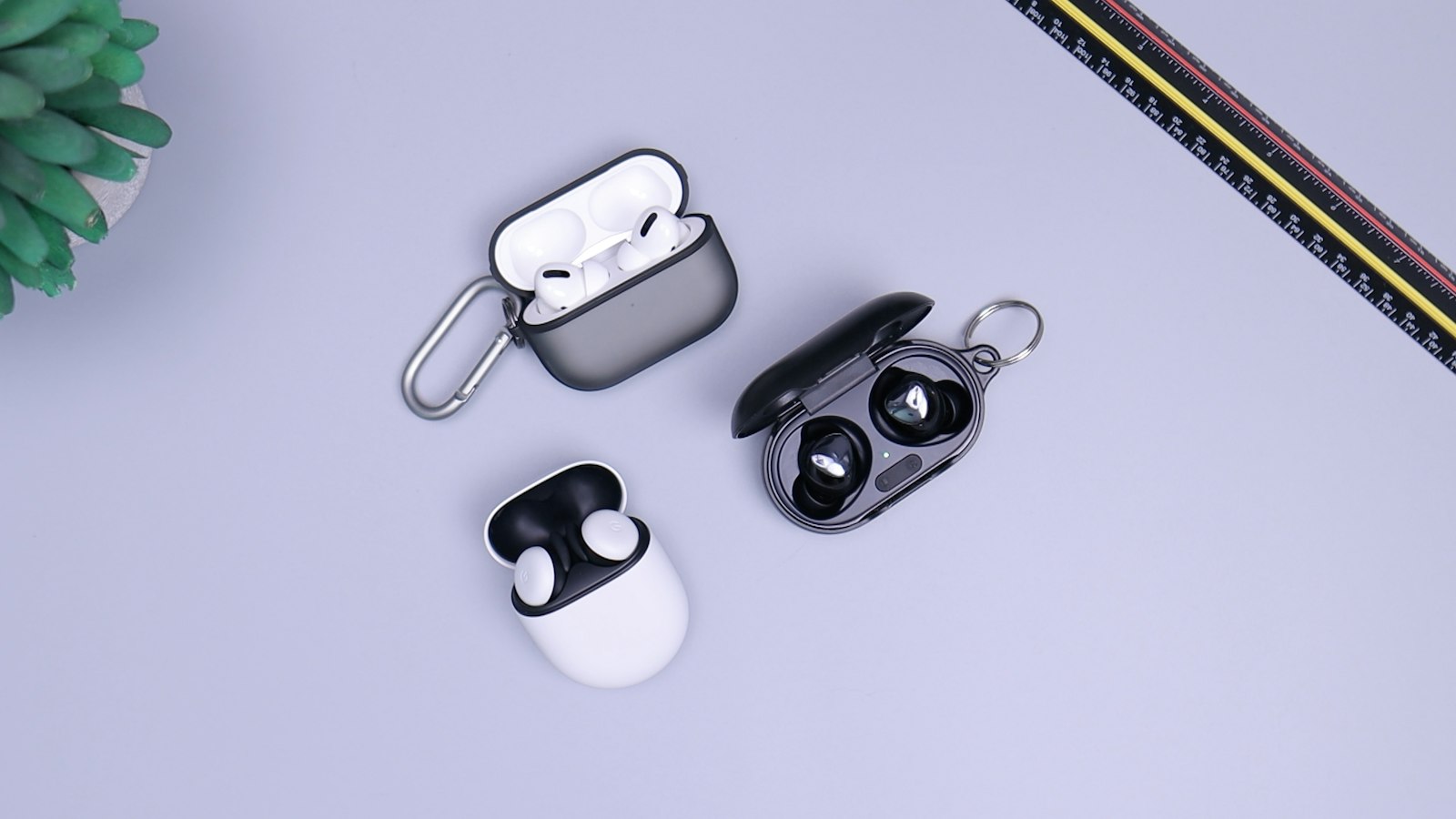
Sennheiser CX 80U, £34.99. Wired earbuds that plug into a USB-C socket, so no headphone jack and no battery. TechRadar gave them 4.5 stars out of 5. That’s a strong score for a pair costing less than a takeaway for two, and it’s the one I’d put at the top for anyone with a USB-C phone.
The catch is obvious. If your phone still has a Lightning port, or you’re carrying an older Android with a headphone socket, these won’t plug in without an adapter. And a cable on a crowded bus is a cable that gets caught on a bag strap.
Sony WH-CH530N, about £50. On-ear headphones with noise cancelling. TechRadar says it hasn’t finished testing this exact model. Its predecessor, the WH-CH520, got 4.5 stars, which is a decent sign but not a verdict. I’d treat the CH530N as likely good, not proven good, until a full review lands.
JLab JBuds Mini ANC, £49.99. Tiny wireless noise-cancelling earbuds. TechRadar doesn’t give a star rating in that piece, only that they’re small and won’t break the bank. That’s thin evidence, so I’d hold off on these until there’s a proper review with measurements.
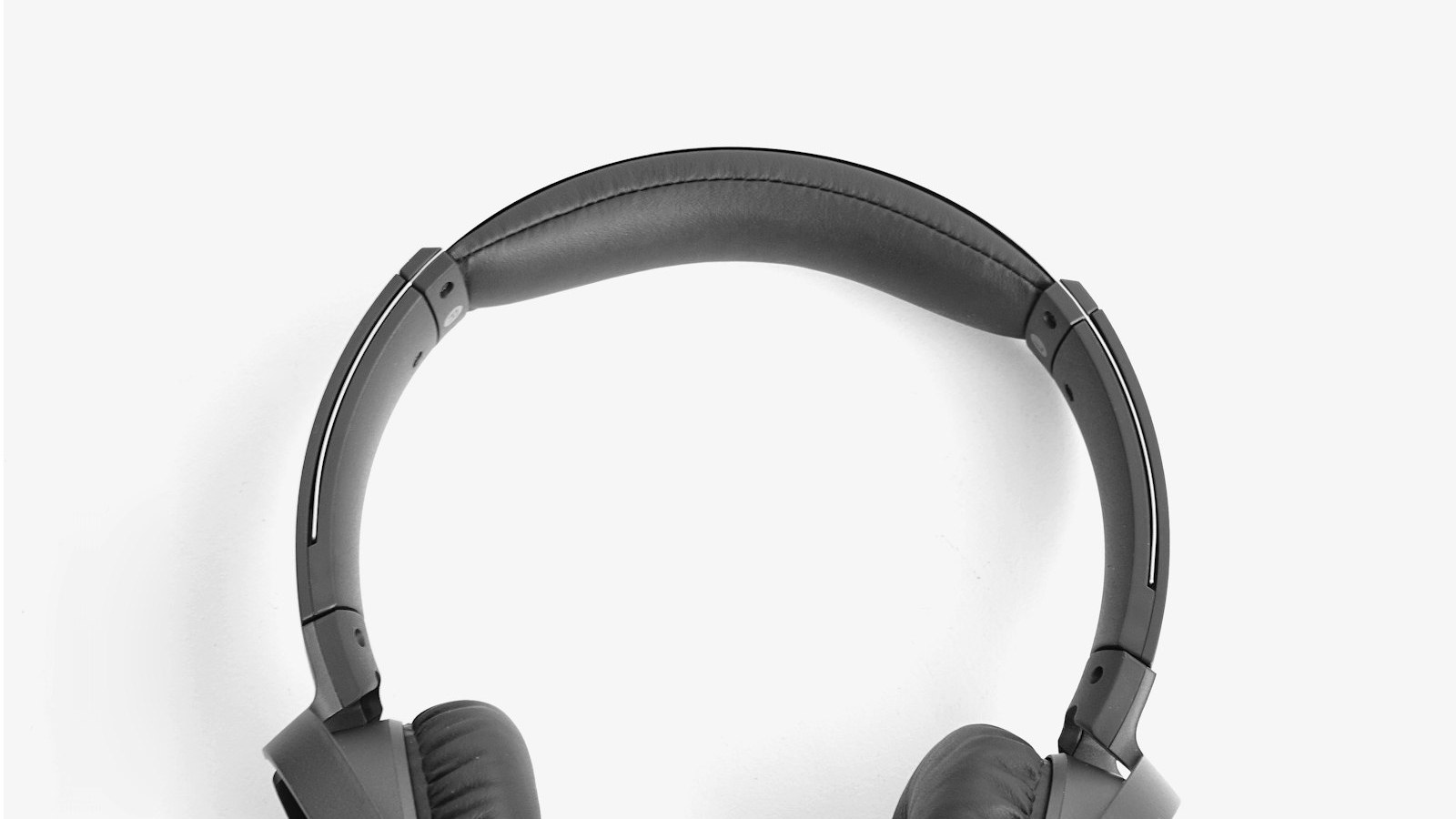
Sony WH-CH730N, just under £99. The over-ear alternative in the same roundup, rated “a solid four stars”. It sits right at the top of the budget and is the only one of the four that feels like a proper pair of headphones rather than a stopgap.
One thing missing from that list: a proper test of how much each pair leaks at bus volume. None of the reviews I’ve seen measure it, which is a shame, because leakage is the only spec that bears on the fine. Closed-back over-ears and well-sealed earbuds do best. Open-backed designs and loose-fitting buds do worst. If you buy any of these, test them on a quiet evening before the first commute, and send them back if a friend across the room can hear your playlist.
Noise cancelling is the wrong thing to pay for on a bus
Now the contrarian bit. For a bus commute under £60, I’d skip noise cancelling altogether.
Active noise cancelling is good at steady low-frequency drone: engines, tube rumble, aircraft cabins. That’s why it earns its keep on a long-haul flight. A bus is a different noise problem. The loud parts are other people, the ding of the stop button, the driver’s announcements, and that’s mostly mid-range sound that cheap ANC doesn’t touch much.
And there’s a safety angle that rarely gets said plainly. If you can’t hear the bus doors, or a cyclist coming up the inside at a stop, you’ve swapped a social problem for a physical one. A well-fitting pair of earbuds with the volume at a sensible level does the job and leaves you aware of your surroundings.
That’s why the £35 Sennheisers make more sense to me than the £50 Sony. You’re paying for a good driver and a good seal, not a feature that mostly works at the wrong frequencies for your journey. Spend the spare £15 on a decent case and a spare cable.
The cheapest fix of all: use what you already own
There’s a drawer in most homes holding at least one pair of earbuds. The wired pair that came free with a phone, the set from a flight, a spare from a gym bag. They cost nothing, and they stop the fine problem dead.
The honest downsides are comfort and sound. Free earbuds usually leak sound at moderate volume, which is exactly what the byelaw is aimed at: if the person next to you can hear your podcast through your headphones, you’re still the one being annoying. So the thing to check isn’t whether you own headphones but whether they keep the sound in your head.
Try this on a quiet evening. Play something with plenty of treble at your usual bus volume, hold the earbuds a foot from your ear, and see whether you can follow the track. If you can, so can the passenger beside you.
Wired versus wireless for a daily bus journey
I’d lean wired for the cheapest end of this market, and the reasons are boring ones. A wired pair doesn’t need charging, doesn’t drop out when you stand up and put the phone in a back pocket, and can’t be left in a case on the kitchen counter at 7am.
Wireless wins on convenience: no cable snagging on a coat button, and calls are easier to take. But the good wireless ones cost more, and the cheap ones are where battery life disappoints. If you ride a bus twice a day for forty minutes, a pair with five hours of charge is fine on paper and annoying by Thursday.
And if you can’t decide, remember that most people end up owning both. A wired pair that lives in your work bag and a wireless one for the gym is a perfectly sensible split.
Spending up to £100: is the over-ear pair worth considering?
The WH-CH730N at just under £99 is the only one here that justifies the jump. A four-star rating is respectable, and an over-ear design keeps sound in better than most earbuds do at the same volume, which is the actual job.
But I wouldn’t buy it just to dodge a fine. If you’ve already got a decent pair you like, you don’t need another. If you’re replacing something worn out, or you want one pair for the train, the office and the sofa, then the extra cost starts to look reasonable. We looked at the wider market in our guide to noise cancelling headphones under £100, and the same trade-offs apply there.
Timing matters too. Black Friday is on 27 November, five weeks away. Our Black Friday tech deals breakdown goes through what’s worth waiting for. My view: wait if you’re replacing something that still works, and don’t wait if your current pair has died, because five weeks of tinny phone speaker is a long time for everyone else on your route.
Three spec-sheet claims to ignore at this price
Budget headphones come with a lot of numbers on the box, and most of them don’t help you pick. Battery life in the “up to 50 hours” range is usually measured with noise cancelling off and the volume low, so your real figure will be well short of that. A Bluetooth version number tells you very little about whether the connection holds in a crowded carriage. And “hi-res audio” badges mean almost nothing when the source is a streaming app on a bus with the engine running.
What does matter is dull. How it fits, whether the earbud tips come in more than two sizes, how long the cable is, and whether the controls work with gloves on in January. Read the reviews for those, not the headline score.
Where the rule could go next
I’m guessing here, but it’s worth thinking through. If a handful of councils adopt the byelaw quickly, expect a rash of “headphone dodger” stories about the first fines, and a patchwork where the rule applies on one side of a county line and not the other. If most do nothing, the guidance quietly becomes background noise and the £100 figure turns into a deterrent nobody tests.
Either way, the sensible move doesn’t change. Keep the sound to yourself, buy something sensible and cheap, and don’t let a headline sell you a £250 pair you don’t need.
What to do this week
If you commute by bus and your phone has USB-C, the £35 Sennheisers are the sensible answer and I’d buy them without agonising. If you’ve got an older phone, any decent wired pair with a good fit will do, and half of you already own one.
If you travel by train, the stakes are higher because the existing powers go up to £1,000, and the guidance describes a stepped approach, so a conversation comes before a penalty. And if you’re heading away for half-term, a pair of cheap wired earbuds is also the thing that saves you when your wireless pair dies mid-flight. We covered the other half-term gear in our power bank guide for flights.
The bigger question is what happens next. Will your local council bother to write the byelaw, and if it does, will anyone actually be there to enforce it on a Tuesday night route at 9pm? Has your local council said a word about it yet?