
The £1,500 Commuter E-Bike Question: What Your Money Buys in 2026 – And Where It’s Wasted
A commuter e-bike under £1,500 now does the same job as a £3,000 one did four years ago, and almost nobody selling the expensive ones wants to talk about it. The motors come from the same handful of factories. The batteries use the same cells. What you’re paying for above that line is mostly weight savings, brand and a nicer app – none of which gets you to work faster, because every legal e-bike in Britain stops helping at 15.5mph anyway.
In This Article
- Why £1,500 is the line that matters
- The best commuter e-bikes under £1,500 in 2026
- Hub motor or mid-drive: the spec that doesn't matter as much as forums say
- The battery is where the cheap bikes will hurt you
- What it costs to run, honestly
- The law, in one paragraph
- The bits owners wish someone had told them
- Questions that keep coming up
- Who should actually switch
And yet the cheap end is genuinely dangerous territory, in one case literally. So the question isn’t whether £1,500 buys a proper commuter e-bike in 2026. It does. The question is which corners the good ones cut, which corners the bad ones cut, and how you tell the difference from a spec sheet written by the marketing department.
I’ve spent the last few months paying attention to what’s actually locked up outside offices and train stations, and the answer has changed. It’s not carbon road bikes. It’s hub-motor hybrids with mudguards, mostly from brands your dad hasn’t heard of.
Why £1,500 is the line that matters
Below about £800, something important has been sacrificed – usually the battery, sometimes the brakes, occasionally the company’s willingness to exist next year when you need a warranty claim. Above £2,000 you’re into mid-drive motors and lighter frames, which are lovely and largely irrelevant for a five-mile flat commute.
Between those points sits the sweet spot, and £1,500 is a meaningful ceiling for another reason: salary sacrifice. The Cycle to Work scheme covers e-bikes, and for a higher-rate taxpayer it can knock roughly a third off the effective cost. A £1,500 bike that really costs you closer to £1,000, spread over twelve monthly payslips, is competing directly with a single zone 1-3 travelcard. Not a year of them. One season ticket. The government’s own Cycle to Work implementation guidance sets out how the scheme works if your employer offers it, and if they don’t, it costs them nothing to start.
That arithmetic is why e-bikes have quietly become a commuting decision rather than a cycling one. The people buying them aren’t lycra people. They’re people who did the sums on the 7:42 to London Bridge.

The best commuter e-bikes under £1,500 in 2026
Names, because a buying guide without names is a horoscope.
Decathlon’s Elops range remains the value benchmark. The step-through city models hover around the £1,000 to £1,300 mark, come with mudguards, a rack and lights already fitted, and Decathlon’s network of stores means a real human can service it. The finish is unglamorous and the weight is honest – which is to say, considerable. As a pure get-to-work tool, it’s the one I’d point most people at first.
Carrera’s electric line at Halfords – the Subway E and its siblings – trades on the same logic: around £1,100 to £1,400, hub motor, serviceable anywhere, and Halfords will build it for you. The battery integration is tidier than the price suggests. Ride feel is firmly “appliance”, but an appliance is what a commuter bike is.
Tenways’ CGO600 sits at the top of the budget, usually just under £1,500, and is the stylish one: a belt drive instead of a chain, meaning no oil, no rusted links, no trouser clips. A belt on a commuter bike is a genuine daily-life upgrade. The catch is the single-speed setup – fine for flat cities, harder work in Sheffield or Bristol – and a support network that’s improved but still isn’t a shop on your high street.
Estarli’s e20 and e28, from a small British outfit, deserve a mention around the £1,300 mark, above all the folding e20 for anyone combining the bike with a train. And on folders generally: the MiRider One is the budget answer to the Brompton Electric question. The Brompton is a beautiful object that folds smaller and rides better, and it costs the better part of twice as much. For a machine that spends its life under a desk and in a luggage rack, I don’t think the difference survives contact with the price tag. That’ll annoy Brompton owners, and I’m comfortable with that.
What all of these share: hub motors, batteries in the 360Wh to 500Wh range, mechanical or entry hydraulic disc brakes, and claimed ranges you should mentally cut by a third.
| Bike | Typical price | Sold and serviced by | Stand-out feature | The catch |
|---|---|---|---|---|
| Decathlon Elops city range | £1,000-£1,300 | Decathlon stores | Rack, mudguards and lights fitted as standard | Heavy, and plain with it |
| Carrera Subway E | £1,100-£1,400 | Halfords, nationwide | Tidy battery integration for the money | Ride feel is pure appliance |
| Tenways CGO600 | Just under £1,500 | Direct, online | Belt drive – no oil, no rusted chain | Single speed struggles in hilly cities |
| Estarli e20 / e28 | Around £1,300 | Direct, small UK outfit | The e20 folds for train commutes | Small dealer network |
| MiRider One | Around £1,300 | Direct, online | Folds nearly Brompton-small for far less money | Short range – a train-leg bike, not a tourer |
Test ride at least one before you decide anything. Ten minutes on the bike tells you more than ten hours of reviews.
As for the big names – Specialized, Cube, Giant and friends all make excellent commuter e-bikes that start comfortably north of £2,000, and the difference you’re paying for is real: lighter frames, torque sensors that respond to how hard you pedal rather than whether you pedal, better suspension forks. It’s also, for a flat urban commute, mostly wasted. The one scenario where I’d stretch is end-of-season sales, when last year’s £2,200 bike drops to £1,600 or so and quietly embarrasses everything else in this piece. If you can wait until the autumn clearouts and don’t mind last year’s paint, that’s the best pound-for-pound buy in the entire market. Impatient buyers in July don’t get that option, which is why this article exists.
Hub motor or mid-drive: the spec that doesn’t matter as much as forums say
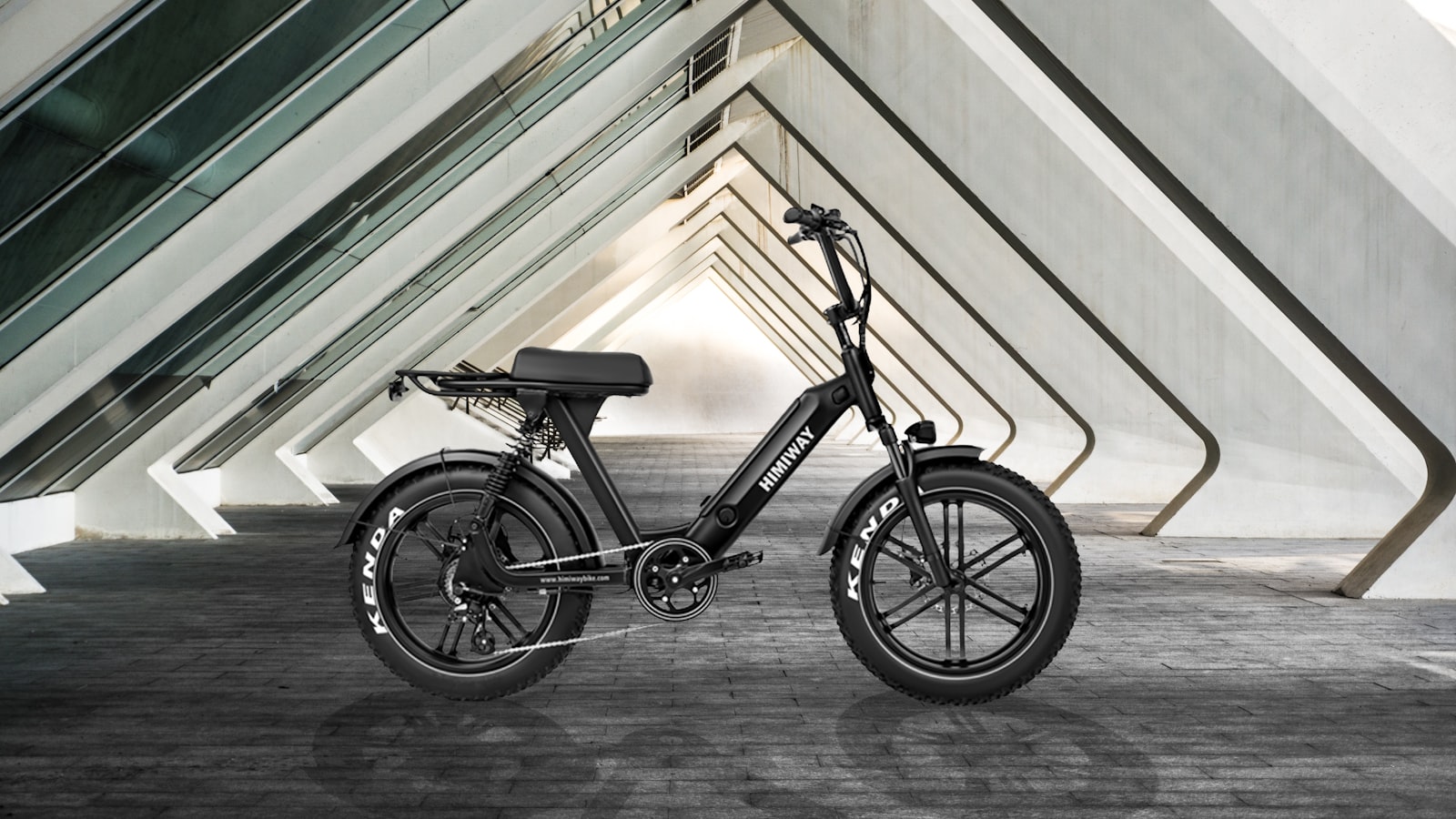
Cycling forums will tell you a mid-drive motor – the type mounted at the pedals, as on Bosch-equipped bikes – is the only serious choice. For touring and proper hills, they’ve a point. For commuting, it’s mostly snobbery. A rear hub motor is simpler, cheaper to replace, and doesn’t put extra wear through your chain. The whole drivetrain is lower-stress precisely because the motor isn’t pushing through it.
The numbers that actually predict whether you’ll like the bike are torque and battery capacity. Torque – measured in newton metres – is what gets you moving from the lights and up the railway bridge; under 40Nm feels weedy with a loaded pannier, 50Nm and up feels effortless. Battery capacity in watt-hours tells you real range the way “up to 60 miles” never will. A 460Wh battery ridden in a British winter, in the highest assist mode, with a headwind, is a 25-to-30-mile battery. For a ten-mile round trip, that’s three days between charges. Range anxiety is a caravan problem that wandered into e-bike marketing; for commuters it barely exists.
The battery is where the cheap bikes will hurt you
Here’s the part that should be printed on the box. The £600 e-bikes on online marketplaces – the ones with 1,000W stickers and throttles – are frequently not road-legal in the UK, and their batteries are the reason e-bike fires became a fire service talking point. The London Fire Brigade’s e-bike and e-scooter safety guidance is blunt about the pattern: unbranded batteries, mismatched chargers and dodgy conversion kits feature in a disproportionate share of incidents. Lithium fires in hallways are not a theoretical risk; they’re why some landlords and train operators started tightening rules on where these things can be charged and carried.
None of this means e-bikes are dangerous. It means cells and battery management systems are exactly where a £600 bike found its £900 saving. Every bike named above uses branded cells with proper certification. That’s a large part of what the extra money buys, and it’s invisible in photos.
Two practical rules. Buy the bike, not a conversion kit, unless you know precisely what you’re doing. And charge it where you’d be comfortable having a small, angry campfire – not blocking your only exit. The same logic applies to any big lithium battery in the house, portable power stations included.
What it costs to run, honestly
Charging is the good news: a full charge of a 460Wh battery costs somewhere around 12 to 15p at current electricity prices. Call it £25 a year for a daily commuter. Nothing else in British transport costs £25 a year.
The honest additions are elsewhere. Brake pads wear faster than on a normal bike, because you’re stopping 25kg of bike plus shopping from higher average speeds – budget for a service or two a year, £60 to £100 each. Insurance is worth taking seriously because thieves like e-bikes even more than you do; specialist cycle cover for a £1,500 bike runs £80 to £150 a year depending on postcode, and your home contents policy may cover it away from home only if you ask. A proper Sold Secure lock is £60 to £100, non-negotiable, and the battery should come indoors with you.
Stack all of it up – bike over five years, insurance, servicing, lock, electricity – and you land somewhere near £700 a year, falling after year one. It’s the same calculation that made dash cams a rational £100 spend for drivers: unglamorous kit, boring maths, clear answer.
The law, in one paragraph
A road-legal e-bike in Britain – an EAPC, officially – assists only while you pedal, cuts out at 15.5mph, and has a motor rated at 250W continuous. Meet those rules and it’s legally just a bicycle: no licence, no tax, no insurance requirement, ride it anywhere a pushbike can go, age 14 and up. The full rules are on gov.uk’s electric bike pages. Anything with a functioning throttle above walking pace or a 500W badge is legally a motorbike wearing a costume, with everything that implies about insurance, helmets and points on a licence you may not have. Retailers at the grey end won’t volunteer this. Now you know anyway.
The bits owners wish someone had told them
A few things surface again and again once the novelty wears off, and none of them appear in product listings.
The battery hates winter. Cold cells deliver noticeably less range from December to February, and leaving the battery on the bike overnight in a freezing shed shortens its life. Bring it in. It charges faster warm anyway.
Panniers change everything. Riding with a rucksack on an e-bike is self-inflicted misery – a sweaty back was the thing you were paying to avoid. A £40 pannier on the rack that every bike above already has turns the machine into a genuine car replacement for the big shop, and this, more than the commute itself, is the point at which people report the second car starting to look pointless.
And depreciation is brutal but useful. E-bikes shed value fast – which stings on the way out, but means the nearly-new market is full of barely ridden machines from January optimists. A one-year-old bike with a receipt, a healthy battery report and half its warranty left is the thrifty buyer’s cheat code, the same logic that applies to most travel and commuter kit: let someone else pay the new-thing tax.

Questions that keep coming up
Do I need insurance? Legally, no – a road-legal e-bike is a bicycle, and bicycles carry no insurance requirement. In practice, insuring a £1,500 machine that lives locked outside a station is just sensible. Some home contents policies will add it for a few pounds a month; specialist cover is better if you can stretch to it, because it usually includes the battery, which contents policies have a habit of quietly excluding.
Can it live outside? The bike, grudgingly, yes – a waterproof cover helps and these machines are built for British weather. The battery, no. Cold shortens its life and dents its range, and a battery kept indoors charges faster anyway. Most owners end up with the battery under the stairs and the bike in the yard within a fortnight.
How long before the battery dies? Reckon on roughly 500 full charge cycles before capacity drops noticeably – for a commuter charging twice a week, that’s four or five years. Replacement packs for the bikes above tend to run £250 to £400. Worth factoring in. Not worth losing sleep over.
Will my local bike shop touch it? The mechanical bits – brakes, tyres, gears – yes, any shop can do those. Motor and electrical faults go back to the brand under warranty, which is exactly why the support network matters, and why the Decathlon and Halfords options keep winning on boring practicality. A brilliant bike from a brand with no UK presence is a brilliant bike until the controller fails.
Who should actually switch
If your commute is under ten miles each way, mostly urban, and currently costs you four figures a year in fares or fuel, the case is close to airtight – and unlike the gym, it survives January. You’ll arrive less sweaty than on a pushbike, which is the entire point of the motor. Pair it with decent waterproofs rather than checking the forecast like a supplicant; commuters in Copenhagen and Utrecht manage in worse weather than Manchester’s, whatever Mancunians claim. And if festival season or holidays are more your reason for two wheels, the battery-powered kit that survives a wet field is a different shopping list entirely.
Skip it if your ride involves a serious hill and you hate single speeds, in which case stretch to gears; if you’ve nowhere secure to keep it at either end; or if you were only ever going to buy the £600 marketplace special. That last bike isn’t a bargain. It’s a deposit on a problem.
The stranger thought is what happens to the 7:42 if even a tenth of its passengers do this maths. Rail operators publish their fare rises every year like clockwork, confident the passengers will grumble and pay. How many £1,300 bikes locked up outside the station does it take before that confidence stops being justified?