
The Odyssey IMAX Tickets UK: Why Britain Booked Its Biggest 2026 Film A Year Early
In July 2025, hundreds of people in London paid good money for a cinema ticket to a film nobody had seen a frame of. No trailer, no poster worth the name, no confirmed running time. Just a date – 17 July 2026 – and two words: Christopher Nolan. If you’ve typed “The Odyssey IMAX tickets UK” into a search bar recently, you already know how that ended. The BFI IMAX’s 70mm screenings sold out roughly a year in advance, the earliest ticket release in IMAX’s history, and the resale vultures have been circling ever since. And now the film itself is nearly here, premiering in London on 6 July before opening across the country on the 17th.
In This Article
- The queue formed before anyone had seen a frame
- What “shot entirely on IMAX” actually means
- The Odyssey IMAX tickets UK: where you can still book
- Homer, but make it Nolan
- Do you need to read the poem first?
- The $250 million bet that moved Spider-Man out of the way
- What nobody knows yet
- The awkward part: the 70mm gold rush is partly theatre
- Cinema as an occasion again
A cinema ticket behaving like a Glastonbury ticket is new. It’s worth asking why it happened, whether the fuss is justified, and – more usefully – where you can still get a seat.
The queue formed before anyone had seen a frame
Start with the raw strangeness of the timeline. Universal put IMAX 70mm tickets for The Odyssey on sale in July 2025, twelve full months before release. Nothing like it had been tried before; studios normally hold tickets back until a few weeks out, when the marketing machine is at full roar. This time the marketing machine barely existed yet. A teaser was playing in cinemas, unavailable online, and that was about it.
It didn’t matter. The BFI IMAX on the South Bank – the biggest screen in Britain – watched its 70mm shows vanish, alongside famous rooms like the TCL Chinese in Los Angeles and the Lincoln Square IMAX in New York. When the wider ticket release came this June, the American chain AMC reported its biggest first-day presale for any film since 2022, with buyers stuck in online queues for over an hour. For a film adapted from a poem written nearly three thousand years ago, that’s not bad going.
Some of this is simple Nolan arithmetic. Oppenheimer took $957 million worldwide against a $100 million budget, according to figures NME cites in its rundown of the production, and it did so as a three-hour biopic about a physicist, largely dialogue, partly in black and white. Studios spent decades insisting audiences wouldn’t turn up for that sort of thing. They turned up in their millions, twice over if you count the Barbenheimer double bills. The Odyssey is the cash-in on that trust, except the subject this time is sea monsters rather than quantum mechanics.
The better comparison isn’t with other films at all. It’s with live events. Booking behaviour like this – alarms set for on-sale morning, group chats coordinating seat blocks, the sting of missing out worn as a small public grief – is how Britain buys Glastonbury tickets and Centre Court debentures, not cinema seats. Somewhere in the last few years, the biggest films crossed a line from content into occasions. You don’t stream an occasion. You attend it, and you book early. It’s the same instinct that sold out Harry Styles’ twelve-night Wembley run a year in advance.
What “shot entirely on IMAX” actually means
Every Nolan release comes wrapped in format talk, but this one has a genuine first attached. As the BFI IMAX listing puts it, “The Odyssey is the first feature to be shot entirely on IMAX 70mm with IMAX cameras”. Not partly, the way Oppenheimer and The Dark Knight were, with the big cameras wheeled out for set pieces and quieter scenes shot on standard stock. All of it.
That used to be physically impossible. IMAX film cameras were notoriously loud, heavy things – you couldn’t record dialogue near one without the whirr drowning out the actors. IMAX built Nolan a new generation of quieter, lighter cameras, and cinematographer Hoyte van Hoytema shot the whole production on them across Morocco, Sicily and the UK.
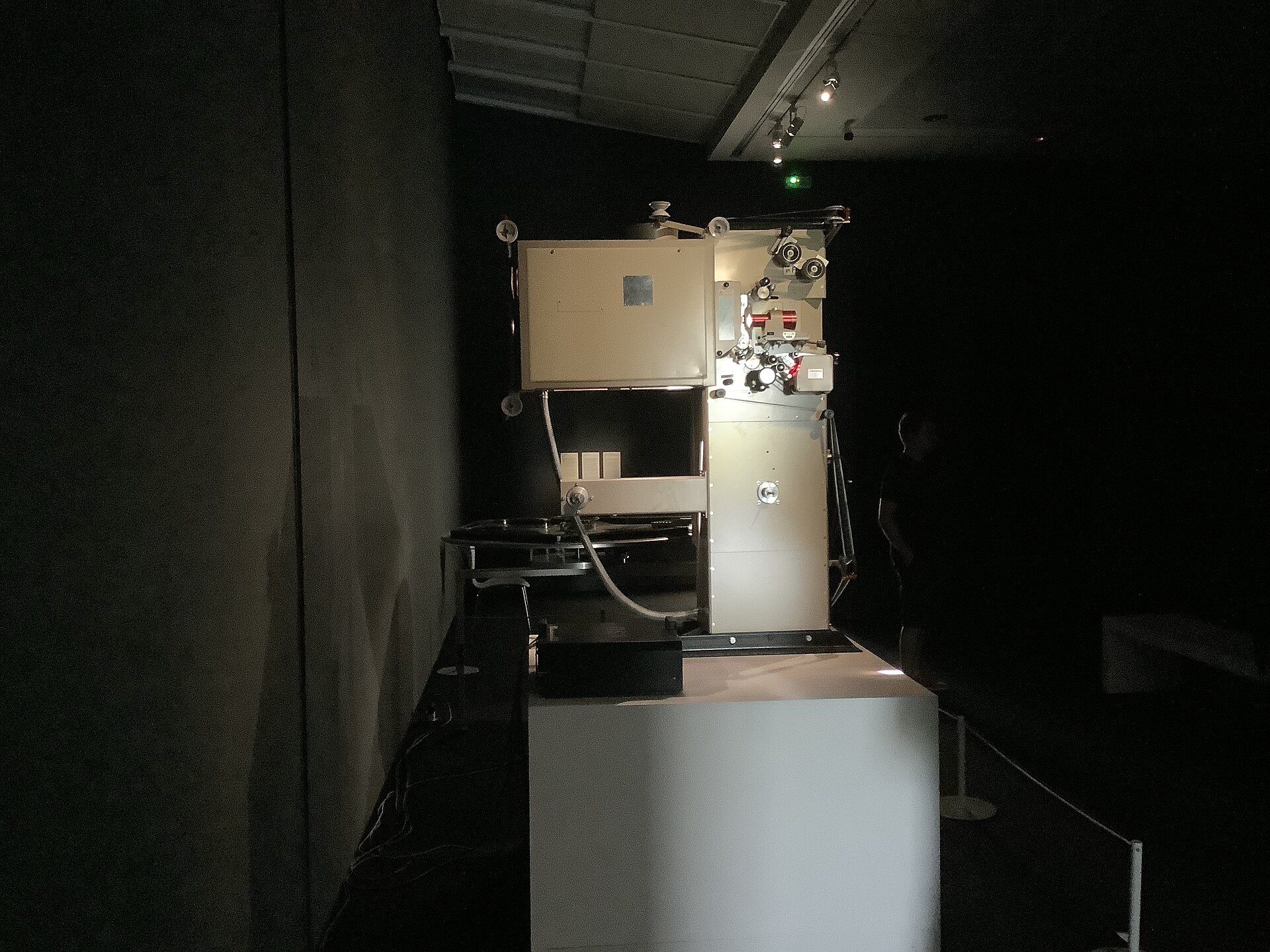
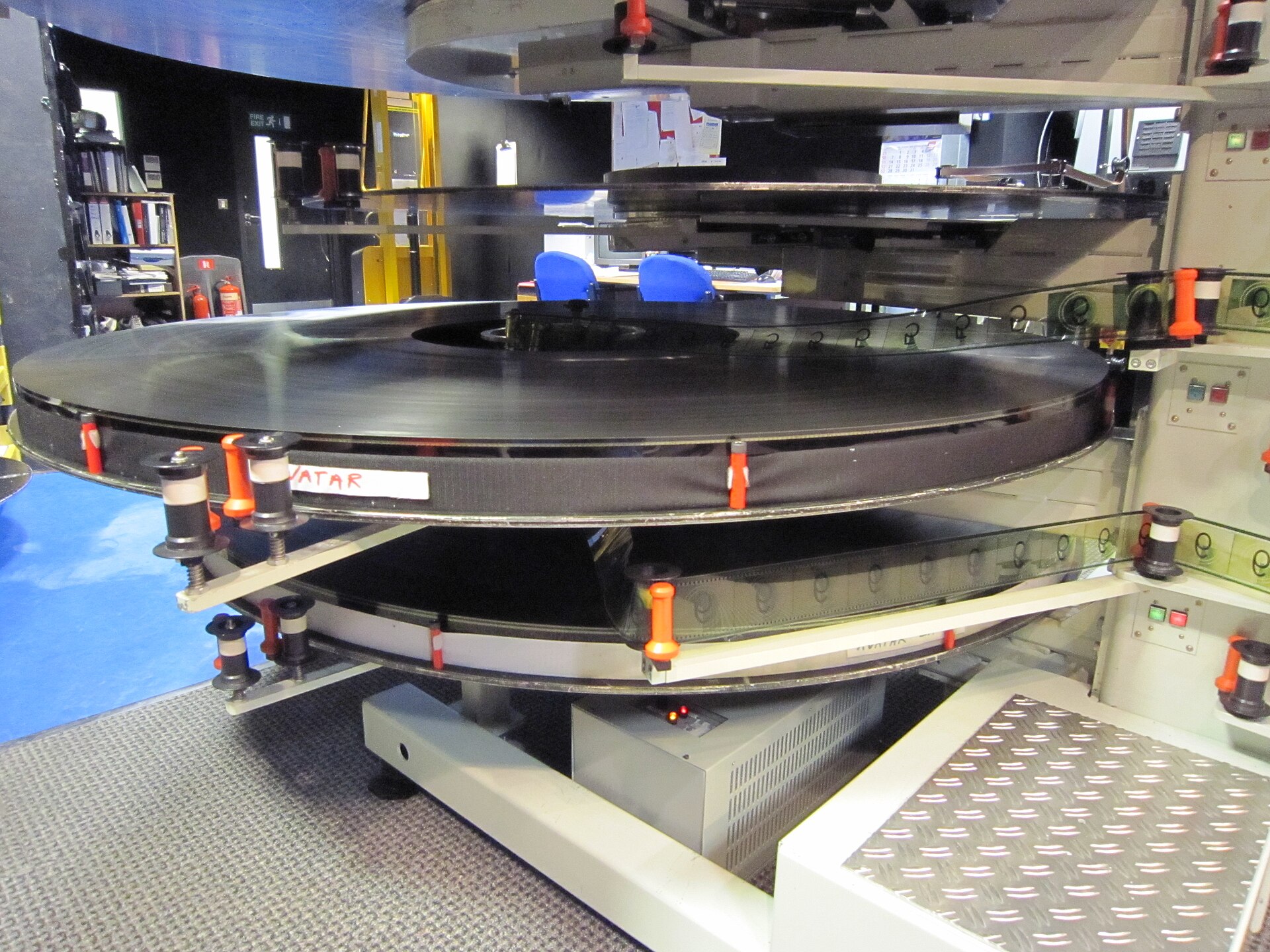
The catch is at the projection end. A 15/70 film print is a monster – reels the size of car tyres, run through projectors only a handful of venues on Earth still own. Britain has two confirmed 70mm IMAX homes for this release, both in London: the BFI IMAX at Waterloo and the Science Museum in South Kensington. That scarcity is real, not manufactured. There are simply very few rooms that can physically show the thing as shot.
The Odyssey IMAX tickets UK: where you can still book
The honest picture, as of early July, looks like this.
The 70mm celluloid screenings at the BFI IMAX are sold out for the opening stretch, but both London venues have history here: when Oppenheimer’s run kept extending, extra weeks of shows appeared with little warning, and returns trickle back through official channels daily. Set an alert, check the BFI and Science Museum sites directly, and don’t pay a tout. A £20 ticket changing hands for £150 on resale sites tells you about the buyer’s patience, not the seat’s value.
Digital IMAX is a different story entirely. Odeon, Cineworld and Vue between them run dozens of IMAX screens from Glasgow to Cardiff, and those still have plenty of availability around the 17 July opening – along with 70mm non-IMAX prints at a handful of independents. And ordinary screenings will be everywhere, because Universal wants this in front of the whole country, not just format obsessives with calendar reminders.
Weekday matinees remain the great unexploited loophole. Two weeks after opening, a Tuesday 2pm IMAX showing is the kind of thing you can book on the day, sit dead centre, and wonder why anyone queued.
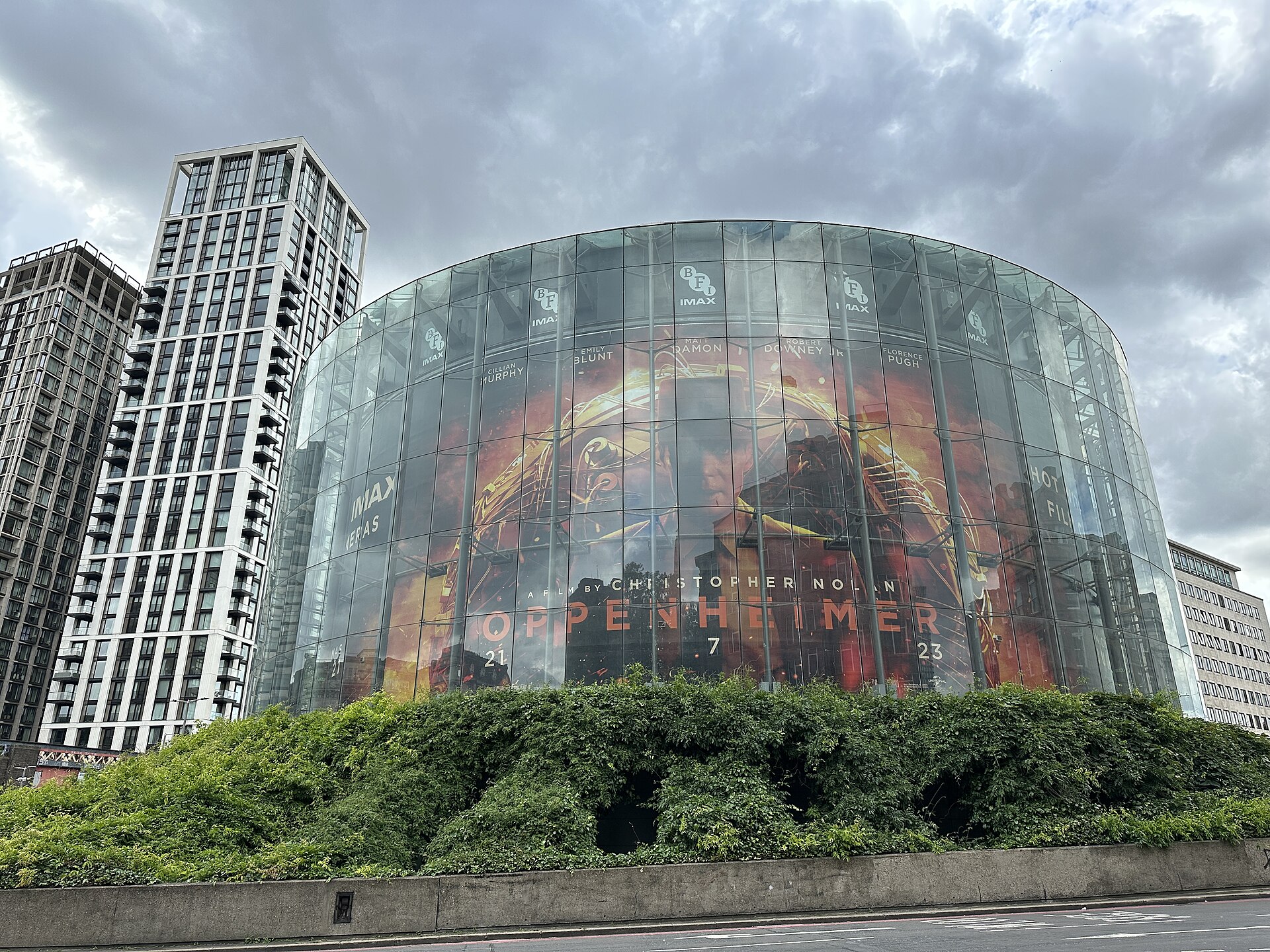
One practical note if a BFI return does come up: the room seats nearly 500, and the front third is a neck-ache with a screen that tall. Middle of the stalls or nothing. A restricted-view seat at the “right” venue is a worse night out than a perfect one at your local Odeon, and it costs twice as much – the venue’s name doesn’t follow you home, the film does.
Homer, but make it Nolan
The source material needs no synopsis from me, but the casting does. Matt Damon is Odysseus, fighting his way home from Troy across ten years of divine sabotage. Anne Hathaway is Penelope, holding Ithaca together while suitors circle; Robert Pattinson plays Antinous, the worst of them. Tom Holland is the son, Telemachus. Zendaya turns up as Athena, Charlize Theron as the witch-goddess Circe, and the supporting ranks include Jon Bernthal, Lupita Nyong’o, Benny Safdie, Mia Goth and John Leguizamo. It’s the most stacked cast sheet of the decade, and Nolan shot much of it in the actual Mediterranean, including Favignana – the Sicilian island where tradition says Odysseus’s crew landed to resupply. Behind the camera the usual firm is intact: Emma Thomas producing, van Hoytema shooting, and Ludwig Göransson – whose Oppenheimer score did half that film’s emotional heavy lifting – widely reported to be composing again.
Holland, for what it’s worth, told GQ it was “the job of a lifetime, without a doubt”, adding that “the movie is going to be unlike anything we’ve ever seen”. Actors say this sort of thing on every press run. But the trailer – which, per Empire, pits Damon against the Cyclops and teases a Trojan Horse sequence built as a practical set piece with thousands of extras – suggests the money is visibly on screen.
How faithful Nolan stays to Homer is the open question. This is a director who has never met a chronology he didn’t want to shuffle, and The Odyssey is famously told out of order in the original. The poem practically invented the flashback. It may be the most Nolan-shaped text ever written.
Do you need to read the poem first?
No. And anyone telling you otherwise is showing off.
The Odyssey survived twenty-eight centuries precisely because it works as a yarn. A man wants to get home. Everything in the ancient world – weather, monsters, gods, his own crew’s stupidity – conspires to stop him. Meanwhile his wife runs the longest bluff in literature and his son goes looking for him. You’ll follow the film cold, the same way audiences followed Gladiator without a grounding in Roman succession law.
If the film does send you back to the source, though, you’re better served now than any generation before you. Emily Wilson’s 2017 translation turned the poem into something you can read on a beach – brisk, plain-spoken iambic pentameter that strips away the Victorian cobwebs, and the version I’d hand to anyone starting from scratch. There’s an audiobook of it read by Claire Danes that has become a quiet favourite among the commuter-listening crowd we wrote about in our look at Britain’s audiobook boom. Ten hours of shipwrecks and slow revenge does wonders for a motorway.
The one thing worth knowing going in: the original tells its story out of order. Odysseus’s most famous adventures – the Cyclops, the Sirens, Circe’s island – arrive as a flashback he narrates at a dinner party, years after the fact. Keep that in your back pocket for the inevitable arguments about whatever structure Nolan lands on.
The $250 million bet that moved Spider-Man out of the way
The reported budget is $250 million, which would make this the most expensive film of Nolan’s career, edging past The Dark Knight Rises. Universal is betting that “from the director of Oppenheimer” now carries the same weight with a mainstream crowd as any superhero logo.
The clearest evidence that Hollywood believes it: Sony blinked. Spider-Man: Brand New Day – a Tom Holland film, awkwardly enough – was shifted back to 31 July rather than open against The Odyssey. Ten years ago the idea of a comic-book tentpole ceding a July weekend to a Homer adaptation would have been a pitch-meeting joke. If you want a snapshot of where mainstream film culture has drifted, that scheduling decision is it – and it fits a year in which, as we argued in our round-up of 2026’s defining British releases, the mid-budget grown-up film has been quietly winning.
What nobody knows yet
For all the noise, the gaps in public knowledge are still large. The BFI listing has both running time and certificate down as TBC, which is remarkable a fortnight from release – though the smart money, given the director’s recent form and the size of the source material, is on something well north of two and a half hours. Nobody outside the production has seen the finished film. There are no reviews, no festival word of mouth, no leaked reactions worth trusting.
That changes on 6 July, when the world premiere lands in London and the first verdicts hit the internet within minutes of the credits. Between then and the 17th we’ll learn whether this is Oppenheimer-level Nolan or Tenet-level Nolan – and yes, there’s a difference, whatever the box-set completists say.
A year of presales without a single review is either total confidence or total exposure, depending on which side of the ledger you sit. Probably both.
The awkward part: the 70mm gold rush is partly theatre
Now the bit the format faithful won’t thank me for. For most people, chasing a 70mm celluloid seat is a waste of effort.
A well-run digital IMAX with laser projection gets you the expanded aspect ratio, the wall of sound and the picture Nolan composed, at a fraction of the hassle. The celluloid difference is real – a warmth and depth to the image that projectionists can wax lyrical about for hours – but it’s the last five per cent, and it matters most to people who already know which seat row at Waterloo they prefer. Some of the year-early scramble was about seeing a film. A decent chunk of it was about being able to say you saw it in the rarest possible format, logged and time-stamped for your Letterboxd followers. It’s the same collector instinct driving Gen Z to buy records they can’t play: the format as trophy, the object as proof of taste. Cinema has simply discovered what the music industry learned years ago – scarcity is a product you can sell separately from the art.
None of which is a complaint about the film. It’s a caution against paying resale prices for a marginal upgrade, when the second-best version is sitting there at £14 in Sheffield.
Cinema as an occasion again
Here’s what the ticket frenzy actually signals, and it’s cheering. British cinema-going has spent years being written off – undercut by streaming, by ever-shorter theatrical windows, by the pull of the living-room set-ups that now rival small multiplexes. Yet hand people a screening that feels like an occasion and they’ll book it a year out, the way they book festivals and rooftop film nights. The appetite never died. It just got choosier.
The Odyssey lands on 17 July. See it big if you can, see it on celluloid if you’re lucky, but see it in a room full of strangers either way – that’s the version Homer would recognise, a crowd gathered to hear the old story told again.
Which leaves one decision: where will you watch it – the biggest screen you can reach, or the comfiest seat you can find?
At the other end of the scale from IMAX, outdoor cinema season is underway – deckchairs, drizzle and all.