SPF Moisturiser vs Sunscreen: Why Your Two-In-One Won’t Get You Through Summer 2026
In 2018, researchers at King’s College London measured what sunscreen does on real skin, applied the way real people apply it rather than the way a lab technician does. The answer: at best 40% of the protection printed on the bottle. And that was dedicated sunscreen, worn by volunteers who knew they were being studied. The SPF moisturiser vs sunscreen question – whether the SPF 30 in your morning face cream can stand in for the real thing – looks rather different once you sit with that number. If proper sunscreen under-delivers by more than half in normal use, what is the hybrid in your bathroom cabinet actually managing?
In This Article
- The 2mg problem nobody mentions on the tube
- What an SPF number is – and isn’t
- SPF moisturiser vs sunscreen: what the UV cameras showed
- The UVA rating your face cream probably hasn’t got
- “But it’s Britain” – the cloudy-day clause
- In defence of the two-in-one (sometimes)
- The stakes, in this year’s numbers
- What a working summer routine looks like
- The five-second label check
Not much, according to the small pile of research on this exact question. Possibly not enough to matter.
That’s an awkward conclusion for an industry that has spent a decade folding SPF into everything – day creams, primers, foundations, lip balms, one suspiciously optimistic setting spray. It’s also awkward for those of us who’ve happily counted the “SPF 30” on a moisturiser tube as sun care sorted by 7.45am. I did it for years. But the arithmetic doesn’t care, and in early July, with the UV index sitting at 6 or 7 by lunchtime, the arithmetic is the whole story.
The 2mg problem nobody mentions on the tube
Every SPF number on every product is generated the same way: the product goes on at 2 milligrams per square centimetre of skin, under lab conditions, and its protection is measured against controlled UV. That’s the deal. The SPF 30 claim is only true at that dose.
Two milligrams per square centimetre is far more product than it sounds. For a face, ears and neck it works out at roughly half a teaspoon – an odd, faintly ridiculous amount of cream to put on your head. The NHS suggests six to eight teaspoons to cover a full adult body, reapplied every two hours in the sun. Almost nobody does this. Real-world studies keep finding that people apply between a quarter and a half of the tested dose, which is exactly why the King’s College London team found that an SPF 50 applied typically delivers, at best, 40% of its promised protection.
Now think about how you apply moisturiser.
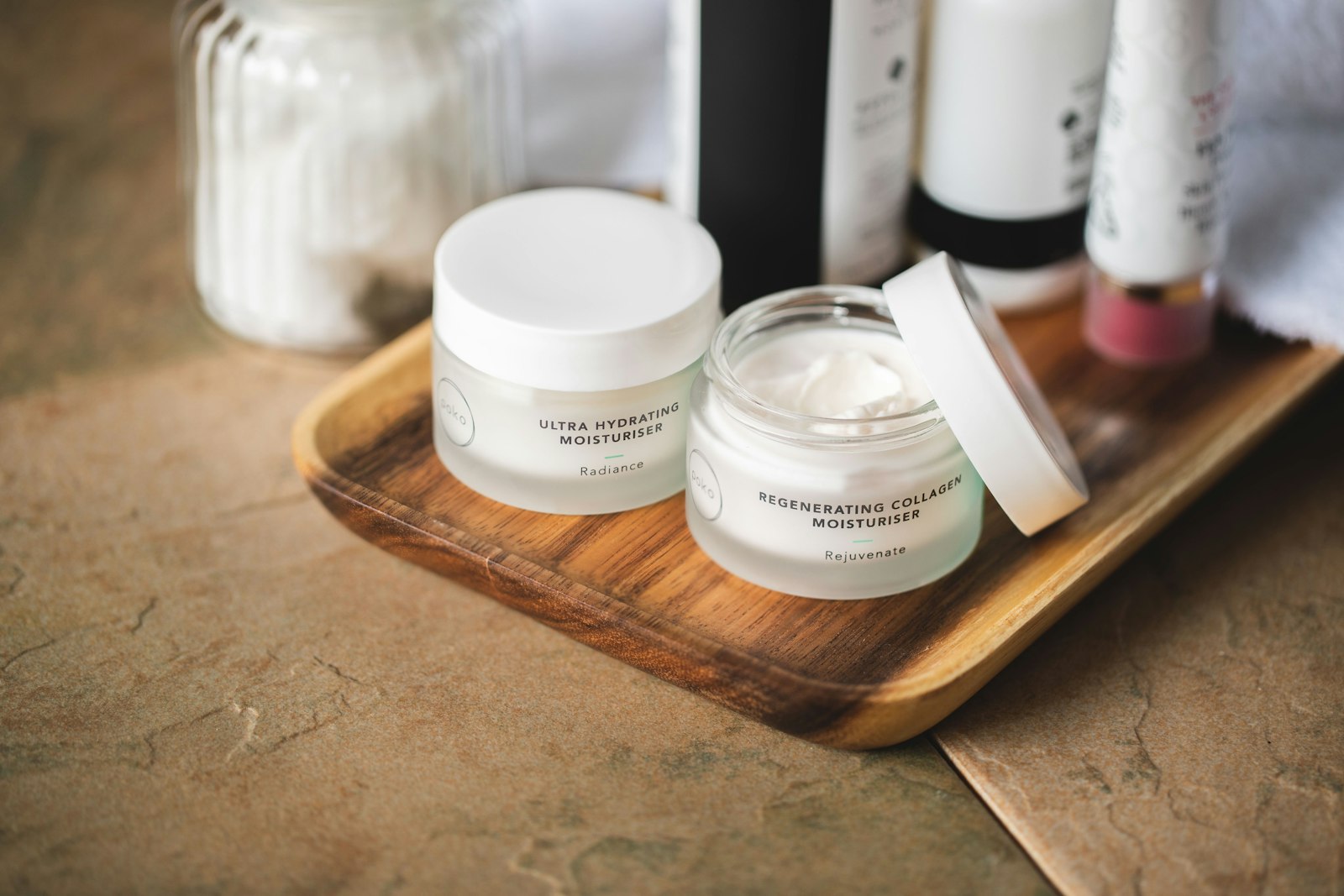
A pea-sized blob, maybe two, massaged in until it disappears. Moisturiser is designed to be used sparingly – the instructions say so, the price encourages it, and the texture rewards it. A 50ml pot that cost £42 gets rationed in a way a £6 tube of Soltan never will. So the product carrying your sun protection is the one you apply most thinly, most habitually, and top up least. Whatever number is printed on the pot, the number on your face is a fraction of it.
What an SPF number is – and isn’t
It helps to know what the number promises even at full dose. SPF 30 filters roughly 97% of UVB when applied at the tested thickness; SPF 50 manages about 98%. The gap between 30 and 50 is small. The gap between SPF 30 applied properly and SPF 30 applied like a face cream is enormous, because protection doesn’t drop in a neat straight line as the layer thins – it collapses. Quantity beats brand, every time.
The same logic buries the “my foundation has SPF” defence. To get the labelled protection from a foundation you’d need to trowel on several times more than anyone actually wears. Makeup SPF is a marketing line, not a sun-protection plan, and I’d treat SPF lip balm and SPF setting spray with the same polite suspicion.
SPF moisturiser vs sunscreen: what the UV cameras showed
The most direct test of SPF moisturiser vs sunscreen came from the University of Liverpool. Researchers photographed volunteers under UV-sensitive cameras after they’d applied either a sunscreen or an SPF moisturiser, then mapped what they’d missed – UV-absorbing product shows up dark on camera, bare skin doesn’t. The results, published in PLOS One, weren’t close. With sunscreen, people missed 11% of their face on average. With moisturiser, 17%.
The eyelids were worse: 14% missed with sunscreen, 21% with moisturiser. That gap matters more than it looks, because the skin around the eyes is thin, collects a lifetime of exposure, and is exactly where basal cell carcinomas tend to turn up. People instinctively steer face cream away from the eye area because it stings, and they don’t notice themselves doing it. When the volunteers were told afterwards what they’d missed, most had no idea.
So the moisturiser goes on thinner than sunscreen, covers less of the face, and skips the highest-risk zone. And its owner walks out the door feeling protected.
That last part is the sting in the tail. A product that quietly under-delivers can leave you worse off in practice than wearing nothing, because it changes your behaviour – the two-hour lunch in the park you’d never have risked bare-faced feels fine when you believe you’re wearing SPF 30. You aren’t wearing SPF 30. You’re wearing some unknowable fraction of it, unevenly, with two unprotected rings around your eyes.
The UVA rating your face cream probably hasn’t got
SPF only measures protection from UVB, the wavelengths that burn. UVA is the other lot: it penetrates deeper, drives most photoageing – the wrinkles, sagging and pigmentation people spend serious money trying to undo – passes through cloud and window glass, and adds to skin cancer risk. In the UK, UVA protection is shown as a star rating from 0 to 5, and the NHS advice is at least SPF 30 with a minimum of four stars. For skin already changing with hormones, that damage compounds; our menopause skincare guide covers what actually helps.
Go and look at your SPF moisturiser. Plenty carry no UVA star rating at all – not necessarily because there’s no UVA filter in there, but because nothing obliges the brand to print the rating. You simply don’t know what you’re getting. For a product whose whole pitch is “protective”, that’s a strange thing to accept.
And if you think independent testing is a formality, consider what happens when products whose only job is sun protection get spot-checked. In June 2025, Which? put 15 sunscreens through SPF and UVA testing and failed two: Ultrasun Family SPF30 – a £28 bottle – missed the UVA pass mark twice, and Morrisons Moisturising Sun Spray SPF30 measured SPF 20.7 on retest against its claimed 30. Dedicated sunscreens, from brands whose reputation rides on the number, and still two of fifteen fell short. The SPF claim on a multitasking day cream rarely faces that kind of scrutiny.
There’s an irony in here for the anti-ageing crowd. Britain will cheerfully spend £60 on salmon-DNA serums promising to repair sun damage while skimping on the one product with decades of evidence for preventing it. Sunscreen is the anti-ageing product. Everything else is cleanup.

“But it’s Britain” – the cloudy-day clause
The standard objection runs something like: this is a country where summer means 19 degrees and a light drizzle, so surely a moisturiser’s worth of protection covers it. It’s a fair instinct and a wrong one, for two reasons.
First, UV doesn’t track temperature. The UV index is driven by the sun’s height in the sky, and in a British June or July it reaches levels that burn unprotected skin in well under an hour – on a cool day, through patchy cloud, while you’re telling yourself it’s barely summer. Cloud thins UV; it doesn’t switch it off. The overcast Saturday at a car boot sale is exactly the setting where people burn, because nothing about the weather warned them.
Second, the damage you can’t feel is the kind the moisturiser is least equipped for. You notice UVB because it burns. UVA gives you no signal at all – no heat, no pinkness, nothing – while it works away on collagen and pigment year-round, through the window next to your desk and the windscreen on the M40. Ask anyone who’s spent twenty years driving for a living which side of their face looks older. The right-hand-drive version of that observation is sitting in traffic all over Britain this week.
None of that requires a heatwave. It requires daylight.
In defence of the two-in-one (sometimes)
None of this makes SPF moisturiser useless. It makes it seasonal.
From roughly October to March, the UV index across most of the UK rarely climbs above 2. If your winter sun exposure is a school run and a dash to Tesco, an SPF day cream is honest work – light, habitual cover for lightly demanding conditions. And anyone selling you a separate SPF 50 step for a November desk job is selling you something you don’t need.
The industry’s favourite defence – “the best sunscreen is the one you’ll actually wear” – is true as far as it goes. But it has become a licence for products that under-deliver, and it flatters a habit into a strategy. Wearing something beats wearing nothing; it doesn’t follow that the something can handle a seven-hour July garden party. If your skin is reactive or rosacea-prone and flares in summer – the same skin that azelaic acid tends to calm – you’ve got even more reason to want labelled, generous, known-quantity UVA protection rather than a mystery dose.
So keep the two-in-one for the depths of winter if you like it. Just don’t ask it to do July.

The stakes, in this year’s numbers
The stakes shifted this year. Cancer Research UK announced in May that melanoma cases have hit a record high, with more than 20,000 people a year now diagnosed in the UK – and almost 9 in 10 of those cases are caused by too much UV, which makes melanoma one of the most preventable common cancers going. The charity’s long-standing warning bears repeating in a summer like this one: getting sunburnt just once every two years can triple your risk. Once every two years. That’s a single overrun pub garden afternoon, repeated across a decade. And faces, ears and necks carry a heavy share of that risk, which is exactly the territory the two-in-one is supposed to be covering.
What a working summer routine looks like
And no, you don’t have to give up the moisturiser you like. It goes on first, gets a minute to sink in, and the sunscreen goes over the top. The two do different jobs; the mistake was only ever asking one product to do both. If your skin runs oily, a gel sunscreen alone often replaces the moisturiser entirely from June to September, which is one product fewer, not one more.
A separate sunscreen, applied as the last skincare step, before makeup. That’s the whole trick. Half a teaspoon or so for face, ears and neck – it feels like too much for the first week, then it feels normal. Give it a few minutes to settle and makeup goes over the top without drama. The current generation of gel and fluid sunscreens bears no resemblance to the chalky beach creams of 2005, as our round-up of British sunscreen brands found – several disappear into skin faster than the average day cream.
Reapplication is where a bit of honesty helps. The NHS says every two hours in the sun, and over a full face of makeup that advice mostly gets ignored – pretending otherwise is how people end up pink on an August Friday. The realistic version: reapply properly when you’re actually outdoors for the afternoon, and when you can’t, lean on the unglamorous stuff that works regardless. Shade in the middle of the day. A hat with a brim. Sunglasses that cover the eyelid skin your cream was missing anyway.
It doesn’t need to cost skincare money either. The same 2025 Which? test round that failed a £28 premium bottle produced budget recommendations alongside it, and supermarket own-brands regularly pass the exact tests that tripped it up. A 200ml tube for about a fiver, applied generously, beats the £42 pot applied like it’s saffron. Hay fever sufferers should take particular note – skin already inflamed by a heavy pollen season takes UV badly, and a proper sunscreen layer is one of the few things that helps on both fronts.

None of this is abstract. UK melanoma diagnoses have hit a record 20,980 in a single year, and the skin cancer signs that turn up after summer are mostly not the ones people are watching for.
The five-second label check
Before the weekend, pick up whatever you’re relying on and check four things. SPF 30 or higher. A UVA star rating of four or five, or the letters “UVA” in a circle – the EU standard. A use-by date that hasn’t passed, because filters degrade and last summer’s half-empty glovebox bottle is a coin flip. And enough left in it to apply like you mean it. And if what’s actually keeping you out of shorts is the state of your legs rather than the sun, strawberry legs are a separate, fixable problem we’ve covered.
If the moisturiser you put on this morning fails that check – and if you had to get up and look, that rather proves the point – it hasn’t earned the job you’ve handed it. So here’s the question worth answering before the next warm spell: is the SPF on your face today something you chose, or something that came free with your face cream?