Why Tailored Shorts Are Summer 2026’s Smartest Office Buy
Tailored shorts have arrived in the British wardrobe via the most unlikely route: the office. After two summers of air-con doing an increasingly convincing impression of a faulty fridge, women are looking at the shorts question with fresh eyes. Not the running pair or the rolled-denim ones – the structured, knee-skimming pair you can wear with a blazer and walk into a Monday meeting in. For summer 2026, tailored shorts are quietly becoming the most useful purchase in the seasonal edit.
In This Article
- From Holiday to Boardroom: Why Tailored Shorts Are Having a Moment
- How to Style Tailored Shorts for the British Summer
- The Hem Length That Actually Suits Most People
- Fabric Choice: The Detail That Separates Polished From Pyjama
- Where the High Street Is Getting It Right This Season
- The Office Test: When To Wear Them, When To Stop
Part of that is climate. Met Office summers have stretched longer and hotter, and the British professional dress code has been visibly catching up. Part of it is fashion: the runway message from Pre-Spring through to high summer has been suiting, suiting, suiting – with the trouser cut in half. Bermuda lengths, cuffed crepes, paper-bag waists in stone and chocolate. The result is a piece of clothing that doesn’t fit neatly into either holiday or office territory, but works for both.
From Holiday to Boardroom: Why Tailored Shorts Are Having a Moment
The shift has been a long time coming. Two years ago, this style was treated like an accident – paired with a tee, marketed as a holiday item, photographed on a sunlounger. Now they’re the centrepiece of editorial sittings at British Vogue and the basis of a real suit at Toteme and The Frankie Shop. The phrase “office shorts” has stopped being a punchline.
Two things are driving the change. The first is the broader return of tailoring. Single-breasted blazers, waistcoats, structured trousers – they’ve all been gaining ground since 2024, and shorts are the natural summer extension of the same wardrobe. The second is the heat. London hit 32°C twice last June and trousers stopped being a realistic option for the daily commute. Brands that were paying attention – Cos, Arket, Mango, Marks & Spencer – have responded with whole shorts capsules cut to look serious rather than seaside.
It’s the same logic that pushed the Cuban collar shirt into smarter summer territory and the co-ord set into the office earlier this season. Pieces that used to read as holidaywear are being recut and re-styled to function five days a week.
How to Style Tailored Shorts for the British Summer
The trick is treating them like trousers. Most outfit mistakes happen when people style tailored shorts the way they style denim ones: tee, trainers, tote. That looks fine on Saturday but reads as confused on Tuesday.
The cleanest formula is shorts plus a sharp top half plus a considered shoe. A fine-knit polo, a crisp poplin shirt, or a slim merino tank all work better than a slogan tee. On the feet, ballet flats, kitten heels, mules and clean leather loafers read polished. Trainers can work, but only in the right pairing – a chunky sole undermines the proportions, while a low-profile leather sneaker holds the line. Boat shoes have crept back in this summer too – our guide to wearing them without the yacht-club baggage pairs them with exactly this kind of tailoring.
A blazer over the top, even unbuttoned, tilts the whole outfit firmly into work-appropriate. Layering also softens the temperature problem in a practical way. A linen jacket means you can walk to the Tube in shorts without feeling underdressed, then take the jacket off at your desk. That’s the entire pitch, and it’s why this trend has stuck.
The Hem Length That Actually Suits Most People
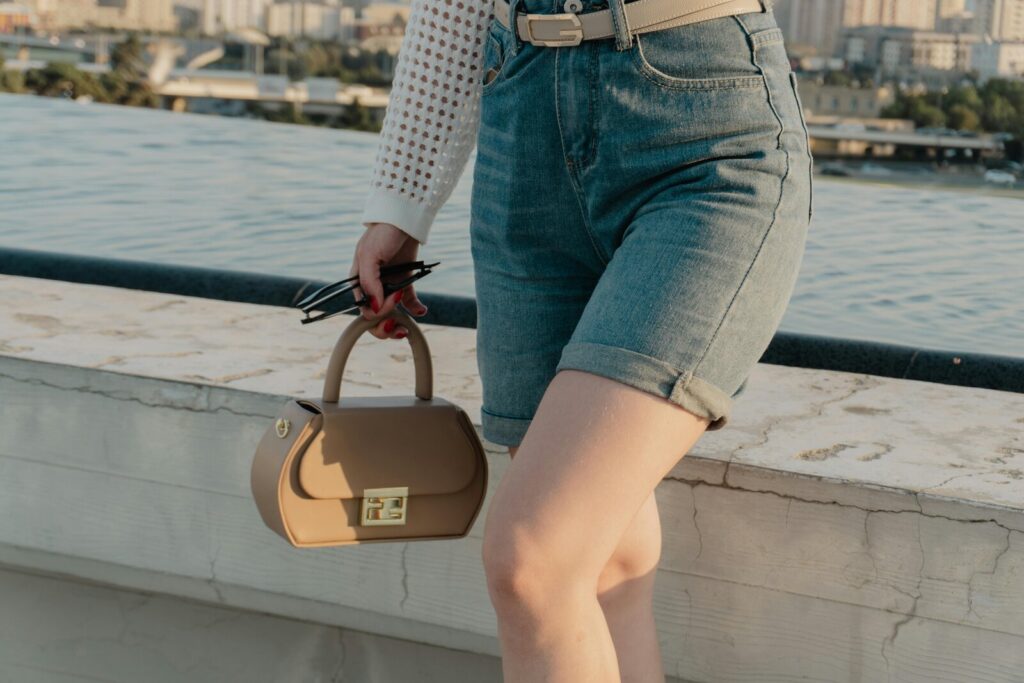
This is where the high street still gets it wrong. The pair you want sits roughly mid-thigh to two inches above the knee. Anything shorter reads as gym wear; anything longer than the knee tips into walking-short territory and ages the outfit by a decade.
The other measurement to watch is the rise. A mid-to-high rise creates a longer leg line and gives the silhouette its tailored look. Low-rise styles undo the effect entirely – they pull the whole thing back into Y2K casual, which is the opposite of what makes the trend land.
If you’re between sizes, size up rather than down. Tailored shorts are meant to drape, not cling. A pair that pulls across the front loses every bit of the polish that made them appealing in the first place. The pleated front, once seen as fusty, is having a quiet renaissance for exactly this reason – it adds room without sacrificing structure.
Fabric Choice: The Detail That Separates Polished From Pyjama
Fabric matters more here than for almost any other summer purchase. Get it wrong and the shorts look like loungewear; get it right and they look like Toteme.
The sweet spot is a structured natural fibre with some weight to it. Cotton-linen blends, lightweight wool, viscose-linen crepes and Tencel-linen mixes all hold a clean line. Pure linen looks beautiful but creases the moment you sit down on the Northern Line, which is a consideration if your commute is more than fifteen minutes. Avoid anything thin, shiny, or with heavy stretch – all three immediately read cheap, regardless of the price tag.
Colour-wise, the most flattering options are mid-tones that read like proper trouser fabric: stone, chocolate, navy, olive, charcoal. Black is the easiest entry point but can feel heavy in July. White and cream look beautiful in photos and require constant management in real life. If you only buy one pair this summer, stone or chocolate are the most useful starting points – they bridge the gap between office and weekend without leaning too far in either direction.
Where the High Street Is Getting It Right This Season
This summer’s strongest tailored shorts are on the British high street, not the international designer rails. Marks & Spencer’s Autograph line has a stone Bermuda short in a linen blend that hangs properly. Cos has both a cuffed wool-mix pair and a fluid Tencel version in navy. Arket’s chocolate cotton-linen short has been a quiet word-of-mouth hit on Instagram for weeks. Mango and Massimo Dutti have both released structured pleated shorts that work hard for under £80.
At the mid-luxury end, The Frankie Shop, Toteme and Reformation are cutting the most directional shapes, but you don’t need to spend £200 to get the look. Drapers reported earlier this spring that mid-market shorts sales were running well ahead of last year in the UK, and the high street has clearly noticed – rails are deeper, cuts are sharper, and the marketing finally treats shorts as a category that adults wear to work.
For a wider sense of how the rest of the summer wardrobe is shaping up, our Italian summer style edit covers the broader mood this season. Tailored shorts slot directly into that aesthetic – it’s the same instinct toward considered, slightly relaxed dressing that doesn’t try too hard.
The Office Test: When To Wear Them, When To Stop
Tailored shorts work for most creative, retail, hospitality, agency and media offices. They work for plenty of professional services environments too, depending on the firm’s unwritten dress code. They don’t work for client-facing meetings at conservative City firms, courtrooms, or formal interviews. If in doubt, look at what the most senior woman in the room wore last summer. That’s your benchmark.
A few practical guardrails. Bare legs in the office still divides opinion; if your workplace skews formal, sheer hold-ups solve the issue without making the outfit feel costume-y. A blazer remains the single most useful styling tool for legitimising the look. And avoid pairing tailored shorts with anything else that reads holiday – straw tote, slides, statement sunglasses indoors – or the whole effect collapses back into beachwear.
The British fashion press has been arguing for two seasons now that “shorts suiting” is the defining silhouette of summer 2026. That feels right. It’s also the rare trend that solves a genuine problem – what to wear to work when the office is 27°C – rather than inventing a new one. The fact that it also looks polished outside of working hours is a bonus.
If you want the shorts and the top to have been designed together, co-ord sets solve that in one purchase – we’ve rounded up the UK ones worth the money.
So, the question worth asking yourself before adding a pair to your basket: would you happily wear the trouser equivalent of these shorts to the office? If the answer is yes, you’ve found the right pair. If the answer is “they look a bit gym”, keep scrolling – the high street has plenty more options, and this trend isn’t going anywhere this summer.