
Polyglutamic Acid UK: The Quiet Hydrator Quietly Outperforming Hyaluronic Acid
Walk past a Boots skincare aisle in May 2026 and the pack copy is shifting in real time. Hyaluronic acid is no longer the only hydrator shouting for attention – polyglutamic acid UK shoppers are now seeing on the front of bottles, usually in a slightly smug font. It has the look of another ingredient trend that will be quietly forgotten in six months, which is why I have spent the last few weeks reading the data behind polyglutamic acid UK launches rather than the marketing deck.
In This Article
- What polyglutamic acid UK shoppers are buying actually is
- How polyglutamic acid UK options compare to hyaluronic acid
- What the research actually says
- Where polyglutamic acid UK routines actually need it
- What to look for on a polyglutamic acid UK label
- Who should probably skip polyglutamic acid UK formulas
- How PGA fits alongside the ingredients you already use
The short version: polyglutamic acid (PGA) is a genuinely useful hydrator, it behaves differently enough from hyaluronic acid to earn shelf space, and it pairs well with almost everything British skin is already dealing with this spring – hard water, heating-dried cheeks, pollen-aggravated skin, and the sudden reappearance of UV, on top of the same barrier-stress that has driven readers towards ectoin-based barrier creams. Here is what is worth knowing about polyglutamic acid UK pricing and formulation before you spend £30 on a bottle.
What polyglutamic acid UK shoppers are buying actually is
Polyglutamic acid is a peptide – a chain of glutamic acid units – produced through the fermentation of Bacillus subtilis, the same bacterium responsible for the stringy texture of natto, the Japanese fermented soybean dish. That is where skincare chemists first noticed it. Natto is famously, uncomfortably slippery, and the slipperiness is PGA doing its job: grabbing water and holding it in place.
In cosmetic formulas it sits on the surface of the skin and forms a breathable, hydrophilic film. Lab measurements cited by ingredient suppliers put its water-holding capacity at several times that of hyaluronic acid by weight, though these figures are done in a petri dish rather than on a face, so take them as directional rather than gospel.
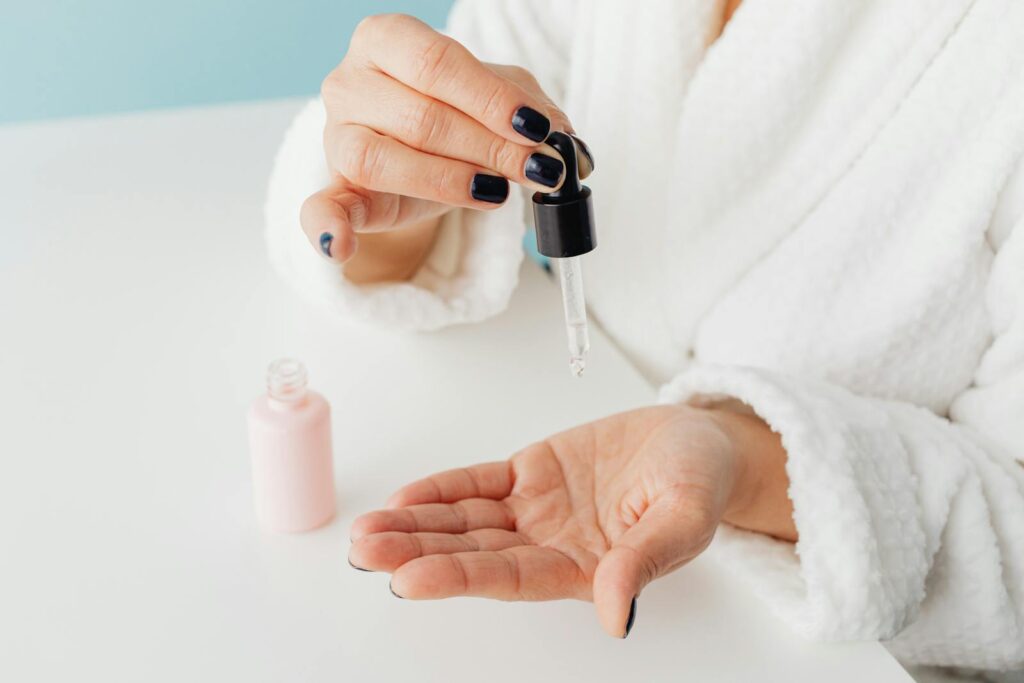
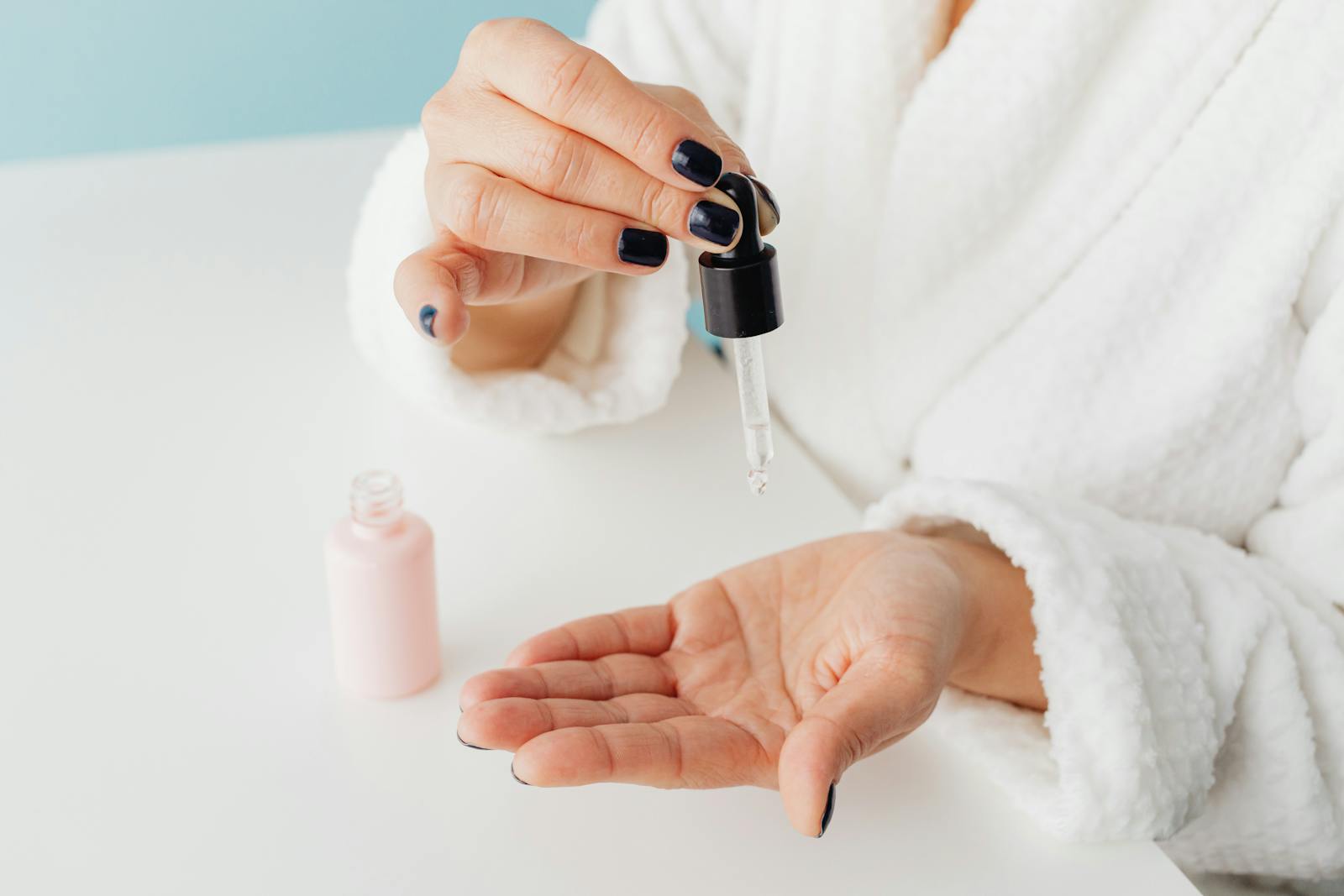
The practical point is that PGA is a humectant – it pulls water toward the skin surface – but it also leaves a thin residue that slows that water evaporating off again. Hyaluronic acid is mostly the first thing without the second.
How polyglutamic acid UK options compare to hyaluronic acid
Hyaluronic acid (HA) has been the default hydrator in British bathrooms for about a decade, and for good reason. It is well tolerated, cheap to formulate with, and at low molecular weight it can sit a little deeper in the skin. Its main weakness is also well-documented: in a dry environment, HA can pull water out of the deeper layers of your skin as readily as it pulls it in from the air, leaving the surface tighter rather than plumper.
This is where PGA behaves differently. Because it forms that occlusive-ish film on top, it is less likely to drain water upwards from where you actually need it. In UK winters, when central heating drops indoor humidity to near-desert levels, that is a meaningful difference. Several independent dermatology educators have flagged this as the reason to consider PGA specifically if HA has ever made your skin feel taut twenty minutes after applying.
I would not throw out your hyaluronic acid serum. The more interesting move is to layer them – HA underneath for the deeper water pull, PGA on top to keep that water in – which is how most of the newer K-beauty and Boots-tier Western brands are now pitching it.
What the research actually says
The peer-reviewed base for PGA is thinner than for retinol or niacinamide, which is the honest caveat. Most of the work is in-vitro or on small panels, often funded by ingredient manufacturers. The commonly cited 2020 study in the Journal of Cosmetic Dermatology found measurable improvements in skin elasticity and hydration after four weeks of twice-daily PGA application, but the sample size was small and the control was basic.
What you can reasonably take from the evidence so far is that PGA works as a short-term hydrator and film-former, and that it probably has a mild effect on skin elasticity over weeks of use. What it is not is an anti-ageing miracle, despite the copy on some premium bottles. If you want collagen signalling, you still want peptides or retinoids. If you want brightening, you still want vitamin C or azelaic acid. PGA sits alongside those, not in place of them.
Where polyglutamic acid UK routines actually need it
British skin, as a loose generalisation, is dealing with three things at once in spring: rebuilding a barrier battered by winter heating, adjusting to more daylight and therefore more UV, and coping with the hard water that covers most of England and Wales. PGA is useful in all three situations.
On a morning routine, apply it after any water-based serum and before your moisturiser. A pea-sized amount is plenty; more does not help and tends to pill under sunscreen. If you use a vitamin C in the morning, PGA goes on after it has settled. Finish with SPF, non-negotiable from March onwards in the UK.
On an evening routine, PGA plays nicely with almost everything. It can be layered over retinol or retinol alternatives to blunt the dryness that often comes in the first few weeks of use. It also sits comfortably alongside exfoliating acids – if you have used a glycolic or lactic acid toner, following it with PGA gives you the hydration buffer that acid-heavy routines often miss.
The one layering note worth making: PGA is a large molecule. Put it on before any thick occlusive (a balm, a cream with shea butter, a sleep mask) rather than after, or it will mostly sit on the outside doing very little. This is the same rule most serums follow, but it matters more with PGA because it relies on being in contact with skin to pull water in.
What to look for on a polyglutamic acid UK label
Polyglutamic acid appears on ingredient lists as “polyglutamic acid”, “sodium polyglutamate” or sometimes “gamma-PGA”. All three are the same basic molecule, usually in a slightly different salt form that affects solubility and feel. Sodium polyglutamate is the most common in cheaper formulations and works fine.
You want PGA to appear reasonably high on the ingredient list – ideally in the top ten – rather than tucked in at the end as a fairy-dusting. Brands are not required to disclose percentages, but anything under about 0.1% is mostly there for the label claim.
Price in the UK currently ranges from around £8 for supermarket own-brand versions (The Inkey List and Revolution Skincare both do perfectly serviceable ones, as does Boots’ own No7 range in their advanced serum lines) up to £50-plus for fermentation-heavy Korean imports at Cult Beauty or Space NK. The law of diminishing returns kicks in fast. For most people, a mid-tier option at £15-£25 with a stable formula is the right buy.
If your skin is reactive or you are layering actives, look for formulations that pair PGA with panthenol or centella – both are gentle, evidence-backed barrier-supporters that play nicely with the film-forming properties of PGA. Avoid PGA serums loaded with added fragrance if you are already doing a full routine; fragrance is the most common trigger for reactions in otherwise calm skincare users, and there is no reason to risk it in a hydrator.
Who should probably skip polyglutamic acid UK formulas
PGA is well tolerated, but it is not for everyone. If you have very oily skin and tend to break out from anything occlusive, the film it forms may feel heavy or trap product underneath. In that case a low-molecular-weight HA serum is a better pick, and you can chase it with a lightweight gel moisturiser.
If your skin is currently compromised – eczema flare, active rosacea, post-procedure – the NHS still recommends sticking to plain, fragrance-free emollients rather than layering in new actives, and their guidance on dry skin care is a reasonable baseline. Once the barrier is calm again, PGA is one of the easier ingredients to reintroduce.
Pregnancy is not a contraindication for PGA specifically – unlike retinoids – but general advice from the British Skin Foundation is worth reading if you are overhauling your routine during pregnancy, because several common actives should be dropped.
How PGA fits alongside the ingredients you already use
The biggest argument for polyglutamic acid UK shoppers should care about is not that it replaces anything, but that it lets everything else work a bit better.
Retinol is less irritating on a well-hydrated base. Vitamin C is more comfortable when paired with a humectant on top, and the same is true if you are layering a brightening active like tranexamic acid for stubborn pigmentation. Peptide serums, which are increasingly the main event in UK routines and which we covered in more depth in our peptide serum guide, benefit from the same kind of hydrated canvas. And if you have moved to gentler routines because of sensitivity – as many readers have, judging by the traffic on our sensitive-skin vitamin C guide – PGA is one of the lowest-risk additions you can make. For another quiet hydrator that earns shelf space, tremella holds more water per gram than hyaluronic acid and layers cleanly under PGA.
The short honest take on polyglutamic acid UK shoppers should hear: it is not a revolution. It is a well-behaved hydrator with a slightly cleverer mechanism than the default one we have all been using since 2016. For about £15, for most UK skin types, it is worth a bottle.
Have you already tried layering PGA over your hyaluronic acid, and if so did your skin actually feel different by the end of week two – or did it mostly look the same?



The natto comparison made me laugh but it’s a really good way to explain what it’s doing. I’ve got stupidly dry cheeks from the central heating and hyaluronic never seemed to cut it – is PGA the sort of thing you layer on top of a HA serum or instead of?
Layer on top of the HA in my experience – PGA seals the water in rather than drawing it up. The Ordinary do a cheap one I’ve been using for a while, then a barrier cream over that. Made a real difference with the central heating cracking my cheeks in January.
Pingback: Hay Fever Skin UK: Why Pollen Season Wrecks Your Face (and What Actually Helps) | Lifestyle Reviewer