London Jazz Festival 2026: 300 Gigs From £24, a Sold-Out Lunchtime and the £80.50 Coltrane Ticket I’d Skip
The best seat at the London Jazz Festival 2026 isn’t at the Royal Festival Hall gala, and it isn’t anywhere near the £80.50 Coltrane tribute. It’s a £24 ticket at Milton Court on a Tuesday night, for an Estonian violinist most of London has never heard of. That’s the case I’ll make over the next ten minutes, and it says something about how this festival works: the headline names sell the brochure, but the value sits two or three rungs down the bill.
In This Article
- What the London Jazz Festival 2026 actually is – and why this year feels different
- The £24 to £34 band: where the value is
- Jazz Voice at £46, and the £80.50 ticket I'd skip
- Free shows that aren't an afterthought
- The lunchtime sell-out at Cadogan Hall
- Why British jazz is the real headline this year
- How I'd spend £100 at the London Jazz Festival 2026
The festival opens tomorrow, Friday 13 November, and runs to Sunday 22 November. It’s the 34th edition. Time Out counts “over 300 performances” across 60 venues, from the Barbican down to church halls and pub back rooms, and plenty of the mid-sized shows still have tickets. A few don’t. Time Out’s verdict is that there’s “something for every sort of jazz fan here, as well as plenty that’ll appeal to total newbies”, and for once that line isn’t just brochure filler.
What the London Jazz Festival 2026 actually is – and why this year feels different
If you’ve never been, the shape takes a minute to grasp. There’s no single site, no wristband, no field. The festival has been running since 1993, produced by Serious and sponsored by EFG since 2013, and it works more like a city-wide takeover: the big concert halls run the marquee nights while clubs and smaller rooms across the city fold their own programmes in under the festival banner. Clash summed it up in March as “10 days of headline concerts and intimate club dates”, which is about right.
And this year has a quiet theme running through it. John Coltrane and Miles Davis were both born in 1926, so 2026 is a double centenary, and the programme leans into it harder than the marketing lets on. There’s Coltrane 100 at the Barbican on the opening night, with Joe Lovano, Melissa Aldana, Nduduzo Makhathini, Linda May Han Oh and Jeff “Tain” Watts on one stage. There’s Emma-Jean Thackray’s Dear Miles – A Love Letter the same evening. And there’s Branford Marsalis and Dianne Reeves celebrating Coltrane on Saturday 21 November – more on that one shortly, because I think it’s the wrong ticket to buy.
The other thing that’s changed is the audience. Ten years ago the London Jazz Festival crowd skewed grey and knowledgeable. Now you’ll see as many people in their twenties as in their sixties, and that’s mostly down to a generation of British players who made jazz feel like something you could dance to. Ezra Collective winning the Mercury in 2023 – the first jazz act to do it – was the moment the wider music press noticed, but the shift had been building for years before that.
The £24 to £34 band: where the value is
Here’s my shortlist of shows priced between £24 and £34, all with tickets on sale at the time of writing according to Time Out’s round-up, which ran under the headline “shows you can still get tickets for”.
Maarja Nuut + Shards, Milton Court, Tuesday 17 November, from £24. The cheapest headline-room ticket I could find in the whole programme. Nuut loops violin and voice into something that sits between Estonian folk song and ambient electronica, and Milton Court is one of the best-sounding small halls in London. This is the one I’d book first.
Matt Carmichael, Cecil Sharp House, Tuesday 17 November, from £26. The Scottish saxophonist is giving Held in the Dark its London premiere, in the home of the English Folk Dance and Song Society. Carmichael’s whole thing is folk melody played with jazz lungs, so the venue isn’t a gimmick – it fits.
Fatoumata Diawara + Thanda Choir, Roundhouse, Wednesday 18 November, from £33. The Malian singer is a big festival draw in her own right, and at £33 for the Roundhouse this is fair pricing for a room that size.
Haruki Murakami’s Jazz at Peter Cat, Barbican, Saturday 21 November, from £34. This is the strangest idea on the bill and possibly the best. Before he wrote novels, Murakami ran a jazz bar in Tokyo called Peter Cat, from 1974 to 1981. The Barbican show is pitched as an “immersive reimagining” of a night there, built around Japanese jazz. Time Out lists a second night on the Sunday; the festival’s own site only shows Saturday, so check before you plan around it.
Two things stand out about this price band. First, it’s where the festival’s programmers have clearly had the most fun – the cross-genre bookings, the odd venues, the one-off premieres. Second, none of these four would cost much more in a normal week. That’s not always true of festival pricing, and it’s worth crediting.
Jazz Voice at £46, and the £80.50 ticket I’d skip
The opening gala, Jazz Voice, is on Friday 13 November at the Royal Festival Hall. Tickets start at £42 plus a £4 booking fee, so call it £46 a head before you’ve bought a drink. Guy Barker conducts, Jumoké Fashola hosts, and the guest singers were still listed as “to be announced soon” when I checked the Southbank Centre’s page this week.
That last detail would put me off most gigs. Jazz Voice is the exception, mostly because of its track record – previous years have brought Corinne Bailey Rae, Jacob Collier, Gregory Porter and Emeli Sandé to that stage, and the Southbank quotes a Telegraph review praising “a luxuriantly big orchestra”. It’s a three-hour evening of standards and reinterpretations with a full band behind a rotating cast of singers. You’re buying the format, not the names, and the format usually delivers. One warning from the Southbank’s own small print: “Ticket prices may be adjusted without notice to reflect demand.” If you’re going, don’t sit on it.
Now the contrarian bit. Branford Marsalis and Dianne Reeves celebrating John Coltrane at the British Airways ARC on Saturday 21 November starts at £80.50. On paper it’s the starriest booking of the ten days – a Marsalis, one of the great living jazz singers, and the year’s biggest anniversary. I’d still pass. For the same money you could see Coltrane 100 at the Barbican on the opening night (five players, saxophone up front, and a far more intimate room for it) and still have change for the £24 Milton Court show. A tribute night with two headliners and a premium price is the kind of event that looks better on a poster than it sounds from row R. I’m guessing on the sightlines, as I haven’t been to a gig at that venue, but the price alone is enough to make the comparison.
Worth knowing, too: the show was first announced in March for Olympia in West London, and has since been listed at the ARC. If you bought early, check your ticket.
Free shows that aren’t an afterthought
A lot of festivals tuck their free programme away like an apology. The London Jazz Festival’s is decent. On the opening night, Simmer Down takes over the Clore Ballroom at the Southbank Centre for nothing, and Jazz FM broadcasts live with Danielle Perry. Over the following days the festival lists free and family events including Tarana on Saturday 14 November, Sound Lines: Voice and Percussion on Sunday 15, Mix & Move on Friday 20, and Homegrown on Sunday 22.
There’s also The Jazz Social at City Point near Moorgate, a two-week hub that’s hosting free sessions including a Guildhall School lunchtime concert. It’s the sort of thing you’d wander into on a lunch break and end up staying for forty minutes, slightly late back to your desk.
If you’re aged 16 to 25, the Serious Youth Network gets you £5 tickets to selected shows. That’s cheaper than the BBC Proms’ famous £8 Arena ticket, and almost nobody talks about it.
The lunchtime sell-out at Cadogan Hall
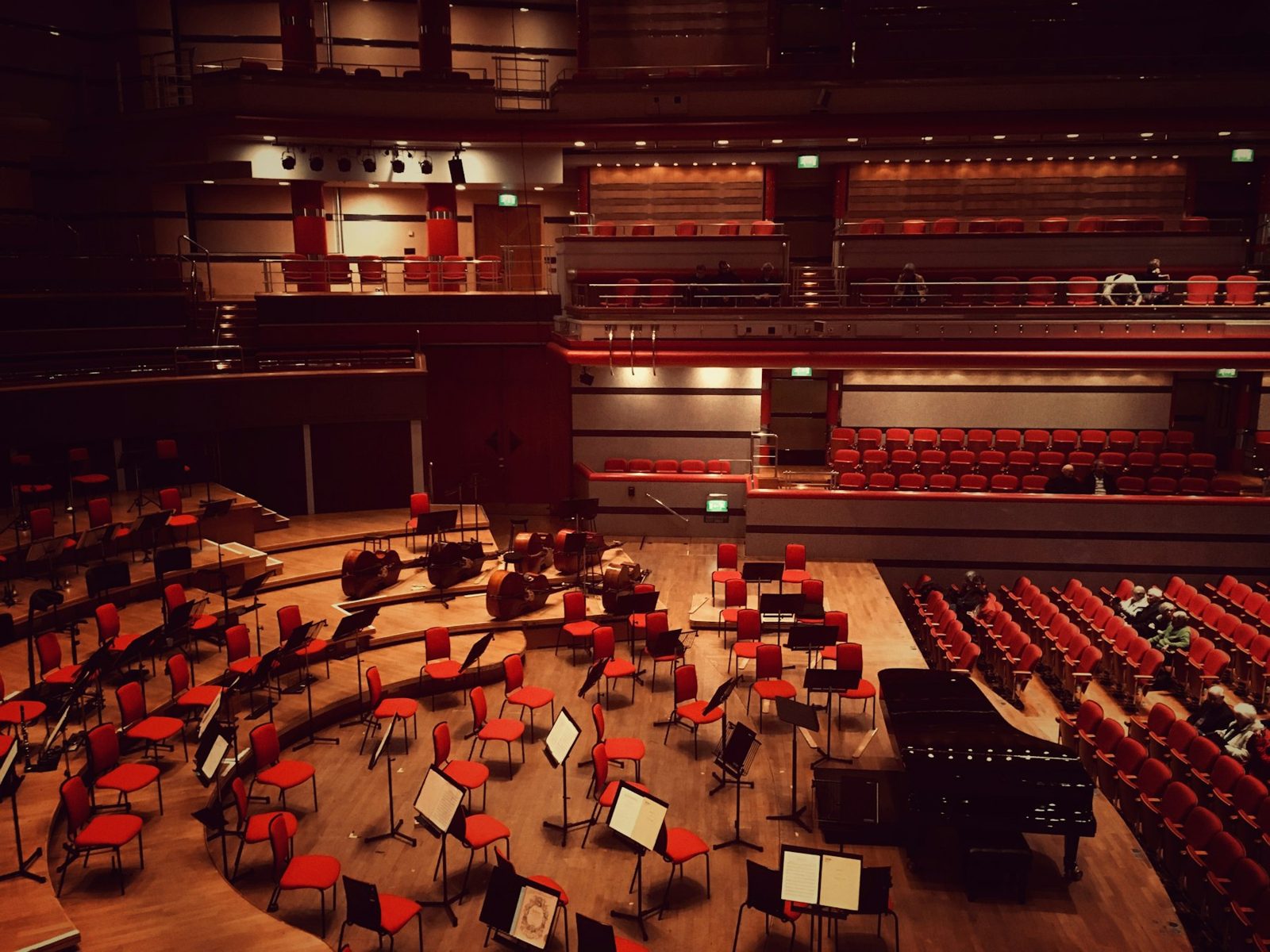
The most telling detail in the whole programme is a small one. Djangada Brazilian Trio, at noon on Wednesday 18 November at Cadogan Hall, is sold out. There’s a waiting list.
A midweek lunchtime gig in Chelsea, by a trio that isn’t a household name, selling out before the festival even starts tells you who’s buying jazz tickets in London right now: people with flexible working days who’d rather spend an hour of a Wednesday in a concert hall than at a desk. Cadogan Hall has leaned into this with a run of noon shows across the week, and several others were marked “limited availability” when I looked – Joanna Eden’s Joni Mitchell programme Joni & Me on Monday 16, Nicolas Meier World Group on Tuesday 17, ISQ on Thursday 19 and Vasilis Xenopoulos & Paul Edis on Friday 20. My mate who works three days a week in an office in Victoria has already booked two of them, which is about as close to a trend piece as I need.
Cadogan Hall’s evening run is strong too. Lizz Wright plays on Sunday 15 November with tickets at £39.50, £44.50 and £49.50 including a £4.50 booking fee, and that’s also marked limited. Andy Sheppard’s trio shares a bill with Norma Winstone and Kit Downes on Wednesday 18, which for British jazz fans of a certain vintage is close to a dream line-up.
Why British jazz is the real headline this year
Look at the opening weekend and count the British names. Emma-Jean Thackray, the Yorkshire trumpeter and producer, doing her Miles Davis tribute on the Friday. Fergus McCreadie, the Scottish pianist whose Forest Floor made the Mercury shortlist in 2022, at Kings Place the same night. Goldie’s Dare to Dream on the Saturday. GoGo Penguin, the Manchester trio who were Mercury-nominated back in 2014, playing KOKO on Monday 16. Morcheeba at the Troxy. Then Matt Carmichael and Shards midweek. That’s a lot of home-grown talent on stages that, twenty years ago, would have been booked almost entirely with American headliners.
But I don’t think this is a London jazz “scene” story any more, and the festival is better for not pretending it is. The UK jazz boom of the late 2010s was sold as a South London thing – Peckham, Deptford, the Total Refreshment Centre era – and that framing was useful for a while. The 2026 programme reads differently. The British acts come from Glasgow, Manchester, Leeds and the Highlands as much as from London, and many of the best of them, McCreadie and Carmichael in particular, are drawing on Scottish folk tradition rather than on grime or broken beat. If anything, the centre of gravity in British jazz has drifted north while everyone was still writing about Peckham.
It also explains why the big American names feel less essential. Robert Glasper has a residency at the Blue Note London across the whole ten days, and Samara Joy and Cécile McLorin Salvant (the latter with the BBC Concert Orchestra) close the festival on Sunday 22 November. They’re world-class. But if you only had one evening, I’m not sure an American star would be the smart booking any more. The British acts are cheaper, playing smaller rooms, and arguably more interesting right now.
Our best British albums of 2026 list and the Mercury Prize 2026 coverage both showed the same pattern from the other side: British artists who’d once have been filed under “niche” now sit comfortably next to pop records in the year-end conversation.
How I’d spend £100 at the London Jazz Festival 2026
A practical plan, assuming one person, one budget and a normal working week.
Tuesday 17 November, Maarja Nuut + Shards at Milton Court: £24. Wednesday 18 November, Fatoumata Diawara at the Roundhouse: £33. Saturday 21 November, Jazz at Peter Cat at the Barbican: £34. That’s £91, before booking fees, for three very different nights – a folk-electronic set in a small hall, a West African singer with a choir in a former engine shed, and a novelist’s jazz bar rebuilt in the Barbican. Spend the leftover on a drink at one of the free sessions and you’ve had a better festival than most people who paid £80 for one night.
The alternative, if you’d rather go big once: Jazz Voice at £46 on the opening night, then free shows for the rest of the week. That’s a perfectly good way to do it, and it’s the one I’d suggest to anyone who’s never been and wants the full orchestral experience first.
What I wouldn’t do is wait. The festival’s own site runs to fifteen pages of listings, and the shows that sell out tend to be the small, cheap ones rather than the headliners. If your diary’s free, the sensible move is to book this afternoon. And if you’re planning a wider run of nights out before Christmas, our guide to Christmas shows in London for 2026 covers the pantos and West End seats that go next.
Which would you book – the £46 gala with singers nobody has named yet, or a £24 Tuesday night with a violinist you’ve never heard of?