Reformer Pilates vs Mat Pilates in 2026: £45 a Class Against £12, and Which One the Back-Pain Evidence Actually Backs
Here’s a number the boutique studios don’t put on their Instagram grids: last year, mat Pilates bookings on ClassPass grew by 114%. Reformer bookings grew by 71%. The cheap version, the one you can do on a £15 mat in a church hall, is growing faster than the £45 one with the sliding carriage and the springs. So before you spend your Black Friday money on a 20-class reformer pack for January, it’s worth asking the question nobody at the front desk will: in the reformer Pilates vs mat Pilates argument, what does the extra money actually buy you?
In This Article
- The 114% figure nobody at the boutique mentions
- What the back-pain trials actually tested
- Reformer Pilates vs mat Pilates: what the springs do and don't add
- The £3,000-a-year question
- The "long, lean muscles" line is nonsense
- Who the reformer is worth paying for – and who should steer clear
- Don't buy the Aldi reformer
- How I'd split it if I were starting in January
I worked as a personal trainer in London before I started writing about fitness, and I’ve taught people on both. My honest answer is “less than you’d think, and more for some people than others”. The evidence is thinner than the marketing, and it points somewhere the industry would rather it didn’t.
The 114% figure nobody at the boutique mentions
In 2025 Pilates was the most-booked workout on ClassPass worldwide for the third year running. According to the booking platform’s own year-end figures, reported by SGB in December 2025, there were more than 15 million Pilates reservations between January and October last year, with Pilates bookings up 66% overall. Strength training and yoga sat behind it. Barre came fifth.
But look at the split. Reformer was up 71%. Mat was up 114%.
Part of that is base effects – mat Pilates was the smaller category on the app, so its percentages jump faster. And ClassPass doesn’t publish a UK-only breakdown, so I’m guessing when I say the British pattern looks similar. Still, anyone who’s tried to book a Saturday morning reformer slot in Clapham or Didsbury will recognise the other half of the story: people are being priced or waitlisted out of the machine and drifting to the mat. Some of them assume they’re getting the budget version. I’d argue a lot of them are getting the version the research was done on.
What the back-pain trials actually tested
The single strongest claim in Pilates’ favour comes from a 2019 network meta-analysis in the British Journal of Sports Medicine. The researchers screened over 9,500 records and ended up with 89 studies covering 5,578 people with chronic low back pain, then compared different types of exercise against each other. For pain, Pilates came out on top – ranked first of every exercise type, with a large pooled effect. For physical function, resistance training and stabilisation exercises ranked highest. For mental health, it was resistance training and aerobic exercise. That headline gets quoted everywhere, usually without the authors’ own verdict, which is that this is “low quality evidence”. The trials were small, they varied wildly in how they ran their programmes, and very few were at low risk of bias. That’s not a reason to ignore it – plenty of useful things in back care rest on modest evidence – but it’s a long way from proof that Pilates fixes backs. And the result is for “Pilates”, full stop. It isn’t a verdict on reformer Pilates, and nothing in that headline tells you the machine is doing the heavy lifting.
NICE, which sets the guidance the NHS works from, takes a broader line. Its low back pain guideline (NG59) recommends considering a group exercise programme and lists mind-body approaches alongside biomechanical and aerobic ones, with the choice shaped by what the person will actually do. That last bit matters more than any ranking. The NHS’s own Pilates and yoga video page is pitched at people with back pain and arthritis, and every one of those sessions is done on a mat at home.
So if you’re paying for a reformer because you think it’s the medically proven option, it isn’t. The best-supported option is the one you’ll turn up to twice a week for three months.
Reformer Pilates vs mat Pilates: what the springs do and don’t add
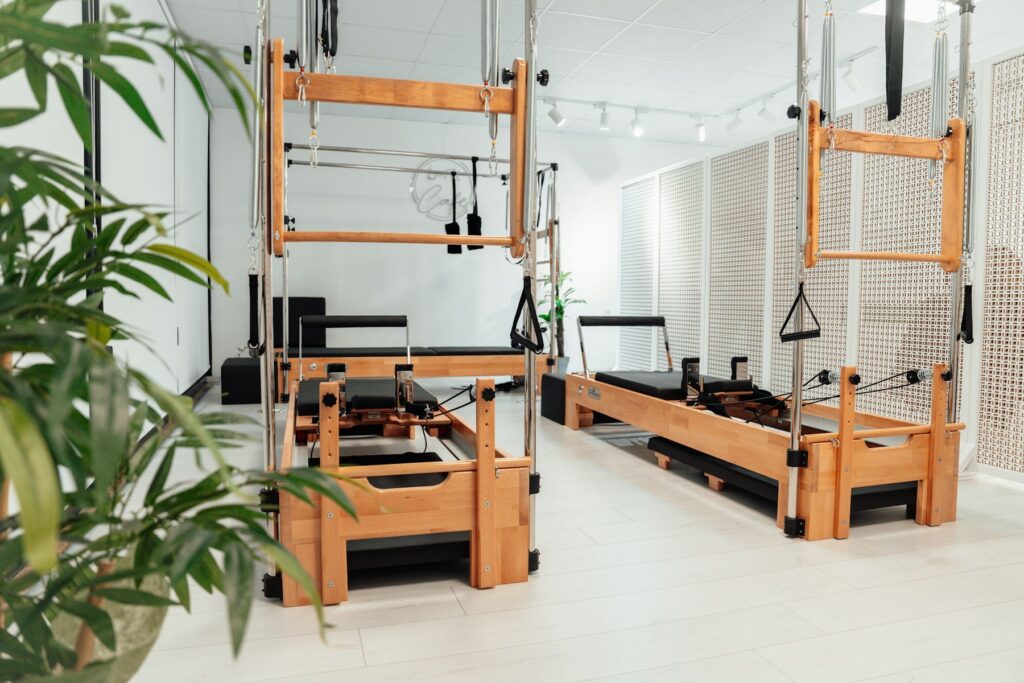
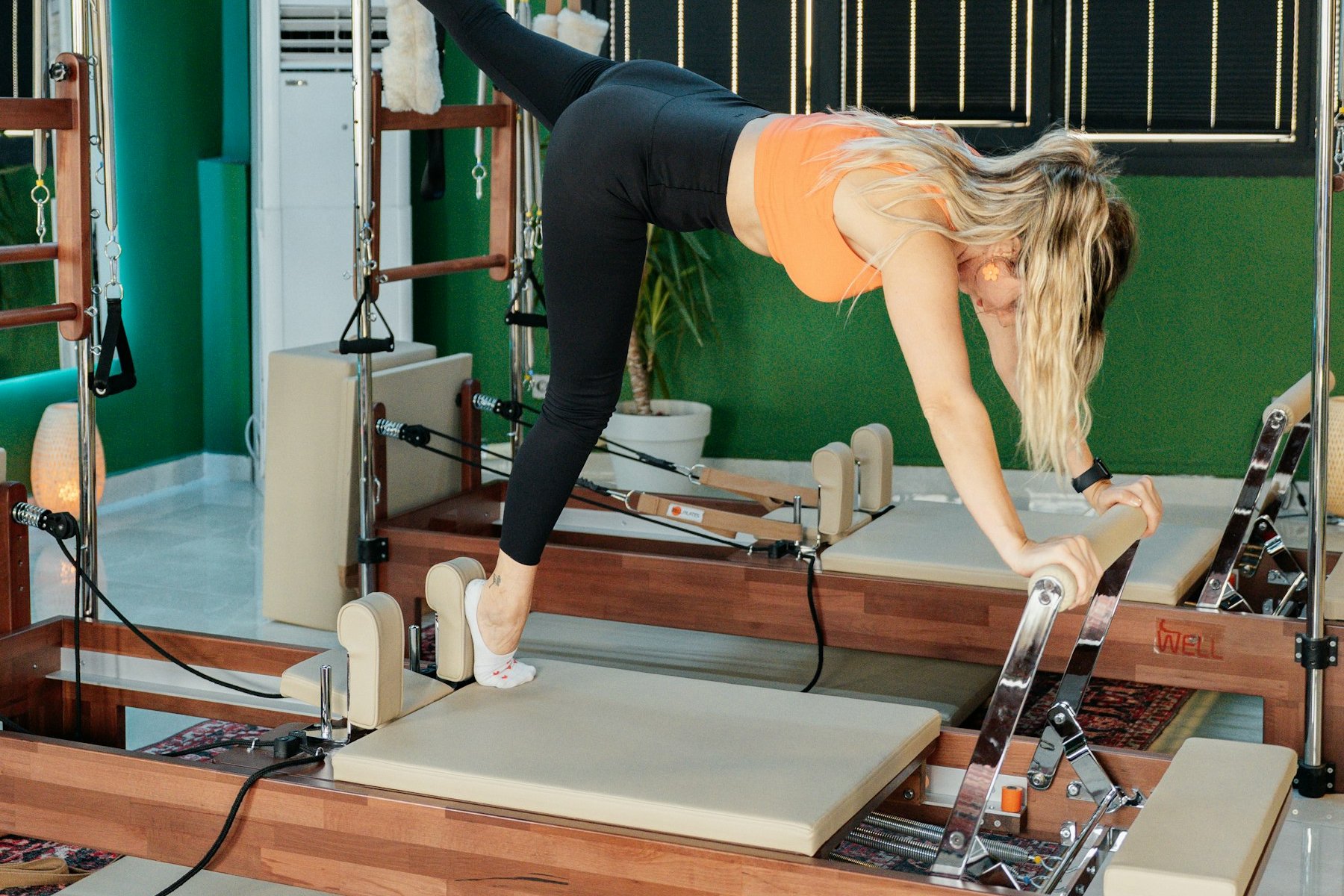
A reformer is a sliding carriage on rails, attached to springs of different tensions, with a footbar at one end and straps and pulleys at the other. The springs can make a movement harder (you’re pushing against them) or easier (they’re helping you through a range you can’t yet control). That second job gets overlooked. On the mat, a roll-up is brutally hard for a beginner with weak abdominals; on the reformer, the straps can take some of the load so you can learn the pattern.
Ajia Lee Forster of Move Union put it well when Which? looked at reformer Pilates in February: “The reformer is often seen as intimidating, but it was actually designed to support the mat work.” That’s roughly the history in one line: the apparatus came out of the mat work, not the other way round.
What the machine adds, in practice:
- Adjustable resistance, so legs and glutes get a meaningful load without dumbbells.
- Assistance for people who can’t yet hold a position unaided – useful after injury or a long layoff.
- Smaller classes. Which? found reformer groups are usually capped at six to 12, because that’s how many machines fit in the room. More eyes on you from the instructor.
- Feedback. If your pelvis rocks or one leg pushes harder, the carriage tells on you.
What it doesn’t add is a different kind of fitness. You’re still training trunk control, hip strength and mobility. A good mat class with a resistance band and a small ball covers most of the same ground. A bad reformer class, run at speed by an instructor shouting “burn!” over a playlist, covers less of it than people think.
The £3,000-a-year question
Which? priced reformer group classes at £20 to £45 a session in person, with private reformer sessions anywhere from £70 to £200. Mat group classes came in at roughly £10 to £30. Some gym chains are cheaper still – PureGym advertises Pilates classes at selected gyms from £2 a class.
Do the maths on a habit. Two reformer classes a week at £30 is £3,120 a year. Two mat classes at £12 is £1,248. If your gym membership already includes a Tuesday-night mat session, it’s close to nothing.
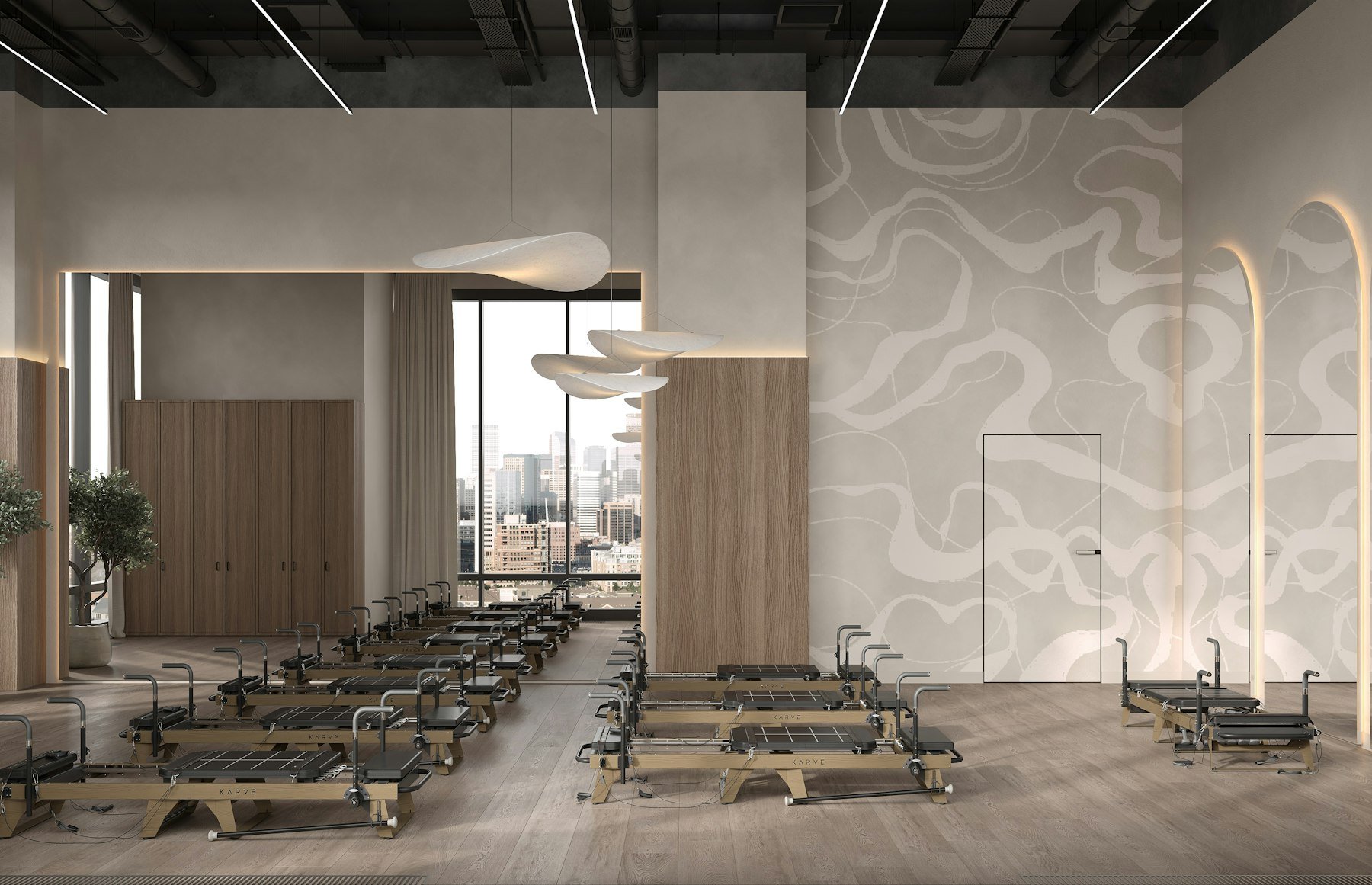
That gap is the whole debate, really. For about £1,900 a year, you’d want the reformer to be doing something the mat can’t, and for most healthy adults who just want a stronger core and a back that doesn’t moan after a day at a laptop, I don’t think it is. I’ll say it plainly: a lot of the reformer boom is about the room. The pale wood, the arched mirrors, the grippy socks you’re required to buy at the desk for £12. It’s a lovely hour. It’s also an hour you could get most of the benefit from for a third of the price.
The “long, lean muscles” line is nonsense
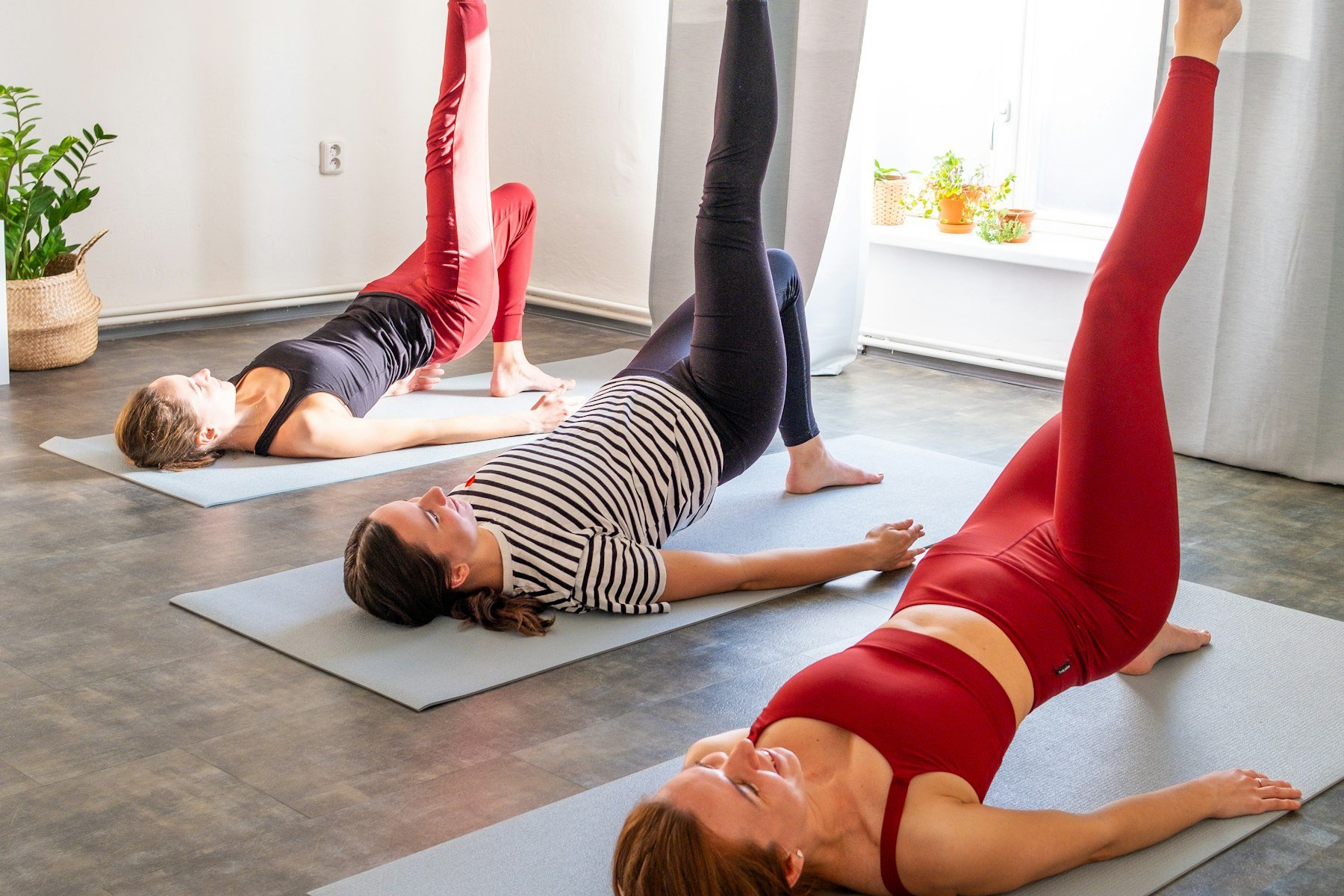
You’ll hear it in almost every studio, and I heard myself say a version of it to clients years ago before I knew better. Pilates, the story goes, builds “long, lean” muscles, while lifting weights makes you bulky.
Muscles don’t get longer because you trained them on a sliding carriage. A muscle’s length is set by where it attaches to bone. What changes with training is its size and how well your nervous system uses it, and the look people describe as “lean” is mostly down to body fat, which depends on diet and overall activity far more than the class you pick. Reformer work can build some strength in the legs and glutes because the springs give a decent load. But the heaviest spring setting on a studio reformer isn’t close to what a moderately trained person can squat or deadlift, and if building muscle is your goal, a barbell will get you there faster and cheaper.
None of that makes Pilates pointless. It makes it a mobility, control and core-endurance practice, which is a perfectly good thing to be. Just don’t buy it expecting a body it was never going to give you.
Who the reformer is worth paying for – and who should steer clear
There are people for whom the machine earns its price. If you’re coming back from an injury and a physiotherapist recommends it, a physio-led reformer class is often worth the premium, because the springs let you load a joint in a controlled way and the instructor has clinical training. Which? noted that these classes exist and cost more. The same goes for older beginners who find getting up and down off the floor a struggle – the reformer sits at knee height, and that alone can be the difference between going and not going.
It also suits people who get bored easily. That’s not a joke. Adherence is the single biggest factor in whether any exercise works, and if the reformer’s variety keeps you coming back where a mat class wouldn’t, that’s a legitimate reason to pay for it.
And then there are people who should be careful, whichever version they choose:
- Anyone with osteoporosis or a history of spinal fractures. Plenty of classic Pilates moves – the roll-up, the “hundred”, rolling like a ball – involve loaded forward bending of the spine, which is the movement people with fragile vertebrae are usually advised to limit. Tell the instructor before the class, not halfway through.
- Pregnant women who haven’t done Pilates before. Pregnancy-specific classes exist for a reason; a fast-paced general reformer class isn’t the place to start.
- People in the middle of a sciatica flare or a sudden bout of back pain they haven’t had checked. Get a GP or physio to look at it first.
- Anyone tempted by “high-intensity” reformer formats as their very first class. These have exploded alongside the classic style and they’re closer to a circuit class on a moving platform. Fine for fit regulars. Not a beginner’s introduction.
Elle Kealy of M.O Pilates told Which? that Pilates is “so effective and challenging, but only when done right”. I’d underline the second half of that. The quality of the teaching matters more than which piece of kit you’re on.
Don’t buy the Aldi reformer
Every few months a budget home reformer turns up as a limited release – Which? mentions both Aldi and B&Q selling basic versions – and they sell out in hours. Home machines run from about £150 to £7,000, and the cheap end is where I’d urge caution.
A reformer is a carriage moving under spring tension with your body on it. The springs, the rails and the stopping mechanism are the whole point. Kealy’s advice in the Which? piece was to “choose a safe and reliable reformer from a trusted brand”, and the trusted brands – Align-Pilates, Balanced Body and the like – cost thousands. A £200 version folded under the bed is, in my view, a false economy: you won’t have an instructor checking your setup, you won’t know which spring to use, and most people I’ve known who bought one used it for a few weeks before it became a very expensive clothes rail. If you want to train at home, a decent mat, a long resistance band and a few NHS or YouTube videos will do more for you.
And if you’ve got the space and the budget for a proper machine, book six or eight studio classes first. You’ll find out whether you actually like it before you spend the price of a second-hand car.
Related: if you’ve been eyeing other home-fitness kit this winter, our look at whether vibration plates work and the evidence on massage guns are worth reading before Black Friday.
How I’d split it if I were starting in January
If you’re a healthy adult who wants a stronger trunk and fewer twinges, start on the mat. Find a small class – ideally under 15 people – with a teacher who knows your name by week three and gives you options rather than one version of every move. Go twice a week for eight weeks before you judge it.
Then add one reformer class a week if you can afford it and you enjoy it. Think of it as the treat, not the foundation. You’ll get more out of it because you’ll already understand what your pelvis and ribs are supposed to be doing, and you’ll stop paying £30 to spend half the class figuring out the straps.
If you’re recovering from an injury, flip that order and start with a physio-led reformer class. If you’re already lifting weights and want Pilates for mobility and control, a mat session once a week is plenty; you don’t need the springs when you’ve already got a barbell.
And whichever you choose, pair it with something that gets your heart rate up. Pilates on its own won’t do much for your cardiovascular fitness. Our pieces on zone 2 cardio and the Japanese walking workout cover two cheap ways to fill that gap, and if you’re the competitive type, our Hyrox beginners’ guide explains why a strong core will save your knees on race day.
The boom will settle eventually. Spin had its moment, then barre, and some of those gleaming studios will be something else by 2028. The mat will still be there, still cheap, still doing most of what it always did. So here’s my question for you: if you’ve done both, which one actually kept you going back after the first month – and was it the workout or the room?