
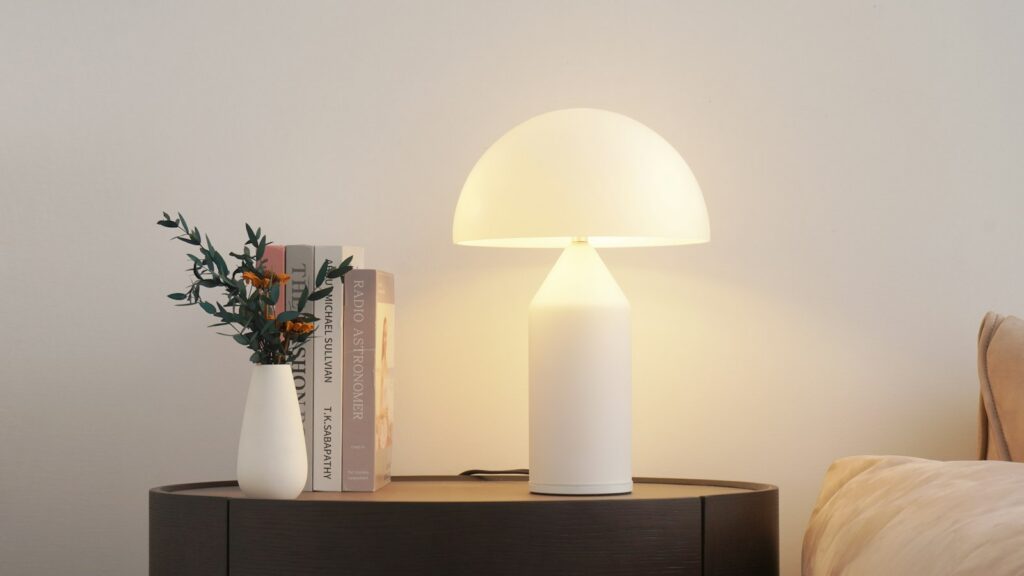
Cosy Living Room Lighting Ideas for Winter 2026: What £100 of Lamps Fixes, and Why the Big Light Isn’t the Villain
The sun goes down in London before half past four this week, and in most British living rooms that’s the moment somebody reaches for the switch by the door. The big light comes on, the room goes flat and bright like a dentist’s waiting room, and everyone quietly agrees it’s fine. It isn’t. But the usual fix for cosy living room lighting – buy a load of lamps and ban the ceiling light forever – gets a couple of things wrong, and one of them costs money.
In This Article
- The big light was never the villain
- Cosy living room lighting ideas that start with the bulb, not the lamp
- Two lamps is the minimum, not the target
- What £100 actually buys, and what £250 adds
- The £100 room
- The £250 room
- Where I'd stop spending
- Cordless lamps are a nice extra, not the main event
- Where the lamps go matters more than which lamps you buy
- Keep the big light – just demote it
So this is a slightly contrary guide. I’ve spent the last month rearranging the lighting in a dark Victorian terrace sitting room (north-facing, one window, a three-arm ceiling fitting the previous owners clearly loved), and pricing up what the high street sells for under £100. What follows is what actually changed the room, what didn’t, and the bit of the “turn off the big light” movement I think is overrated.
The big light was never the villain
Start with the money, because that’s the argument you’ll hear most often for switching to lamps. It’s mostly wrong.
Ofgem’s cap for October to December puts electricity at an average of 26.32p per kWh on direct debit, with VAT removed from electricity bills until the end of March. A three-arm ceiling fitting with 6W LED bulbs draws 18W. Run it for five hours a night and it costs about 2.4p, or roughly £2.84 across the 120 darkest nights of the winter. Two table lamps with 5W LED bulbs, on for the same five hours, cost around £1.58 between them over the same stretch. You’d save about £1.26. That’s not a reason to buy anything.
There’s one big exception, and it’s worth checking before you spend a penny on lamps. If your living room has a ring of old halogen GU10 downlights – the kind fitted in thousands of 2000s kitchen-diner extensions – six of them at 50W each pull 300W. Five hours a night at the current rate is about 39p, or £47 over the winter. Swapping those bulbs for 5W LED versions brings that down to under £5. It’s the cheapest lighting upgrade in this article and nobody puts it on Instagram, because a box of bulbs from Screwfix doesn’t photograph well. If you’re already doing the sums on energy saving gadgets that actually pay back, start there.
And the designers have come round too. Homes & Gardens asked a run of interior designers whether the big light is back, and the answer was a qualified yes – as long as it’s treated as one layer among several, or as a piece of art in its own right. Lee Broom called ceiling lights “jewelry for ceilings”. Christian Bense’s advice was to put the big light in the corner. Neither of them said rip it out.
So the problem isn’t that the ceiling light exists. It’s that it’s often the only light, at full whack, from directly overhead, which throws every face into shadow and makes the edges of the room disappear.
Cosy living room lighting ideas that start with the bulb, not the lamp
Here’s what made the biggest difference in my sitting room, and it cost less than a takeaway: changing the colour of the bulbs.
Most LED bulbs sold as “warm white” sit around 2700K. That’s fine, and it’s a big step up from the bluish 4000K “cool white” bulbs that sometimes end up in living rooms because they were the multipack on offer. But for the lamps you use after dark, go warmer still – 2200K bulbs, often sold as “extra warm” or filament-style, give that amber, candle-ish glow people are actually trying to buy when they buy a £300 lamp. Put a 2200K bulb in a £30 lamp and a 4000K bulb in a £300 one, and the cheap lamp wins. Every time.
Brightness matters just as much. A lamp that’s meant to glow in a corner doesn’t need a 806-lumen bulb (the old 60W equivalent); something nearer 250 to 470 lumens is plenty. Too bright and the shade turns into a hot spot you can’t look at. Too dim and it’s decoration. If you can’t decide, buy dimmable bulbs and a plug-in dimmer, which gets you most of the benefit of a smart system without the app.
The ceiling light deserves the same treatment. Put warmer, dimmable bulbs in it and, if you can stretch to an electrician, a dimmer switch. Lara Bates, the designer behind Lara Et Al, told Homes & Gardens she loves a dimmer for exactly this reason: control over how much light you’ve got. A dimmed big light at 2700K is a completely different thing from a big light at full blast, and it’s what you’ll want when you’re hunting for a dropped earring behind the sofa.
Two lamps is the minimum, not the target
The interior stylist Iokasti Sotirakopoulou, writing for Livingetc last month, gave the most useful single rule I’ve come across: “Two is my comfortable starting point for most living rooms”, with a third if the room is large, open-plan or split into zones like a reading corner and a TV end. In a smaller room with a decent ceiling light, she suggests one table lamp and one floor lamp can be enough.
I’d push that slightly further. Two lamps get you out of the dentist’s waiting room, but four light sources is where a room starts to feel properly lived in. Bense, in the Homes & Gardens piece, goes to five: overhead, wall, floor, table and task. You don’t need all five on at once. You need enough of them, at different heights, that the room has pools of light and soft shadow rather than one even wash.
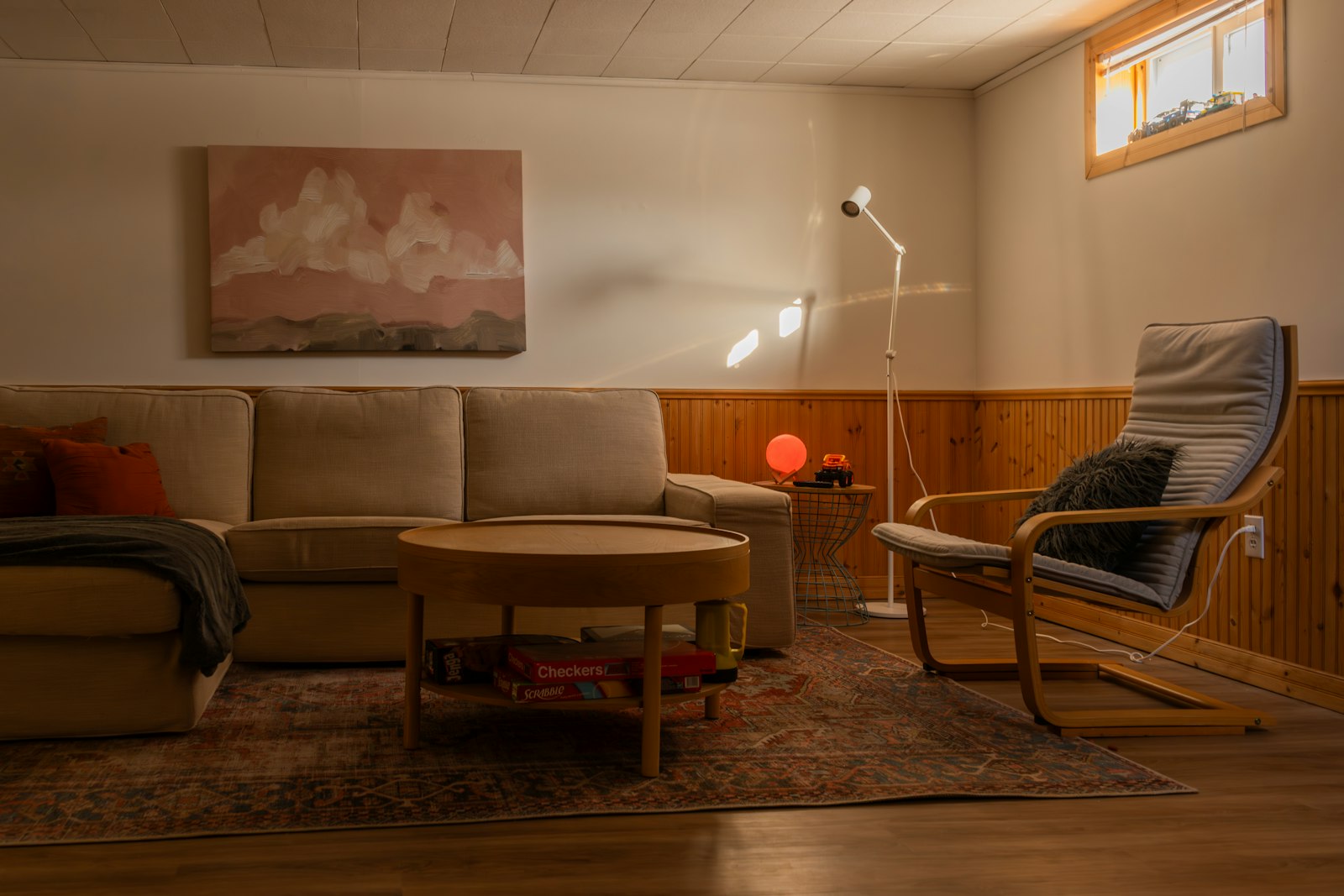
Height is the thing most people get wrong. If every lamp is a table lamp on a side table at the same level, you’ve just moved the flatness down a metre. Mix them: a floor lamp that throws light up and across the ceiling, a table lamp at sofa-arm height, something low on a shelf or a sideboard, and maybe a wall light near a chair. In my room the single most effective move was a floor lamp in the darkest corner, the one furthest from the window, which made the whole room feel bigger in a way the ceiling light never did. Corners are where rooms go to die after dark. Light them first.
What £100 actually buys, and what £250 adds
Prices below are as listed by the retailers and by the magazine round-ups we checked this year; they move about, especially in the run-up to Black Friday on 27 November, so treat them as a guide rather than a promise.
The £100 room
The H&M Rice Paper Floor Lamp (£59.99) does the corner job. Paper shades diffuse light beautifully, they’re light enough to move about, and they look more expensive than they are. Pair it with the Dunelm Paris 2 Light Table Lamp (£31.20) on a side table at sofa height, and you’re at £91.19. Spend the change on a pack of 2200K bulbs. That’s a properly layered room for under £100, and it’ll do more than any single designer lamp.
The £250 room
Swap the paper floor lamp for the M&S Andie Curved Floor Lamp (£130), which arches over a chair and works as a reading light as well as background glow. Add the M&S Glass Small Table Lamp (£39.50) for a shelf or sideboard. Then add a wall light: the M&S Brass Rechargeable Wall Light (£39.50) needs no wiring, which matters if you rent or can’t face chasing cables into plaster. Round it off with Dunelm’s FlexiCell Louis base (£28) and one of its £6 to £8 clip-on shades for a fourth point of light. That comes to about £243 and gives you four sources at four different heights.
Where I’d stop spending
Above that, you’re mostly paying for the name. The Livingetc round-up includes the Soho Home Kea Table Lamp at £495 and the Kartell Teresa at £422 from John Lewis. They’re lovely objects. But a lamp’s job in a cosy room is mostly to glow behind a shade, and once the bulb’s right, the difference between a £40 lamp and a £400 one is something you notice with the light off, not on. If you want to spend serious money on one thing in the living room this winter, I’d put it into a single statement piece of furniture – we’ve written about why sculptural accent chairs are the piece designers keep reaching for – and keep the lamps cheap.
Cordless lamps are a nice extra, not the main event
This is where I part company with a lot of the coverage. Rechargeable lamps have been the high street’s favourite lighting story for two years, and every retailer now has one. They’re really handy for a dining table, a bathroom shelf or a garden table in summer. As the main lamps in a living room, though, I think they’re overrated.
The reason is the charging. IKEA’s Avhåll portable lamp (£25) is a good-looking thing, but by T3’s figures it runs for up to nine hours at full brightness and takes around ten hours to charge fully – and the USB-C cable is sold separately. That’s a lamp you’ll be ferrying to a socket every couple of days through the darkest months, and the one evening you forget, it’ll die halfway through a film. I tried a similar cordless lamp on the sideboard for a fortnight in October and by the second week I’d left it plugged in permanently, which rather defeats the point.
The better buys are the ones that don’t force the choice. Dunelm’s FlexiCell Louis base, according to Ideal Home, lasts up to 24 hours after a four-hour charge and can also run off the mains, so it lives plugged in on the sideboard and comes off the lead when you want it on the dining table for Christmas lunch. H&M’s Rechargeable Table Lamp at £29.99 is another sensible one for the odd shelf. Use cordless for the awkward spots with no socket nearby. Don’t build the room around them.
Where the lamps go matters more than which lamps you buy
A few placement rules that made a real difference in testing, in no particular order.
Keep bulbs out of your eyeline. If you can see the bare bulb from the sofa, either the shade’s too shallow or the lamp’s too tall for where it’s sitting. A table lamp beside a sofa works best when the bottom of the shade sits roughly at eye level when you’re seated.
Light the wall you look at, not the one behind you. Most people put a lamp behind the sofa and wonder why the room still feels dark. Light bouncing off the wall opposite, or off a bookshelf or a picture, is what makes a room feel warm. A low lamp under a painting does more than a bright one in a corner you never face.
Don’t line them up. Lamps in a row along one wall look like a showroom. Spread them out so there’s a light source in at least two or three different parts of the room.
Watch the TV. A bright lamp right next to the screen causes glare, and watching a dark film in a pitch-black room is hard on the eyes. A soft lamp to one side, or a strip of warm LED behind the set, sorts both. If you’re upgrading the screen for the football or Christmas films, our guide to 55-inch TVs under £500 before Black Friday covers which panels cope best in a lamp-lit room.
Put the lamps on timers. A pair of plug-in timers, set to come on at sunset, means you walk into a lit room rather than fumbling for the big light by the door, which is the habit you’re actually trying to break. They’re a few pounds each. And on dark mornings, a sunrise alarm clock does the same job at the other end of the day.
Keep the big light – just demote it
The honest version of the “no big light” rule is “not just the big light”. Keep it for cleaning, for hunting for the remote, for the half-hour when the kids are doing homework at the coffee table. Put warmer bulbs in it and a dimmer on it, and if it’s a dated flush fitting you hate, swap it for something you’d be happy to look at, which is the designers’ point about the ceiling light as art.
Then build the evening around lamps at different heights, warm bulbs, and the dark corner you’ve been ignoring. In my sitting room, the total spend was a little over £100, the electricity difference is pennies, and the room feels like a different room after half four. While you’re there, check the gaps around the windows and skirting, because a lamp-lit room with a draught still feels cold – our guide to draught proofing on a budget covers what £50 fixes.
Ofgem announces January’s price cap on 25 November, so that’s a sensible point to look again at what you’re running and when. In the meantime, I’m curious: which room in your house still lives under the big light every evening, and what’s stopping you switching it off?