
Best Kids Smartwatch 2026: The First-Phone Answer to September’s School Ban – From £109 to £289
For twenty years the first-phone conversation went the same way. Child starts secondary school in September, child gets a smartphone, parents spend Year 7 arguing about it. That script died on 29 June, when the phone ban in England’s schools stopped being guidance and became law. And so the question thousands of families are asking this August isn’t which phone – it’s whether the best kids smartwatch can do the job instead, for less money and considerably less grief. And the family phone question no longer stops at the child’s wrist: the copper landline network their grandparents still rely on switches off for good in January 2027.
In This Article
- Why the first-phone question changed on 29 June
- The awkward bit: your child's school probably bans smartwatches too
- What a first watch actually needs to do
- Best kids smartwatch under £120: the imoo Watch Phone Z1
- The Xplora X6 Play: what £150 plus £7.99 a month gets you
- The Apple Watch SE: when it makes sense – and when it's £289 of overkill
- What I'd buy at 7, 9, 11 and 13
- The subscription maths nobody does at the till
- Which SIM to put in it
- Four claims on the box you can ignore
- Security questions worth asking before you buy
Having spent a chunk of the summer holidays with three of them strapped to a nine-year-old, I can tell you the answer is mostly yes – with one legal catch the adverts don’t mention, and a subscription trap that turns a £150 watch into a £340 commitment.
Prices below range from £109 to £289, and the cheapest one is the one I’d buy.
Why the first-phone question changed on 29 June
Section 36 of the Children’s Wellbeing and Schools Act 2026 came into force at the end of June, and the government guidance expects every state school in England to run a phone-free day from 1 September – not just lessons, but corridors, breaktime and lunch.
In practice most schools were already there. A 2025 survey by the Children’s Commissioner found around 90% of secondaries restricted phones in some form, and the House of Commons Library briefing on the ban makes clear the law mostly formalises what heads were doing anyway. But formalising it changes the buying decision. A £300 smartphone that spends seven hours a day in a locked pouch is a strange thing to buy an eleven-year-old. What parents actually want from a first device is narrower: call me, text me, tell me where you are, and don’t put TikTok in a ten-year-old’s pocket.
That’s a watch. It’s been a watch for years, frankly – Norwegian firm Xplora and China’s imoo have been quietly selling millions of them while British parents defaulted to hand-me-down iPhones. The ban has just made the maths obvious.

The awkward bit: your child’s school probably bans smartwatches too
Before you spend a penny, read the school’s policy, because this is where the marketing gets ahead of reality. The statutory guidance covers phones, but it lets schools extend restrictions to any device with similar functions – and a 4G watch that makes calls is exactly that. Some schools require communicating smartwatches to be switched to a restricted mode; a few ban them outright. Barnet, the London borough that went early on all this, prohibits smartwatches entirely but allows old-fashioned brick phones for the journey.
The manufacturers saw this coming. Every watch in this piece has a school mode – the screen locks to a clock face during set hours, calls and messages are silenced, and the watch quietly carries on logging location. Set it up properly and most schools are satisfied. Skip it and the watch is getting confiscated by half term.
One more thing the ads won’t say: if your child walks to school alone and you only want contact for the journey, a £35 brick phone from Tesco with a £5 PAYG SIM does the core job for a fifth of the price. It won’t do GPS and it has all the playground cachet of a school shoe. But it works, and some schools prefer it.
What a first watch actually needs to do
Strip away the marketing and a first device has four jobs. Reach a parent by call or message. Be reachable in return. Share a live location. And refuse to talk to anyone you haven’t approved. That’s it. Everything else on the spec sheet – dual cameras, AI chatbots, mini app stores, “emotional wellbeing scores” – is padding, and some of it is worse than padding.
The camera is the one kids care about most and the one you should care about least. Every watch here takes photos somewhere between “grainy” and “acceptable”, they’re all fine for wrist selfies, and none of them matters. What does matter: call quality on a windy pavement, whether the GPS updates fast enough to be reassuring rather than alarming, and whether the battery survives from breakfast to pick-up with school mode on. Those three things separated my test watches far more than any headline feature.
Be suspicious of anything advertising an app store for children. The entire case for a watch over a phone is that it can’t grow a social media habit. A watch that runs third-party apps is just a very small phone with a worse screen, and you’ll have bought the problem you were trying to avoid.
Battery deserves one more line. Nightly charging is the norm across the category – treat any claim of a week’s battery on a 4G kids’ watch the way you’d treat a £15 “waterproof” phone case.
Best kids smartwatch under £120: the imoo Watch Phone Z1
The imoo Z1 is the one I keep recommending to people, partly because at £109 it undercuts everything else that actually works, and partly because imoo – part of the same Chinese group behind Oppo and OnePlus – has been making nothing but kids’ watch phones for over a decade. This isn’t a shrunken adult smartwatch. It’s a phone for a wrist, designed by people who have thought hard about eight-year-olds.
You get 4G video and voice calls, live GPS, and proper waterproofing – pool-proof, not just rain-proof, which matters because children don’t take watches off. Two features earn the money on their own. Class Mode shuts everything down on a timetable, which is your school-policy answer. And Stranger Rejection blocks any call from a number that isn’t in the parent-approved contact list, which kills the scam-call problem stone dead.
Negatives? The strap screams primary school, so image-conscious Year 7s may revolt. The parent app occasionally nags you to buy accessories, which grates. And there’s no app store at all – though depending on your view of a ten-year-old with an app store, that’s arguably the entire point.
The Xplora X6 Play: what £150 plus £7.99 a month gets you
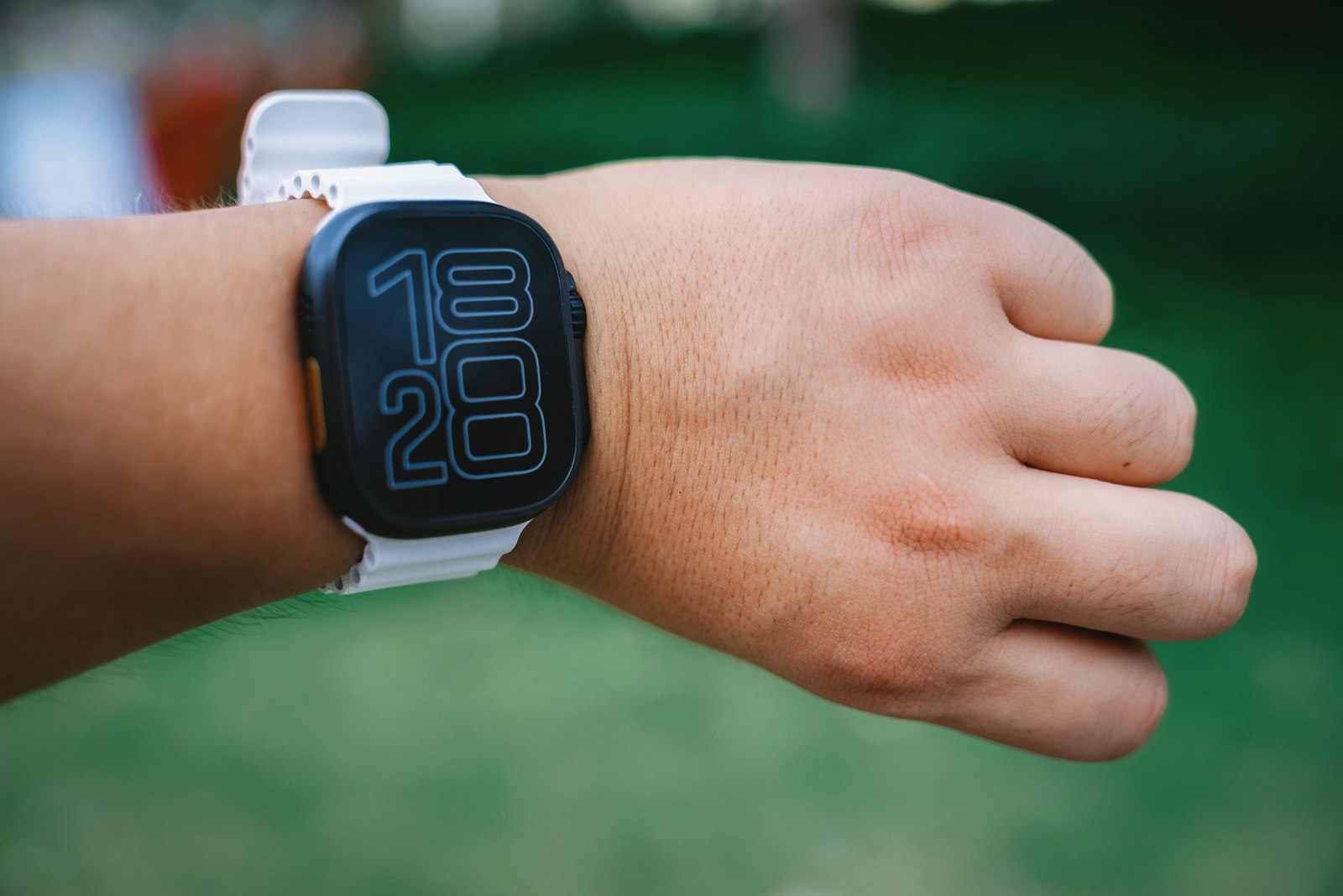
The X6 Play is the polished one – CES award, sharp screen, decent camera, and the watch most UK schools will already have seen on wrists. It launched at £180 and now floats around £150. Calls, messages, GPS with safe zones, an SOS button, a school mode, and a step-counting scheme that converts activity into coins kids can spend on rewards, which sounds gimmicky and works annoyingly well. On a week’s testing in July the battery needed charging every night, which is the price of that screen.
The catch is the business model. The watch needs Xplora’s own subscription to do anything useful – from £7.99 a month with a 12-month minimum. You can’t just drop in a spare SIM and walk away. Over two years that’s £150 for the watch and roughly £190 in fees: £340 all in, more than triple the sticker price of the imoo plus a cheap SIM. Xplora’s connectivity is genuinely well sorted once running, but you’re renting the product, and the Trustpilot reviews about cancelling are not a fun read.
Buy it if the school-gate factor matters and your child would leave the imoo in a drawer. Otherwise the £109 watch does 90% of this for a third of the lifetime cost.
The Apple Watch SE: when it makes sense – and when it’s £289 of overkill
Apple’s answer is Family Setup: pair an SE to your own iPhone, and the child gets calls, messages, location sharing and Schooltime – Apple’s own lessons-lockout mode – without owning a phone. It’s slick, the location tracking is the best here, and for a 13-year-old it’s the only option on this page they’ll actually wear with pride.
But look at the cost with cold eyes. You need the cellular model, which starts at £289 for the current SE, plus a monthly watch plan from your network, and Family Setup only exists if a parent has an iPhone – Android households are excluded entirely, no exceptions. For a primary-school child that is a lot of money for the same four functions the imoo delivers at £109. I’d go further: strapping £289 of Apple hardware to a nine-year-old is buying it for the parents, not the child. Save it for secondary school, if at all.
What I’d buy at 7, 9, 11 and 13
At seven, honestly, nothing with a SIM in it. A child who is never out of an adult’s sight doesn’t need a phone on their wrist, whatever the school-gate arms race suggests. If you want the location comfort on days out, an AirTag-style tracker in a bag pocket costs £30 and needs no subscription, no charging routine and no conversation about screen time.
At nine – the age when solo walks to school, football practice and the corner shop start happening – the imoo Z1 is the sweet spot. The four core jobs, done properly, at the lowest running cost in the category. This is the purchase most families are actually shopping for in August, and it’s the one where the expensive options add the least.
At eleven it gets harder, because Year 7 is a status minefield and a babyish watch will simply stop being worn. The X6 Play survives the playground test better than anything else without an Apple logo on it. Budget for the subscription with your eyes open and it’s a good product; sign up assuming you’ll cancel early and you’ll be cross.
At thirteen, be realistic: the watch era is ending. If the goal is delaying the smartphone a little longer, the Apple Watch SE is the only wearable a teenager will tolerate, and Schooltime plus the new law gives you more cover than parents have had in a decade. But you’re holding back the tide, and the £289 might be better saved for the phone negotiation you’ll be having by Christmas.

The subscription maths nobody does at the till
Every one of these devices needs a data connection, and this is where the real ranking gets decided. Two-year cost, all in:
A brick phone with a PAYG SIM lands around £150. The imoo Z1 with a cheap 4G SIM comes in near £290. The Xplora X6 Play hits about £340 on its cheapest plan. And the Apple Watch SE with a typical £5-a-month watch plan clears £400 before you’ve bought a strap.
| Device | Upfront | Ongoing | Two-year total | Locked in? |
|---|---|---|---|---|
| Brick phone + PAYG SIM | £35 | ~£5/month | ~£150 | No |
| imoo Watch Phone Z1 | £109 | ~£6-8/month SIM | ~£290 | No – any SIM works |
| Xplora X6 Play | £150 | from £7.99/month | ~£340 | Yes – 12-month minimum |
| Apple Watch SE (cellular) | £289 | ~£5/month watch plan | £400+ | Needs a parent’s iPhone |
There’s a resale angle too, since these are two-to-three-year devices at best. A SIM-free imoo sells on easily when it’s outgrown. A watch welded to a manufacturer subscription is a harder thing to shift on Vinted, and the listings sitting unsold at £60 tell you the market has noticed.
The gap between cheapest and dearest is roughly £250 – the price of a decent kids’ tablet and most of a hall room’s worth of kit besides. If you’re already doing a September spend alongside a back-to-school laptop, that difference isn’t decoration.
Which SIM to put in it
The imoo’s biggest advantage – taking any SIM – comes with one trap that catches parents every September. The UK networks have been switching off their 3G signals, and a kids’ watch makes its calls over 4G using something called VoLTE. Most big-name SIMs support it. Some of the cheaper virtual networks still don’t, or only support it on phones they recognise – and a watch isn’t one. The symptom is maddening: data works, the app shows the watch online, and calls silently fail.
So before term starts, put the SIM in and ring the watch from the school run, not from the sofa. A PAYG plan at about £6 a month with calls and a gigabyte of data is all the watch needs; anything more is wasted. And avoid data-only SIMs entirely, however cheap – the watch needs a voice number or the one thing you bought it for doesn’t work.
Four claims on the box you can ignore
“Up to a week of battery.” On a 4G watch with GPS polling, it’s nightly charging. Every watch here, every night, no exceptions. The week-long figure comes from a mode with everything useful switched off.
“Precise GPS positioning.” Expect ten to fifty metres in the open, worse indoors, and the occasional teleport into a neighbour’s garden while the watch grabs a new fix. It’s reassurance, not surveillance – which is honestly the healthier way to use it anyway.
“HD camera.” It’s a camera on a wrist. Your child will take 400 photos of the ceiling in the first week and you’ll never look at any of them. Ignore it as a buying factor.
“AI companion” or wellbeing scores. A sleep score for a nine-year-old is a solution in search of a problem, and a chatbot on a child’s wrist is precisely the sort of feature this category exists to avoid. Treat it as a reason to buy something else.
Security questions worth asking before you buy
A word of caution before the September rush. Which? has been flagging security holes in kids’ smartwatches since 2019, when researchers found cheap models that let strangers listen in or fake a child’s location. The market has improved, and the three watches above all encrypt their traffic and lock contacts to a parent app. The £25 unbranded watches flooding online marketplaces are another story – a GPS tracker with weak security is worse than no tracker, because it can hand a child’s location to exactly the people you bought it to guard against.
So stick to firms with a reputation to lose, set up school mode before the first Tuesday of term, and check where the location data is stored. And if the watch comes from a brand you’ve never heard of at a price that seems too good, it is.
A watch is one route. The other is a phone that can’t do much, and we’ve weighed the two in our guide to the best first phone for kids, including why the cheap 2G Nokias on Amazon no longer work on every network.
The bigger question is what happens to the first smartphone now. If the watch covers Years 5 to 8, does the iPhone conversation simply move to age 14 – and will anyone miss the years it used to occupy?