

Caffeine Cut-Off Time in 2026: The 8.8-Hour Rule, and Why 2pm Means Different Things at Costa and Starbucks
A medium cappuccino at Costa holds 325mg of caffeine. The same drink at Starbucks holds 89mg. Which? measured both this August, and the gap makes nearly every piece of advice about coffee and sleep look a bit daft.
In This Article
- Where the 2pm rule actually comes from
- What the 2023 meta-analysis found on caffeine cut-off time
- A Costa cappuccino is not a Starbucks cappuccino
- Why your caffeine cut-off time isn't mine
- The problem is that you won't feel it
- Caffeine cut-off time by drink: a working guide
- Stop trying to hack your way round it
- The evening gym problem nobody mentions
- A sensible plan for the week the clocks change
- What I'd want to know next
The usual rule is “nothing after 2pm”. I’ve looked for the study behind it and can’t find one. That doesn’t prove there isn’t one, but the research I can find points somewhere messier: your caffeine cut-off time depends on how much is in the cup, how quickly your body clears it, and when you actually go to bed. Clocks go back on Sunday 25 October, and plenty of us will be reaching for a third coffee in the dark by 4pm. So it’s worth knowing what the evidence says before then.
Where the 2pm rule actually comes from
Short answer: nobody can tell me, and I’m guessing here that it’s folklore that got repeated until it sounded like guidance. It’s a tidy, sensible-sounding number, the sort of thing a GP might say in passing, and tidy numbers travel.
But a rule that ignores the size of the drink is a poor rule. And it ignores the person too.
The NHS gives the baseline numbers: about 100mg in a cup of instant coffee, 75mg in a cup of tea, 40mg in a can of cola and 80mg in a 250ml can of energy drink. Its pregnancy guidance caps intake at 200mg a day. For other adults, the European Food Safety Authority’s 2015 opinion put the line at 400mg a day, with single doses of up to 200mg considered safe. Neither of those is about sleep. They’re about safety, and they’re a different question from “when should I stop”.
What the 2023 meta-analysis found on caffeine cut-off time
The best single source I’ve found is a 2023 systematic review and meta-analysis by Gardiner and colleagues in Sleep Medicine Reviews. It pooled 24 studies on caffeine and the sleep that follows. The headline: on average, caffeine cut total sleep time by 45 minutes and sleep efficiency by 7%. People took 9 minutes longer to drop off and spent 12 more minutes awake during the night. Deep sleep fell by 11.4 minutes.
Then the bit that matters for timing. For a coffee of about 107mg in 250ml, the authors reckoned you’d want to stop at least 8.8 hours before bed. For a standard pre-workout serving of 217.5mg, it was 13.2 hours. (Summary via AJMC.)
Read that again. Eight point eight hours before an 11pm bedtime is about 2.15pm, so the 2pm rule isn’t far off for a small coffee. For a pre-workout, you’re looking at 9:45 in the morning.
The authors called those cut-offs “a starting point”, and they were right to. Caffeine’s half-life runs from roughly 2 to 10 hours across healthy adults, which is a five-fold spread. Three of the studies used wrist monitors that may have under-counted wakefulness. And dosing differed from study to study, so a regular drinker’s tolerance could be muddying the results. It’s a good paper with real limits.
A Costa cappuccino is not a Starbucks cappuccino
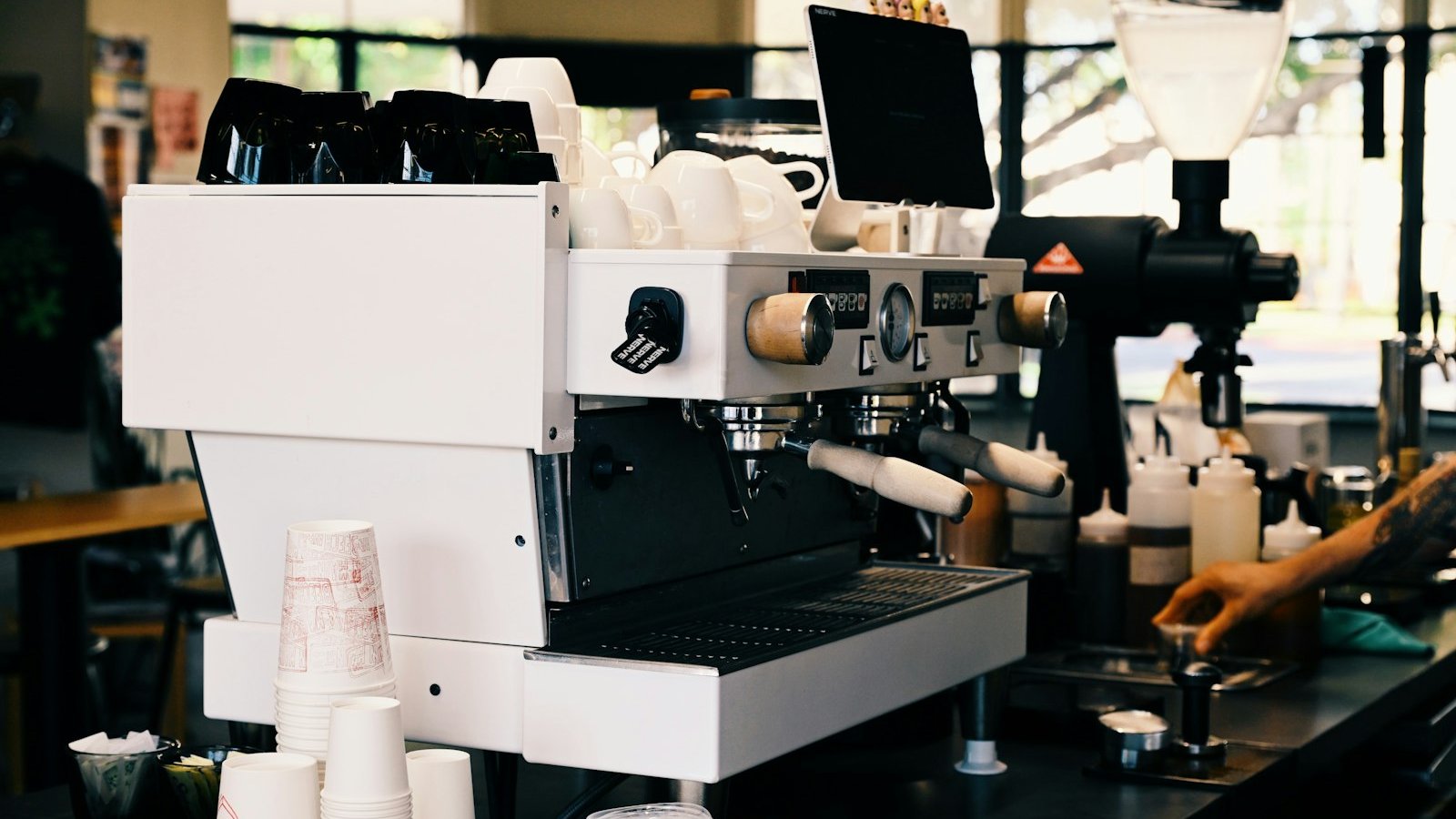
Here’s the awkward part. That 8.8-hour figure was for about 107mg. Which?’s latest high-street test, reported by the Irish Times on 25 August, measured a medium Costa cappuccino at 325mg. Greggs came in at 235mg and Caffe Nero at 221mg. Starbucks was lowest at 89mg.
Flat whites tell the same story: 241mg at Costa, 89mg at Starbucks. A Costa espresso shot was 100mg against 45mg. Even matcha swings, from 99mg at Costa to 57mg at Starbucks and just 28mg at Pret.
Caffe Nero’s cappuccino has roughly doubled in caffeine since Which?’s 2023 test, when it measured 110-115mg. Starbucks’ numbers have crept up as well, though it’s still the lowest of the five. Costa’s haven’t moved. Jessica Carson, Which?’s health and wellbeing expert, summed it up: “Our research shows caffeine content varies wildly from chain to chain.” Costa’s reply was that levels “can vary depending on factors such as the blend, recipe and serving size.”
So what does that do to a cut-off time? Take the meta-analysis at face value and a 325mg drink, roughly three times the amount in the 107mg coffee, plausibly needs a far earlier deadline than 8.8 hours. How much earlier? I don’t know, and I’d be wary of anyone who gives you a precise figure. I’m guessing here, but a morning-only rule for a Costa cappuccino and a lunchtime rule for a Starbucks one doesn’t look daft.
One more thing about that Costa cup. It’s over the 200mg single-dose figure EFSA used, and over the NHS’s whole-day pregnancy limit, in one drink. Nobody at the counter mentions that.
Why your caffeine cut-off time isn’t mine
That 2-to-10-hour half-life range is the most useful number in the whole debate, and it gets the least attention. Take two people drinking the same flat white at 1pm. One clears half of it by 3pm. The other is still carrying half of it at 11pm.
As far as I know, things that slow clearance include pregnancy and some hormonal contraception, and smoking speeds it up, but I’d check that with a pharmacist rather than take my word for it. The practical point is simpler: if coffee has ever kept you awake at 2am while your partner slept like a log, you’re probably at the slow end, and the generic rule was never written for you.
Slow clearers should work backwards from bedtime and add a safety margin. Fast clearers still lose sleep, as the studies show; they just lose less.
The problem is that you won’t feel it
The study I’d put in front of anyone who says “coffee never affects my sleep” is a small one. In 2013, Christopher Drake and colleagues at the Henry Ford Sleep Disorders and Research Center gave 12 healthy normal sleepers 400mg of caffeine at 0, 3 or 6 hours before bedtime. It was published in the Journal of Clinical Sleep Medicine. Even the dose taken six hours before bed cut total sleep time by more than an hour.
And the participants didn’t notice. Their own reports suggested they were unaware of the disturbance.
That’s a reason to distrust your gut on this. Twelve people is tiny, and 400mg is a big dose (four Costa espressos, going by Which?’s 100mg shot). But the pattern fits the meta-analysis: caffeine nibbles at sleep time and depth in ways you can’t feel the next morning. You can feel rough and put it down to the clocks, the kids, the news. The coffee never gets blamed.
If you already wear a tracker, that’s the one place the effect might show up in your own numbers. Wrist and ring trackers are better at counting hours than judging quality, though; we covered how far to trust sleep trackers and the short version is “not very”.
Caffeine cut-off time by drink: a working guide
Here’s the sourced amounts side by side. The right-hand column is my own judgement, not a research finding, so treat it as a rule of thumb.
| Drink | Caffeine (mg) | Source | My rule of thumb |
|---|---|---|---|
| Costa medium cappuccino | 325 | Which?, 2026 | Morning only |
| Greggs medium cappuccino | 235 | Which?, 2026 | Late morning at the latest |
| Caffe Nero medium cappuccino | 221 | Which?, 2026 | Late morning at the latest |
| Cup of instant coffee | 100 | NHS | Around the 8.8-hour line |
| Starbucks medium cappuccino | 89 | Which?, 2026 | Early afternoon is fine for most |
| Energy drink (250ml) | 80 | NHS | Treat as one coffee, not a soft drink |
| Cup of tea | 75 | NHS | Mid-afternoon, no real fuss |
| Can of cola | 40 | NHS | Low, but not zero |
The NHS figures are for a cup, and a builder’s mug is bigger. So the tea number is probably low if you drink it out of the sort of mug that holds half a pint.
Stop trying to hack your way round it
Here’s my contrarian view, and you won’t like it if you’ve spent money on this. Most of the sleep products sold to cancel out afternoon caffeine are a waste of money. That includes the blue-light-blocking glasses I wrote about last month (17 trials found no help for eye strain). It includes the magnesium powder that promises to take the edge off, since our own look at magnesium for sleep found the evidence thin. And I’d steer clear of reaching for melatonin to clean up after a bad night, because in the UK it’s a prescription medicine; our piece on melatonin gummies explains why the sweets aren’t the same thing.
I’d go further. A wearable that tells you your sleep score dropped after a late flat white is fine as a nudge, but you don’t need a £300 ring to learn what a free experiment will show you: drop the afternoon coffee for a fortnight and see how you feel waking up. If nothing changes, you’ve lost nothing but a drink.
The cheap fix is the boring one. Count milligrams rather than cups. Pick a cut-off by drink, not by the clock. Don’t use a 3pm coffee to patch a bad night, because that’s how a lost hour of sleep becomes a habit.
The evening gym problem nobody mentions
Pre-workout is where the 8.8-hour rule gets properly awkward. The meta-analysis put a standard serving, 217.5mg, at a 13.2-hour gap before bed. Now think about who actually drinks the stuff. It’s people training at 6pm after work, in the dark, with a bedtime of 11pm.
That’s a five-hour gap against a recommended thirteen.
I’m not saying skip the gym. Training late is better than not training, and the sleep cost of caffeine is real but modest next to the benefit of exercise. But if you’re one of the Hyrox and spin-class crowd who needs a scoop of something at 5:30pm to get through a session, you’ve found the place where timing matters most. A cup of tea at 75mg is a fairer deal than a tub scoop that’s nearly three times that, and a lot of tubs list the dose in small print on the back, so it’s worth reading. Evening trainers who already struggle to drop off are, in my view, the people most likely to be quietly paying for it. If that’s you, try a caffeine-free scoop or nothing for a fortnight, and see what your 6am alarm feels like.
A sensible plan for the week the clocks change
I wouldn’t tell anyone to quit. Coffee does give a real boost, and a single morning cup is unlikely to cost you much sleep, based on the thresholds in the Gardiner paper. The trouble starts when the dose or the timing creeps up.
So try this for ten days. Have your main coffee before 11am. If you drink a large high-street cappuccino, find out what’s in it first; Which?’s figures are a good starting point and the chains’ own sites sometimes list the numbers. After lunch, switch to tea, a small coffee or decaf. I can’t give you a sourced milligram figure for decaf, so I won’t pretend to, but it’s a fraction of the regular stuff.
If your sleep is still poor after two weeks, the problem probably isn’t the coffee. See your GP, especially if you snore loudly, wake gasping or feel exhausted all day, because those are NHS-listed symptoms of sleep apnoea, which needs proper assessment rather than a tweak to your latte. And if the mornings are the issue as the days shorten, a SAD lamp may do more for your energy than a fourth espresso.

What I’d want to know next
The honest gap here is dose. We have good evidence on a 107mg coffee and a 400mg test dose, and almost nothing that tells you what a 325mg high-street cappuccino does at 1pm. Someone should run that trial with a Which?-style cup, not a lab capsule.
Until then, you’re working from rough numbers and your own judgement. So what’s your cut-off time today, and have you ever checked what’s actually in the cup?