30 Nights With a £399 Sleep Ring: Sleep Tracker Accuracy in 2026 Is Better Than the Sceptics Say – and That Isn’t the Problem
The ring gave my sister’s wedding a 61.
In This Article
- What sleep tracker accuracy actually means – and the 83% figure nobody quotes
- Night 12: a 61 for the best night of the year
- Orthosomnia is real, and it's somewhere between 3% and 14% of wearers
- The price list, with the subscriptions people forget
- The one thing the ring did that a diary can't
- Who should wear one this autumn, and who should take it off
- What I changed after 30 nights
I’d had, by any sane measure, one of the best nights of 2026. Danced until one, slept until nine in a hotel bed the size of a small car, woke up without an alarm and felt fine. And there it was on my phone before I’d found my glasses: Sleep Score 61, “Pay attention”, a little amber arc telling me my readiness was compromised. That was night 12 of a 30-night test, and it’s the moment I stopped worrying about sleep tracker accuracy and started worrying about what the number does to the person reading it.
Because the accuracy question, it turns out, has a fairly clear answer now. The studies exist, the numbers are better than the sceptics claim, and none of it’s the real problem.
What sleep tracker accuracy actually means – and the 83% figure nobody quotes
Every validation study works the same way. You put people in a sleep lab for the night, wire them up for polysomnography (electrodes on the scalp, chin, legs, a belt round the chest – the gold standard, and about as restful as it sounds), strap the consumer devices on at the same time, and see how often the two agree, 30 seconds at a time.
The number to know first is 83%. That’s roughly how often two trained human technicians scoring the same polysomnography recording agree with each other on which sleep stage you were in. So no consumer device is going to beat that, and anyone marketing “clinical accuracy” is selling you something. The honest ceiling is “about as good as a second technician”.
Against that ceiling, the ring I wore does well. A 2024 study at Brigham and Women’s Hospital in Boston (published in Sensors) put 35 healthy adults through a single lab night wearing an Oura ring, an Apple Watch and a Fitbit Sense at once. Oura’s four-stage agreement with the lab came out at 79%. Adjusted for chance – the kappa statistic, which is the one researchers actually care about – Oura scored 0.65, Apple Watch 0.60, Fitbit 0.55. Apple’s watch overestimated deep sleep by an average of 43 minutes a night. Oura didn’t significantly over- or under-shoot any stage. It was funded by Oura, which you should weigh, but it was independently run and it broadly matches a separate University of Tokyo study of 96 people that found staging accuracy between 75% and 91% depending on the stage.
The wrist-worn field is patchier. A 2025 paper in Sleep Advances tested six wrist devices – two Fitbits, a Withings, a Garmin Vivosmart 4, a Whoop 4.0 and an Apple Watch Series 8 – on 62 adults, and the kappa scores ran from 0.21 to 0.53. “Fair to moderate” agreement, in the authors’ words. The Garmin overestimated total sleep by 38 minutes. The Whoop by 24. All six devices were very good at knowing you were asleep (over 90%) and fairly bad at knowing you were awake in the night, with specificity as low as 29%.
That last point matters more than the stage percentages. If you lie awake for 40 minutes at 3am, staring at the ceiling and not moving much, there’s a decent chance your tracker files it as light sleep. Which is precisely the wrong error to make for the people most likely to be lying awake at 3am.
So the honest summary in 2026 is this: the good rings and the newest watches are accurate enough to spot trends over weeks. None of them is accurate enough to trust on any single night. And the sleep score – the one number everyone actually looks at – isn’t a measurement at all.
Night 12: a 61 for the best night of the year
Back to the wedding. Why did a happy, long, alarm-free night score so badly?
Because a sleep score is a recipe, not a reading. Apple published its own with watchOS 26 last September: 50 points for duration, 30 for bedtime consistency, 20 for interruptions. Oura’s is more opaque but rewards the same things – going to bed at your usual time, a resting heart rate that drops early, “efficiency”. I went to bed three hours late, with two glasses of champagne and a portion of hog roast in me, in a room that was too warm. My heart rate stayed up until about 4am. Every one of those is a legitimate physiological observation. None of them means I slept badly. They mean I had a wedding.
The score can’t tell the difference, and it isn’t designed to. It’s designed to nudge you towards a monk’s routine every single night, and to make you feel slightly guilty when you don’t. That’s fine if a monk’s routine is what you’re after. Most people wearing these things have jobs, children, a social life and a train to catch, and for them the nightly score is mostly a tax on living.
Contrast night 22, a Tuesday. In bed at 10.40, up at 6.30, no alcohol, house cold. Score: 88, “Optimal”. I felt like something scraped off a shoe. Two nights later, the ring flagged an elevated body temperature and a resting heart rate four beats above my baseline, and I was in bed with a cold by the Friday. Which is the genuinely useful thing these devices do, and I’ll come back to it.
Orthosomnia is real, and it’s somewhere between 3% and 14% of wearers
Sleep doctors have a name for what happened to me on night 12. In 2017, Kelly Glazer Baron and colleagues at Rush University in Chicago published a short paper in the Journal of Clinical Sleep Medicine describing three patients who’d turned up at the clinic convinced they had a sleep disorder because their tracker said so. One of them, put through a full lab study, slept normally. She didn’t believe the lab. She believed the app. Baron called it orthosomnia, after orthorexia, and the paper’s subtitle – are some patients taking the quantified self too far – was a question in 2017. It isn’t any more.
The first attempt to count it came in 2024, in the journal Brain Sciences. Researchers surveyed 523 adults, of whom 176 (36%) regularly used a sleep tracker, and screened them for anxiety and preoccupation about sleep. Depending on how strict the cut-off, between 3% and 14% of the whole sample met the criteria for orthosomnia. The people who met it had higher insomnia scores than the people who didn’t, at every threshold. Cause and effect run both ways there – anxious sleepers are drawn to trackers – but the direction the 2017 case series describes, data making the sleep worse, is now on the record in a general population.
And the British numbers suggest a lot of the people buying these devices are exactly the ones the research warns about. Dreams’ 2026 UK Sleep Survey of 2,000 adults, run in January, found 8% of us now wear something to bed that tracks sleep and a further 10% use a phone app. The wearers skew young: 14% of 18 to 24-year-olds, against 2% of over-65s. The same survey found 44% of 18 to 24-year-olds worry about not getting a good night’s sleep most nights or every night, compared with 17% of over-65s. The group most anxious about sleep is the group most likely to strap a scorekeeper to it. I don’t think that’s a coincidence, and I don’t think it’s healthy.
My own version was mild. But I noticed, around night eight, that I’d started checking the score before I’d decided how I felt. The number came first; the feeling arranged itself to fit. On the 61 morning I was briefly, absurdly, tired – until I remembered I wasn’t.
The price list, with the subscriptions people forget
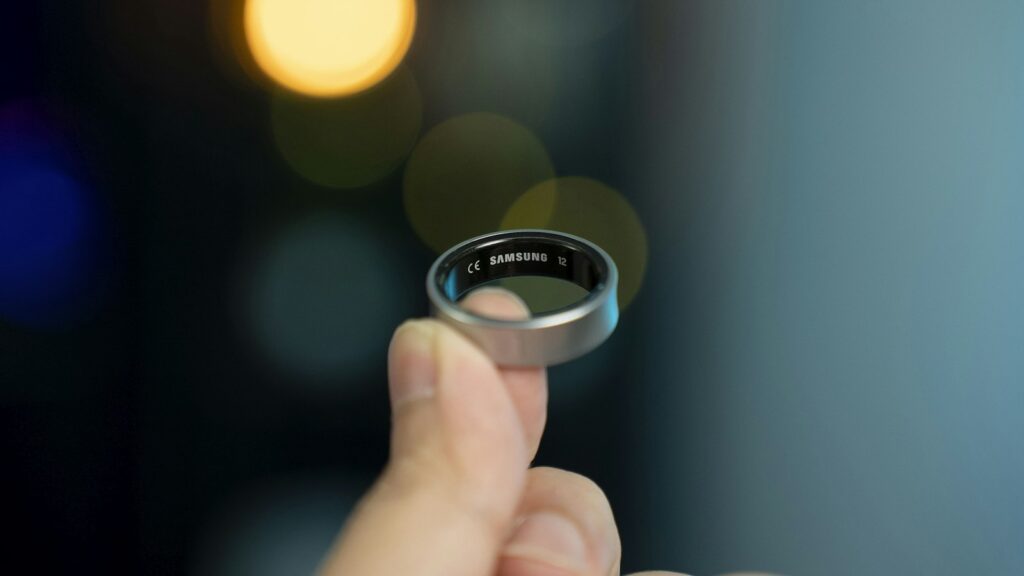
The ring I wore was the new one. Oura launched the Ring 5 at the end of May, £399 in silver or black and £499 for the fancier finishes, which is £50 more than the Ring 4 it replaces. Then there’s the membership: £5.99 a month or £59.99 a year, and without it the app strips out the scores, the trends and most of the point. Over three years that’s a £580 sleep ring. The charging case is another £99, and yes, I lost the little charging puck within a fortnight.
The old Ring 4 is the better buy now, and by some distance. Since the new model arrived it’s been sitting at £199 to £265 on the price comparison sites, and it’s the ring most of the validation research was actually done on. The staging algorithm is the same. You’re paying for a slightly smaller band and a titanium finish that, in my experience, picks up scratches from a kettlebell handle inside a week.
Whoop is the other name people ask about, and it’s a subscription with a free strap attached. The 5.0 came out last year: £169 a year for the basic One tier, £229 for Peak, device included. There’s no screen, no score you can glance at, and it’s designed for people who train hard and want recovery data. The 2025 six-device study had the previous Whoop overshooting total sleep by 24 minutes, which is worth knowing before you build a training plan round it.
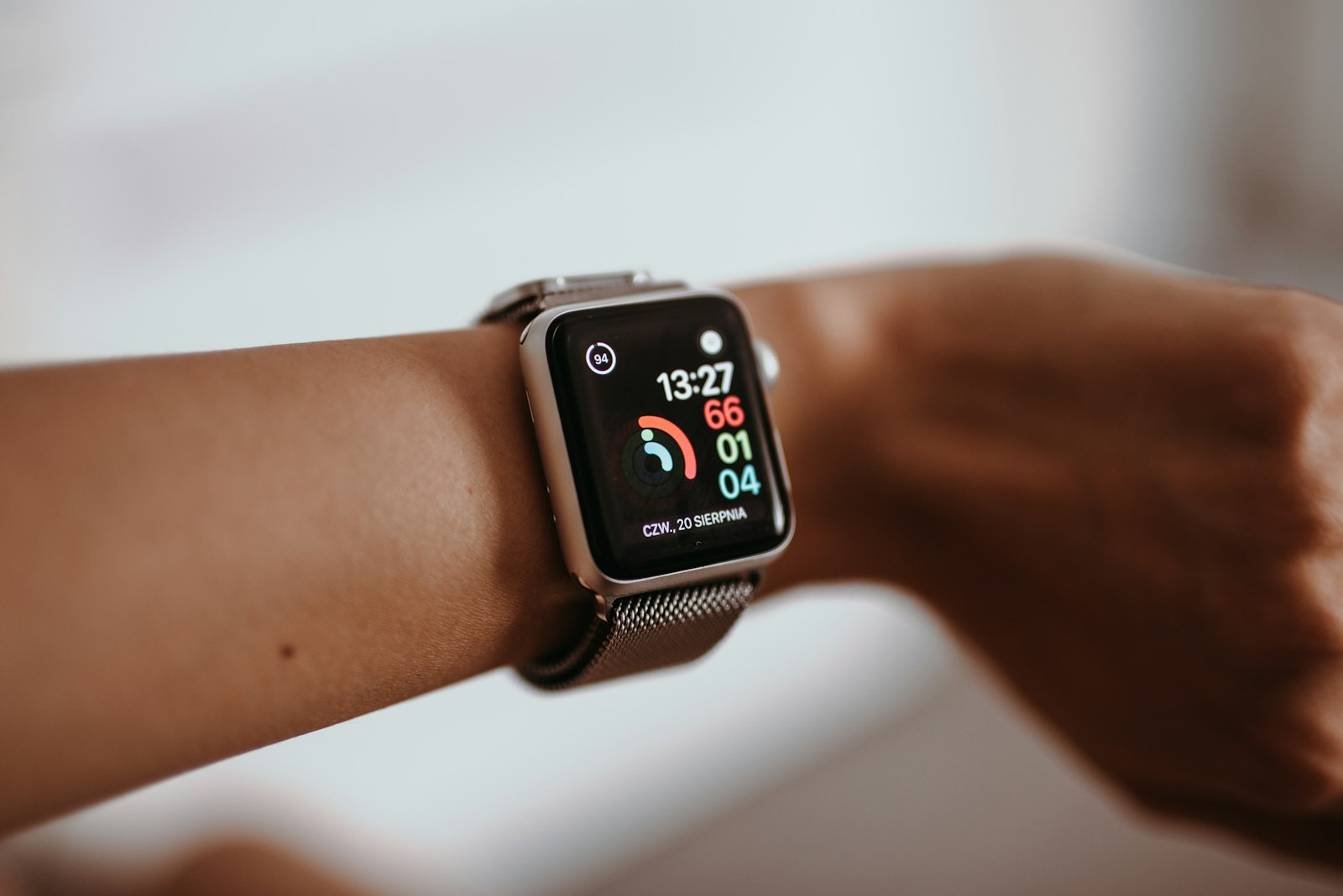
Then there’s the one most readers already own. Apple’s Sleep Score arrived with watchOS 26 last September and costs nothing beyond the watch on your wrist; Samsung, Garmin and Fitbit have had something equivalent for years. The wrist devices are less accurate than the ring for stages – that 0.53 kappa for the Series 8 against Oura’s 0.65 – but for the two things that actually matter, bedtime and time asleep, they’re close enough. If you’ve got a smartwatch already, my honest advice is to switch on the sleep tracking you own, wear it for a month, and see whether you learn anything before spending £400 on a ring. Most people won’t get past that month.
The one thing the ring did that a diary can’t
I’ve been unkind about the score, so let me be fair about the sensors.
The nightly resting heart rate, skin temperature and heart rate variability readings are a different category of information. They’re measurements, not recipes, and the ring takes them at the same point in the night every night, on the same finger, which is more consistent than any wrist device manages. That’s how it caught my cold two days before my throat did. It’s also how, over 30 nights, I learned four specific things I hadn’t known.
A single large glass of red wine after 9pm put my resting heart rate up by six to eight beats and held it there until about 3am, every time, without exception. Coffee after 2pm did nothing measurable, which surprised me. A hot bath before bed dropped my time-to-fall-asleep from a typical 20 minutes to under 10. And the nights the heating clicked on (we caved in the first week of September, sorry) my deep sleep fell by about a quarter, which is consistent with what the sleep labs have said about bedroom temperature for decades and which I’d never actually believed until it was my own graph.
None of this required a score. All of it required a few weeks of consistent data and the willingness to run a small experiment on myself. That’s the use case that survives scrutiny: not “how did I sleep” but “what does X do to my sleep”. A tracker is a decent lab instrument and a rotten judge.
Who should wear one this autumn, and who should take it off
The clocks go back on 25 October, and the weeks either side are when most of Britain’s sleep goes quietly wrong: darker mornings, the heating on, the first colds of the school term. It’s also, not coincidentally, when the wearables get discounted for Black Friday. So if you’re weighing it up, here’s my honest read of who benefits.
Shift workers and anyone whose bedtime moves around get the most from one, because the thing trackers do best – measuring when and how long – is exactly what’s hard to keep track of when your week has no shape. Same for parents of small children who want evidence, rather than a vague sense, of how broken the nights are. People trying to change one habit – the wine, the late coffee, the phone in bed – will get a clear answer within a fortnight, and it’s a more persuasive answer than any article. And there’s a real case in the perimenopause years, when night sweats and a racing heart at 3am are easy to dismiss and much harder to dismiss when there’s a temperature graph. Oura has been pushing hard into that space this year, and for once the marketing and the useful application line up.
Who should steer clear is a shorter list, and a firmer one.
If you already have insomnia, don’t. The NHS guidance on insomnia is built around breaking the link between the bed and the worry – regular hours, getting up if you can’t sleep, and cognitive behavioural therapy for insomnia, which NICE has backed as a first-line treatment since 2022. A device that hands you a disappointing number every morning does the opposite. Every sleep clinician who has written about orthosomnia says the same thing: for the insomnia patient, the first intervention is often taking the tracker off. If you’re under 30 and in that 44% who already worry about sleep most nights, I’d put you in this group too. You don’t need more information. You need less.
And if you suspect sleep apnoea – loud snoring, gasping, waking unrefreshed however long you sleep – a consumer tracker isn’t a diagnostic tool, whatever the blood-oxygen graph implies. Some devices now flag “breathing disturbances”, and that’s a useful prompt, but the prompt should send you to a GP for a proper sleep study, not into three months of watching the graph.
If you take one thing from the studies, take this: the devices are now good enough that the accuracy is no longer the reason to be cautious. The reason to be cautious is you.
What I changed after 30 nights
I kept the ring. I took the app off my home screen.
The score notification is gone, and I look at the trends on a Sunday, once, with a coffee, the way you’d look at a bank statement. The nightly number was doing me no good at all, and the weekly graph of resting heart rate and temperature is, I think, one of the more useful things I’ve bought in a while. That split – keep the sensor, bin the verdict – is what I’d suggest to anyone buying one this autumn, and it’s the setting I wish the apps offered by default. They won’t, because the score is what keeps people opening the app, and opening the app is what keeps people paying £5.99 a month.
One thing I’d resist is the “readiness” culture that comes with these devices, where a low number becomes permission to skip a run or cancel a plan. The evidence for using a single night’s HRV to steer your training is thin, and the evidence that people feel worse when told they slept badly – regardless of whether they did – is fairly solid. If the ring had had its way I’d have sat out my sister’s wedding brunch. I didn’t, and I’ve never felt better on a 61.
If you already wear one, here’s what I’d like to know: when did the number last tell you something your own body hadn’t – and when did it last tell you something you then had to talk yourself out of believing?
Related reading: Magnesium for sleep – what the trials of 151 people actually show, why melatonin gummies are a prescription drug in the UK, SAD lamps before the clocks go back, continuous glucose monitors and the reading they get wrong, and who actually needs a £299 full-body health scan.