Blue Light Glasses in 2026: 17 Trials Found No Help for Eye Strain – and the Few People Who Should Still Wear Them When the Clocks Go Back
A laptop screen sends your eyes roughly a thousandth of the blue light you’d get from ordinary daylight. That’s not a wellness influencer’s figure or a lens company’s. It comes from the researchers behind the most thorough review yet done on blue light glasses, and it’s the number to hold in your head when the clocks go back on Sunday 25 October and the evenings turn into one long stretch of screens.
In This Article
- What the 17 trials behind blue light glasses actually tested
- Your eye strain isn't blue
- The sleep argument is the better one – and it's still thin
- Don't bother with the clear coating
- Why so many were sold anyway
- What actually helps before the clocks go back
- Who might still have a case for blue light glasses
Because this is the time of year the pitch works best. It’s dark by half five, the laptop comes out on the sofa, the phone comes into bed, and by November a lot of us are rubbing our eyes and blaming “all that blue light”. The fix on offer is a pair of lightly tinted lenses, sold everywhere from Amazon to the high street optician. So it’s worth knowing what the trials actually found.
Short version: not much.
What the 17 trials behind blue light glasses actually tested
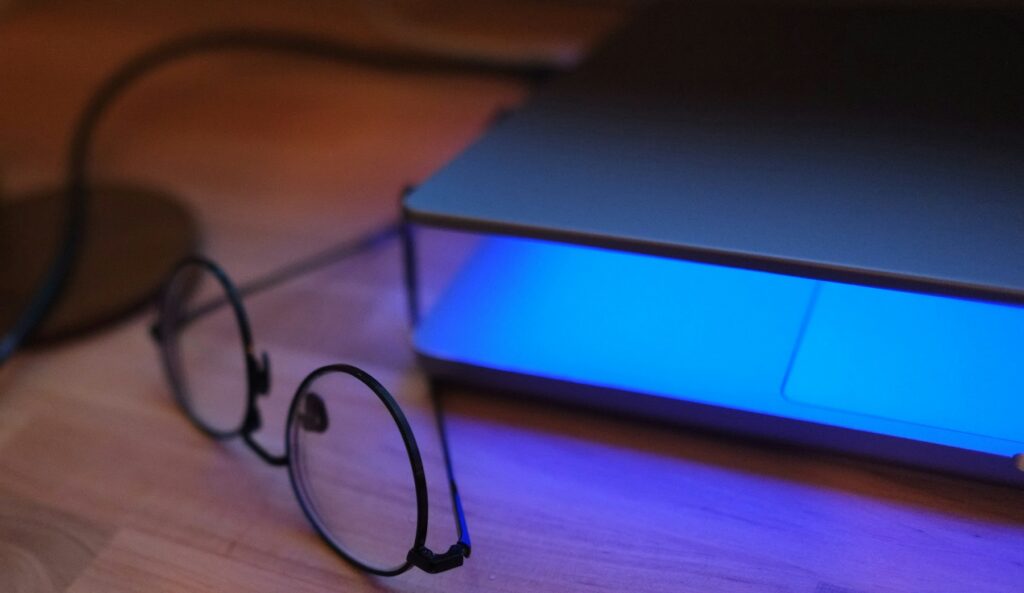
In 2023 Cochrane, the group whose reviews tend to settle arguments in medicine, pulled together every randomised controlled trial it could find comparing blue light glasses with ordinary clear lenses. There were 17 of them, involving 619 people across six countries, including the UK. The verdict was that the lenses probably make no difference to eye strain from computer use, and the effect on sleep is unclear. There was also no evidence that they protect the retina, which is the claim that tends to sell the most expensive versions.
The senior author, Associate Professor Laura Downie at the University of Melbourne, put it plainly: the findings “do not support the prescription of blue-light filtering lenses to the general population”.
And the trials themselves weren’t much to write home about. Individual studies ranged from five people to 156. Some tested the lenses for less than a day; the longest ran five weeks. Professor Andrew Przybylski at the Oxford Internet Institute, reacting to the review for the Science Media Centre, pointed out that around two in three of the studies hadn’t been registered in a clinical trial database and fewer than half reported the basic statistics you’d need to judge them. He called the review “fairly damning”. You could argue that a weak evidence base means the glasses might still work and nobody’s managed to show it. That’s true of almost anything. It’s not a reason to spend money.
The UK’s professional bodies had got there first. The College of Optometrists’ position is that the best evidence available doesn’t support blue-blocking lenses in the general population for visual performance, eye fatigue, sleep quality or macular health, and that optometrists selling them should tell patients as much. The Macular Society, which you’d expect to be the most cautious about anything touching the retina, says the front of the eye already filters out most blue light before it reaches the macula.

Your eye strain isn’t blue
Here’s the part the lens marketing skips. Eye strain after a day at a screen is real. It’s just not caused by the colour of the light.
When you stare at something close for hours, the muscles that focus your eyes stay clenched, a bit like holding a half squat all afternoon. You also blink less when you concentrate on a screen, so the surface of the eye dries out and starts to feel gritty by mid-afternoon. Glare off a window or an overhead light bouncing across your lenses makes you squint. Text that’s slightly too small makes you lean in. And if you’re somewhere past 40, the lens inside your eye is gradually losing its ability to switch focus (presbyopia, the reason arms suddenly get too short for menus), so a screen at arm’s length that was fine five years ago now makes you work for it. None of that has anything to do with wavelength. A pair of glasses that trims a fraction of the blue end of the spectrum can’t touch any of it.
Even Specsavers, which now includes a blue light filter as part of its UltraClear SuperClean lens treatment, says on its own guide to whether blue light glasses work that there’s “no scientifically-proven benefit” for eye health, and that eye strain is more likely down to overuse of screens than blue light itself. It’s an odd thing to read on a page that also sells you the filter. But it’s honest, and it’s more useful than most of what you’ll find on the listings for the cheap pairs.
The other thing worth knowing: typical clear blue light lenses only cut out about 10 to 25% of blue light, according to the Cochrane authors. To block much more than that, the lens has to be visibly amber or orange, which changes how every colour looks. So the pair that looks like normal glasses is, almost by definition, doing very little.
The sleep argument is the better one – and it’s still thin
If blue light glasses have a real case anywhere, it’s sleep, not eyes. Blue-ish light in the evening does nudge the body clock; it’s picked up by cells in the retina that tell the brain whether it’s day, and bright light late at night can delay the release of melatonin. That part isn’t in dispute.
What’s in dispute is whether the light from a phone or laptop is bright enough to matter much, and whether slightly tinted lenses change anything. The Cochrane review found the sleep evidence inconclusive. Professor Russell Foster, the Oxford circadian neuroscientist, described the evidence for the sleep claims as “at best weak, and at worst non-existent”, while agreeing that better studies are needed.
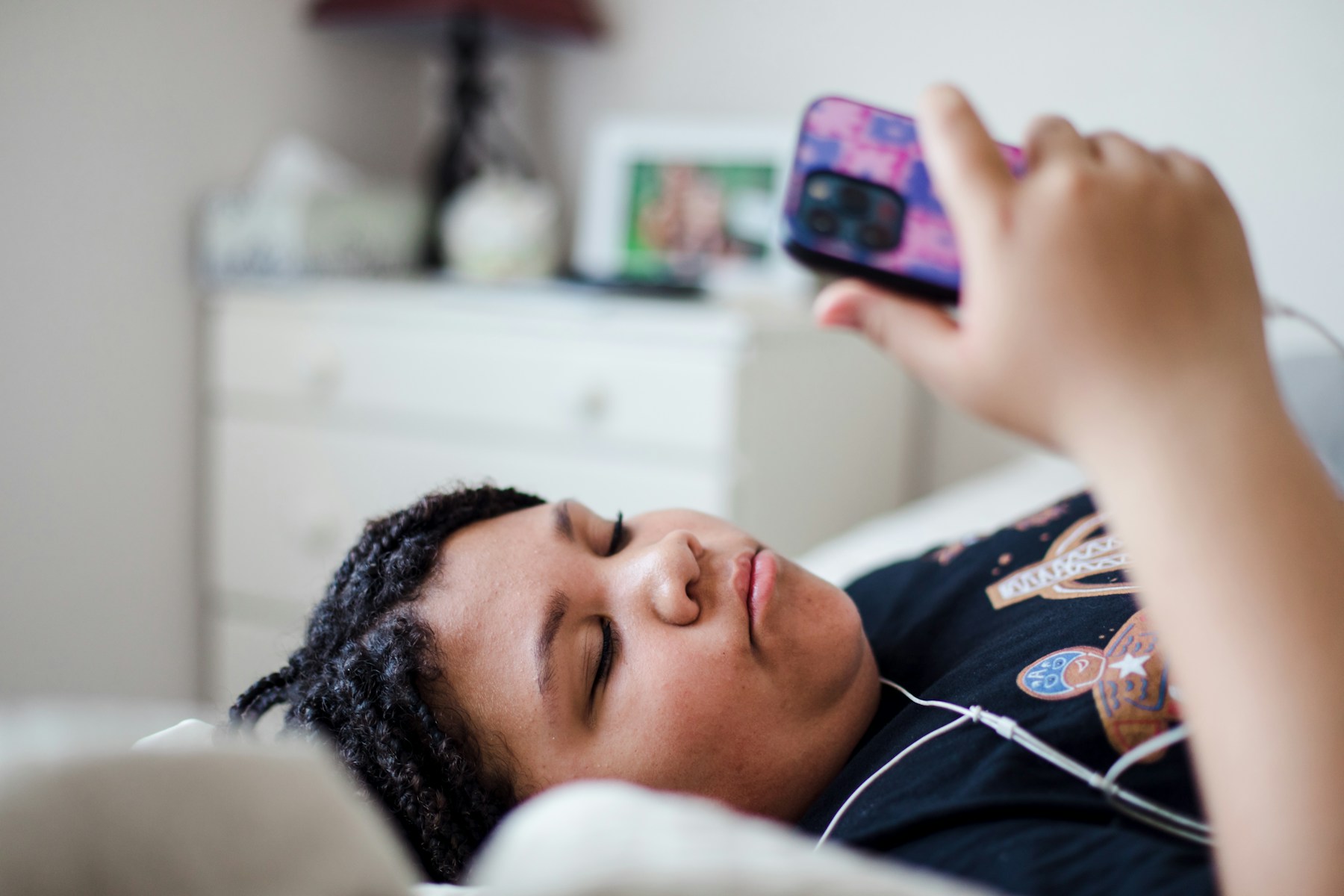
The phone makers ran into the same wall. A Brigham Young University study published in 2021 fitted 167 young adults with wrist sensors and compared three groups: people using their phones at night with Apple’s Night Shift turned on, people using them without it, and people who didn’t use a phone before bed at all. Across the whole group there was no difference between the three. Night Shift was no better than scrolling with it off. But in the group sleeping about seven hours, the people who left the phone alone slept a little better than either of the scrollers.
Which points at the obvious. It’s probably not the blue light keeping you up. It’s the group chat, the next episode, the news, the work email you “just checked”. A tint doesn’t fix any of that.
There is one corner of the research that’s more interesting, and it involves proper amber lenses, not the clear-ish kind. A small Columbia University trial published in 2018 had 14 adults with insomnia symptoms wear wraparound amber glasses for two hours before bed for a week, and compare them with clear placebo lenses. Their sleep scores improved and their wrist monitors picked up more total sleep with the amber pair. A 2009 trial of 20 adults had found something similar. Researchers in Norway have also tested amber lenses as an add-on treatment for people in hospital with mania, where the body clock is badly disrupted.
Fourteen people for seven nights isn’t an evidence base. But it’s the only version of this idea with a plausible mechanism and a positive result, and it looks nothing like the product most people buy.
Don’t bother with the clear coating
So here’s where I land, and not every writer on this beat will agree. If you’re choosing new glasses anyway, don’t pay extra for a blue light filter, and don’t buy non-prescription “computer glasses” off a marketplace listing because your eyes feel tired. The clear filters don’t filter enough to affect your body clock, the eye strain they’re sold against isn’t caused by blue light, and there’s no evidence at all that they protect the retina. Of the claims on the box, that last one annoys me most, because it sells to worry.
The one lens extra with a proper argument behind it is anti-reflection coating. It cuts glare bouncing off the lens from windows and overhead lights, which is a genuine cause of squinting and discomfort at a desk. Some opticians now bundle a blue light filter into the same package, as Specsavers does, in which case you’re not paying for it separately and it does no harm. Fine. Just don’t buy the package for the blue bit.
And if you’ve already got a pair you like wearing? Keep wearing them. The Cochrane authors found no consistent side effects beyond the mild ones you’d get from any glasses. If they make you feel like you’re doing something for your eyes, that’s between you and your placebo.
Why so many were sold anyway
Blue light glasses had a very good pandemic. Specsavers’ own consumer report recorded an 812% year-on-year jump in searches for “blue light glasses” in May 2020, when half the country was working from a kitchen table. The theory was easy to grasp, the product was cheap to make, and the symptoms it claimed to fix were ones almost everyone had.
Opticians weren’t immune either. An Australian survey from 2018, cited by Cochrane, found that 75% of the 372 optometrists who replied were prescribing these lenses while acknowledging the evidence was limited. When a professional recommends something, most of us assume there’s a study behind it. Here there mostly wasn’t.
It’s the same pattern as a lot of what we cover in this section. A real phenomenon (blue light does affect the body clock, screens do tire your eyes) gets stretched into a product claim the evidence can’t carry. We’ve seen it with magnesium for sleep, resting on trials of 151 people, and with mouth taping, where every study was rated poor quality. At least blue light glasses are cheap and harmless. That’s more than you can say for some of the others.
What actually helps before the clocks go back
None of this is glamorous. It works better, though.
Get your eyes tested. An uncorrected prescription, or one that’s drifted, is one of the commonest reasons screens feel like hard work, and it’s the thing people put off longest. If you use a screen for work, your employer has to pay for an eye test when you ask for one under the HSE’s display screen equipment rules. If the test shows you need glasses just for the distance you view your screen at, they have to pay for a basic pair too. Plenty of people don’t know this, and plenty of employers don’t volunteer it.
Use the 20-20-20 rule. Every 20 minutes, look at something about 20 feet away for 20 seconds. It lets the focusing muscles relax and gets you blinking again. It’s the advice opticians give, it costs nothing, and it’s a bit of a faff to remember, which is why a phone timer helps for the first fortnight.
Make things bigger. Zoom the browser to 125% or 150%, bump up the phone’s text size, push the laptop back a little and raise it so you’re looking slightly down. Turn the screen brightness to match the room rather than the other way round.
Sort the glare. Angle the screen so a window isn’t directly behind or in front of you. If you wear glasses, the anti-reflection coating is the upgrade worth having.
For sleep, put the phone down, not a filter on. The BYU result is the one to take seriously: the people who slept best didn’t use their phone at all before bed. If that’s unrealistic (it is for most of us), charge it across the room so the last half hour isn’t spent in the scroll. If you’re seriously struggling, speak to your GP rather than reaching for melatonin gummies, which are a prescription drug here for good reason.
Get daylight in the morning. This is the half of the body clock story that gets ignored. Bright light early in the day does more to anchor your sleep than dimming a phone at night, and after 25 October there’ll be precious little of it on the way to work. A walk at lunch counts. If you’re one of the people who really struggles through winter, a light box has better evidence behind it than blue light glasses do, though our look at SAD lamps under £50 found that evidence is less settled than the boxes suggest too.
Who might still have a case for blue light glasses
Being fair to the idea, there are a few people for whom it isn’t daft.
Anyone with insomnia who wants to try proper amber lenses for the couple of hours before bed is testing something with at least a small positive trial behind it. The pair needs to be properly orange and wrap around the sides, the sort you’d feel slightly silly wearing to watch telly, and you should treat it as an experiment, not a cure. Two weeks on, two weeks off, and be honest with yourself about whether anything changed.
Some people with macular disease use blue-blocking tints to reduce glare, as the Macular Society points out, and that’s a conversation for their optometrist or eye clinic, not a marketplace listing.
People working night shifts are a harder call. It’s plausible that blocking light on the drive home in the morning might help them sleep through the day, but I haven’t found good trial evidence in UK shift workers, and I’d rather say so than guess.
For everyone else, the money’s better spent on an eye test, and the evening’s better spent with the phone in another room. If you’ve tried tracking your sleep, it’s a simple enough thing to test on yourself: a week with the glasses, a week with the phone out of the bedroom, and see which one your tracker notices.
So which is it for you as the evenings draw in – are you keeping the blue light glasses, or is this the winter the phone finally sleeps in the kitchen?