
Keep Your House Cool in a Heatwave: Why Britain Shades the Wrong Side of the Glass – And What Works From £12 to £2,500
Walk down any British street at three in the afternoon during a hot spell and you’ll see the same ritual: curtains pulled tight behind closed windows, sun hammering the glass regardless. It feels sensible. It’s the wrong side of the fight. Once sunlight has passed through glass, most of that energy is already in the room – your curtains just become a gently warming radiator hanging where a view used to be. Seville worked this out centuries ago, which is why Andalusian streets are lined with exterior shutters while Basingstoke makes do with blackout curtains from Dunelm doing half a job.
In This Article
- Why British houses turn into storage heaters
- Shade outside the glass, not inside it
- The cheapest ways to keep your house cool in a heatwave
- Inside the glass: what curtains and blinds can actually do
- The heat you're making yourself
- The portable air con trap
- Renting? You still have options
- What I'd spend, in order
If you want to keep your house cool in a heatwave, the order you do things matters far more than the kit you buy. And after a summer like this one – brown lawns, hosepipe restrictions, bedrooms still at 27°C at midnight – it’s worth getting the order right before the next hot spell rather than panic-buying a portable air con unit at 4pm on the hottest day of the year, which is precisely when they sell out and precisely when they’re least able to help.
This is the ladder, from a £12 roll of window film to shutters that cost more than a holiday. Most of the good stuff sits at the bottom.
Why British houses turn into storage heaters
Our housing stock was designed for one problem: keeping heat in. Cavity walls, loft insulation, draught-proofing, ever-larger glazing to grab every scrap of winter daylight. All of it works exactly as intended in January. In August, the same fabric soaks up heat all day and releases it into your bedroom all night. A well-insulated Victorian terrace in a heatwave behaves like a storage heater someone forgot to switch off.

The regulations have started catching up – new homes in England have had to meet an overheating standard, Part O, since 2022 – but that does nothing for the 25 million or so homes already standing. Researchers writing at The Conversation have pointed out the awkward planning contradiction: the system pushes for daylight, which means bigger windows, which cooks the occupants. External shading barely exists in British architecture, and it’s genuinely hard to get planners to approve it because it “doesn’t look like a British building”.
The scale of it is worth sitting with for a second. Academics have estimated that more than half of UK homes are already prone to overheating in a typical hot summer, and the homes most at risk aren’t the obvious ones. Top-floor flats, 1960s blocks with big single-aspect windows, and – the modern classic – the new-build with floor-to-ceiling glazing facing due west. I’ve been in show homes where the sales suite ran air conditioning that the actual houses will never have. Nobody mentions this on the viewing.
Since the 40.3°C record in July 2022, the conversation has shifted from whether our homes have a heat problem to what we’re prepared to bolt onto them. Not fast enough, mind.
Shade outside the glass, not inside it
Here’s the principle the whole article hangs on: stop the sun before it reaches the glass and you win; stop it afterwards and you’re rearranging heat that’s already indoors.
The British Blind and Shutter Association – a trade body, so read with that in mind, but their physics is sound – cites research showing external shading can cut indoor temperatures by more than 6°C. That’s the difference between a 29°C bedroom and one you can actually sleep in. No fan, no compressor, no running cost.
External options run from cheap to eye-watering. An awning over a south or west-facing window starts around £150 at Screwfix for a manual model and does most of what a £2,500 motorised external roller shutter does, minus the security benefit and the smug Continental look. Even a bamboo blind cable-tied outside the window frame – about £25, and yes, it looks like student digs – beats an expensive blind fitted inside.
But orientation matters. North-facing windows need nothing. East-facing glass gets morning sun that’s rarely the problem. It’s the south and west faces, catching full afternoon sun when the day is already hot, that deserve the money. Shade two windows properly rather than eight badly.
The cheapest ways to keep your house cool in a heatwave
If you can’t fix the outside, the £12 end of the market still does real work.
Reflective window film is the quiet hero. The Energy Saving Trust recommends solar film because it reflects a chunk of the sun’s energy back out before it becomes room heat. A roll from B&Q costs about £12-£15, applies with soapy water and a squeegee, and is a bit of a faff to get bubble-free – allow an hour and some swearing per window. The static-cling versions peel off in October, which matters, because permanent film also dims your rooms in December.
Then there’s timing, which costs nothing. Windows shut and shaded from mid-morning to early evening; everything open once the outside air drops below the inside temperature, usually around 9pm. Open windows on opposite sides of the house and internal doors between them, and you get cross-ventilation that flushes the day’s heat out of the fabric overnight. This “night purge” is the single most effective free habit, and most people do the opposite – windows wide open at 2pm letting 33°C air in, everything shut at night for security.
Kitchen foil taped over a rental’s west-facing skylight is ugly and works. The oven is your enemy until September – this is the fortnight for salads and the barbecue. And if the lawn’s already gone, let it go brown with pride – a dead lawn reflects less heat at your windows than a paved patio does, which is one small mercy.
One more free win: the loft hatch. On a hot day the loft above your bedroom can hit 45°C, and a badly fitting hatch leaks that heat straight down onto your pillow. Push it firmly shut, and if it rattles, a strip of self-adhesive draught excluder – about £4, and you probably have some left over from winter – seals it. A £6 digital thermometer is worth having too, because half the battle is knowing when the air outside is finally cooler than the air inside. People consistently guess wrong by a couple of hours.
Two short rules cover most of it. Shade early, ventilate late.
Inside the glass: what curtains and blinds can actually do
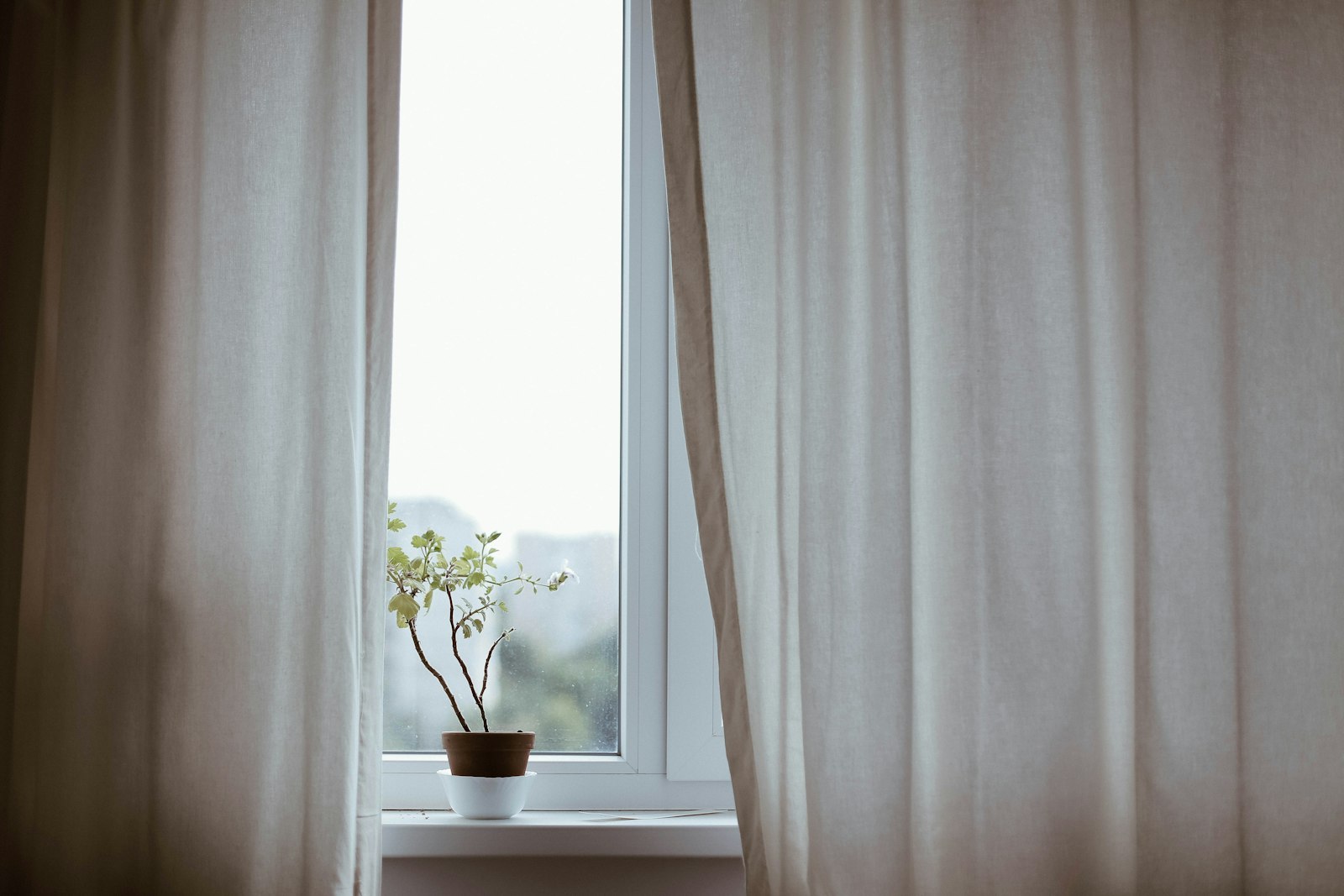
None of this means internal window coverings are pointless. They’re just playing defence after the goal’s gone in, and it helps to know which ones concede the fewest.
The ranking, roughly: cellular (honeycomb) blinds first, then a decent thermal-lined curtain, then an ordinary roller blind, then the venetian gathering dust in most British rentals. Cellular blinds trap a layer of still air in their honeycomb structure, which slows heat moving off the hot glass into the room – they’re the one internal option that behaves a little like insulation rather than decoration. Duette is the posh name; Ikea and Blinds2Go both do versions from around £30-£60 a window, and they earn their keep again in winter, which is more than you can say for an air con unit.
Colour matters more than people think, and it works the opposite way to intuition. That heavy navy blackout curtain that’s brilliant for sleep is absorbing solar energy and feeding it into the room all afternoon. What you want facing the glass is white or reflective backing – bounce the light back out through the window it came in. Some blackout linings come white-backed for exactly this reason. Check before you buy; plenty don’t.
And leave a gap at the top or sides if you can. A curtain sealed tight against a hot window builds a column of trapped hot air behind it that eventually spills into the room anyway. The awkward truth about all of this is that the best internal setup – white-backed cellular blind, closed by 10am, on a south-facing window – still loses to a £25 bamboo blind hung on the outside of the same window. Physics doesn’t care about the decor.
Worth saying, too, that this is one of the few areas where spending more indoors buys you very little. A £300 made-to-measure Roman blind with thermal interlining performs about the same as the £45 ready-made cellular one. Pay for the Roman because you love the fabric, not because summer demands it.
The heat you’re making yourself
On a 31°C day your house is also being heated from the inside, and it’s the most overlooked fix going. An oven at 200°C dumps heat into the kitchen for hours after it pings – hot-weather cooking wants to happen outside or not at all. The dishwasher and tumble dryer are the same story at a smaller scale: run them in the overnight purge window, not at 4pm.
Electronics count too. A gaming PC, a big telly and a router cupboard all run warm around the clock, and a spare-room office full of kit is a small sauna by mid-afternoon. Any surviving halogen bulbs run hot enough to matter in a small room, and smart plugs that cut standby loads while you’re out cost a few pounds each.
And a practical note on the night purge itself: window restrictors – security stays, a few pounds a pair from any DIY shed – answer the obvious objection to sleeping with the windows open. Hay fever sufferers should know an open bedroom window all night also lets pollen settle on the bed. Pick your misery.
The portable air con trap
Now the contrarian bit: the £600 portable air conditioner is the worst-value cooling purchase in Britain, and every July we buy tens of thousands of them.
The single-hose design that dominates the market has a built-in flaw. It pumps hot air out through a window, which lowers the pressure in the room, which pulls warm air back in through every gap in the house to replace it. The unit fights itself all afternoon. Add the venting kit – a hose jammed through a window that now can’t close properly – and a kilowatt or more of electricity draw, call it 25p-35p an hour depending on your tariff, and you’ve got a noisy machine achieving what an awning and a decent fan manage silently for less.
They’re not useless. A loft bedroom with no cross-ventilation, a home office under a flat roof, anyone medically vulnerable in a top-floor flat – in those rooms a portable unit earns its keep, run for an hour before bed with the door shut rather than all day with it open. My rule: it’s the last purchase on the ladder, not the first. Britain buys it first because it’s the one that looks like it’s doing something.
A £50-£80 fan, placed well, covers most bedrooms – we’ve already ranked the quiet fans worth having, and the short version is that £55 buys plenty. Evaporative coolers, which the Energy Saving Trust rates for running costs, are the awkward middle child: cheaper to run than air con, but they add moisture to the air, and a muggy British heatwave is the one climate where that’s exactly what you don’t want. In a dry, continental-style hot spell they’re decent. In close, sticky air, skip them.
Renting? You still have options
Everything structural needs a landlord’s blessing, but the renter’s toolkit is better than it looks: static-cling solar film (leaves no residue, take it with you when you move), the cable-tied external bamboo blind if your window opens onto anywhere you’re allowed to touch, thermal-lined curtains which are merely the least-bad internal option, and ruthless night-purge discipline.
And it’s worth knowing what heat does to sleep, because that’s where a hot house actually hurts. We’ve covered what genuinely cools you at night and which gadgets waste your money – the overlap with this piece is deliberate. Cool the room during the day so you don’t have to fight for the night.
One group with no landlord to blame: garden office owners. A timber-framed box with a flat roof and a glass wall is a greenhouse with a desk in it, and if you’re considering one, budget for the overheating problem at the design stage – an overhang or external blind specified upfront costs a fraction of retrofitting one.
What I’d spend, in order
Start at zero: night purging, shutting up the house by 10am, moving cooking outdoors or to the evening. Then £12-£30 on solar film for the south and west windows. Then £25 on the ugly external bamboo blind for the worst offender, or £150-£300 on a proper manual awning if you own the place. Then £55-£80 on a good fan for the bedroom.
Only after all of that – and honestly, for most houses, never – the £600 portable air con for the one room nothing else fixes. If you’ve got £2,000-£3,000 and a south-facing problem you’re tired of solving every July, external shutters or a fixed awning are the grown-up answer, and they’ll still be working in twenty years when the plastic air con unit is landfill.
The uncomfortable truth is that Britain will need to make its peace with external shading looking “un-British”, the way it once did with wheelie bins and solar panels. The next few summers will make the argument for us. What’s the one change you’d actually bolt onto the front of your house – and what’s stopping you?