
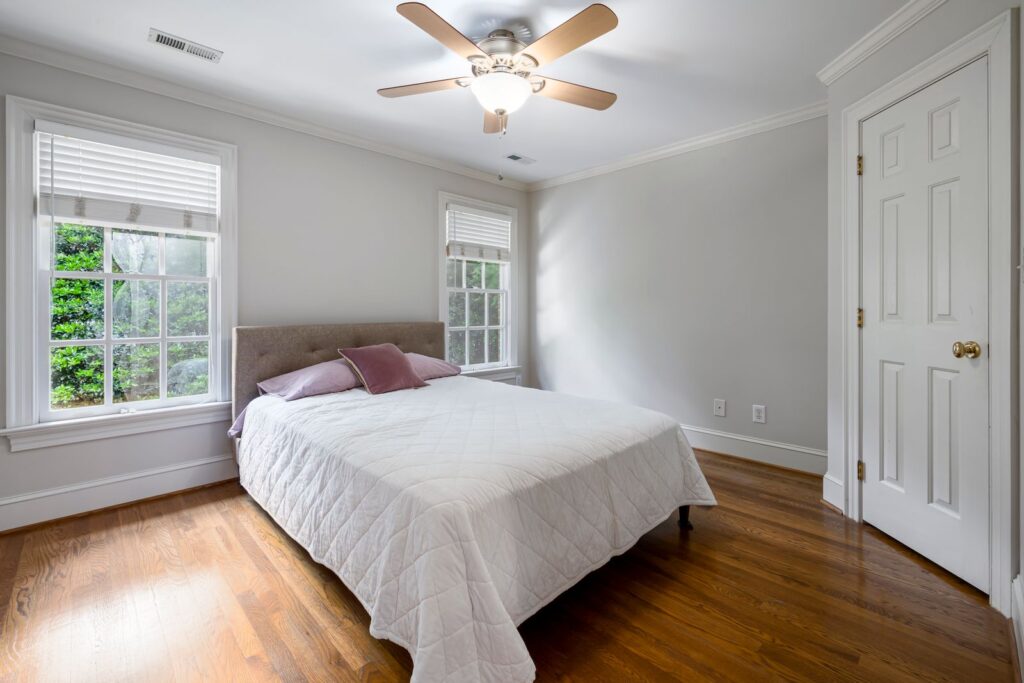
Sleeping in a Heatwave 2026: What Actually Cools You at Night – And the Gadgets Wasting Your Money
Sleeping in a heatwave isn’t really about the heat. It’s about half a degree. That’s roughly how far your core temperature has to fall for your brain to release its grip and let you drop off, and on a sticky July night your body simply can’t shed it fast enough. So you lie there, sheet kicked to the floor, one foot hanging off the side of the mattress, quietly calculating how many hours of sleep you’ve got left before the alarm. Most of Britain knows that exact feeling.
In This Article
- The half-degree your body can’t shed
- The fan question nobody answers properly
- Win the night before you get into bed
- The cold shower trap
- Bedding, and why the £400 cooling topper is mostly theatre
- The kit that’s actually worth buying
- Booze, late dinners and the 3am wake-up
- When it stops being just an annoyance
And the houses don’t help. Ours were built to hold warmth in – thick walls, small windows, bedrooms tucked under the roof where heat collects like water in a bowl. Almost nobody has air conditioning. We’ve written before about why British homes turn into greenhouses the moment the mercury climbs, and the bedroom is where that failure hits hardest, because it’s the one room where you actually need your body to cool down.
This is a guide to what genuinely works for sleeping in a heatwave, what’s a waste of your money, and the bit of physiology that explains why. The UK Health Security Agency reckons hotter-than-usual spells are more likely again this summer, so it’s worth getting right.
The half-degree your body can’t shed
Falling asleep is, mechanically, a cooling process. In the evening your core temperature starts to drift down, melatonin rises, and the steeper that temperature drop, the easier you slip into the deep, slow-wave sleep that actually restores you. Researchers have measured it: sleep onset lines up with the point where your core temperature is falling fastest.
Your body does the cooling by pushing blood out to the surface – hands, feet, face – and dumping heat through the skin. That’s why warm feet help you nod off. It’s the blood vessels opening up to vent.
But on a hot night the system jams. When the air around you is nearly as warm as your skin, there’s nowhere for that heat to go. The drop stalls. Studies on the temperature dependence of sleep show that heat eats into both slow-wave and REM sleep, while moderate cold barely touches them. Your body is far better at coping with a room that’s too cold than one that’s too warm – you can always add a blanket, but you can’t add a personal cold front. This is the whole game. Everything else in this article is just tactics for helping that half-degree fall.
The fan question nobody answers properly
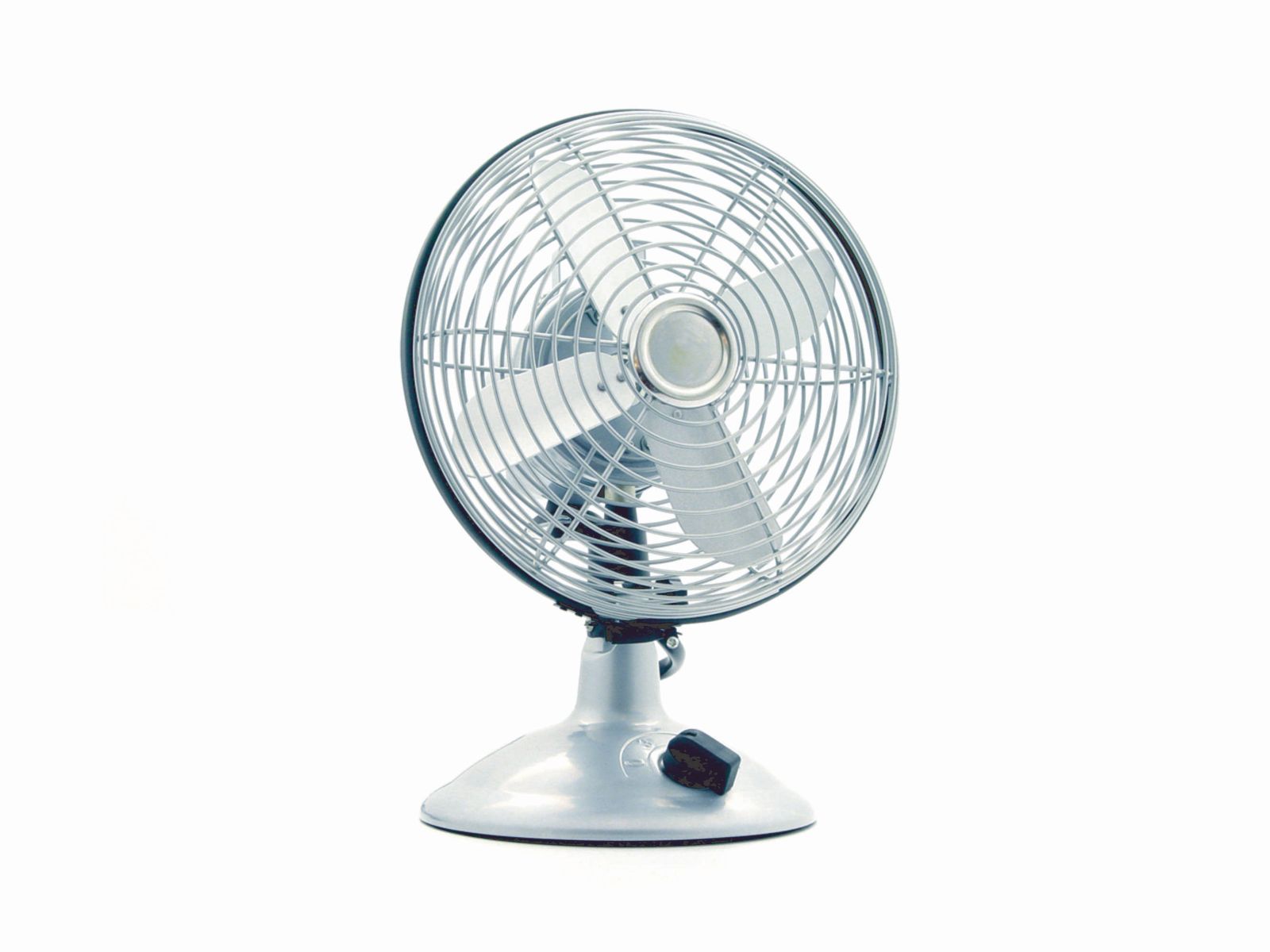
Here’s where the standard advice gets lazy. “Put a fan on” is the default suggestion, and for most British nights it’s fine. But there’s a temperature above which a fan stops cooling you and starts cooking you, and almost nobody mentions it.
The number is roughly 35°C. Your skin in the shade sits around 35 to 37°C. Below that, moving air carries heat away from you – lovely. Above it, the air is hotter than your skin, so all the fan does is blow warmth onto you, like a convection oven, while quietly speeding up dehydration. A critical review in The Lancet Planetary Health found fans don’t meaningfully lower core temperature once the air goes past about 35°C, and UK government guidance says to use electric fans only when the air is below that mark. We rarely hit 35°C indoors overnight in this country, so your fan is usually your friend. Just know it has a ceiling.
There’s a cheap trick that makes a fan work far harder, though: water. A fan cools by evaporating moisture off your skin, so give it something to evaporate. A damp flannel over your arms, a light mist of water on your shins and the back of your neck, or even a slightly damp cotton t-shirt – the fan then does proper work instead of just stirring the air. It looks daft. It also works better than half the gadgets you can buy.
Win the night before you get into bed
The most useful thing you can do for sleeping in a heatwave happens hours before bedtime, in daylight, while the room is still empty.
Keep the curtains and windows shut on any room facing the sun during the day. It feels wrong – you want to fling everything open – but you’re trying to stop the room banking heat it’ll radiate back at you at midnight. Then, once the outside air drops below the inside temperature (usually well after dark), open up and get a through-draught going. Two windows on opposite sides of the flat beats one window every time.
Kill the electronics. Your telly on standby, the laptop charging, the phone, the router – they all chuck out heat, and in a small bedroom it adds up more than you’d think. Unplug what you can. And if your home has more than one floor, sleep low. Heat rises, so the spare room downstairs or even the sofa can be a couple of degrees cooler than the bedroom under the roof. I’ve decamped to the living room floor in past summers and slept better there than in my own bed, which tells you something about where the heat ends up.
The cold shower trap
Reach for an icy shower before bed and you’ll feel amazing for about ten minutes, then worse. A blast of cold water tells your body it’s under threat, so it clamps down the surface blood vessels to conserve heat – the exact opposite of what you want when you’re trying to vent warmth and drift off.
Go lukewarm instead. A tepid shower cools you gently without triggering that clamp-down, and the slight evaporative chill afterwards helps your temperature keep falling. The NHS suggests a cool shower before bed, but in practice “cool” should mean comfortable, not punishing. Same logic applies to the trick of running cold water over your wrists or pressing a cloth to your neck – pulse points work, but tepid does the job without the rebound.
Bedding, and why the £400 cooling topper is mostly theatre
This is the bit the wellness industry doesn’t want you to read. There’s a whole market of cooling mattress toppers, “phase-change” pillows, weighted-but-breathable duvets and gel pads, and a fair chunk of it is overpriced theatre. The expensive cooling toppers feel cold for the first few minutes – that’s the gel reaching equilibrium with the room – and then they’re just a topper. Your body heat saturates them and the effect fades long before you’re actually asleep. For £300 to £400, I’d want more than a novelty.
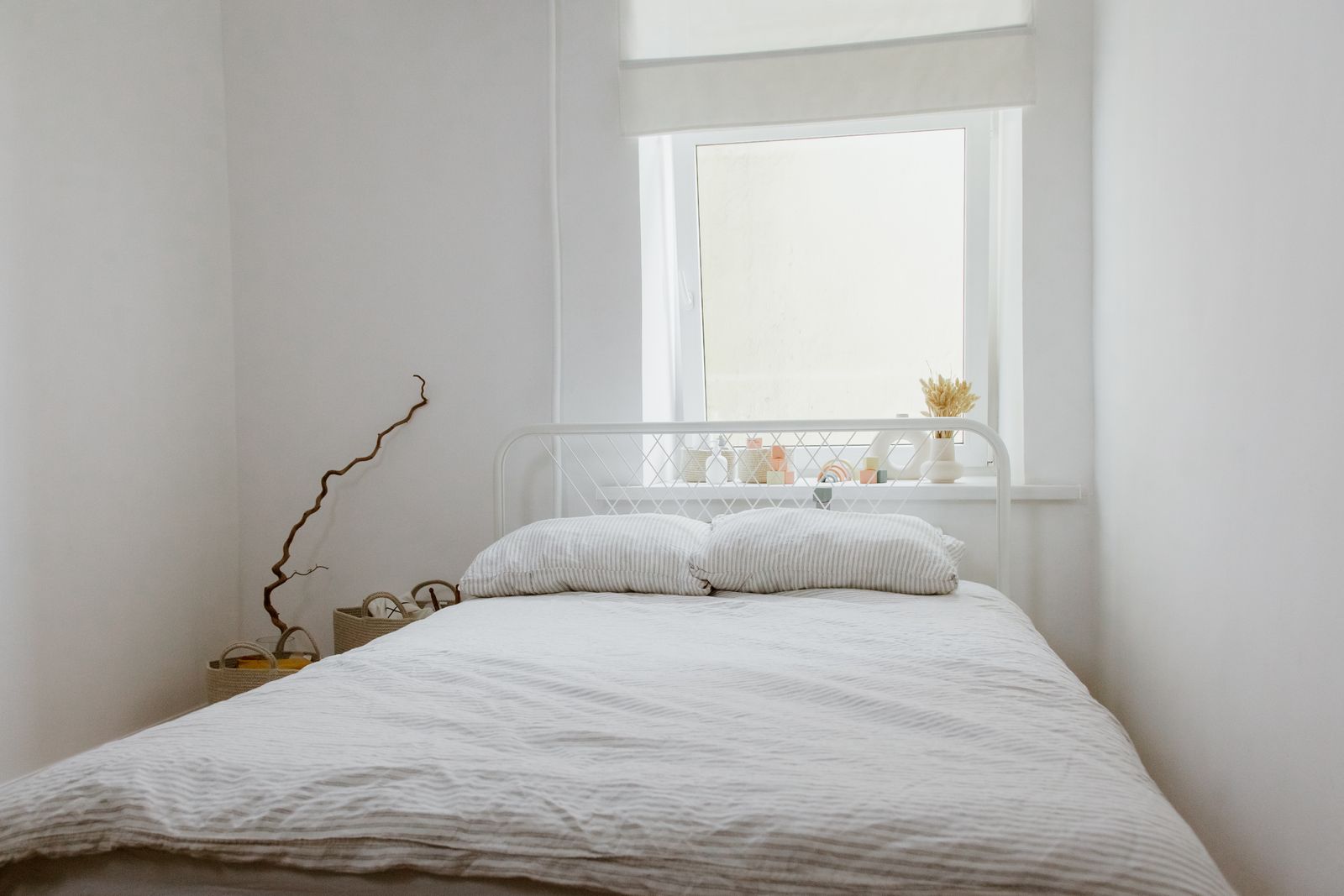
What genuinely moves the needle costs almost nothing. Swap the duvet for a single cotton or linen sheet, or just the cover with nothing inside it. Natural fibres breathe and wick sweat; polyester traps it and you wake up damp. Loose cotton or linen nightwear beats sleeping naked for the same reason – the fabric pulls moisture off your skin and lets it evaporate, whereas bare skin against a synthetic sheet just sticks. Linen in particular is worth the faff of the creases. If you’re replacing bedding anyway, our linen bedding guide sorts what’s worth paying for from the flax-scented marketing.
The one upgrade I do rate is a buckwheat or natural-fill pillow over a memory-foam one. Memory foam is dense and holds heat against your head and neck all night, which is precisely where you don’t want it. If you’ve ever flipped your pillow a dozen times chasing the cold side, that’s why.
The kit that’s actually worth buying
Not everything with a price tag is a con. If you sleep badly in the heat every single summer, a few purchases earn their place.
A decent pedestal or tower fan is the obvious one. Spend £40 to £80 on something with a timer and a genuinely quiet night mode, because a cheap fan that rattles will wake you as surely as the heat does. The DC-motor models cost a bit more and use a fraction of the electricity, which adds up if it’s running eight hours a night for a fortnight.
A portable air-conditioning unit is the honest upgrade, and I’ll say plainly that it’s the only thing on this list that reliably fixes a hot bedroom. The catch is the hose – it has to vent out of a window, the units are bulky, they’re a bit loud, and they drink electricity. Expect £250 to £450 for one that can actually cope with a bedroom rather than a box room. But on the three or four genuinely brutal nights a British summer throws up, it’s the difference between sleeping and lying there resenting the weather. Beyond that, a linen bedding set and a couple of natural-fill pillows, and you’re done. The gel pads, the cooling sprays, the “chill” pillowcases – skip the lot. If you’d rather throw money at sleep more generally, the supplement aisle is its own minefield; we’ve looked at whether the apigenin sleep trend stands up, and the short version is that no capsule beats a cool, dark room.
What you did at 6pm matters more than any pillowcase, too. A hard session in the heat keeps core temperature raised well into the evening – our piece on exercising in a heatwave covers how to time it.
Booze, late dinners and the 3am wake-up
That nightcap on a warm evening is doing you no favours. Alcohol helps you fall asleep faster and then wrecks the back half of the night, fragmenting sleep and waking you in the small hours – and it dehydrates you on a night when you’re already losing fluid through sweat. The growing number of Britons going dry over summer aren’t just being virtuous; sober summer genuinely pays off when the bedroom’s like a sauna.
Heavy late meals work against you too, because digestion nudges your core temperature up exactly when you need it coming down. Eat earlier and lighter when it’s hot. Keep a glass of water by the bed for the inevitable 3am wake-up, and go easy on caffeine from mid-afternoon – it lingers far longer than people assume. And if the hot nights have you and your partner eyeing separate rooms, you’re in growing company – we’ve looked at the rise of the sleep divorce.
If you’re the type who tracks all this, a sleep wearable will show you in brutal detail how a hot night shreds your deep sleep. We’ve sorted the wellness apps worth keeping from the ones to bin, and for sleep the data can be motivating – though staring at a bad sleep score the morning after rarely helps anyone relax the next night.

When it stops being just an annoyance
A broken night’s sleep is miserable but harmless. Heat itself isn’t always harmless, and this is the part worth taking seriously.
The UKHSA issues colour-coded Heat Health Alerts – yellow, amber, red – and has been clear that heat doesn’t have to be extreme to be dangerous. Deaths have been recorded even during yellow alerts. Older adults, babies and young children, and anyone with heart, lung or kidney conditions are most at risk, partly because the body’s cooling response weakens with age and some common medications blunt sweating. If there’s an elderly neighbour or relative who lives alone, a knock on the door during a hot spell matters more than any tip in this article.
Babies and young children deserve a special mention, because they can’t kick off a blanket or tell you they’re too hot. Keep cots away from windows and radiators, use a single sheet rather than a sleeping bag on the warmest nights, and feel the back of the neck rather than the hands to judge whether they’re overheating. A nursery thermometer is one of the few cheap gadgets worth owning – the room ideally sits somewhere around 16 to 20°C, which in a July heatwave is frankly aspirational, but at least it gives you a number to aim at.
Know the warning signs of heat exhaustion: heavy sweating, dizziness, a headache that won’t shift, cramps, feeling sick. The fix is to cool down and rehydrate, and if someone isn’t better within 30 minutes, or they stop sweating, get confused, or their temperature climbs, that’s heatstroke and a 999 call. For most of us, a heatwave is a few rotten nights and a lot of yawning. For some people it’s genuinely dangerous, and the two get blurred far too easily in the breezy “just pop a fan on” advice.
So before you spend a penny on cooling gadgets this summer, work down the free list first: shut the curtains by day, sleep low, ditch the duvet, go tepid not freezing, lay off the wine. What’s the one thing that’s actually got you through a heatwave night – and which expensive bit of kit turned out to be a waste?
If it’s summer allergies keeping you up rather than the heat, our guide to the best air purifier for hay fever is the companion read.
And if the noise of your current fan is part of the problem, our guide to the best quiet fan for sleeping compares models from £55 to £250 on the decibel figures the boxes leave out.
If the heat is showing up on your skin as well as your sleep, our guide to treating prickly heat covers what actually calms it down.