

Red Light Therapy for Skin UK: Does It Really Work?
Red light therapy for skin has gone from niche clinic treatment to mainstream beauty obsession in what feels like no time at all. Scroll through any skincare forum or beauty counter in the UK right now and you’ll spot LED devices everywhere – from handheld wands to full face masks. But is there actually solid science behind the glow, or is this just another trend that’ll fade by next season?
In This Article
- What Is Red Light Therapy for Skin?
- What Does the Science Say About Red Light Therapy for Skin?
- The Real Benefits of Red Light Therapy for Skin
- Fine Lines and Wrinkles
- Skin Texture and Tone
- Inflammation and Redness
- How to Try Red Light Therapy at Home in the UK
- What to Watch Out For
- My Honest Verdict
- Frequently Asked Questions
- Is red light therapy safe for all skin types?
- How long does it take to see results from red light therapy?
- Can I use red light therapy with retinol or vitamin C?
- Is professional red light therapy better than at-home devices?
I’ve spent the past few months digging into the research, talking to dermatologists, and testing devices myself. Here’s what I’ve found about whether red light therapy genuinely delivers on its promises for UK skin.
What Is Red Light Therapy for Skin?
Red light therapy – sometimes called low-level light therapy (LLLT) or photobiomodulation – uses specific wavelengths of red and near-infrared light to penetrate the skin. The key wavelengths sit between 630nm and 850nm, with red light (630-660nm) working at surface level and near-infrared (810-850nm) reaching deeper into the dermis.
The basic idea is that these wavelengths stimulate your mitochondria – the energy powerhouses inside your cells – to produce more adenosine triphosphate (ATP). More ATP means your cells have more energy to repair, regenerate, and produce collagen. It’s not a new concept either. NASA originally developed the technology in the 1990s to help plants grow in space, and researchers quickly noticed it had potential for wound healing too.

What Does the Science Say About Red Light Therapy for Skin?
This is where things get interesting. Unlike many beauty trends, red light therapy actually has a reasonable body of clinical evidence behind it. A 2014 study published in Photomedicine and Laser Surgery found that participants who used red light therapy twice weekly showed measurable improvements in skin complexion, skin feeling, and collagen density after 30 sessions. Wrinkle depth was reduced and skin roughness improved significantly.
More recently, a 2023 review in the Journal of Cosmetic Dermatology concluded that LED phototherapy shows promise for anti-ageing, acne reduction, and wound healing – though the authors noted that more standardised clinical trials are still needed. The NHS acknowledges light therapy as a legitimate treatment for certain conditions, though its cosmetic applications aren’t currently offered on the health service.
That said, it’s worth being realistic. Red light therapy isn’t going to reverse decades of sun damage overnight, and results depend heavily on the device you’re using, how consistent you are, and your individual skin type. Think of it as a helpful addition to a solid skincare routine rather than a miracle cure.
The Real Benefits of Red Light Therapy for Skin
Based on the current evidence, here’s what red light therapy can realistically help with:
Fine Lines and Wrinkles
This is the most well-supported benefit. Red light at 633nm stimulates fibroblast activity, which boosts collagen and elastin production. Most clinical studies show visible improvements after 8-12 weeks of consistent use, typically 3-5 sessions per week. Don’t expect Botox-level results, but the gradual firming effect is noticeable over time.
Skin Texture and Tone
Many users report smoother, more even-toned skin after regular use. The increased cellular energy helps speed up skin turnover, which can reduce the appearance of dullness and mild hyperpigmentation. If you’ve been looking into ingredients like PDRN for skin repair, red light therapy works through a similar principle of supporting cellular regeneration.
Inflammation and Redness
Red and near-infrared light have well-documented anti-inflammatory properties. This makes the therapy particularly useful for rosacea-prone skin and post-procedure healing. Some users with mild acne also report fewer breakouts, though blue light (around 415nm) is typically more effective for targeting acne-causing bacteria specifically.
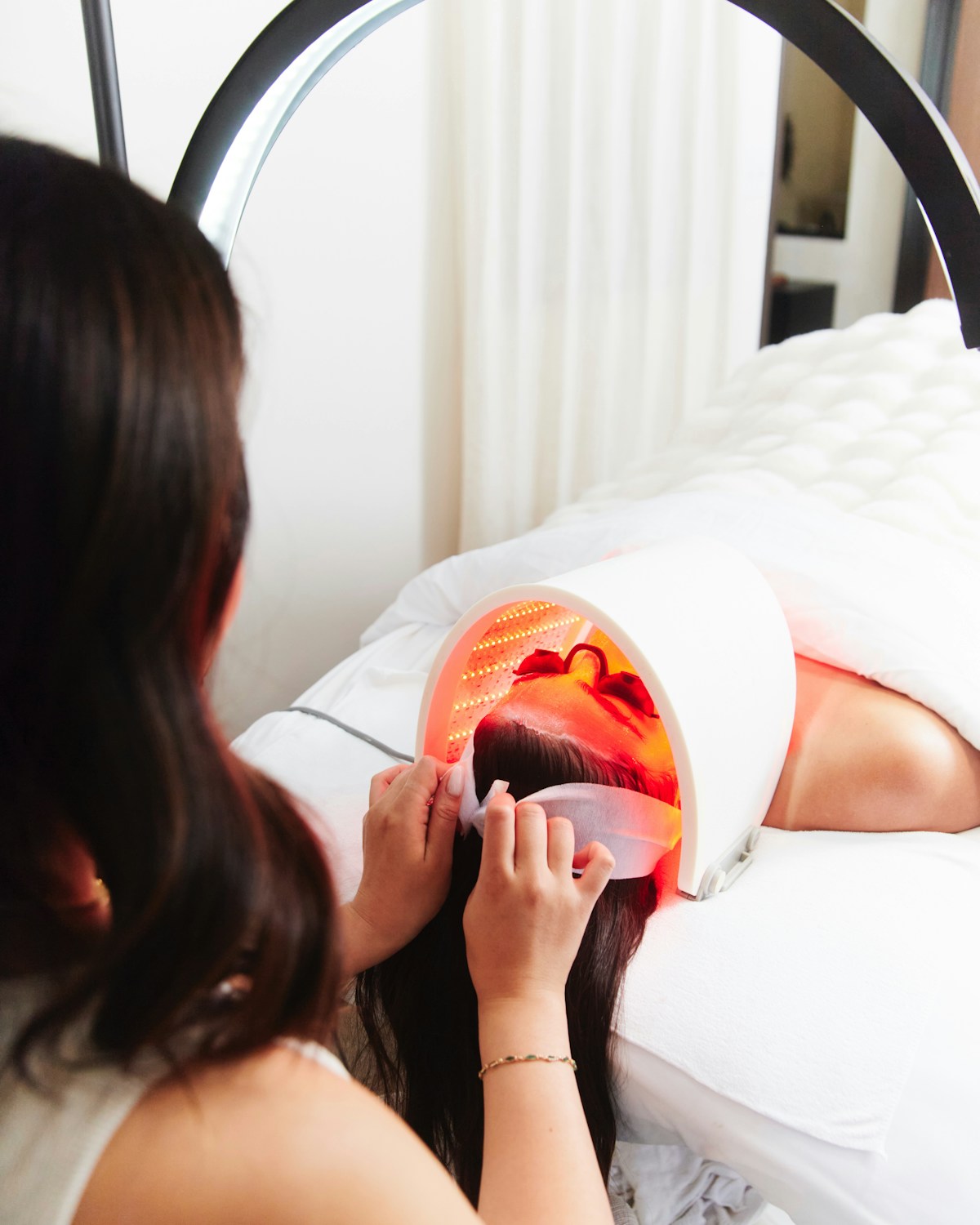
How to Try Red Light Therapy at Home in the UK
Professional LED treatments at UK clinics typically cost between £50 and £150 per session, with courses of 6-12 sessions recommended. That adds up fast. The good news is that at-home devices have improved massively over the past couple of years, making the technology far more accessible.
When choosing a device, the two things that matter most are wavelength and irradiance (power output). You want a device that delivers light in the 630-660nm range for surface-level benefits, ideally with near-infrared (830-850nm) for deeper penetration. Irradiance should be at least 20-30 mW/cm² for meaningful results. Anything significantly lower and you’re unlikely to see much change.
At-home LED face masks have become the most popular format in the UK. Prices range from around £30 for basic models up to £400+ for medical-grade options like the CurrentBody LED Mask (which uses 633nm and 830nm wavelengths) or the Therabody TheraFace Mask. If you’re not sure where to start, we’ve put together a detailed guide to the best LED face masks available in the UK right now.
What to Watch Out For
Red light therapy is generally considered very safe, but there are a few things worth knowing. If you’re taking photosensitising medications (some antibiotics, retinoids, or certain antidepressants), check with your GP before starting. The light shouldn’t be used directly over active skin cancers, and anyone with epilepsy should be cautious with flickering LED devices.
Also be wary of very cheap devices that claim professional-grade results. Some budget LED masks on the market deliver such low irradiance that they’re essentially useless. If a deal seems too good to be true, it probably is. Check the specifications for wavelength and power output before buying.
My Honest Verdict
After months of research and testing, I think red light therapy for skin sits in a genuinely useful middle ground. It’s not the revolutionary miracle that some influencers claim, but it’s not snake oil either. The science is there – it just takes patience and consistency to see results.
If you’re already doing the basics well (cleansing, moisturising, SPF every day) and want to add something extra to your routine, a quality LED device is a worthwhile investment. Just go in with realistic expectations, stick with it for at least two months, and choose a device with proper specifications rather than the cheapest option you can find.
For most people, the sweet spot seems to be a mid-range at-home mask used 4-5 times per week for 10-15 minutes. It’s hardly a chore – I usually pop mine on while watching telly in the evening. Give it 8-12 weeks and you should start noticing firmer, smoother, more even skin. Not bad for something you can do in your pyjamas.
Frequently Asked Questions
Is red light therapy safe for all skin types?
Yes, red light therapy is generally safe for all skin types and tones. Unlike UV light, it doesn’t cause burns or increase melanin production. However, if you have a known sensitivity to light or are taking photosensitising medication, speak to your doctor before starting treatment.
How long does it take to see results from red light therapy?
Most clinical studies show noticeable improvements after 8-12 weeks of consistent use, with 3-5 sessions per week. Some users report subtle improvements in skin texture and radiance within the first few weeks, but collagen-related changes like reduced fine lines take longer to become visible.
Can I use red light therapy with retinol or vitamin C?
You can, though some dermatologists suggest using your LED device on clean, bare skin for maximum light penetration, then applying serums afterwards. Retinol can make skin more photosensitive, but since red light doesn’t produce UV, it’s generally considered safe to combine them. When in doubt, apply your actives after your LED session rather than before.
Is professional red light therapy better than at-home devices?
Professional devices are typically more powerful and can deliver results faster. However, quality at-home masks from brands like CurrentBody and Therabody now offer clinical-grade wavelengths and respectable irradiance levels. The trade-off is that at-home treatment takes slightly longer per session and requires more consistency, but the convenience and cost savings make it a practical choice for most people in the UK.





Useful sorting of claims-vs-evidence on red light therapy. The wavelength distinction (630-660nm vs 800-850nm) is the thing most UK marketing skips over – and it matters because the benefits cited for each are different. For anyone who has stuck with an at-home panel for three months or more, did you actually see the collagen-related changes, or just the short-term glow?
The wavelength point is the one I wish I’d known a year ago. Bought a cheap mask off Amazon, used it religiously for three months, turns out it was pumping out something nearer 520nm which doesn’t really do much beyond mood stuff. Paid double for a proper CurrentBody one and the difference in skin tone was actually visible within six weeks.