Adolescence BAFTA TV Awards 2026 UK: Why Stephen Graham’s Sweep Just Rewrote British Drama
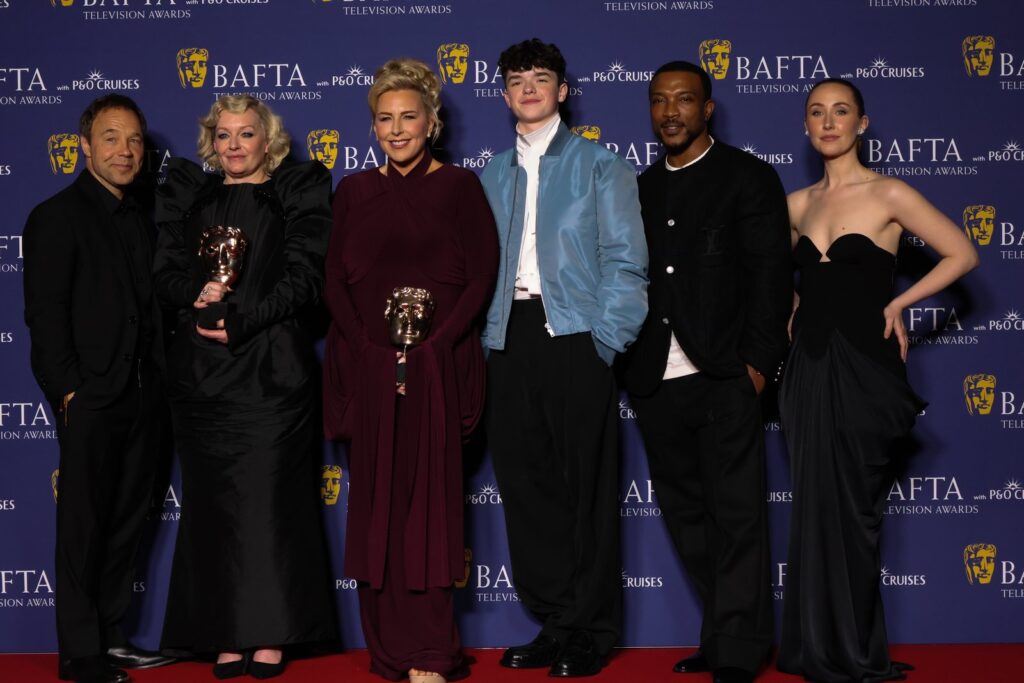
When Stephen Graham walked off the Royal Festival Hall stage on Sunday night with his third trophy of the evening, Britain’s relationship with prestige drama had already shifted. The Adolescence BAFTA TV Awards 2026 sweep – four wins from seven nominations, including Limited Drama, Leading Actor, Supporting Actor and Supporting Actress – is the most decorated single-night haul any British project has ever managed at the ceremony. It also became the clearest verdict in years on what British television is now genuinely good at: short, formally adventurous, working-class stories shot with cinema discipline. The headlines went to Adolescence. The more interesting story is what this win tells us about who British drama is for, and who it has stopped trying to please.
In This Article
- What Adolescence actually won at the 2026 BAFTAs
- Why a 15-year-old’s BAFTA win matters more than the headline
- The one-take format isn’t a gimmick, it’s a thesis
- What the rest of the night told us about British TV
- Why Trespasses missed – and what that says about Channel 4
- What the Adolescence BAFTA TV Awards 2026 result actually changes
This wasn’t a quiet awards-cycle nod. It was a structural moment for the industry, the kind of result the BBC, ITV and Channel 4 will be parsing in commissioning meetings for the rest of the year.
What Adolescence actually won at the 2026 BAFTAs
Across the ceremony on 10 May, Adolescence took Limited Drama, with Stephen Graham winning Leading Actor for his role as Eddie Miller, Owen Cooper taking Supporting Actor as his 13-year-old son Jamie, and Christine Tremarco winning Supporting Actress. The four wins, against seven nominations, beat Amandaland’s five-nomination tally for the night’s biggest haul. Toxic Town, Trespasses and A Thousand Blows – all credible contenders going in – went home with nothing in the major drama categories. Our BAFTA TV Awards 2026 predictions flagged Adolescence as the heavy favourite, but few in the room expected the comprehensive top-tier sweep that actually landed.
The ceremony itself, broadcast on BBC One and BBC iPlayer, ran with a deliberately British sense of restraint. Graham’s third acceptance speech of the night, delivered without notes, leaned hard on the project’s collaborative origins, naming co-writer Jack Thorne, director Philip Barantini and the cast of largely unknown young actors. The full BAFTA winners list confirms how broad the show’s footprint became.
Why a 15-year-old’s BAFTA win matters more than the headline
Owen Cooper is 15. He filmed Adolescence aged 13. Before the audition, his acting CV consisted of a single drama club at his comprehensive in Warrington. On Sunday, he became one of the youngest male actors ever to win in the Supporting Actor category at the TV BAFTAs, a record that until now has skewed firmly mid-career.
The headline is the age. The more useful detail is how Cooper got there. Casting director Shaheen Baig’s team auditioned more than 500 boys for the part of Jamie, working largely through regional drama groups and state-school workshops rather than the central London agency circuit. That process has been quietly normal in British casting for years – Boiling Point, This Is England, Top Boy all used it – but Adolescence’s win lays the approach in front of the rest of the industry as a working method, not a thrift exercise.
The cultural significance is harder to script. A teenager from a comprehensive school in the North West, with no industry parents and no headshot at the start of the audition process, just out-acted a roomful of seasoned American character actors at a televised awards ceremony. Whether commissioners take the right lesson from that – support regional-school pipelines, fund proper casting time – is the question the next 12 months of British drama will answer.
The one-take format isn’t a gimmick, it’s a thesis
Each of Adolescence’s four episodes was shot in a single, genuine continuous take. Not stitched, not invisibly edited – a real run, choreographed across schools, police stations, suburban kitchens and prison visiting rooms. Director Philip Barantini brought the technique from his 2021 feature Boiling Point and his BBC follow-up of the same name. The four-part TV version of Adolescence pushes the method further than either.
This isn’t formal cleverness for its own sake. The one-take method enforces a brutal honesty on the performances: there is no cutaway to mask a flat reading, no edit point to smooth a wobble, no rhythm massaged in post. It also removes the algorithmic editing pulse that streaming drama has drifted into – the cut-every-three-seconds montage that gets clipped well on TikTok but ages badly. Adolescence does the opposite. It bets on sustained attention and trusts the viewer to stay in the room.
That bet won. The format also rhymes with what other recent British prestige projects have been doing in less obvious ways, including Richard Gadd’s Half Man, where extended single-camera passes did similar emotional work. The BAFTA sweep cements the wider verdict: the medium can still reward formal ambition when the writing is doing real work.
What the rest of the night told us about British TV
BBC One’s Amandaland, the Motherland spin-off, took Best Scripted Comedy, with Katherine Parkinson winning Comedy Actress for Channel 4’s Here We Go and Steve Coogan taking Comedy Actor for How Are You? It’s Alan. The comedy categories have rebalanced cleanly around traditional broadcasters after several years of Apple TV and Prime Video crowding the slate. The Studio, Apple’s Hollywood satire, did take International, but it sat in its own category rather than gatecrashing the British ones.
The Celebrity Traitors winning Best Reality continued a quiet upgrade of reality television’s BAFTA standing. Simon Schama: The Road to Auschwitz took Specialist Factual on BBC Two, a reminder that public-service documentary still has BAFTA leverage when commissioning lets a serious project breathe. The split between Netflix dominating drama and the BBC dominating comedy, reality and factual is roughly where British television has been heading for three years, but Sunday made it unusually clean to read.
Why Trespasses missed – and what that says about Channel 4
The pre-ceremony chatter, including some of our own coverage of the Trespasses case, kept circling back to the possibility of an upset. Channel 4’s Belfast-set adaptation of Louise Kennedy’s novel was the critics’ alternative – quieter, more political, regionally specific. It collected nominations but no wins.
That outcome is awkward for Channel 4. The broadcaster’s drama strategy has leaned hard on smaller-budget, regionally rooted commissioning since the 2024 funding settlement, and Trespasses was the public flagship for the approach. Missing on the night doesn’t invalidate the strategy – Channel 4 was up against a Netflix project with a vastly larger budget and global marketing – but it does sharpen the question of whether the awards calculus has tilted decisively toward streamers with cinema-grade unit budgets. The Guardian’s TV desk has been making that argument for two years; Sunday night gave it ammunition.
What the Adolescence BAFTA TV Awards 2026 result actually changes
Three things will follow this sweep, and the first one is already happening. Casting agencies reported a measurable spike in enquiries from regional drama schools and parents of teenage actors in the week before the ceremony – the post-BAFTA wave will be steeper. Whether that energy is channelled into actual paid screen work, or evaporates into a year of unproductive auditions, depends on commissioners.
The second is genre. Knife-crime and youth-violence drama, treated until recently as a difficult sell, now reads to a commissioning department as award-eligible territory. Expect a wave of pitches in the next 18 months that try to clone the Adolescence template – four episodes, one-take, working-class family, social-media subtext. Most will not survive script stage. A few will.
The third is structural. Four-episode runs – the form Adolescence works in – have just collected the biggest BAFTA prize of the year. UK drama has been quietly migrating toward shorter seasons for half a decade. Sunday’s result removes the last commissioning excuse to drag a story across eight when four will do.
The risk is the obvious one. Every awards cycle produces a template, and every template produces a wave of imitators that miss what made the original good. Adolescence worked because Thorne’s script, Graham’s pulled-back lead performance, Cooper’s unforced naturalism and Barantini’s nerveless direction landed on the same project at the same time. That alignment is rare. The next two years will be full of shows that have a one-take episode and a regional-school casting story and not much else.
What is harder to dispute is the wider cultural signal. British prestige drama, after a decade of arguing it could compete with HBO and FX on their own terms, just won the night by doing something American prestige drama largely doesn’t try: refusing to look polished. So here’s the real question. Was Sunday the moment British television finally stopped apologising for being short, regional and difficult, or just another awards peak before commissioning quietly drifts back to the safer playbook?
For another adaptation chasing awards-season attention, see whether the Gilead follow-up earns it in our Testaments review.