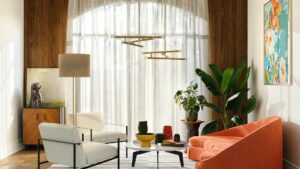
The Return of the Separate Dining Room: Why Britain’s Most Mocked Room Is Winning Again in 2026
For the best part of thirty years, the first thing a builder did in a British terrace was knock the dining room through. Load-bearing wall out, RSJ in, one big kitchen-diner where two rooms used to be. Estate agents loved it. Grand Designs practically ran on it. And now, quietly but unmistakably, the whole thing has gone into reverse: the separate dining room – the room your nan kept “for best”, the room whole TV property shows were built around demolishing – is back on British wish lists for 2026. Not as a museum of mahogany and hostess trolleys, but as the most useful room in the house. The kitchen end of the same story is the fading of the fitted island – kitchen island alternatives are pulling the table back into the middle of the room.
In This Article
This isn’t nostalgia talking. It’s a genuine shift in how people are choosing to live, and it’s showing up everywhere from Homes & Gardens’ 2026 trend forecasts to what kitchen designers say clients are asking for. The room we spent decades ripping out is the room buyers now circle on floorplans.
How Britain fell out of love with the dining room
The dining room didn’t die of natural causes. It was killed, deliberately, by two decades of knock-through culture.
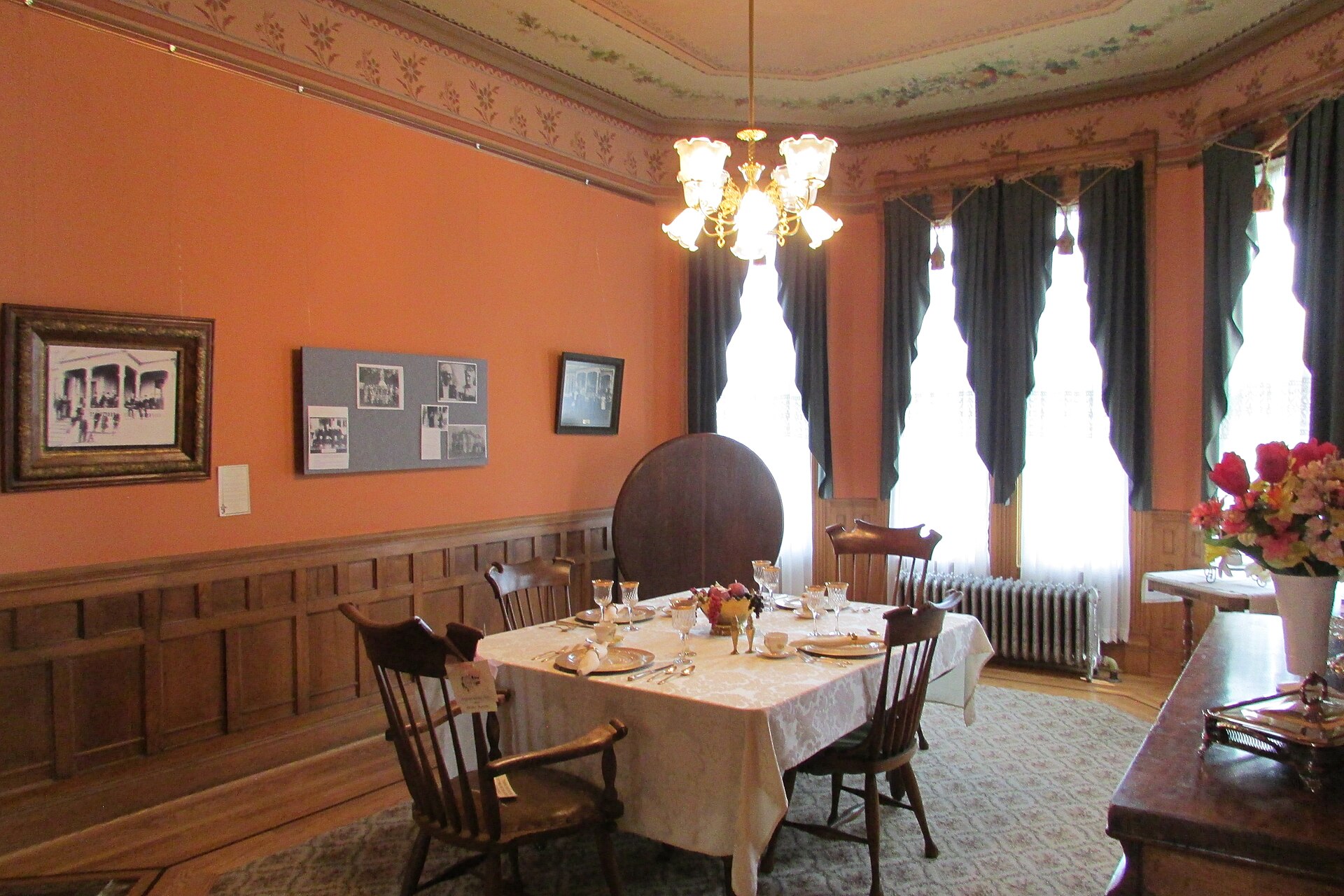
Worth remembering how deep the room’s roots go. The separate dining room was the great trophy of the Victorian middle classes – the first room ordinary families set aside purely for eating, proof you’d risen far enough not to eat where you cooked. By the fifties it was standard in even modest semis, and by the seventies it had calcified into the room nobody used: the good china behind glass, the table extended twice a year, the faint smell of furniture polish and obligation. The TV dinner did the early damage. Why sit at a table when the sofa had better entertainment?
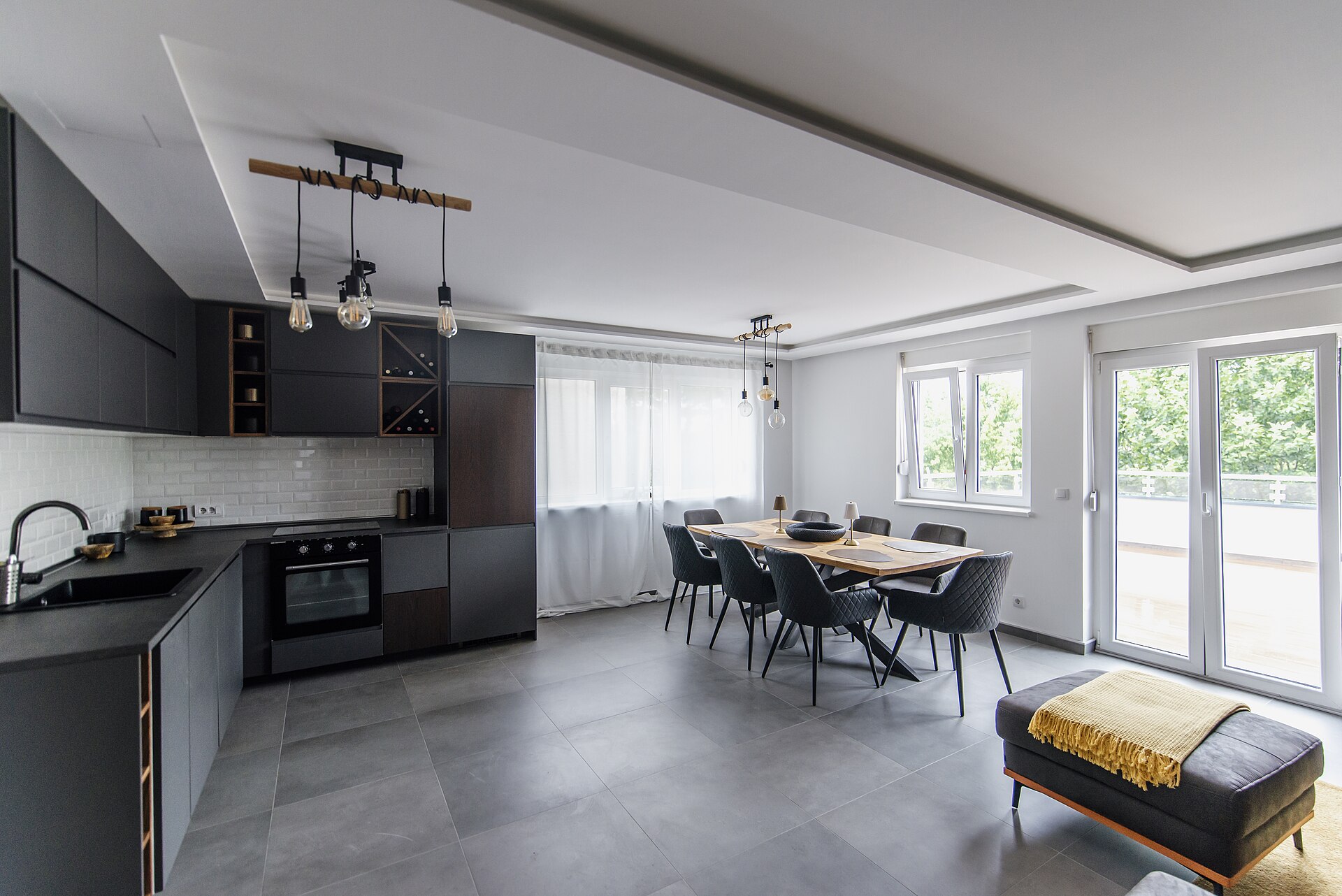
From the late nineties onwards, open plan was less a layout than a moral position. A separate dining room meant you were formal, fusty, probably the sort of household that owned napkin rings. The future was one vast space where you cooked, ate, worked and watched telly in a single room, ideally around an island the size of a small car. Millions of Victorian terraces and thirties semis lost their dividing walls, and for a while it felt like progress – more light, more flow, more room for the kids to do homework where you could see them.
The problem is that the open-plan kitchen-diner asks one room to do everything, and rooms are like people in that respect: ask them to do everything and they do nothing well. The smell of last night’s fish. The dishwasher on its third cycle of the day. The washing-up staring at you while you eat. Anyone who’s tried to have a proper conversation over dinner while the extractor fan roars knows the trade-off. Grand Designs Magazine – house journal of the knock-through – now runs pieces asking whether we’re moving away from open plan altogether. That tells you something.
We covered the first half of this story last year, when broken plan kitchens started replacing open plan in British renovations. The dining room’s return is the logical next chapter. First we put the walls back. Now we’re remembering what the rooms behind them were for. The wider case for putting them back is in our piece on broken-plan living.
The office that ate the dining table
There’s an irony here. The thing that nearly finished the dining room off is also what saved it.
When lockdown sent everyone home, the dining table became a desk. For a lot of households it never went back. The “dining room” of 2021 was a monitor, a tangle of cables and a chair that was ruining someone’s back. But that occupation proved the point campaigners for the dining room could never quite land: a room with a door is worth having. People who spent two years working from the dining table discovered exactly why Victorians put walls between activities. Once the office moved out – to a spare room, or one of the garden rooms Britain keeps building – the dining room stood there, empty and newly appreciated, waiting for a better job.
Hosting made it useful again
The better job arrived with the cost-of-living squeeze. Eating out with another couple now clears £150 without anyone ordering recklessly, and £200 in most of London. Do that twice a month and you’re £4,000 a year down. Cooking for the same four people at home costs £40, and nobody has to get a train back to Zone 4 at 11pm. The kit maths works the same way – we found stand mixers under £150 that will outlast the trend.
So Britain went back to hosting, and hosting is the dining room’s home fixture. Houzz UK asked whether the dining room is making a comeback and found designers reporting exactly that: clients requesting a defined space for eating together, away from the cooking mess. A room with a door concentrates an evening in a way a kitchen island can’t. The cook isn’t performing. Guests aren’t perched on bar stools watching you swear at a sauce. You close the door on the chaos and the meal becomes the event.
We saw the early signs of this in June, when tablescaping quietly took over British dinner parties. You don’t spend £60 on candles, runners and matching water glasses to arrange them next to a draining board. The styled table wanted a room of its own. Now it’s getting one.
The supper club generation has something to do with it too. A cohort that came of age paying £14 for a cocktail has worked out that the same evening, moved into someone’s home, is better as well as cheaper – longer, louder, no one hovering with a card machine at 10.45. Since January I’ve been to more dinners in people’s houses than restaurants, and I don’t think my diary is unusual. The dining room is the infrastructure that trend was missing.
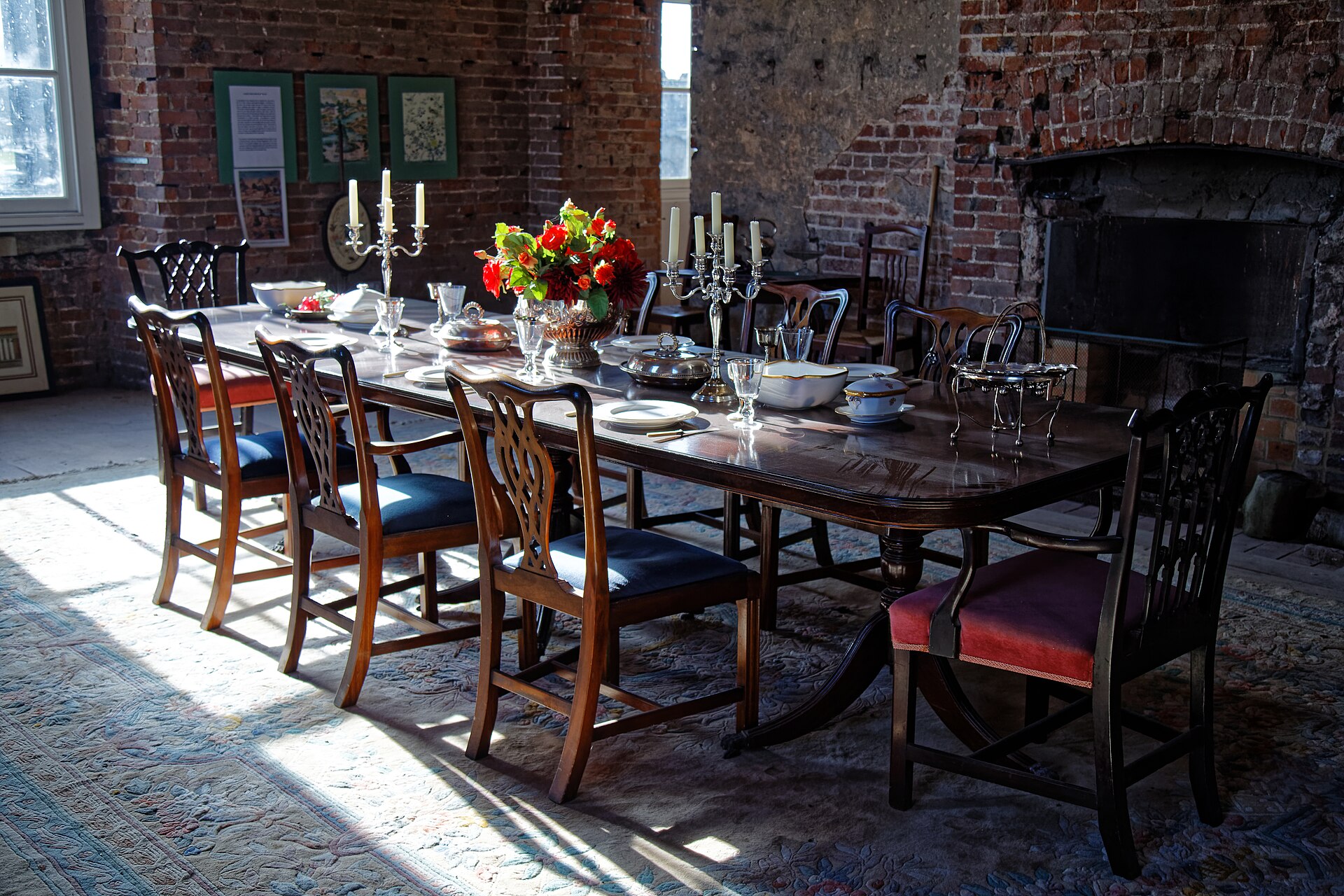
Is a separate dining room worth the space?
Here’s the honest bit. In a three-bed semi with one reception room, no, it probably isn’t – and anyone who tells you otherwise is selling dining furniture. Floor space in Britain is brutally expensive, and a room used twice a year at Christmas is a luxury dressed up as a virtue. That was always the fair criticism of the old formal dining room, and it hasn’t stopped being true.
The calculation changes when the room earns its keep weekly rather than annually. The 2026 version isn’t “for best” – it’s for Friday. It seats homework on Tuesday, a work call on Wednesday, six friends on Saturday and a jigsaw the rest of the week. The difference from the open-plan era is that all of this happens behind a door, so none of it has to be tidied away for the room to function.
And if you’re weighing up a move rather than a renovation, it’s worth knowing the wind has changed. Agents report that a floorplan showing a separate dining room – or even a space that could obviously become one – has gone from liability to selling point in the space of about five years. The knock-through no longer adds automatic value. Nobody is putting the walls back in fast, because steel and plaster run £5,000 to £15,000 before you’ve bought a table. But buyers have stopped paying a premium for the absence of walls, and that’s the quiet part of this trend that will outlast the styling.
What the 2026 dining room actually looks like
Not like your nan’s. The new dining room has shed almost every convention of the old one, which is precisely why it survived the return journey.
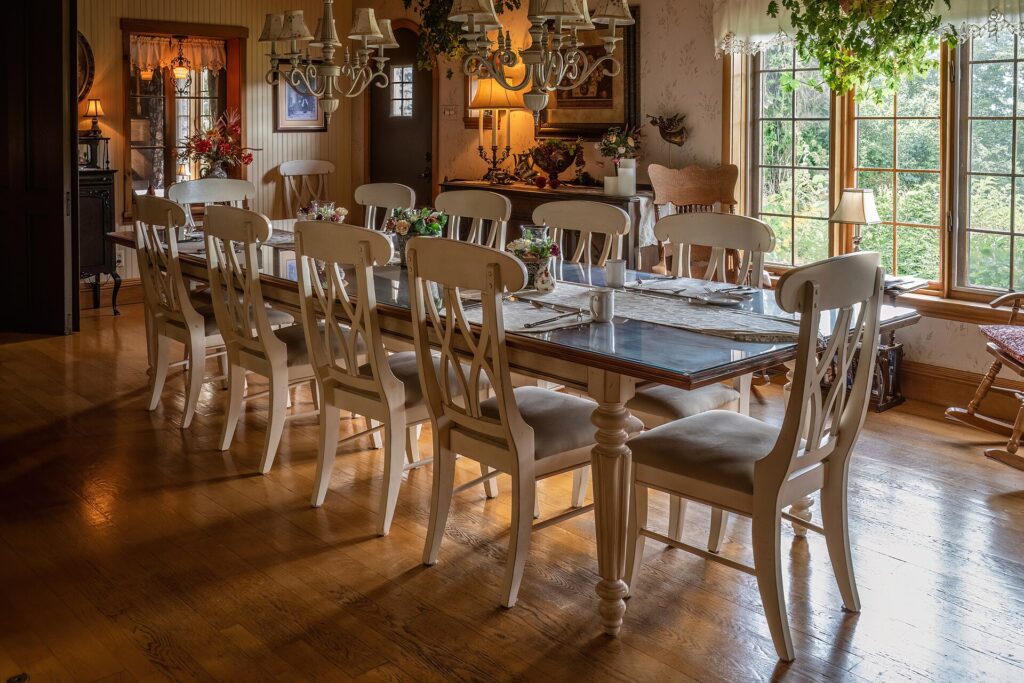
The matching eight-piece suite is still dead, and deserves to stay dead. A £2,000 table with eight identical chairs is the fastest way to make a room feel like a furniture showroom in 2026. The rooms getting photographed – and the ones designers keep pinning – mix a solid second-hand table with chairs collected over time. Facebook Marketplace is heaving with G Plan and Ercol tables at £80 to £150 because a generation cleared out their parents’ dining rooms; the same tables cost £600 upwards, sanded and waxed, in a Hackney vintage shop. Buy the £90 one. It’s the same table.
Round tables are having their moment, especially in smaller rooms – better for conversation, no dead corners, kinder to a tight floorplan. Colour has followed the room’s rehabilitation too: deep greens, oxblood, chocolate browns, often drenched over walls, skirting and ceiling in one shade, which suits a dining room better than any other room in the house because you mostly use it at night. And the lighting rulebook we set out when the big light died applies double here: a low pendant over the table, candles doing real work, lamps in the corners, and the ceiling rose retired from active duty.
One warning from the trend photography: the dining room’s comeback has brought some old formality back with it, and not all of it deserves the lift. You do not need a drinks trolley. You definitely don’t need a tureen.
The same instinct is showing up outside the back door, where the drought tolerant garden has replaced the lawn nobody had time to water.
What it costs to bring one back
Cheaper than you’d think, if you resist the showroom.
The room itself is usually already there – a knocked-through space that can be re-zoned, a “study” that stopped being one, the cold front room that defaults to storing the ironing board. Reclaiming it starts at roughly £250 if you’re doing paint and second-hand furniture yourself: £60 to £80 of decent emulsion covers a colour-drenched small room, a Marketplace table runs £80 to £150, and mismatched chairs turn up at £15 to £30 each from charity furniture warehouses if you’re patient. A pendant, a dimmer switch and a big rug push a comfortable budget to £600 or so. IKEA will sell you a perfectly good extending table and four chairs for under £500 if second-hand isn’t your thing, though in ten years the Ercol will be worth more than you paid and the flat-pack won’t.
The expensive version exists, obviously. Made-to-measure banquette seating starts around £2,000, hardwood tables from British makers run £3,000 upwards, and re-instating a wall with a proper doorway lands £5,000 to £15,000 depending on what the knock-through did to your structure. Skip the wall unless noise genuinely rules your life. Skip the banquette too, honestly – it photographs beautifully and then someone has to shuffle along a bench sideways at every meal for the next decade.
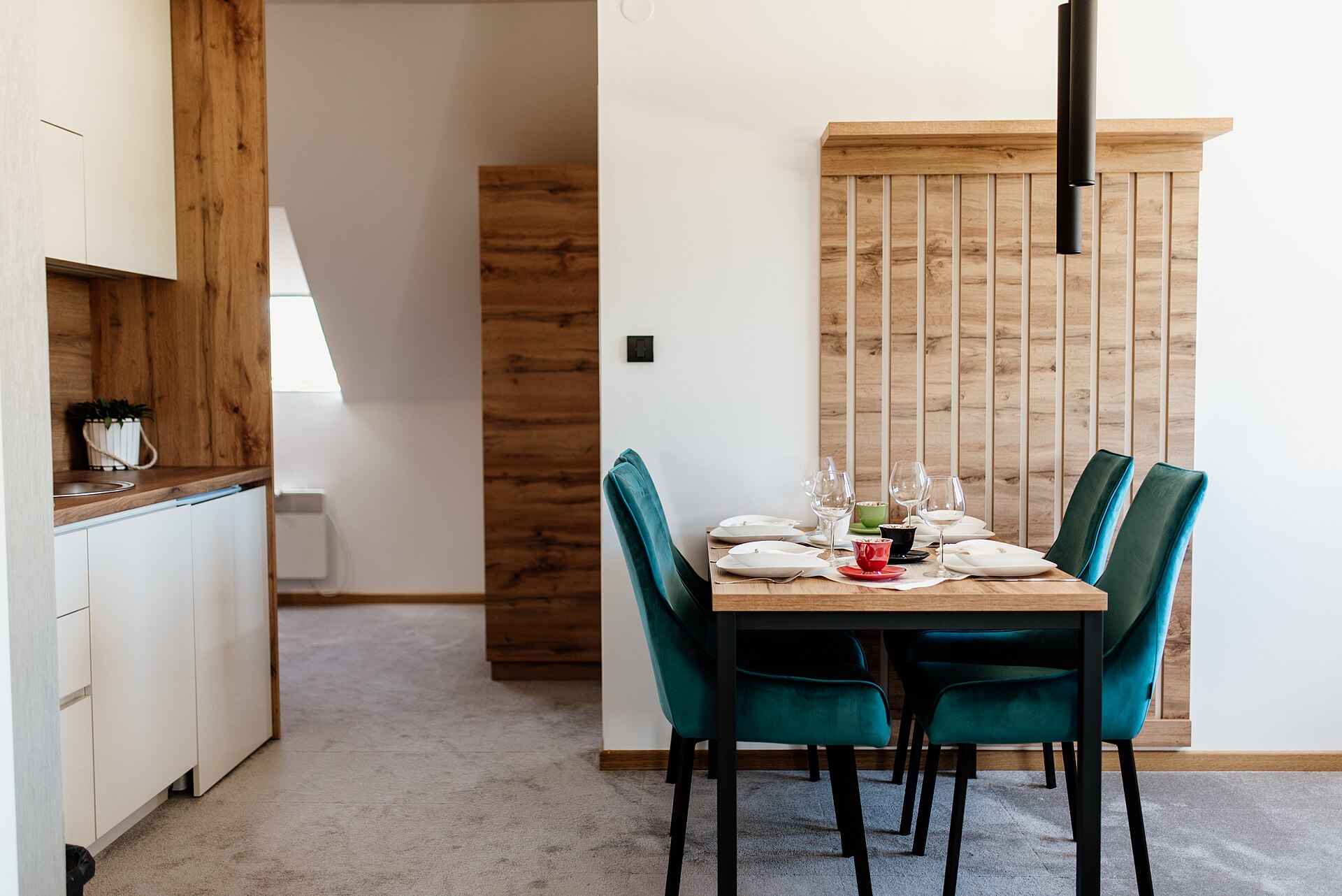
No spare room? Zone it instead
Most British homes can’t spare a full room, and the trend has adapted rather than excluded them. The fastest-growing version of the separate dining room isn’t separate at all – it’s a dining area with a firm boundary. A half-wall or oak slat screen. A different floor finish. A rug that defines the table’s territory, a pendant hung low enough to claim the space, curtains or Crittall-style glazing across an opening.
Done properly, zoning buys you most of what the wall gave you at a fraction of the cost – a few hundred pounds for a screen and a rug against five figures for masonry. What it can’t buy is the door, and the door is the point for anyone whose objection to open plan is noise and smell rather than sightlines. If that’s you, and the budget only stretches to one intervention, hang a door across the opening before you spend a penny on furniture. It’s the least glamorous purchase in this entire trend and the one you’ll use every day.
The room that refused to die
Every interiors trend of the last three years – the return of walls, the death of the big light, colour drenching, the styled table – has been pointing at the same conclusion: British homes are re-learning the value of rooms that do one thing well, at night, with the door shut. The separate dining room is where all of those threads meet. It was mocked, knocked through and turned into an office, and it has outlasted every layout that was supposed to replace it.
And once the dining room is back, it needs filling, which is where buying antique furniture gets interesting: a Victorian mahogany chest often costs less than flatpack. The walls need deciding too. The finish of the moment is cloudier than you’d expect – our limewash paint guide covers what it costs, where it works and the fakes to avoid.
Underfoot, the same rehabilitation is under way: carpet is coming back for exactly the reasons the dining room is – warmth, quiet and rooms that feel finished rather than staged.
The question for 2026 isn’t whether the dining room is back – it’s whether your house has been quietly holding a space for one all along. Where would yours go?