Greens Powders in 2026: What £97 a Pouch Actually Buys – And When a 3p Multivitamin Does the Same Job
There’s a moment in almost every big podcast this year – somewhere around the 40-minute mark – when the host’s voice drops half a tone and the ad read begins. It’s usually about a morning scoop of greens. AG1, the biggest name in greens powders, has built a billion-dollar business largely on that ad read, and Britain has bought in with enthusiasm: the green scoop now sits next to the kettle in flats and gym bags across the country. A single pouch bought outright costs £97. The subscription softens that to £59 a month, which still makes it pricier than most gym memberships.
In This Article
- How a green drink became a £59 direct debit
- What £97 actually buys you
- The proprietary blend problem
- What the trials actually show
- Who greens powders actually make sense for
- The 3p alternative, and the one supplement that earns its place
- The footnote the industry would rather skip
- Four questions that sort the defensible from the daft
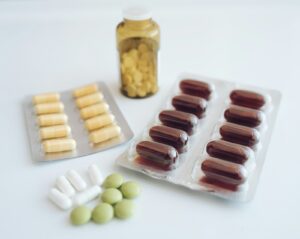
And here’s the awkward bit. For most of the people drinking it, a supermarket multivitamin costing roughly 3p a day covers the same nutritional ground.
That’s not a throwaway jab. It’s the conclusion you reach when you sit down with the label, the trial data and the price list – which is what this piece does. Greens powders aren’t a scam exactly. They’re something more annoying: a real product with real vitamins in it, priced like a miracle and marketed hardest at the people who need it least.
How a green drink became a £59 direct debit
Athletic Greens has been around since 2010, but for its first decade it was a niche product for triathletes and biohackers. What changed wasn’t the formula. It was the marketing channel. The company rebranded as AG1, raised money at a valuation north of a billion dollars, and went all-in on podcast sponsorship at exactly the moment podcasts became the main way health-curious men aged 25 to 45 consume information. If you’ve listened to any show about fitness, productivity or “optimising” anything in the last three years, you’ve heard the pitch – probably read by a host you trust, which is the entire point.
It worked in the UK for the same reason electrolyte sachets did: the product piggybacks on a real behaviour (trying to eat better) and converts vague guilt about vegetables into a tidy daily ritual with a subscription attached. You’re not buying spirulina. You’re buying the feeling of being someone who has their mornings sorted.
Subscriptions are the quiet genius of the model. Nobody re-evaluates a direct debit. A £59 monthly charge that started as a two-week experiment has a way of still being there eighteen months later, unexamined, because cancelling feels like admitting the experiment failed.
What £97 actually buys you
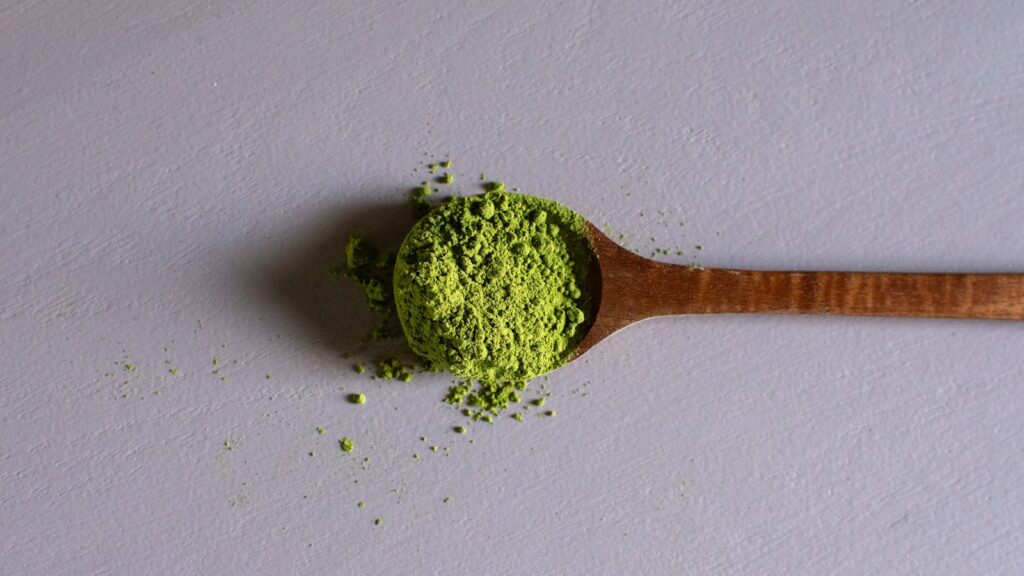
Open a pouch and you get a fine green dust that smells like a health food shop and tastes, depending on who you ask, like pineapple-adjacent grass. The current AG1 formula lists more than 80 ingredients: vitamins, minerals, a “superfood complex” of powdered vegetables and algae, digestive enzymes, adaptogenic mushrooms, probiotics and prebiotics.
Eighty-plus ingredients sounds impressive until you do the arithmetic. A 12g scoop split across that many components means many of them are present in amounts too small to flavour a soup, let alone shift a blood marker. Spirulina, for instance, has some trial evidence behind it – at doses of a gram or more per day. Whether AG1 contains that much is anyone’s guess, because the label won’t tell you.
Which brings us to the industry’s favourite trick.
The proprietary blend problem
Most greens powders, AG1 included, group their showpiece ingredients into “proprietary blends” – clusters where only the total weight is declared, not the individual doses. The stated reason is protecting the recipe from copycats. The practical effect is that you can’t check whether the ashwagandha, the broccoli extract or the reishi mushroom is present at anything like the dose used in the studies the marketing gestures at.
This isn’t unique to greens powders – it’s the same issue we flagged with bovine colostrum’s £88 tubs earlier this summer, and it runs right through the supplement aisle. But greens powders take it further than most, because the sheer length of the ingredient list acts as its own camouflage. A label with 80 ingredients reads as abundance. It can just as easily be 75 pinches of dust sitting on top of a standard multivitamin.
The vitamins and minerals, to be fair, are declared properly, and the doses are respectable – often 100% or more of your daily reference intake for the B vitamins, vitamin C, zinc and biotin. That part of the product works. It’s also the part a £1.85 tub of 90 supermarket A-Z tablets replicates almost line for line.
One detail that rarely makes the ad read: the fibre content of most greens powders is around two grams a scoop or less. The NHS recommends 30g a day. The product that markets itself on gut health delivers less fibre than half a slice of wholemeal toast.
What the trials actually show
AG1 is unusual in its category for having run randomised controlled trials at all – four of them, which the company mentions often. Look closer and the enthusiasm cools. The trials were company-funded, small, and measured things like nutrient status and markers of gut flora. They found, roughly, that if you take a supplement containing vitamins, your vitamin levels improve, and that if you swallow probiotics, they show up in your gut.
Neither finding is nothing. Neither is the claim on the tin.
The promises that actually sell greens powders – more energy, sharper focus, better immunity, less bloating – haven’t been demonstrated in any independent, peer-reviewed trial of these products. Not one. That’s a striking gap for a category this size, and it mirrors what we found when we dug into NMN’s longevity claims and magnesium’s sleep evidence this month: the distance between what’s been studied and what’s being sold is where the margin lives.
The British Dietetic Association’s position on supplements is blunt by comparison: food first, and if you don’t have a deficiency, a supplement has little to offer you. Dietitians who’ve reviewed AG1 for US and UK outlets tend to land in the same place – reasonable product, unreasonable price, unnecessary for anyone eating halfway decently. One registered dietitian’s verdict did the rounds this year for its brevity: not worth it unless you’re an athlete with unusual nutrient demands or someone with a diagnosed deficiency. And if you have a diagnosed deficiency, your GP will give you the specific nutrient you’re short of, at prescription strength, for less than a week of AG1.
The same food-first logic applies to how much protein you actually need – which, for most Britons, is rather less than the packaging suggests.
Who greens powders actually make sense for
There are real candidates, and being fair about them matters, because the answer isn’t “nobody”.
If you travel constantly and eat from petrol stations and hotel buffets, a greens powder is a plausible insurance policy against a poor diet – though so is a multivitamin. If you’re in a phase of life where cooking has collapsed (new baby, hospital stints, a house move that’s eaten your kitchen), same logic. And some people simply won’t eat vegetables but will drink something green if it tastes of pineapple. For them, the powder beats nothing, and “better than nothing” is an honest use case the adverts never lead with.
The list of people who should skip it is longer. Anyone on warfarin needs to be careful with concentrated green ingredients because of vitamin K. The inulin and fructooligosaccharides that pad out most blends are high-FODMAP, which is a rough deal for the IBS crowd the “debloating” marketing often targets – a dark irony, that. Pregnant women are usually advised off the herbal and adaptogen components, several of which have never been safety-tested in pregnancy. Kids don’t need adult micronutrient doses at all. And if you already take a multivitamin, adding a greens powder mostly means paying twice for the same B vitamins – a surprisingly common combination among the wellness-inclined, who tend to add products rather than swap them.
But the core audience – people who eat vegetables most days, train a bit, sleep fine – are buying a £59 monthly answer to a problem they don’t have.
The 3p alternative, and the one supplement that earns its place
Run the comparison properly. A supermarket A-Z multivitamin covers the declared micronutrients in a greens powder for about 3p a day – the kind of tub that sits unglamorously on the bottom shelf in Tesco next to the cod liver oil. A £1.30 bag of spinach, a couple of carrots and a tin of beans deliver the fibre, the polyphenols and the actual food matrix that powdered vegetables can only impersonate. We made a similar point in our fibre supplements piece a fortnight ago: the 40p tin of beans keeps beating the £30 powder, and it isn’t close.
The one supplement with a clear case for most Brits is vitamin D – the NHS advises 10 micrograms a day for everyone through autumn and winter, because British sunlight doesn’t cover it from October onwards. Plenty of greens powders are oddly light on exactly this nutrient. The one deficiency Britain reliably has is the one the £97 pouch doesn’t prioritise.
If you want the ritual – and the ritual is real, there’s something to be said for starting the day with a deliberate healthy act – UK-made rivals such as Huel’s Daily Greens run at roughly half AG1’s subscription price for a broadly similar formula. Cheaper still: a multivitamin, a vitamin D tablet and an actual vegetable. The ritual survives. The £59 direct debit doesn’t need to.

The footnote the industry would rather skip
One more thing worth knowing before you buy any powdered plant product. In January, US regulators investigated a salmonella outbreak traced to moringa leaf powder in a super-greens supplement, which sickened dozens of people before the recall. Powdered botanicals are a concentrated agricultural product. And in the UK, as in the US, food supplements are regulated as foods rather than medicines – nobody independently checks that the tub does what it says, and safety testing is largely the manufacturer marking its own homework.
That’s not a reason to bin the pouch in your cupboard. It’s a reason to treat “it’s just concentrated vegetables, what’s the harm” with the same suspicion you’d apply to any £97 product whose active doses are a trade secret. The harm is usually to your bank balance. Occasionally it’s more than that.
Since the January recall, the sharper end of the industry has started publishing third-party testing certificates, which is welcome and overdue. If you do buy a greens powder, that certificate is worth more than all 80 ingredients combined.
Four questions that sort the defensible from the daft
If you’re still tempted – and the taste of pineapple-adjacent virtue is tempting, I’ll give it that – put any greens powder through four questions before the card comes out.
Does the label declare individual doses, or hide them in blends? A brand confident in its formula has no reason to hide the numbers. Is there a current third-party testing certificate you can actually view, not just a badge on the website? What, precisely, are you short of – and have you checked, or are you guessing? A £30 blood panel from your GP or a private lab answers in a week what a year of green scoops never will. And could you cancel the subscription today without a small pang of identity loss? If that last one stings, the product is doing its job on your self-image rather than your bloodwork.
Most powders fail the first two questions outright. The honourable exceptions – and there are a handful, mostly newer UK brands that publish batch results – tend to cost less than AG1, not more. Make of that what you will.
It took the supplement industry about a decade to turn “eat your greens” – the cheapest health advice ever given – into one of the most expensive products in the aisle. That’s a remarkable piece of commercial alchemy, and it deserves a kind of grudging applause. It just doesn’t deserve £59 a month of yours.
Greens powders aren’t the only supplement trend running ahead of its evidence this summer. Our look at lymphatic drainage drops – TikTok’s puffiness cure of choice – finds the same gap between claims and trials.
So here’s the question worth sitting with before the next podcast ad read gets to you: if the same green scoop cost £8 a month instead of £59, with the same label and the same taste – would you still believe it was doing anything? And if not, what exactly is the other £51 buying?