
Astaxanthin For Skin UK: Why The Red Algae Antioxidant Is The Pre-Summer Supplement Most British Routines Miss
Last November, someone reversed into my colleague’s parked Corsa in a Tesco car park, got out, looked at the damage, and drove off – and no, that has nothing to do with astaxanthin, but it does explain why I now read supplement labels the way I read insurance small print. Sceptically, and with a calculator.
In This Article
- What astaxanthin actually is
- How it compares to the antioxidants you already take
- What astaxanthin for skin actually does
- The pre-summer angle: why May and June matter in the UK
- Diet first: where astaxanthin turns up on a plate
- How to take astaxanthin
- Buying astaxanthin in the UK: what's actually on the shelf
- What it will not do
- A sensible pre-summer routine
Which brings me to the red-pink capsule that has quietly colonised the “skin supplement” shelf. Astaxanthin for skin – a carotenoid pulled from microalgae – has gone from Japanese clinic curiosity to something a Boots pharmacist will now happily point you towards. The claims run hot. The evidence runs cooler. Both are worth pulling apart before you spend £20 on it.
It is not a sun cream. Nothing is, except sun cream. But the case for adding astaxanthin to a pre-summer routine has firmed up over the last two or three years, and it remains the one supplement most UK bathroom cabinets still do not contain.
What astaxanthin actually is
Astaxanthin is a carotenoid – the same family of plant pigments that gives carrots their orange and tomatoes their red. It is produced naturally by Haematococcus pluvialis, a freshwater microalga that turns a startling deep red when stressed by sunlight. That same pigment is what turns salmon flesh pink and flamingos their characteristic colour: it works its way up the food chain, and the fish and the birds are borrowing it from the algae, not making it themselves.
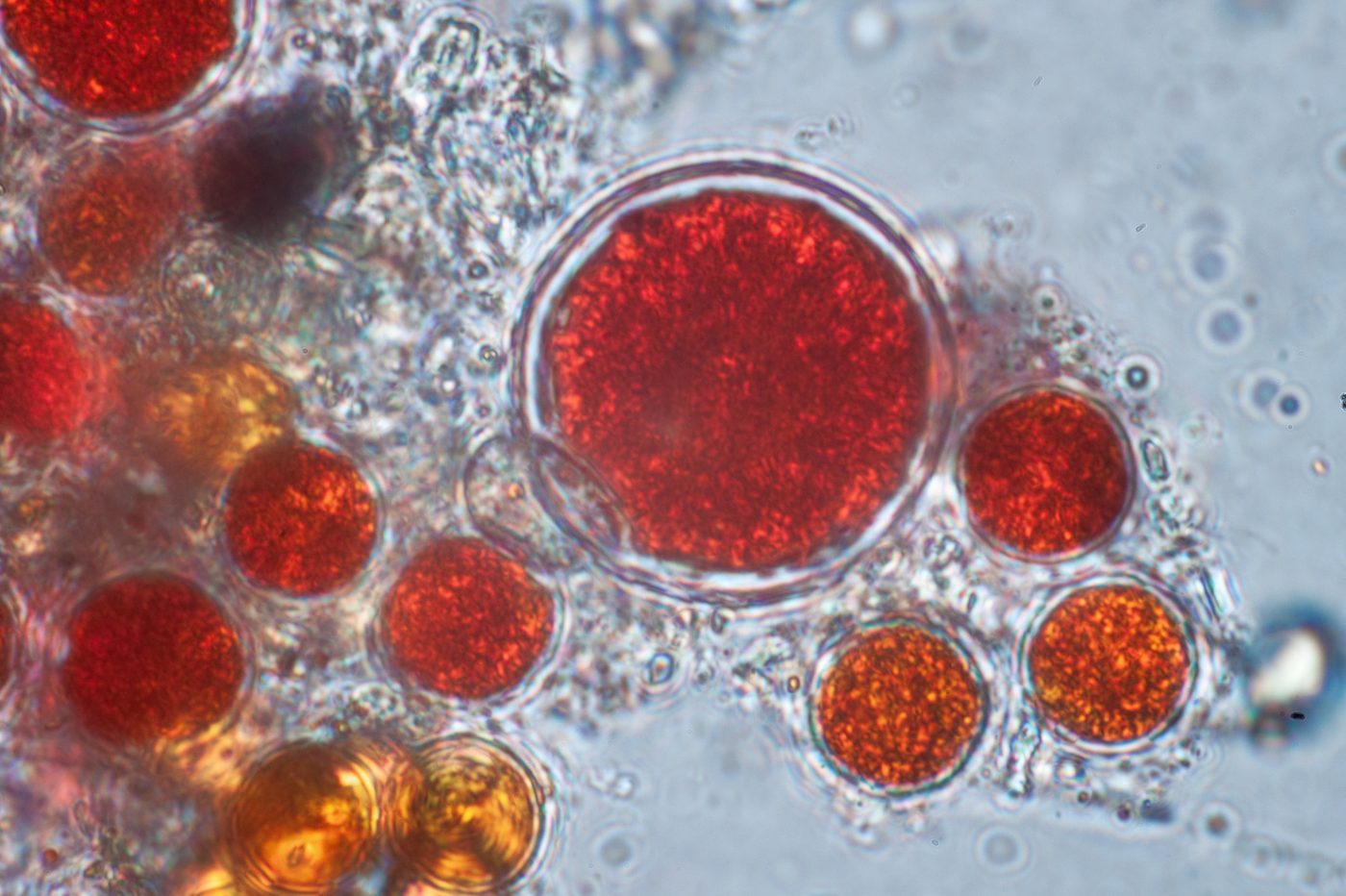
Chemically it sits closer to beta-carotene than to vitamin C, but it lands in a different category from most supplemental antioxidants because of where it goes inside a cell. Vitamin C works in the watery part of a cell. Vitamin E works in the fatty membranes. Astaxanthin straddles both, spanning the membrane and anchoring at each end. That structural quirk is the basis of the “more potent” claims that get slapped on the front of the bottle.
And those claims get silly. You will see “10x vitamin E” on one label and “550x vitamin E” on another, which should tell you something: whether either number holds up depends entirely on which paper you cite and which assay was run in which test tube. The cell-biology mechanism is broadly accepted. The marketing multipliers are close to meaningless.
How it compares to the antioxidants you already take
If you already own vitamin C serum and a bottle of vitamin E capsules, the fair question is whether astaxanthin adds anything or just duplicates them. Roughly, here is where each one sits.
| Antioxidant | Where it works in the cell | Main skin claim | Evidence in humans |
|---|---|---|---|
| Vitamin C | Water-soluble (cytoplasm) | Collagen synthesis, brightening | Strong, mostly topical |
| Vitamin E | Fat-soluble (membranes) | Membrane protection | Moderate |
| Beta-carotene | Fat-soluble | Photoprotection support | Mixed; high doses debated |
| Astaxanthin | Spans the membrane, both layers | Elasticity, UV redness, fine lines | Small but consistent oral trials |
The honest read: astaxanthin is not a straight swap for any of them. It occupies a slightly different physical position in the cell, which is the mechanistic argument for stacking it on top of a diet already rich in the others rather than instead of them.
What astaxanthin for skin actually does
The marketing clusters around three points: better skin elasticity, less UV-induced redness, and a measurable reduction in fine wrinkle depth after several weeks of daily intake. Small Japanese and European clinical trials – most using 4-12mg per day for 8 to 16 weeks – have reported modest but real effects on each. One frequently cited 2012 study on middle-aged women (6mg per day, plus a topical, over eight weeks) found improvements in crow’s-feet wrinkles and skin elasticity. The sample sizes are small, some trials are industry-funded, and nobody has run the large independent study that would settle it.
The mechanism is plausible, which is why the modest results are believable rather than baffling. UV exposure generates reactive oxygen species inside the skin. Those break down collagen and set off the inflammatory cascade behind sun damage. A fat-soluble antioxidant that reaches skin cells and mops up some of that oxidative load should, in theory, take a little pressure off the repair systems. That is what the research points at, even if it is quieter than the adverts.
What astaxanthin is not is a replacement for SPF. The British Association of Dermatologists is firm on this: oral antioxidants can support skin health, but they do not stop UV photons hitting the skin. Sunscreen still does the structural work. Astaxanthin is an internal companion, not the front line – and any brand implying otherwise is overselling.
The pre-summer angle: why May and June matter in the UK
Carotenoid skin effects build up over weeks, not days. Tissue concentrations rise gradually as the supplement saturates fat stores, and skin-level benefits tend to show up around the two-month mark rather than the two-week one. That is the practical reason for the timing: British summer, such as it is, delivers its strongest UV between June and August, with faces and the backs of hands taking the brunt.
Start in May and the supplement is doing its work by the time the first hot week lands. Start in July and you are playing catch-up. The NHS already advises that UK UV is strong enough between late March and early October to warrant SPF on uncovered skin, and that window is exactly when you want any skin-supporting habit already in place.
There is also the plain fact that British sun is feast or famine. Long grey stretches, then one fierce week that does disproportionate damage to skin which has not seen daylight in months. Building antioxidant reserves before that hit is a more sensible plan than scrambling to repair afterwards. It is the same logic as servicing the boiler in September, not January.
Diet first: where astaxanthin turns up on a plate
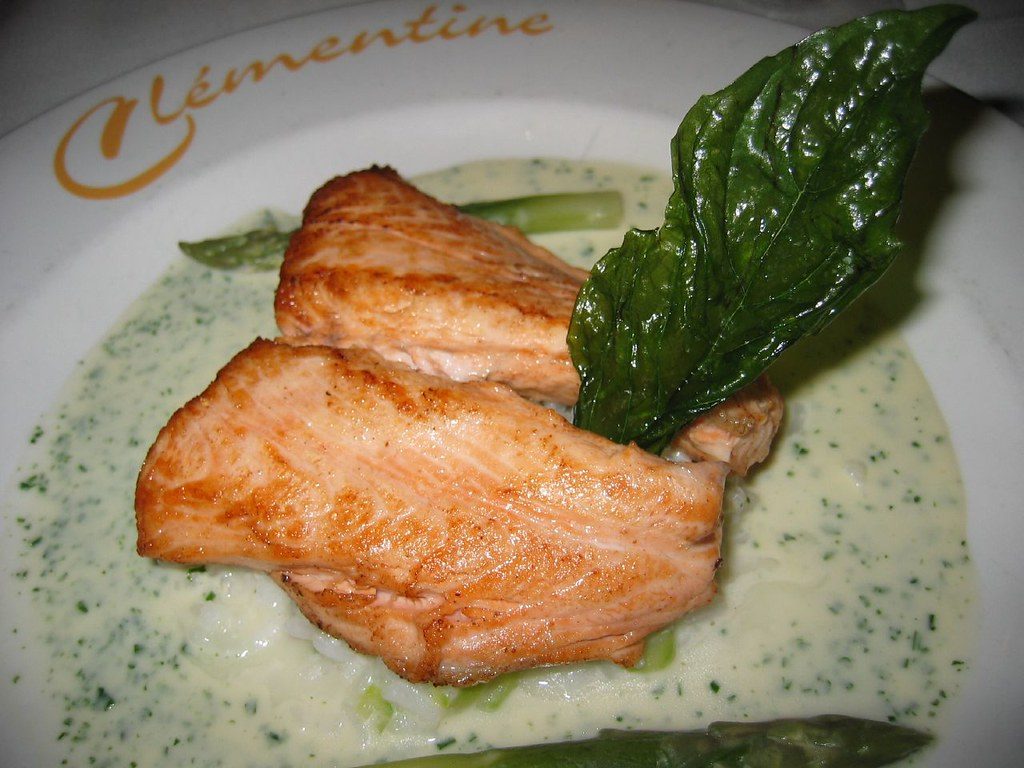
Before the capsule, the plate. Astaxanthin is what makes salmon, trout, prawns and lobster pink, so a diet with oily fish in it already delivers some. The catch is dose. A 100g portion of wild salmon carries only a few milligrams at most, and farmed salmon is usually pigmented with synthetic astaxanthin, which has a different profile again. You would need to eat a lot of fish to match a single 8mg softgel.
That does not make the food pointless – far from it. Oily fish brings omega-3s, vitamin D and protein that no capsule replicates, and our piece on the health benefits of oily fish covers why it earns its place regardless of the pigment. The supplement is a top-up on a decent diet, not a substitute for one. Our guide to foods for better skin in the UK handles the supermarket end of the same equation.
How to take astaxanthin
The clinical doses that have shown skin effects sit in the 4-12mg per day range, which is where most reputable UK brands now formulate. Anything under 2mg is unlikely to be doing much. Anything above 12mg is unlikely to be doing more, so paying for a 16mg capsule is mostly paying for a bigger number on the label.
Take it with a fatty meal. Astaxanthin is fat-soluble, so its absorption multiplies when there is some oil in the stomach to carry it – porridge with seeds, an oily fish lunch, eggs with avocado, all fine vehicles. Wash it down with a black coffee on the way out the door and a good chunk of it passes straight through.
Give it eight weeks before you decide anything. Carotenoid effects are slow to build, slow to reverse, and not the sort of thing you clock day to day. Take a “before” photo in decent light in the first week if you want a comparison that means anything – memory is a hopeless judge of your own face.
Some people need to be careful. Anyone on blood-thinning medication, anyone with low blood pressure, and anyone with a known allergy to algae or seafood should clear it with a GP first. Pregnancy and breastfeeding are also reason to ask before starting. None of that is scaremongering – it is the same checklist any sensible supplement deserves.
Buying astaxanthin in the UK: what’s actually on the shelf
The market is messy, and the price-per-milligram varies more than it should. A few named options give a sense of the range on UK shelves in 2026:
- Solgar Astaxanthin 5mg – softgels from Haematococcus pluvialis, sold through Holland & Barrett and Solgar’s own site. A middle-of-the-road dose in a well-known brand.
- Higher Nature Astaxanthin & Blackcurrant – uses AstaSuper natural astaxanthin, vegan capsules, stocked at Holland & Barrett.
- Health Spark Astaxanthin and Pretty Gorgeous Astaxanthin – both carried by Holland & Barrett, aimed squarely at the beauty-supplement shopper.
I’m not going to quote exact prices here because supplement pricing shifts with promotions and pack size, and a figure I write in July will be wrong by September. As a rough guide, a 30 to 60-day supply from a credible brand tends to land somewhere in the £12-£30 bracket – check the current price and, more importantly, the cost per milligram before you buy.
Two filters do most of the work. First, look for natural astaxanthin from Haematococcus pluvialis rather than the synthetic version, which is cheaper, dominates fish farming, and has thinner skin-relevant data behind it. Reputable brands state the source on the label. Second, check the dose per capsule, not per serving – some products quote a daily total that needs three or four capsules, others give you 8mg in one. Soft-gel capsules with an oil base also absorb better than dry pressed tablets.
Worth a mention: astaxanthin now turns up bundled into collagen and “beauty” complexes, like Holland & Barrett’s own vegetarian collagen products. Those can be fine, but the astaxanthin dose in a blend is often token – a milligram or two – so if that is the ingredient you actually want, buy it on its own and check the number.
What it will not do
A few honest caveats, set against the hype. Astaxanthin for skin will not remove existing wrinkles or undo years of unprotected sun. Most published effects are small percentage improvements in elasticity or fine-line depth, not before-and-after transformations. The general Which? line on supplements holds: anything promising dramatic visible change in days is selling you a story.
It will not turn your skin pink. There is occasional internet chatter about astaxanthin producing a flamingo glow at very high doses. In normal supplemental ranges it simply does not happen, and the published trials describe no such thing.
And it will not paper over a poor diet or a bad sleep pattern. The British Skin Foundation makes the point bluntly: most of how skin ages comes down to sun behaviour, smoking and sleep, and supplements sit well below those three in any honest hierarchy. Astaxanthin is one of the more credible “supports” on the shelf – not a shortcut past the boring fundamentals.
A sensible pre-summer routine
Here is the whole protocol, no padding. Daily SPF on face and hands from now until October. A diet weighted towards oily fish and bright vegetables. A sleep schedule that does not undo the rest of it. On top of that, 4-8mg of natural astaxanthin per day with a fatty meal, given eight weeks before you judge it. That is it.
If you are already running a magnesium and vitamin D stack – and the case for UK magnesium supplements for sleep and recovery is one we have made – astaxanthin is the next skin-tilted addition rather than a duplicate of either. Is the pre-summer window the moment you finally sort the one part of your skincare routine that nothing in your bathroom cabinet currently touches?
Pair with: our take on glutathione for skin and the beta glucan moisturiser that dermatologists rate – both sit alongside astaxanthin in a 2026 UK antioxidant routine.
Internal antioxidants are no substitute for topical protection. For the bit hair pretends to cover, see our scalp sunscreen UK guide, and if you only update one thing this summer make it your sunscreen – our breakdown of UK-made SPFs we rate for 2026 is the place to start.



Started taking AstaReal 4mg in March on a derm’s suggestion (mild rosacea, sun-reactive) and the difference by week six was honestly more than I expected – flushing settled, redness less reactive in the wind. Worth flagging it should be taken with a meal that has some fat in it, dry tablet on an empty stomach was basically a waste. Any pharmacists here got a view on whether the BioAstin version is meaningfully different to AstaReal? The price gap is significant.