

Best British Films 2026: The 5 Releases That Have Defined The Year So Far
Six months into 2026, British cinema finds itself in a strange and rather wonderful position: the films have rarely been better, and the business of showing them has rarely been more confused. Any honest list of the best British films 2026 has produced so far must hold both facts at once. We have a BAFTA-sweeping literary adaptation that became a word-of-mouth phenomenon, a horror sequel that critics adored and audiences largely skipped, and a gangster epic that filled a handful of British cinemas before 25 million households watched it on a streaming service. The work is thriving. The question of where we watch it is wide open.
In This Article
- The ground rules
- Hamnet: the best British film of 2026 so far
- 28 Years Later: The Bone Temple – the acclaimed sequel that audiences skipped
- Peaky Blinders: The Immortal Man – the Shelby send-off that proved a point
- Wuthering Heights: the most divisive British film in years
- The Incomer: the small Scottish comedy that won big at Sundance
- What the first half of 2026 says about British cinema
- Still to come: the releases that could redraw this list
What follows is a half-year report card: the five releases that have defined British film in 2026 so far, why each one matters beyond its star rating, and the titles arriving later this year that could redraw the list entirely. If you are planning a proper cinema trip this summer – and with no Glastonbury to organise your June around, you may have a free weekend or two – consider this your shortlist.
The ground rules
A quick word on method, because “best of the year so far” lists are only useful if you know how they were built. To qualify, a film needed a UK cinema release between January and mid-June 2026, or a major festival premiere with a confirmed path to British screens. “British” is taken in the broad, BAFTA-ish sense: British stories, British production, or British creative leadership at the core. And the ranking is not a pure star-rating exercise – cultural impact counts. A film that half the country argued about earns its place alongside the one every critic agreed on, which is why you will find a 57 per cent Rotten Tomatoes score sitting two entries below an 87.
One genre is conspicuously absent: no documentaries made the cut this time, not because the form is struggling but because the strongest contenders of the spring were television commissions rather than theatrical releases. That, as we will see, is part of a larger story.
Hamnet: the best British film of 2026 so far
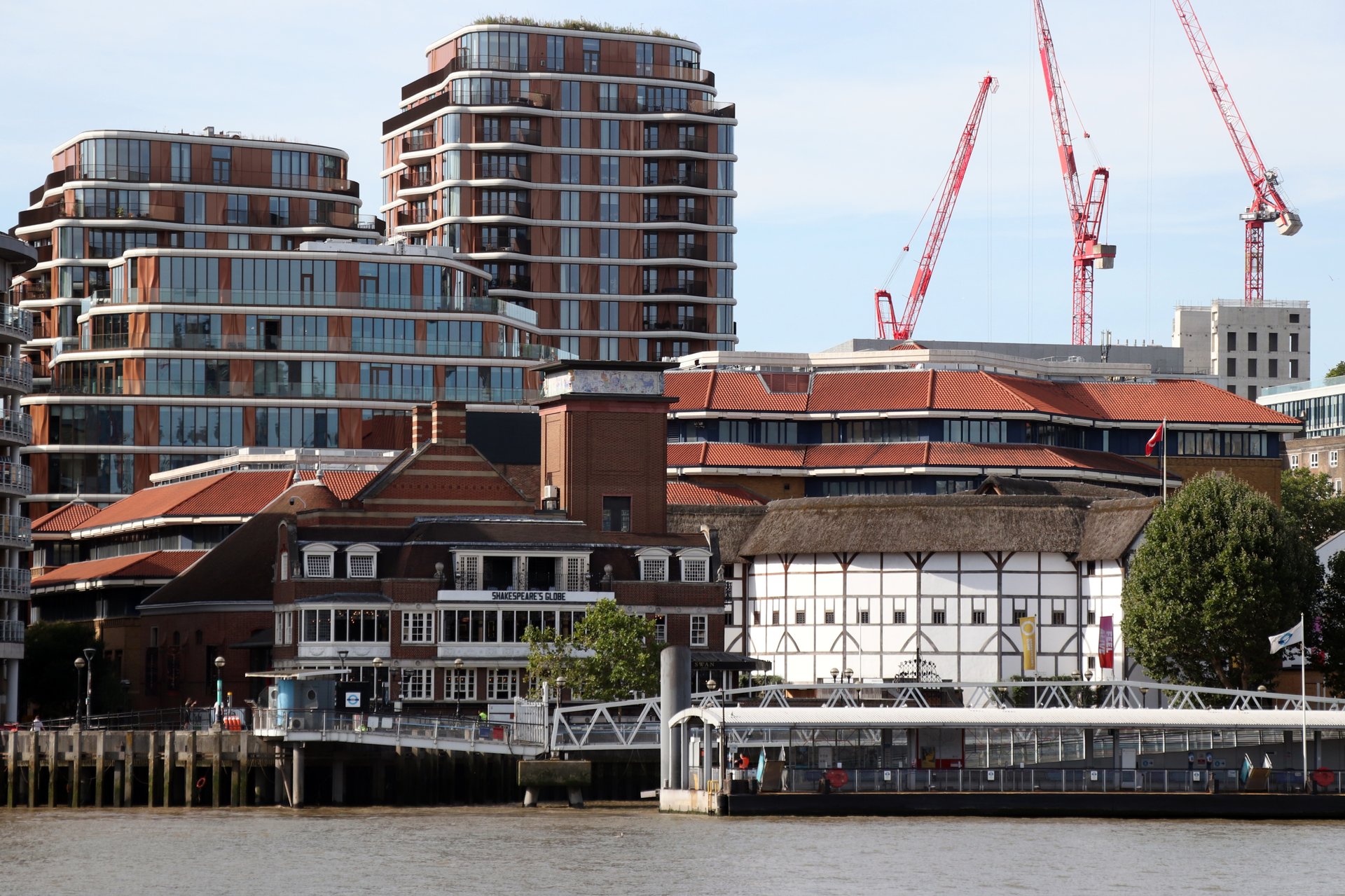
Some awards favourites age badly within weeks of the ceremony. Hamnet, adapted from Maggie O’Farrell’s beloved novel and produced by Sam Mendes’ Neal Street Productions, looks more secure with every passing month. Released in UK cinemas on 9 January, it went into February’s BAFTAs with eleven nominations and came out with the two that matter most to this list: Outstanding British Film, and Best Actress for Jessie Buckley.
Buckley plays Agnes, wife of a rarely named William Shakespeare, in the years around the death of their son – the boy whose name, give or take a vowel, would later sit atop his father’s most famous play. Paul Mescal and Emily Watson, both BAFTA-nominated, do superb work in support, but this is Buckley’s film, and her grief in the final act is the single most affecting passage of acting in any 2026 release to date.
The critical consensus is unusually solid: 87 per cent on Rotten Tomatoes from over 300 reviews, and a Metacritic score of 84, which sits in the territory the aggregator labels “universal acclaim”. The verdict here is simpler. Hamnet is the rare prestige literary adaptation that earns its tears rather than demanding them, and it is the film this year’s other British releases will be measured against.
It is also, quietly, a win for a particular kind of British film-making that the industry keeps declaring unviable: mid-budget, adult-oriented, built on a novel rather than existing screen IP, and sold on performances rather than spectacle. O’Farrell’s book spent years on bestseller lists and in book clubs, and the film trusted that audience to show up in January – traditionally a dumping ground – rather than chasing a crowded autumn awards corridor. The bet paid off twice over, first at the box office and then at the BAFTAs. Producers will be studying that release strategy for years.
28 Years Later: The Bone Temple – the acclaimed sequel that audiences skipped
Nia DaCosta inherited an unenviable job: directing the middle film of Danny Boyle and Alex Garland’s rage-virus trilogy, with Boyle watching from the producer’s chair. Her response was to refuse to imitate him. The Bone Temple, written by Garland and released in UK cinemas on 13 January, is stranger, gorier and more idiosyncratic than its predecessor, following Ralph Fiennes’ Dr Kelson and Jack O’Connell’s unhinged cult leader Jimmy Crystal through a Britain that has long stopped waiting for rescue.
Critics responded emphatically. The film holds a 94 per cent Rotten Tomatoes score – the best-reviewed entry in the entire series – and earned an A- CinemaScore, a grade horror films almost never receive. Then the paradox: it took roughly 58.5 million dollars worldwide against a 63 million dollar budget, well short of the 151 million its predecessor managed, and reports soon followed that the planned third film had slipped down the priority list.
That gap between acclaim and turnout is the most troubling data point in British film this year. The Bone Temple is a bold, nasty, genuinely distinctive piece of national horror – a tradition currently flourishing on the small screen too – and it deserved a bigger audience than it found. See it now and you can at least say you were right before everyone else.
Peaky Blinders: The Immortal Man – the Shelby send-off that proved a point

Tom Harper’s wartime conclusion to the Shelby saga is not a perfect film. Critics were split in an unusual way – 90 per cent positive on Rotten Tomatoes but with a modest 7.0 average, and a Metacritic score of 59 that better reflects the reservations. The complaints are fair: it is visually striking but uneven, and it leans hard on Cillian Murphy’s commanding central performance to carry stretches the script does not quite earn.
So why does it belong on this list? Because of what happened when it opened. Released into a deliberately limited run of around 60 UK cinemas in March, The Immortal Man sold roughly 105,000 tickets over its opening weekend and took an estimated 1.1 to 1.5 million pounds – per-screen numbers most wide releases would envy. When it landed on Netflix on 20 March, it drew 25.3 million views in three days and became the platform’s most-watched title that week.
The lesson is one the British industry has been slow to absorb: audiences will turn out, at short notice and in large numbers, for British stories treated as cinematic events. The Immortal Man also completes a journey worth noting – a television series outgrowing the shrinking six-episode formats of modern British drama and finishing its story on the big screen instead. Flawed, yes. Significant, undeniably.
Wuthering Heights: the most divisive British film in years

No 2026 release has split opinion like Emerald Fennell’s Wuthering Heights. Peter Bradshaw of The Guardian dismissed it as “an emotionally hollow, bodice-ripping misfire”. The Telegraph awarded five stars and called it “resplendently lurid, oozy and wild”. Both critics watched the same film: Margot Robbie’s Cathy and Jacob Elordi’s Heathcliff circling each other through latex, iridescent silk and a reading of Bronte so unfaithful it borders on provocation.
The numbers tell their own story. A 57 per cent critics’ score on Rotten Tomatoes sits against an 80 per cent audience rating, and the film opened over Valentine’s weekend in February to around 56 million pounds at the global box office – the year’s biggest opening at that point. Whatever critics made of it, people went, argued about it in the pub afterwards, and went again with friends.
An honest verdict: this is not a good adaptation of Wuthering Heights, and it is not trying to be. As a piece of maximalist gothic spectacle – a two-hour argument that British period drama need not behave itself – it is the most discussed British film of the year, and there is real cultural value in that. Bronte purists should stay home. Everyone else should form their own opinion, loudly.
The Incomer: the small Scottish comedy that won big at Sundance
The quietest entry on this list may prove the most durable. The Incomer, the debut feature from Scottish writer-director Louis Paxton, premiered at the Sundance Film Festival in January and left with the NEXT Innovator Award. Domhnall Gleeson plays a mainland official sent to a remote Scottish island to relocate two siblings – Gayle Rankin and Grant O’Rourke – who have grown up alone with the island’s folklore, and who have no intention of leaving quietly.
Screen Daily’s review captured it well, noting that the three central performances help the film “overcome moments in which it strains too hard for whimsy” and let it evolve into “a charming, defiantly regional human drama”. That is the right framing: yes, it flirts with tweeness, and not every flight of fancy lands. But films this rooted in a specific British landscape and dialect rarely come along, and rarer still do they win prizes at America’s biggest independent film festival.
Keep an eye out for a UK release date. When it reaches cinemas here, it will reward the trip – ideally at one of the independent venues currently reinventing themselves across the UK, which is exactly where a film like this belongs.
What the first half of 2026 says about British cinema
Put the five together and a pattern emerges. The two biggest critical successes took opposite commercial paths: Hamnet built a long theatrical life on awards momentum, while The Bone Temple’s superb reviews could not buy it a second weekend. The two franchise films split the difference – one a streaming giant using cinemas as a launchpad, the other a divisive auteur swing that turned controversy into ticket sales. And the year’s most charming discovery is still waiting for British audiences to get the chance to see it at all.
It is worth dwelling on the Peaky numbers, because they cut against a decade of received wisdom. The standard industry line is that a simultaneous or near-simultaneous streaming release kills theatrical demand, so why book the screens at all? The Immortal Man’s limited run suggests the opposite can be true when the property is right: scarcity made those 60 cinemas feel like events, the sell-outs generated coverage, and the coverage fed the record-breaking Netflix launch. Distribution strategists will draw very different conclusions from Hamnet’s patient platform release and Peaky’s blitz – but both worked, and both were built around British audiences first.
The honest conclusion is that there is no longer one British film economy. There are at least three – awards cinema, event cinema and streaming cinema – and the films that thrive are the ones that know exactly which game they are playing. The ones that suffer, like The Bone Temple, are those caught between: too cinematic for the sofa, too bleak for a casual Saturday crowd, released in a January window with no awards machine behind it.
For viewers, though, this fragmentation has an upside. The first six months of 2026 have offered a literary weepie, an art-horror sequel, a gangster epic, a scandalous gothic romance and a folkloric island comedy – all British, all distinct, none interchangeable. As a national slate, that is as varied as it has been in a decade.
Still to come: the releases that could redraw this list
The second half of the year looks at least as strong. The one to circle in the diary is Ish, the debut feature from artist and film-maker Imran Perretta, co-written with Enda Walsh and shot in luminous black and white in Luton. It follows two 12-year-old best friends, Ish and Maram, navigating adolescence, loss and the attention of the police in a community British cinema almost never centres. It won the audience award at Venice Critics’ Week, and Peter Bradshaw gave it four stars, calling it a “complex, compassionate drama”. The BFI releases it in UK and Irish cinemas on 31 July – the date around which serious British film fans should plan their summer.
July also brings Christopher Nolan’s The Odyssey, a swords-and-sandals epic from Britain’s most bankable director, and the autumn festival circuit will surface contenders nobody has heard of yet – last year, after all, few had heard of Ish. The list above is written in pencil, not ink.
British film in 2026 has already produced a masterpiece, a scandal, a hit and a missed opportunity – and that is just the first half. If this list has a companion piece, it is our round-up of the British albums defining 2026, because the case for a great year in UK culture does not rest on cinema alone.
So, over to you: which British film has defined 2026 for you so far – the one everyone agrees on, or the one that started an argument?
Several of these titles are turning up at open-air screenings this summer, and they are among the most-logged films on Letterboxd right now. The commercial side of that story is worth reading alongside this list: a record £178m July that pushed British releases off the top of the chart.
One omission worth flagging: the year’s noisiest sequel isn’t British at all. If you want the release details anyway, we’ve covered The Devil Wears Prada 2 separately.