Glastonbury Fallow Year 2026: Why The Empty Weekend Is Quietly Reshaping Britain’s Festival Summer
The last weekend of June without Glastonbury feels wrong. For the best part of a decade, this is the stretch when half the country’s group chats turn into a running commentary on someone else’s mud, and the other half quietly resent the people who got tickets. Not in 2026. The Glastonbury fallow year 2026 means Worthy Farm is sitting empty this summer, the cows have the run of the place, and the biggest weekend in the British music calendar simply isn’t happening. And the strange thing is how much that absence tells you about the state of everything else.
In This Article
- What the Glastonbury fallow year 2026 actually means
- Where 200,000 people go when Worthy Farm shuts
- The empty weekend exposes a problem the industry would rather not discuss
- We’ve been here before, and the festival came back bigger
- The BBC has a Glastonbury-shaped hole too
- What I’d actually do with the free weekend
This isn’t a cancellation. It’s deliberate, it’s been planned for years, and Michael Eavis has been doing it since the 1980s. But the timing lands differently now, because the festival it’s leaving behind looks nothing like the one that took its last proper break.
What the Glastonbury fallow year 2026 actually means
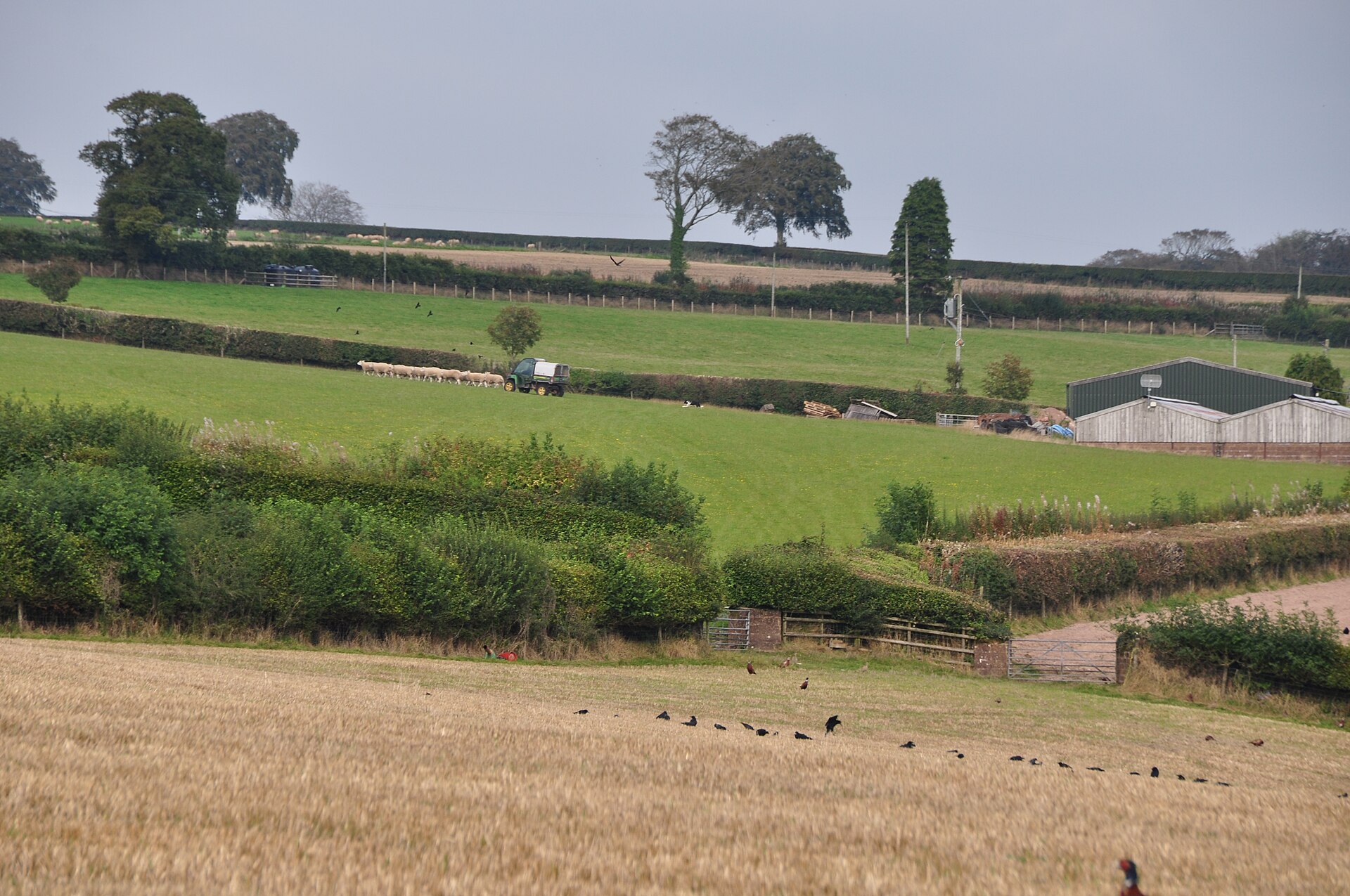
Roughly one year in five, Glastonbury takes the summer off. The reason is agricultural before it’s anything else – Worthy Farm is a working dairy farm, and you can’t park 200,000 people and their tents on grazing land every single year without the soil giving up. Leaving the ground to rest is the same principle a farmer has used for centuries. The land recovers, the cattle get their fields back, and the festival comes back stronger.
The last official fallow year was 2018. There was no Glastonbury in 2020 or 2021 either, but those were Covid cancellations rather than planned breaks, which is partly why this one feels overdue. Emily Eavis confirmed back in 2024 that 2026 would be a rest year, saying it was needed to “give the land a rest”. She also let slip something telling about the run-up: “The festival before a fallow year is always a fun one to plan, because you almost have to fit two years into one.” That explains a lot about why 2025’s edition felt so stacked.
Her father, who started the whole thing, was typically blunt about why he invented the fallow year in the first place. “I invented those in the ’80s, because it was very stressful with the licence, the police, the village, the press and the council,” he told the Glastonbury Free Press. “I thought, ‘We’ll give them all a break so they’ve got nothing to complain about for a bit!’ And of course, the farm gets a rest.” The whole thing is less mystical than the festival’s reputation suggests. It’s a farmer giving his neighbours and his fields a year off.
What’s different this time is the planting. Organisers have said 30,000 trees are going into the Worthy Farm site during the break, which turns the rest year into something more like active restoration. The next Glastonbury is locked in for 23 to 27 June 2027. So this is a gap with a fixed end date, not a question mark. You can read the full background on the fallow year over at NME, who covered the announcement as 2025’s festival wrapped.
Where 200,000 people go when Worthy Farm shuts
Here’s the practical question nobody at the festival has to answer but everyone in the wider industry is thinking about. A Glastonbury ticket costs the better part of £400 once you’ve added the booking fee, and that’s before travel, food and the small fortune you spend on overpriced cider. Multiply that by a couple of hundred thousand people and you’ve got an enormous pot of festival money with nowhere obvious to go this year.
Some of it stays in the bank. Plenty of people will treat the fallow year as a chance to save, or to spend on a proper holiday instead of a field in Somerset. But a fair chunk gets redistributed across the rest of the calendar, and the bigger players know it.
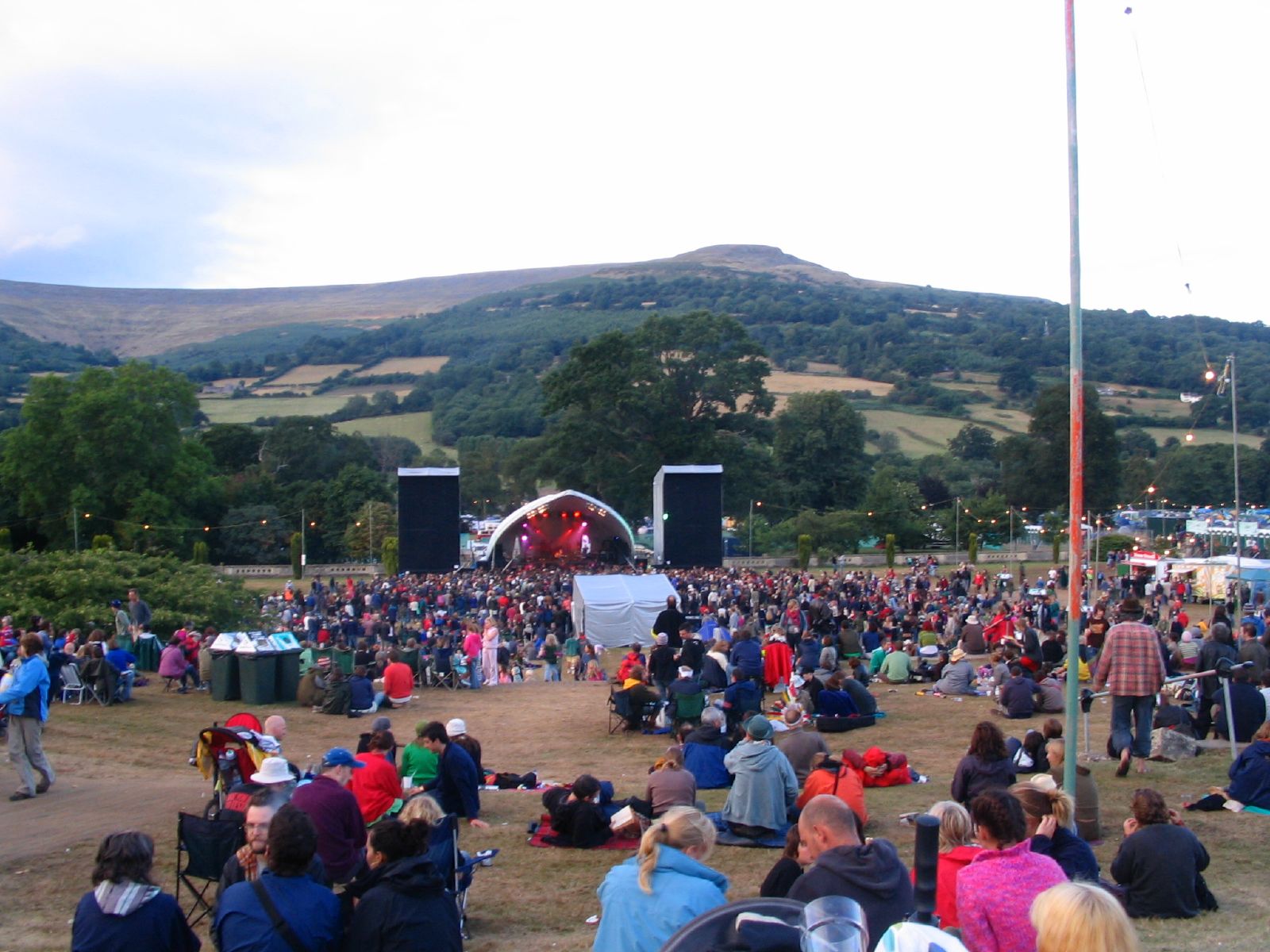
Reading and Leeds carry on as the obvious mainstream alternative, especially for the under-25s who were never really Glastonbury’s core crowd anyway. And they’re not treating it as business as usual: six headliners for 2026 (Charli XCX, Chase & Status, Dave, Florence and the Machine, Fontaines D.C. and Raye), Kasabian taking the first ever Thursday main-stage slot in Leeds, and a new purpose-built dance arena, The Warehouse – the clearest sign yet of a booking team chasing the multi-genre ground Glastonbury normally owns. Boardmasters in Newquay has scaled up its bill too, with Fatboy Slim and Lily Allen leaning into the coastal-weekend crowd. Latitude in Suffolk picks up the people who go to Glastonbury for the poetry tent and the comedy as much as the headliners – it’s the closest thing England has to that mix of arts and music on a manageable scale. Green Man, tucked into the Brecon Beacons with the mountains behind the main stage, has spent years being the festival people recommend in hushed tones, and a year without Glastonbury is exactly when word-of-mouth tips a 25,000-capacity event into selling out fast. The Isle of Wight Festival has the heritage, Download has the rock crowd sewn up, and WOMAD returns after its own break. If the comedy tents are your main draw, our guide to the best British comedians of 2026 is a decent shortlist of who to catch before the Fringe.
And this is where the fallow year does something genuinely useful. For one summer, the gravitational pull of the biggest festival in the world isn’t there to flatten everything around it. Bookers who’d normally lose an act to Worthy Farm have a clearer run at them. Punters who’d default to Glastonbury have to actually look at what else is out there. My mate who’s been to Glastonbury six years straight and never considered anything else is, for the first time, reading up on Green Man. That doesn’t happen in a normal year.
There’s a catch, though, and it’s worth being honest about it. No single festival can mop up 200,000 displaced ticket-holders, because the maths doesn’t allow it. Green Man tops out around 25,000. Latitude is bigger but still a fraction of Worthy Farm. The crowd doesn’t pour into one replacement, it scatters – a few thousand here, a few thousand there, a lot of people simply staying home. That dispersal is good for variety and terrible for any individual promoter hoping the Glastonbury refugees will balance their books. A sold-out Green Man helps Green Man. It does nothing for the festival in the next county that needed those same campers and didn’t get them.
The empty weekend exposes a problem the industry would rather not discuss
It’s tempting to treat the fallow year as a quirky bit of festival folklore. A nice story about cows and soil. But it lands in the middle of the worst stretch for British festivals in living memory, and that context changes how you read it.
The numbers are grim. According to the Association of Independent Festivals, 2024 was a “devastating year”, with a record 78 events falling across the twelve months – more than double the 36 lost in 2023. By early June 2025 another 39 had already gone, and the AIF’s running total of UK festivals lost since 2019 hit 249 once you fold in the 96 wiped out by Covid. Secret Garden Party, one of the most loved boutique festivals in the country, called it a day after 2024. These aren’t dodgy cash-grabs going under. They’re established, well-run events that simply can’t make the maths work any more.
The causes are boring and brutal. Production costs have jumped, supplier deposits have shot up, and the cost-of-living squeeze means people book later and spend less when they get there. AIF chief executive John Rostron put it plainly when Somerset’s new Homestead festival collapsed before it could even launch: “All the ingredients are there for a wonderful new festival, but the pressure on events is making it too difficult to get over the line.” The organisation is now lobbying for a festival tax relief, modelled on the breaks theatres and orchestras already get, aimed at events under 30,000 capacity. Music Week has tracked the cancellations in detail if you want the full picture.
So here’s the uncomfortable bit, and I’ll say it plainly because the festival press tends to tiptoe around it. Glastonbury choosing to sit out a year while genuine independents are folding for good is a study in who can afford to rest and who can’t. The biggest festival on earth can take a planned sabbatical, plant 30,000 trees and stroll back in 2027 with its reputation untouched. A 2,000-capacity newcomer in Somerset gets one shot, misses, and disappears. The fallow year is a luxury. Most of the sector would kill for the security that makes it possible.
None of that is Glastonbury’s fault, and the festival has done more than most to support the wider scene. But the optics of an empty Worthy Farm this June, while the AIF counts its dead, are hard to ignore. It’s the same pressure squeezing the bottom of the live circuit, where grassroots music venues keep shutting their doors and the £1 ticket levy on arena shows is being floated as a way to funnel money back down to the small rooms where bands actually start out.
We’ve been here before, and the festival came back bigger
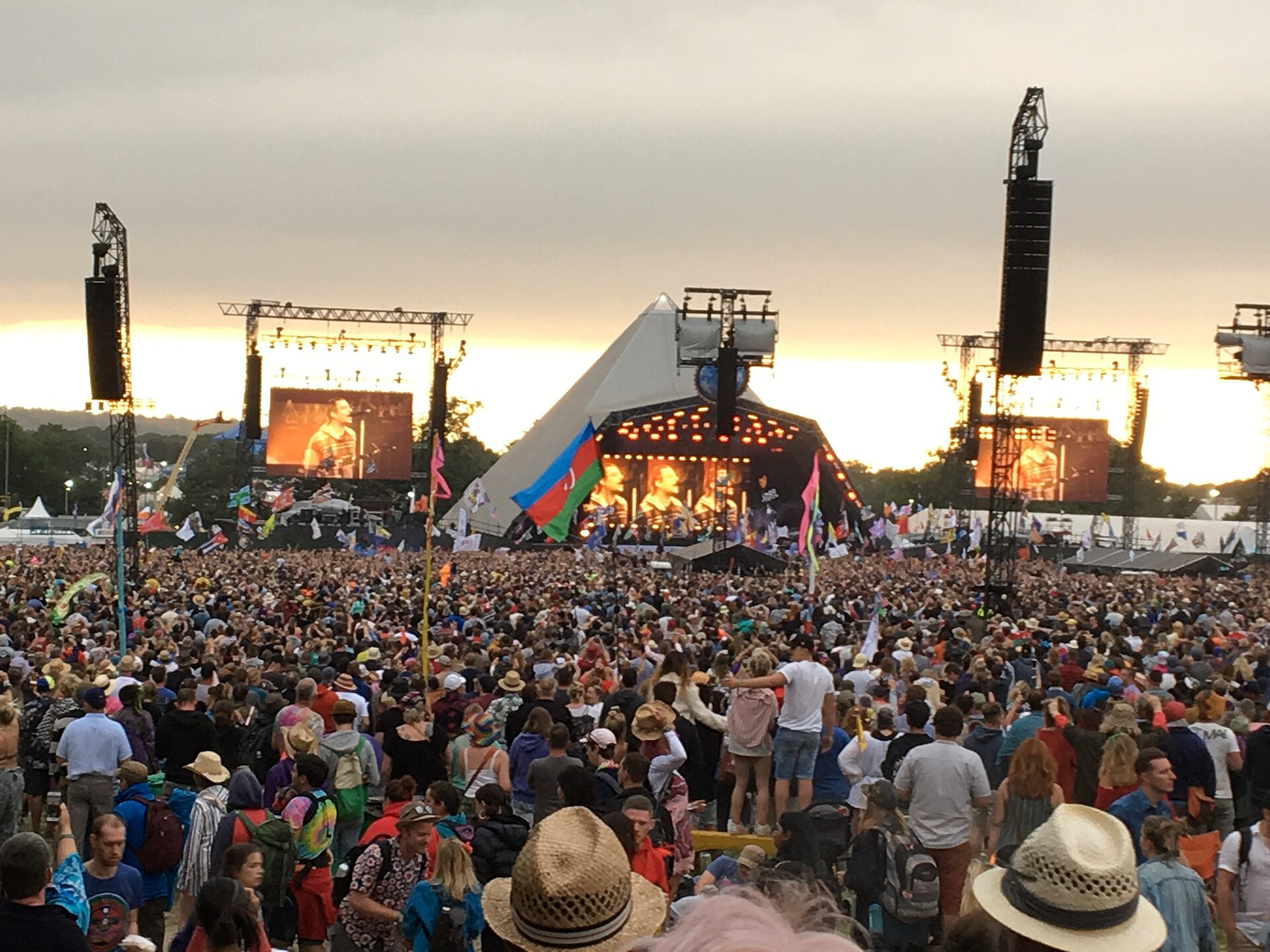
If you want a reason not to panic, look at what happened after the last proper break. Glastonbury sat out 2018, and the 2019 return was one of the strongest in its history – the year Stormzy headlined the Pyramid Stage in a stab vest designed by Banksy and became the first Black British solo artist to top the bill. A year off didn’t dent the festival. It gave it room to come back with something to say.
That’s the pattern worth holding onto. The fallow year has never been a sign of decline at Worthy Farm. It’s maintenance, the same way you’d rest a pitch or rotate a crop. The festival that returns in 2027 will have had two years of planning poured into one weekend, 30,000 new trees in the ground, and a fanbase that’s spent a summer realising how much they missed it. Scarcity does wonders for demand, and Glastonbury has never had a problem selling tickets even in a normal year.
The wider scene is where the real uncertainty sits. A resting Glastonbury bounces back by design. Whether the smaller festivals filling the gap this summer are still standing in 2027 is a different question entirely, and it’s the one that actually matters. It’s the same story playing out across British culture right now, from the vinyl revival propping up record shops to the Edinburgh Fringe wrestling with its own costs – the headline acts are fine, and everything underneath them is fighting to stay open.
The BBC has a Glastonbury-shaped hole too
It’s easy to forget how much of Glastonbury’s cultural weight comes from the broadcast, not the field. Most people who “do” Glastonbury do it from the sofa, with a cup of tea and the red button, flicking between stages they’ll never physically stand in front of. The BBC’s coverage has become its own summer fixture – hundreds of hours across iPlayer, the kind of thing that gives you Pyramid Stage headliners and a folk act in a barn within the same ten minutes.
That’s gone this year, and the corporation has a sizeable gap to fill in late June. Expect more from the alternatives – the Proms season doing heavier lifting, more coverage of the festivals that are running, maybe a few archive Glastonbury sets dusted off for a nostalgia weekend. It won’t replace the real thing. There’s a particular national ritual in arguing about a headliner you didn’t even watch, and you can’t manufacture that from repeats.
There’s also a knock-on for the artists. A Pyramid Stage slot is a career moment – the kind of thing that shifts an album up the chart and sells out a tour. Without it, a whole tier of British acts loses its single biggest shop window of the year, and the secret-set economy that builds around it vanishes too. No surprise “Patchwork” reveal, no Lewis Capaldi comeback moment, no act waking up famous on the Monday because they played a tent at two in the afternoon and the clip went round the internet by teatime. Those moments don’t transfer neatly to a smaller stage with no cameras on it. The gravity has shifted to the stadiums instead – Harry Styles’ twelve-night Wembley residency is the clearest sign of where live music’s money went this summer.
The broader point is that Glastonbury stopped being only a festival a long time ago. It’s a fixed marker in the British summer, like Wimbledon or the proms or the school holidays starting. Take it out for a year and you notice the shape of the thing it used to fill.
What I’d actually do with the free weekend
If you’d normally be glued to the coverage, the honest move is to treat 2026 as a chance to go somewhere smaller and actually be there. Festivals are better when you’re standing in the field than when you’re watching a 4K feed of someone else standing in it.
Green Man is the one I’d push hardest. It’s the right size, the setting does half the work, and it never feels like a corporate exercise. Latitude if you want the books-and-comedy side of what made Glastonbury special. End of the Road in Dorset for the discerning, slightly older crowd who want good food and no queues for the toilets that you’d actually consider using. And if all you really want is the telly experience without the festival, there’s an argument for skipping it entirely and saving the cash for 2027, when the tickets will somehow cost even more.
The one thing I wouldn’t do is mope. A fallow year isn’t a loss, it’s a pause built into the system on purpose, and the smaller events that get a clearer run at your attention this summer are exactly the ones worth supporting if you want any of this to still exist in a decade. The festival summer didn’t shrink because Glastonbury took a year off. It was already shrinking. This is just the year you can see it clearly.
So the real question isn’t whether you’ll miss Glastonbury in 2026. You will. It’s whether the year off makes you bother with the festivals that have been quietly carrying the scene all along – and whether you’ll still turn up for them when Worthy Farm reopens its gates in 2027.