Why British Folk Horror Is The Most Interesting Thing Happening To UK Drama In 2026
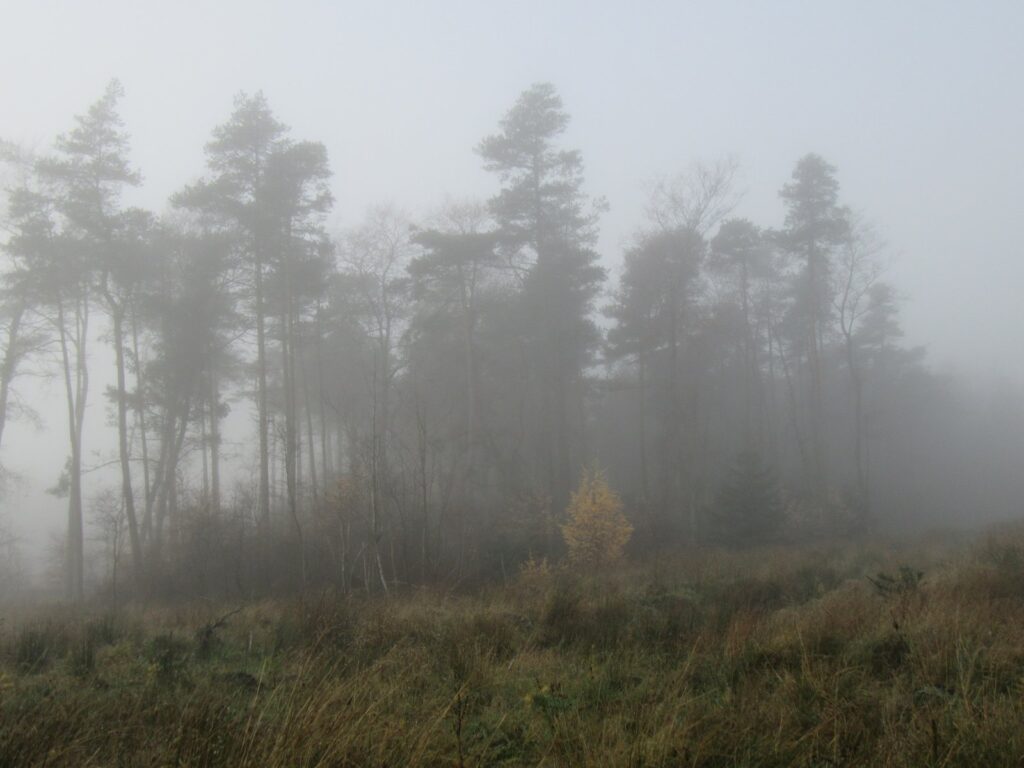
There is a particular kind of unease creeping back into British television. It does not arrive with a jump scare or a forensic montage. It arrives with mist on a hillside, a half-remembered hymn, a face at the wrong window. British folk horror in 2026 is no longer a Halloween curiosity or a critic’s niche. It is becoming the most interesting thing happening to UK drama, and the most stubbornly British argument the streamers have for keeping their commissioning desks in London rather than Los Angeles.
In This Article
- A genre that never quite went away
- What folk horror actually is, and why the label keeps slipping
- The slow drift back to the woods
- Five British folk horror works that still set the bar
- The book pipeline: where the next wave is coming from
- What 2026 has actually changed about British folk horror
- Is it just rural Gothic in better lighting?
- Where the genre might walk next
- A short note for new viewers
You can feel it in the way directors talk about landscape, in the kinds of stories that get fast-tracked, in the books being optioned. Something old has put on a new coat, and it suits it.
A genre that never quite went away
It is easy to talk about folk horror as if it disappeared after The Wicker Man and only came back, blinking, in the 2010s. That is not really true. The genre has been a steady undercurrent in British storytelling for sixty years, sometimes loud, often muttering. Penda’s Fen, Alan Clarke’s strange and brilliant Play for Today in 1974, was on BBC One. Lawrence Gordon Clark’s A Ghost Story for Christmas series adapted M. R. James and ran across the 1970s, and was revived more recently by Mark Gatiss for the BBC. The Stone Tape, Nigel Kneale’s 1972 BBC ghost story, has been re-evaluated about every five years since.
What changed is the prestige. For a long time folk horror sat near the bottom of the genre table, somewhere between hauntology playlists and weird-fiction reading groups. Now it sits next to Booker-shortlisted novels and BAFTA-recognised debuts. The shift was gradual. It became visible when Ben Wheatley made A Field in England in 2013 and Film4 released it simultaneously in cinemas, on television and on disc, an experiment that no major British distributor had really tried before. By the time Rose Glass made Saint Maud in 2019 and Mark Jenkin made Enys Men in 2022, the establishment had stopped treating the form as niche. Critics had started turning up early.
What folk horror actually is, and why the label keeps slipping
Defining folk horror is harder than the cultural shorthand suggests. The most cited framework comes from Adam Scovell’s book Folk Horror: Hours Dreadful and Things Strange (Auteur, 2017), which sets out a chain of recurring elements: a landscape that isolates, a community whose beliefs have skewed away from the mainstream, a moral system you can feel curdling, and a happening or summoning at the end that the modern viewer cannot quite explain away. It is not a definition that everyone agrees with, and some directors actively reject the label, but it is the one most British critics fall back on.
The trouble is that the chain is permissive enough to swallow almost anything rural. By its loosest grammar, a Yorkshire moors drama becomes folk horror, a Hebridean ghost story becomes folk horror, even certain episodes of straight detective shows brush against it. So one of the quiet jobs of 2026 has been refining the label. The conversation has moved away from “anything with standing stones” and towards a more specific argument about how a story treats belief, land and outsiders. Mark Gatiss made roughly that case in his BBC documentary A History of Horror, where he traced folk horror as a distinct British strain rather than a cousin to Hammer’s Gothic. Fourteen years on, the argument has only got firmer.
The slow drift back to the woods
The British screen industry has been drifting back to the woods for years, and the trip seems to have picked up pace. Part of the reason is practical. Folk horror is, by international standards, cheap to make. You need a field, a costume budget that respects period and texture rather than glamour, a small cast and a sound designer who knows what to do with wind. That fits the post-prestige cost discipline of British production, where budgets have flattened and overseas streamer money has become more cautious.
Part of the reason is generational. The writers and directors who run a lot of British drama now grew up watching The Wicker Man late at night on Channel 4, reading Robert Aickman in second-hand bookshops, and listening to Ghost Box records. The hauntological strand of British indie music in the late 2000s and early 2010s, the Boards of Canada and Belbury Poly side of things, was a soft training ground. Those references are now in the rooms where commissions get signed off.
And part of it is national mood. British folk horror tends to flourish when the country is feeling unsettled about identity, land use and who exactly the countryside belongs to. The Wicker Man arrived in 1973 with the country mid-strike and oil-shocked. The 2010s wave coincided with Brexit. The 2026 wave is arriving into a country still arguing about housing, water companies, ancient woodland and farming. Folk horror has always been the form that walks into those arguments rather than around them.
Five British folk horror works that still set the bar
If you want a working canon to argue with, this is a fair starting list. None of these are obscure now. All of them are still being argued about.
The Wicker Man (Robin Hardy, 1973). The non-negotiable. A police procedural that becomes something else by accident. Edward Woodward’s policeman is, on rewatch, an interesting study in how authority shrinks when the locals stop pretending to be impressed.
Penda’s Fen (Alan Clarke, BBC, 1974). A Play for Today that begins as a coming-of-age story about a vicar’s son and ends somewhere stranger. The reason critics keep returning to it is that almost nothing about its argument has aged. It thinks about Englishness in a way that English television rarely allows itself to.
A Field in England (Ben Wheatley, 2013). The film that proved a hallucinogenic Civil War folk horror could open on Film4, in cinemas and on disc on the same day and still find an audience. It is also the work that gave a younger generation of directors a kind of permission slip.
Saint Maud (Rose Glass, 2019). Less rural than the others on this list, but folk horror’s grammar runs all the way through it: a private cosmology, a coastal town that closes around its lonely characters, and a final image that refuses to soften.
Enys Men (Mark Jenkin, 2022). Shot on 16mm in Cornwall in a way that feels like grainy memory rather than archive footage, this is the film that argued most successfully for folk horror as art house. The structure is loose, the dread is patient, the landscape is the lead.
A short list, but a useful one. You could replace any of these with Witchfinder General, Blood on Satan’s Claw, The Owl Service or In the Earth and still have a defensible canon.
The book pipeline: where the next wave is coming from
Folk horror’s television future is being written, in part, by novelists. The work of Alan Garner sits on every commissioner’s wish list. Andrew Michael Hurley, whose The Loney won the Costa First Novel Award in 2015, has spent the last decade writing the kind of restrained literary horror that translates well to small-screen drama, with small casts, strong landscapes and an internal logic that does not need to be over-explained. Daisy Johnson, Lucie McKnight Hardy and Fiona Mozley have all been read in the same conversation. The book pages of British broadsheets have been giving that work serious column space for several years now, and the commissioning side has finally caught up.
The other quiet boom is in non-fiction. Books on hauntology, English folklore, the politics of land use and the cultural history of the British weird have multiplied. Robert Macfarlane’s writing on landscape, Ben Myers’ fiction set in the Pennines, and academic work coming out of universities like Falmouth and East Anglia have all enriched the soil. Folk horror was always part literary, part cinematic, part musical. Right now the literary half is doing some of the most useful thinking, and it is feeding straight into commissioning meetings.
What 2026 has actually changed about British folk horror
If you only read industry trade press, you might think British folk horror in 2026 is mostly a marketing category, a tag that gets slapped on anything atmospheric. The more interesting change is that the genre has finally stopped being treated as a niche by the people commissioning television.
That has three practical consequences. First, writers who used to be told their scripts were “too quiet” are getting greenlights. Second, the British landscape itself is being treated as a character that deserves a serious budget, which means location work, on-set sound, and natural light, rather than studio mock-ups with green screens. Third, there is real money for ambiguity. A few years ago, a folk horror project would have been asked to explain its supernatural elements by the third act. Now the form is increasingly allowed to leave them unresolved, which is part of how it works.
There is also a quieter shift in who gets to make these stories. Folk horror used to be an overwhelmingly English form, often set somewhere south of Birmingham. In 2026 it is recognisably Scottish, Welsh, Northern Irish, Cornish, Manx, and increasingly diasporic. The genre’s old habit of treating “outsiders” as objects of suspicion is being inverted by writers who grew up as the outsider in the village. That is the most interesting development of the year, and the one most likely to keep paying off for the rest of the decade.
That broadening sits alongside a wider shift in British cinema that we explored in our recent piece on British films at Cannes 2026, where the strongest UK entries were precisely the ones least interested in playing to American taste.
Is it just rural Gothic in better lighting?
It is worth taking the strongest version of the case against. Some critics, fairly, argue that folk horror in 2026 is a marketing repackage of older Gothic, dressed up in better light meters and louder publicity. The accusation is that the genre is now safer than it pretends to be, because most of its supposed transgressions are aesthetic rather than political.
There is something in that. A folk horror that only borrows the look of the genre, the wicker, the costumes, the standing stones, without the political seriousness of The Wicker Man or Penda’s Fen, ends up as decoration. Mood without argument. You can find quite a lot of that on the streamers right now, often beautifully shot and dramatically inert.
The work that survives the accusation is the work that still has an argument. Enys Men is about memory and ecological grief. Saint Maud is about faith, class and care work. Penda’s Fen is about Englishness, sexuality and dissent. The genre is at its best when the landscape is doing political and emotional work, not only aesthetic work. That is the bar to hold the 2026 wave to.
The pattern is not unlike the one we identified in the UK indie cinema scene this year: there is a flood of work that looks like the form without doing its job, and a smaller body of work doing it properly. Audiences are getting quicker at telling them apart.
Where the genre might walk next
If 2026 has been the year folk horror found mainstream prestige, the next move is likely to be format. Audio drama is the obvious one. The BBC has been quietly building a folk horror catalogue on Sounds for a few years, and the form arguably works even better in audio, where the listener supplies their own landscape. We covered the broader argument for this in our look at BBC Sounds audio drama, but folk horror sits at the heart of the strongest material there.
Limited series are the second growth area. Folk horror works in tight, contained runs of three to four episodes, which is where British drama is increasingly happy. That structure rewards patience, dread and one good cast rather than the sprawl of an American twelve-episode season. The reception of contained British dramas, including the kind of slow-burn argument we saw around Stephen Graham’s Adolescence at the BAFTAs, suggests audiences are content to sit with three carefully built episodes rather than ten loose ones.
The third area, slightly less obvious, is animation. The Owl Service and the work of Alan Garner more generally have been on every producer’s wish list for years. Animation can solve some of folk horror’s perennial budget problem, and a British animation industry that has been quietly impressive lately is well placed to take it on. The work that BFI Network has supported in shorts over the last few years is a clue to where some of that talent is sitting now.
What probably will not work is a folk horror by committee. The genre is allergic to focus groups. The best of it has always been the work of one strong-minded writer or director left alone with an idea. The streamers that learn to back that kind of voice, and step away from it, are the ones that will get the best of the 2026 wave. The ones that try to algorithm their way in will get the worst.
A short note for new viewers
If you have read this far and want a way in, the simplest route is also the most rewarding. Start with The Wicker Man. Then watch Penda’s Fen. Then watch A Field in England. Then read Adam Scovell’s book. Then watch Enys Men with the lights off. That sequence, in that order, will tell you more about why British folk horror in 2026 is taking up the space it is than any preview list can.
It will also, on a good night, properly unsettle you. Which is, after all, the point.
What do you think folk horror does to British screen culture that the slick imports cannot? Which film or series would you add to the canon, and which would you quietly remove?