
Outdoor Cinema UK 2026: Why Britain Pays to Watch Old Films in the Rain
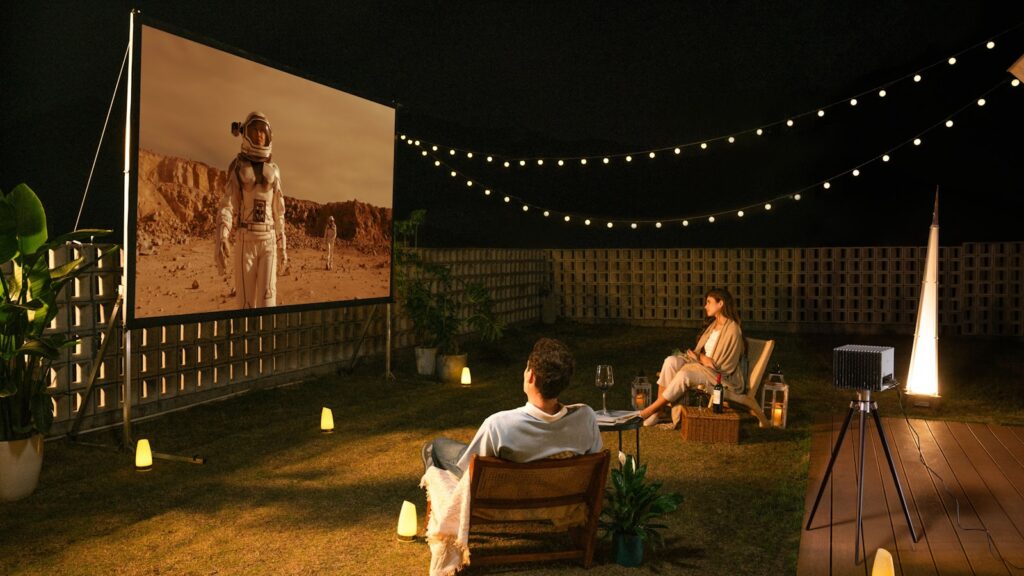
Britain has invented a strange new ritual. We won’t reliably turn up to a warm, dry multiplex with reclining seats and a Tango Ice Blast machine, but we will pay £20 to sit on damp grass in a castle garden and watch a film we’ve seen eleven times, under a sky that is visibly planning something. Outdoor cinema UK 2026 season is the busiest it’s ever been – more operators, more venues, more sing-along Mamma Mia! than any nation should reasonably need – and it’s happening in the same year the industry admitted that ordinary cinema-going still hasn’t recovered from the pandemic.
In This Article
- The multiplex is limping. The field is packed.
- How a lockdown workaround became a fixture
- The strange vanishing of Luna Cinema
- What your £20 actually buys
- The Dirty Dancing problem
- The best screen in London is free
- Beyond the M25
- Outdoor cinema UK 2026: the nights actually worth booking
- What the multiplex should be stealing
- Booking it without coming away grumpy
- Why the rain is part of the deal
Those two facts look contradictory. They’re not. They’re the same fact, wearing different coats.
The multiplex is limping. The field is packed.
Start with the numbers. The Film Distributors’ Association reported in January that UK and Ireland admissions reached 134 million in 2025, down 3% on 2024 but over the 130 million mark for the third year running. Box office crept up to £1.07 billion. The FDA also noted, with some pride, that the UK and Ireland “delivered 4% of world box office in 2025 from just 1% of the global population”. We remain a nation of film watchers.
But the longer view is less cheerful. As Deadline reported in February, UK admissions are still running roughly 30% below pre-Covid levels. The casual Tuesday-night trip to the pictures – the one you made because there was nothing on telly – has quietly died, and it isn’t coming back. What’s replaced it is event viewing: people will still leave the house for cinema, but it has to feel like an occasion. The FDA’s own data backs this up – July, peak outdoor season, was the strongest single month for cinema-going in 2025.
That’s the gap outdoor cinema has crawled into, picnic blanket first. It’s the same instinct that’s filling hi-fi listening bars and turning television back into a weekly appointment. Nobody wants more content. Everybody wants an evening.
How a lockdown workaround became a fixture
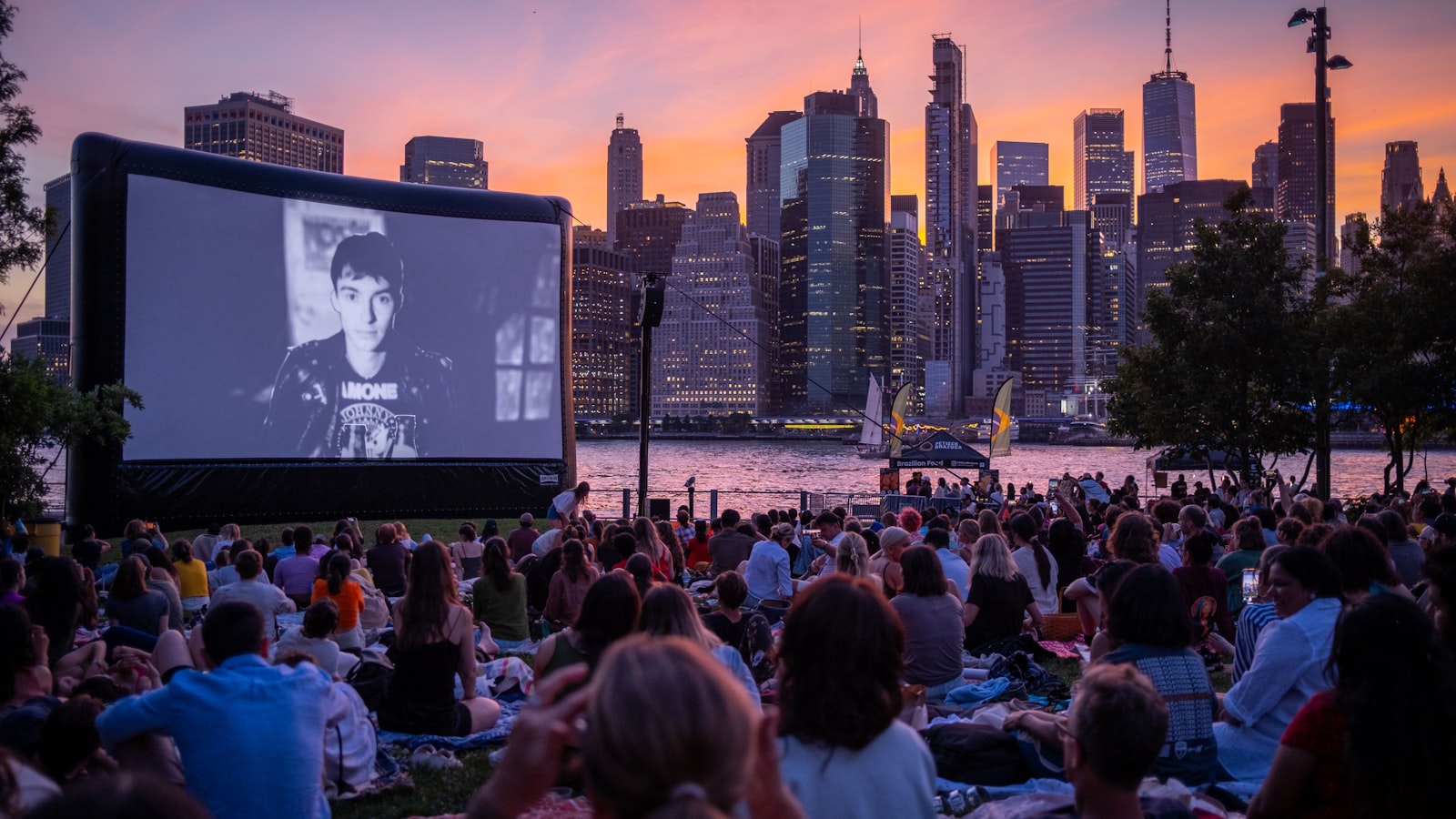
It’s worth remembering how recent all this is. Open-air screenings existed before 2020, but they were a fringe thing – a few deckchairs in a stately home garden on a couple of August weekends. Then the indoor cinemas shut, drive-ins reappeared in car parks, and watching a film outdoors went from quirky to one of the only things you were allowed to do. The habit stuck, and the operators who scrambled to put screens in fields now run slick, repeat-booking seasons that sell out weeks ahead.
The wider shift in how we spend helped too. We’ve grown used to paying for the event rather than the product – the supper club, the immersive theatre night, the weekend festival. A film under the stars fits that mood neatly. You’re not really buying a ticket to a movie; you’re buying an evening, and the movie comes free with it.
The strange vanishing of Luna Cinema
Here’s the twist nobody saw coming: the company that built this market isn’t around to enjoy it. The Luna Cinema spent over a decade as the undisputed king of British open-air film, projecting Grease onto every stately home lawn from Cornwall to Edinburgh. And this summer it has simply gone.
Time Out’s film editor Phil de Semlyen put it with admirable dryness in the magazine’s 2026 outdoor cinema guide: “Stepping into the gap left by the mysterious disappearance of Luna Cinema is Adventure Cinema who bring a similar USP: outdoor screens backdropped by more than 50 spectacular country house locations and castles across the UK.”
Read that again. The biggest name in the category evaporated, and the market barely flinched. A rival with a near-identical offer slotted straight in, tickets from £9.80. That tells you something important about this business: the brand was never the draw. The draw is the format – a famous film, a spectacular backdrop, a blanket, a bar. Anyone with a licence, a big screen and access to a castle can sell it.
It should also make you slightly wary of the premium end. If the market leader can vanish between seasons, this is a business with thinner margins than the £75 VIP dinner packages suggest. Buy your tickets close to the date. And maybe don’t buy the season pass.
What your £20 actually buys
Priced per minute of film, outdoor cinema is terrible value. Barbican’s Sculpture Court screenings run £20 a head – for that money you could stream the same film at home roughly forty times, on a screen where you can actually hear the dialogue over a departing police helicopter. The picture quality is worse than your telly. The sound is worse than your headphones. The start time is hostage to sunset, which in a British June means the film you booked for the kids begins somewhere around their bedtime.
But pricing it per minute of film misses what’s being sold. It’s the same logic as the £8 Proms ticket, just inverted: there you pay less than the product is worth, here you pay more, and in both cases the transaction only makes sense as a night out rather than a media purchase. The £20 buys the golden hour before the film starts. It buys eating chips off your knees while the screen glows against a Brutalist tower or a Grade I-listed orangery. It buys the specific, slightly smug pleasure of being outside on a warm evening while everyone else is at home.
The Barbican, to its credit, understands it’s a cultural venue and not just a lawn. This year’s late-August programme swings from Spike Lee concert documentaries to Denis Villeneuve, by way of the French New Wave and Iranian cinema. It’s the only major outdoor operator in the country treating its audience as if they might want to watch something they haven’t already seen.
The Dirty Dancing problem
Which brings me to the complaint. The programming across most of this industry has ossified into about a dozen films: Grease, Dirty Dancing, Mamma Mia!, Top Gun, Back to the Future, Jurassic Park, a Bridget Jones, a Paddington. The rotation is so fixed that you could attend outdoor screenings for five summers straight and see fewer distinct films than a single week at the Prince Charles.
Operators will tell you this is what sells, and they’re right. Nostalgia is the whole engine. You’re not buying a film, you’re buying a memory of the film with better catering. A crowd that knows every word of “(I’ve Had) The Time of My Life” is a crowd that’s forgiven the weather in advance, and forgiveness is the most valuable commodity in outdoor events. But it’s still a bit of a swizz that an industry with this much good will and this many beautiful venues shows this little imagination. The average outdoor programme treats British audiences like they’d bolt for the exits if confronted with anything made after 2008 that isn’t a superhero.
The irony is that the audience has already proven it’ll show up for harder stuff. The same people on those blankets spent 2025 making Sinners a word-of-mouth hit and putting One Battle After Another – which went on to sweep the Oscars – into the year’s box office highlights. The appetite for good new cinema exists. It just hasn’t been trusted with a picnic yet.
There are signs of thaw. The 2026 slates have started folding in last year’s actual hits – Sinners, Weapons, One Battle After Another and Wicked: For Good are all doing the outdoor rounds this summer alongside the comfort classics. Progress. Slow, singalong-adjacent progress.
The best screen in London is free
Now the contrarian bit, and I mean it: the best night of outdoor cinema in London this summer costs nothing at all.
Everyman on the Canal is back at King’s Cross for its seventh year, running 29 June to 16 August, and every screening is free. The line-up – Some Like It Hot, Grease, Dune: Part One, Paddington, The Devil Wears Prada – is projected onto a screen designed with Central Saint Martins students, with Wimbledon shown in the daytime and DJ Yoda opening the season. You turn up early, you claim a beanbag, a duck heckles the quiet bits. It’s a better evening than most of the £20 options, and it isn’t close.
It’s not alone. Vauxhall’s Summer Screens run free every Tuesday evening in July – Zootropolis on the 7th, Cool Runnings on the 14th, Clueless on the 21st, Mamma Mia! Here We Go Again on the 28th – and Lower Marsh in Waterloo throws in fancy-dress prizes with its street screenings. The free tier of this market is quietly excellent, which rather undermines the premium tier’s whole pitch.
Beyond the M25
All of which sounds terribly London, and for years it was. The capital got the rooftops, the royal parks and the canal-side beanbags; the rest of the country got a bloke with a projector at the cricket club, if it got anything.
That’s changed, and quickly. Adventure Cinema’s circuit of 50-plus country houses and castles is, by design, a regional operation – the whole point of the model is that Britain’s best film backdrops are nowhere near Zone 2. A ruined castle at dusk does more for Robin Hood than any rooftop in Peckham could, and the estates get a revenue stream that doesn’t involve a Christmas light trail. Everyone wins, including the ice cream van.
The regional economics arguably work better than London’s. Outside the capital there’s less competing with your evening – fewer rival screenings, cheaper parking, and an audience for whom a film at the local stately home is a proper event rather than the third-best option on a Thursday. If the industry has a growth story left, it’s in market towns, not Shoreditch.
And there’s a looser, scrappier tier below the touring operators that deserves a mention: community screenings in parks, harbourside films at seaside towns, one-off nights run by film societies on borrowed scaffolding. They’re rarely slick. The sound wobbles when the wind gets up. But they’re often the most enjoyable version of the whole format, because nobody involved is trying to upsell you a hamper.
Outdoor cinema UK 2026: the nights actually worth booking
If you’re going to pay, pay for a backdrop that does something the film can’t. Adventure Cinema’s country house circuit covers more than 50 locations this year – its Kew Gardens run in June paired Wicked: For Good and Jurassic Park with the botanical gardens at dusk, and the formula repeats at castles and estates across the country through September. Rooftop Cinema Club – rebranded from Rooftop Film Club this year – remains the reliable urban option at Peckham’s Bussey Building and Roof East in Stratford, from £14, and had the wit to screen Interstellar under May’s blue moon.
The one I’d actually cross London for is Propellers and Popcorn at the RAF Museum in Hendon: Top Gun on 22 August and Top Gun: Maverick on the 23rd, screened among actual fighter jets, early tickets from a tenner with popcorn thrown in. That’s the format at its best – a venue that makes the film funnier, louder and stranger than it was.
Families get a small bonus this year too: a temporary VAT cut on children’s cinema tickets came in for the summer, which takes some sting out of taking three kids to see Encanto in a field.
What the multiplex should be stealing
The obvious reading of all this is that outdoor cinema is a summer novelty and the real industry carries on indoors. I’d argue the reverse: the fields are currently running a masterclass the multiplexes badly need.
Think about what an outdoor screening actually gets right. There’s a firm start time that people arrive early for, because arriving is part of the evening. There’s food people are excited about rather than resigned to. There’s a crowd that wants to be a crowd – people who’ll cheer the shark and sing the chorus – instead of a scatter of strangers pretending the others aren’t there. And there’s a programme built entirely around the question “what would make someone leave the house for this?”, which is the only question that matters now.
The chains have started to notice. The premium screens, the quiz nights, the sing-along strands and anniversary re-releases that increasingly prop up quiet months are all borrowing the same insight: the film alone stopped being enough somewhere around 2020, and the wrapper is now the product. The FDA can celebrate a “stellar start to 2026” and a strong slate, and it’s true the films coming this year are the best pipeline in some time. But slates come and go. The habit is what needs rebuilding, and habits are built on evenings people remember.
Cinema spent a century as a default. It’s now a choice, competing with your sofa, and the sofa is very good. The operators winning that fight – on rooftops, in sculpture courts, in castle grounds – are the ones selling atmosphere first and the film second. There’s no reason a Wednesday-night multiplex screening couldn’t learn the same trick. Some of us would even forgive the carpet.
Booking it without coming away grumpy
A few hard-won opinions, if you’re booking.
Pick the venue before you pick the film. A great location carries a mediocre movie; a car park behind a retail estate doesn’t, no matter what’s on. Go for the latest slot available, because the earlier ones in midsummer are little more than watching a film in daylight. Bring more layers than feels sensible, since British evenings turn cold the second the sun’s down and the deckchairs are never as cosy as the photos make out. And if you genuinely want to watch the film rather than sing at it, check whether you’ve booked a sing-along before you arrive, or you’ll spend two hours wishing everyone would pipe down.
Get that right and it’s one of the best nights summer offers. Get it wrong and it’s twenty-five quid to sit in a field, cold and faintly annoyed, watching a film you already own on Blu-ray.
Why the rain is part of the deal
Every outdoor cinema veteran has a weather story, told with the pride of a returning polar explorer. Mine involves The Big Lebowski, a July downpour of biblical intent, and four hundred people in pac-a-macs refusing to leave. Not one person asked for a refund. It was, everyone agreed afterwards, the best screening they’d been to all year.
This is the part the spreadsheet will never capture. The British relationship with outdoor leisure has always been defiant rather than sensible – it’s the same instinct that keeps the lidos full in a 16-degree June. The possibility of rain isn’t a flaw in the outdoor cinema proposition. It’s the stakes. A clear night feels earned. A wet one becomes a story. Either way you got something a multiplex can’t sell you, which is precisely why this market keeps growing while the multiplex queue keeps shrinking.
Once the outdoor season packs up, the next big-screen event in the diary is the BFI’s 70th London Film Festival. We’ve broken down what each LFF 2026 ticket tier buys and what to book at 10am on 17 September.
So the question for the rest of the summer isn’t whether outdoor cinema is worth it – 134 million annual admissions say we still want the big screen, and the packed lawns say we want it with sky attached. The question is what you’ll risk the weather for. Dirty Dancing again? Or is this the year you take a punt on Iranian cinema in a Brutalist courtyard?
For culture with a roof on it, the best London exhibitions of summer 2026 are the rainy-day fallback.