

The Berth Rating Is a Lie: Choosing a Family Tent Under £200 That Survives a British August
A “four-berth” tent sleeps two adults in anything approaching comfort. That’s not cynicism, it’s arithmetic, and the tent industry has been getting away with it for decades. If you’re shopping for a family tent under £200 before an August camping trip – and right now, with the school holidays a week in, a lot of Britain is – the berth rating on the box is the single least useful number on it. Here’s how the sizing actually works, which specs matter when the weather turns, and four tents at this price that won’t ruin the trip.
In This Article
- Where the berth rating comes from – and why it's fiction
- What a family tent under £200 actually needs
- Four tents that hold up
- Skip the air tent – at this price, and honestly at most prices
- Pitch it in the garden first – and other things the veterans know
- When to buy – because tent pricing is a rigged game
- The kit that matters more than the tent
One thing before we start: £200 is a proper budget for a first family tent. The camping industry will happily sell you a £700 inflatable palace, and the internet is full of people insisting you need one. You don’t.
Where the berth rating comes from – and why it’s fiction
Berth ratings are calculated on roughly 60cm of width per sleeping body. That’s the width of a standard camping mat, laid edge to edge with no gaps, no bags, no room to roll over. Nobody sleeps like that. A double self-inflating mat is about 130cm wide on its own. Add a bag of clothes each, a toddler who migrates sideways at 2am, and the wet jackets you brought in from the porch, and a “four-man” bedroom compartment holds two adults and not much else.
The honest maths, used by almost every experienced camper: subtract two from the berth rating. A family of four wants a six-berth. Two adults and a baby can get away with a four-berth if the layout is right.
And this is where the £200 budget gets tested, because six-berth tents at this price exist but the good ones sit right at the top of it. The trick is knowing which corners the manufacturers cut to hit the number – and which of those corners you can live with.

What a family tent under £200 actually needs
Four specs decide whether a cheap tent copes with a British campsite in August. Everything else is decoration.
Hydrostatic head of 2,000mm or more. This is the waterproofing figure, and it’s the one to check before anything else. 1,500mm is festival-grade – fine for a dry weekend, miserable in sustained rain. 2,000mm handles a normal wet night. 3,000mm, which Vango fits to most of its budget range, shrugs off the sideways stuff. August is statistically one of the wetter summer months in much of the UK – the Met Office records thunderstorm-heavy Augusts far more often than the school-holiday brochures suggest – so this is not a spec to gamble on.
A sewn-in groundsheet. Non-negotiable with kids. It keeps out draughts, water and the slug population of the entire field. Almost everything at this price now has one, but check, because the odd older design still uses a clip-in floor.
Fibreglass poles are fine. Steel is heavier and sturdier, fibreglass lighter and cheaper, and at this end of the market you’ll mostly get fibreglass. It does the job. Carry a repair sleeve – about £4 from Go Outdoors – and the worst-case scenario becomes a five-minute fix rather than a ruined weekend.
A porch or living space you can stand in. This is the one families underrate until it rains. A bedroom-only tent means a wet Tuesday is spent lying down or in the car. A tent with a decent porch means somewhere to cook, play cards and pile the muddy boots. Given the choice between a bigger bedroom and a bigger porch, take the porch.
Blackout bedrooms – Quechua calls it “Fresh & Black” – are the one genuinely clever recent addition to cheap tents. Summer sunrise is before 5.30am for most of the school holidays. A darkened sleeping compartment buys you and your children up to two extra hours. Once you’ve camped with one, you won’t go back.
Four tents that hold up
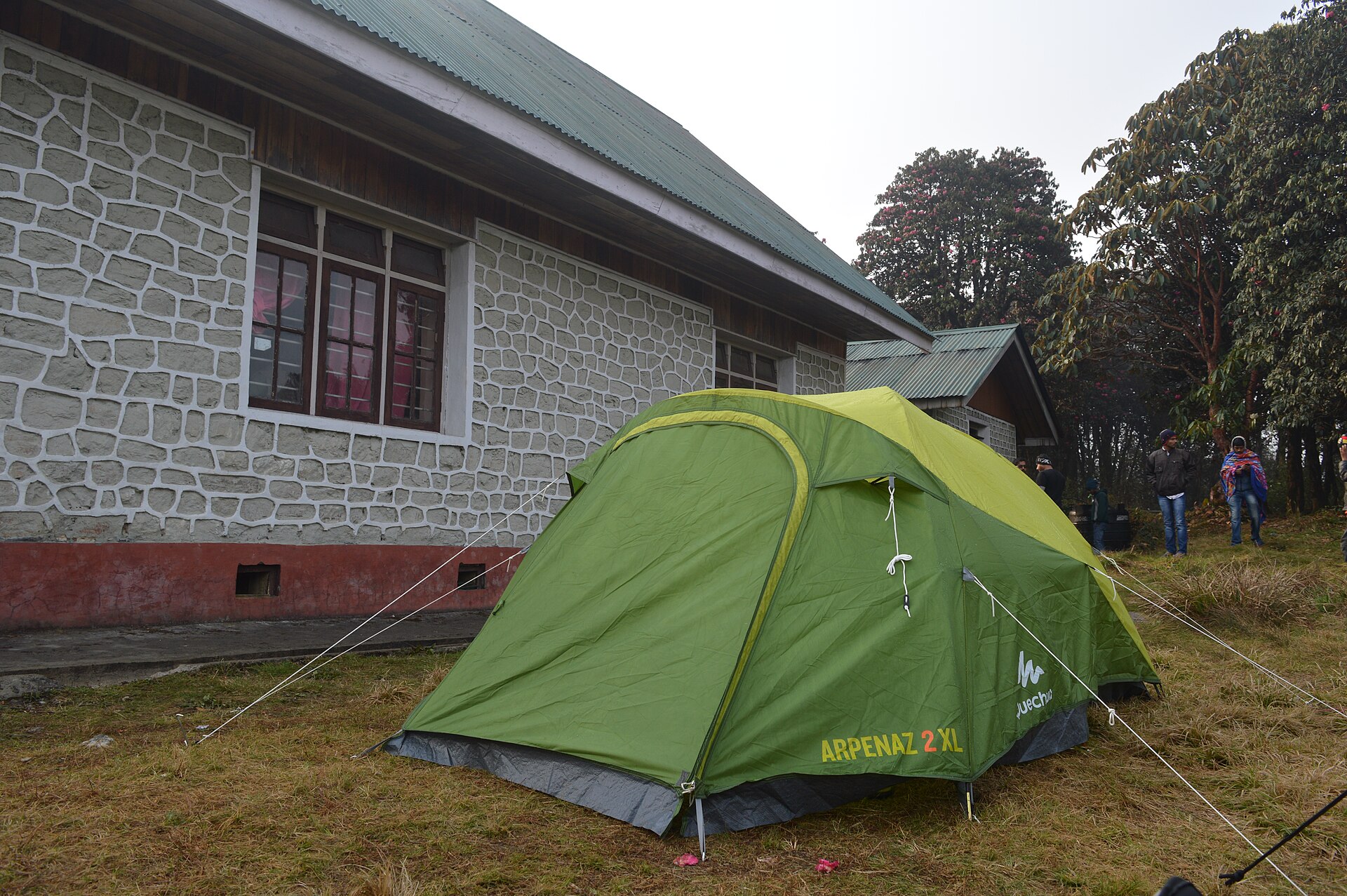
Quechua Arpenaz Family 4.1 (Decathlon, around £150). The default recommendation for a first family tent, and for good reason. Proper standing-height living area, a genuinely dark bedroom compartment, and Decathlon’s pleasingly un-British habit of publishing its own wind-tunnel and rain test results. The bedroom is a “4” in Decathlon maths, which means two adults and two small children at a squeeze, or two adults in comfort. Downsides: it packs big – think checked-luggage-sized holdall – and the fibreglass poles want two people for the first pitch. At this price, nothing touches it.
Vango Skye 400 (around £180). The build-quality pick. 3,000mm hydrostatic head, better pole sleeves than anything else here, and it feels like it’ll survive a decade of Augusts. The living space is smaller than the Quechua’s, and there’s no blackout bedroom – you’re trading liveability for durability. If your camping plans lean Scottish or coastal, make that trade.
Eurohike Rydal 600 (Blacks and Millets, £160-£180 depending on the week’s discount). A six-berth footprint for four-berth money, which makes it the pick for a family of four who want actual space. The compromise is everywhere else: 2,000mm waterproofing, thinner flysheet fabric, and zips that need a gentler hand than the Vango’s. Treat it kindly and re-proof the seams each spring and it’s a lot of tent for the money. Eurohike’s pricing is also a moving target – it’s the kind of tent that drops £40 in a Millets sale roughly monthly, so don’t pay full whack.
Coleman Darwin 4 Plus (around £130). The small-and-solid option: a tunnel design with a modest porch, 3,000mm waterproofing and the quickest honest pitch of the four – one adult, fifteen minutes, no swearing. But it’s a lie-down tent. No standing height anywhere. For a couple with one small child doing two or three weekends a year, it’s arguably all the tent you need. For a rainy week in Wales with two kids, it isn’t.
What about the £90-£110 supermarket tents that appear in the middle aisle every July? Aldi’s and Lidl’s family tents are better than they’ve any right to be for a single dry weekend. The waterproofing figures are optimistic and the poles are the first thing to go. As a spare or a “let’s see if we even like camping” punt, fine. As the family tent for the next five years, spend the extra £50.
Worth knowing what the next £100 buys, too, if only to resist it. At £250-£300 you get the Vango Farndale and Coleman’s bigger tunnel tents: heavier fabric, a second bedroom pod, a longer porch. Nice, none of it essential, and all of it more weight and a bigger pitch to wrestle. The £150-£180 bracket is the sweet spot for a family that camps a few times a year, and no one standing in a wet field has ever wished their tent was harder to put up.
Skip the air tent – at this price, and honestly at most prices
Inflatable tents are the industry’s favourite upsell, and the camping forums treat them as the obvious endgame. I don’t buy it. A decent air tent starts at £400 and the good family ones are £600-£900. What that money buys is a faster pitch – ten minutes instead of twenty-five – and a single point of failure you can’t fix in a field. A snapped fibreglass pole costs £4 and five minutes. A torn air beam ends the holiday.
Anything sold as an “air tent” under £200 is worse than a poled tent at the same price, because the beams eat the budget that should have gone into fabric and waterproofing.
The twenty-five minute pitch is also a one-time cost per trip. You do it once, on arrival, probably in daylight. Paying £400 extra to save fifteen minutes once per holiday is the kind of deal that only makes sense in a showroom.
Pitch it in the garden first – and other things the veterans know
Every campsite in August has one family pitching a brand-new tent for the first time, in the dark, narrating the instruction sheet at rising volume. Don’t be that family. Pitch it in the garden – or a park, if you haven’t got one – the weekend before. You’ll find the missing peg, learn which pole goes where, and discover whether the “four-berth” claim survives contact with your actual family and their actual stuff.
While you’re at it: buy a rubber mallet and a bag of decent rock pegs, because the pegs supplied with sub-£200 tents are made of cheese. Budget £15. The Camping and Caravanning Club keeps a good beginner’s library on the rest – pitch selection, guy-line tension, the lot – and its member campsites are reliably the gentlest places to learn.
Arrive before 4pm on changeover day. Not because the site fills up – because pitching with daylight to spare, then having a brew while the kids explore, is a different holiday from pitching at 7.30pm with everyone hungry. And check the forecast for the pitch, not the region: a valley campsite and the nearest town can be having two different weeks entirely.
Book a site with a decent fallback within reach, too. First trips go wrong in boring ways – a broken zip, a child who won’t settle, forty-eight hours of rain – and the difference between a funny story and a disaster is usually a pub with a fire and a soft-play within twenty minutes. The Guardian’s camping pages are a better source of honest site recommendations than the booking platforms, which have a financial interest in every site being lovely.

When to buy – because tent pricing is a rigged game
Tent prices move more than almost any other product this site covers. The same Eurohike that’s £180 in the last week of July was £140 in early June and will be £110 by the September “end of season” clearances. Vango runs quieter but still discounts hard from late August. Decathlon is the exception – Quechua prices barely move, which is one of the reasons the Arpenaz is easy to recommend: the price you see is the real price, not a mark-up waiting for a sale sticker.
If you’re buying for a trip that’s already booked in the next fortnight, you buy now and accept it. That’s fine. But if this is a “maybe next summer” purchase, set a price alert and wait for September, when the outdoor chains clear stock and this year’s £180 tent becomes next year’s £120 one. Same tent. The 2027 “new model” will be a colour change.
Second-hand deserves a mention too, though it comes with one rule. Facebook Marketplace in September is full of barely used family tents from households who did one wet weekend in Pembrokeshire and decided camping wasn’t for them – a two-year-old Vango for £70 is a common find. The rule: never buy a tent you haven’t seen pitched. A missing pole section or a torn groundsheet turns a bargain into landfill, and “we never got round to using it” sometimes means “it came back wet and went in the loft”, which is how mould happens. Ask the seller to pitch it. The genuine ones will.
One more pricing note: ignore the RRP-anchored discounts. “Was £349.99, now £179.99” is a claim about a price almost nobody paid. Judge the tent at the price in front of you against the four above, not against a number invented to make the sticker look kind.
The kit that matters more than the tent
Sleeping mats decide whether anyone actually sleeps. Budget the same per person as you’d spend on a cheap airbed, but buy self-inflating mats instead – airbeds are cold, squeaky and flat by day three. This is where the money you saved by not buying an air tent goes.
A power bank stops the “my tablet died” mutiny on day two; our festival power bank test found the £20 Anker brick outlasted everything, and the same logic applies on a campsite. Speaking of which, if the children are bringing screens for the car journey and rainy afternoons, our guide to the best tablet for kids is worth a read before you spend money on a “kids” model. Bites and stings are the other guaranteed feature of a British campsite in August – a heat pen beats every cream in your washbag, and it weighs nothing.
And if you’re still costing up the whole trip, our breakdown of what £1,000 buys a family in the August peak makes camping look even better value than it already is: a £150 tent, a £40-a-night pitch and a week somewhere green comes in under half of it, and the tent’s still there next year.
So: ignore the berth rating, check the hydrostatic head, take the porch over the bigger bedroom, and put the air-tent money into mats and pegs. The tent is the cheap part of camping done well. The question worth sitting with before you buy is a different one – is your family a two-weekends-a-summer family or a full-week-in-Wales family? Because that answer, not the berth number on the box, is what should decide which of these four you carry to the checkout.