
Best Power Bank for Festivals UK 2026: The £20 Brick That Beats the £10 Charging Tent
A single phone charge from the charging tent at a big UK festival now costs around a tenner. The locker version – drop it off, queue twice a day, hope nobody walks off with it – runs £25 to £30 for the weekend. And the best power bank for festivals UK shoppers can buy in 2026 costs about £20, weighs less than a can of lager, and charges your phone twice before it needs thinking about. The economics aren’t subtle. One weekend of charging-tent fees buys the brick outright, and you keep the brick.
In This Article
- Three days off-grid: the actual maths
- The best power bank for festivals UK 2026: what to buy
- The 27,000mAh trap
- What matters in a field (and what doesn’t)
- Making it last from Thursday to Sunday
- Earbuds, vapes and cameras: the rest of the drain
- What about the charging tent anyway?
- Solar chargers: save your money
At Reading and Leeds prices, that tenner is the least of the weekend’s stings, but it’s the most avoidable one.
Yet every summer the queues form anyway.
Part of that is forgetfulness, but a decent chunk is bad buying. People either turn up with a freebie conference power bank that’s been dead in a drawer since 2023, or they overcorrect and lug a 27,000mAh slab that spends the weekend in the tent because it’s too heavy to carry to the main stage. With festival season in full swing – and the Fringe looming for anyone doing Edinburgh in August – here’s how to get it right for somewhere between £20 and £40.
Three days off-grid: the actual maths
Most current phones carry a battery of roughly 4,000 to 5,000mAh. So a 10,000mAh power bank sounds like two and a half charges, doesn’t it? It isn’t. Voltage conversion and heat eat somewhere around a third of the rated capacity, which is why a 10,000mAh bank delivers more like one and a half to two full charges in the real world, and a 20,000mAh bank manages three to four.
Festivals make it worse. Your phone works hardest when signal is poor, and signal at a festival – 100,000 people hammering the same masts in a Somerset field – is dreadful. Add camera use, video, the official app redrawing its map every four minutes, and torch duty on the way back to the tent, and a phone that lasts a day and a half at home can be begging by 6pm. City events are no kinder: Tramlines puts 40,000 people a day on Hillsborough Park’s masts.
The rule of thumb that’s served me well: one full phone charge per day, plus one spare. For a long weekend that’s four charges, which lands you at 20,000mAh. Doing a day festival, or you’re the sort who keeps their phone in their pocket during sets rather than filming them? A 10,000mAh bank does the job and disappears into a bumbag.
The best power bank for festivals UK 2026: what to buy
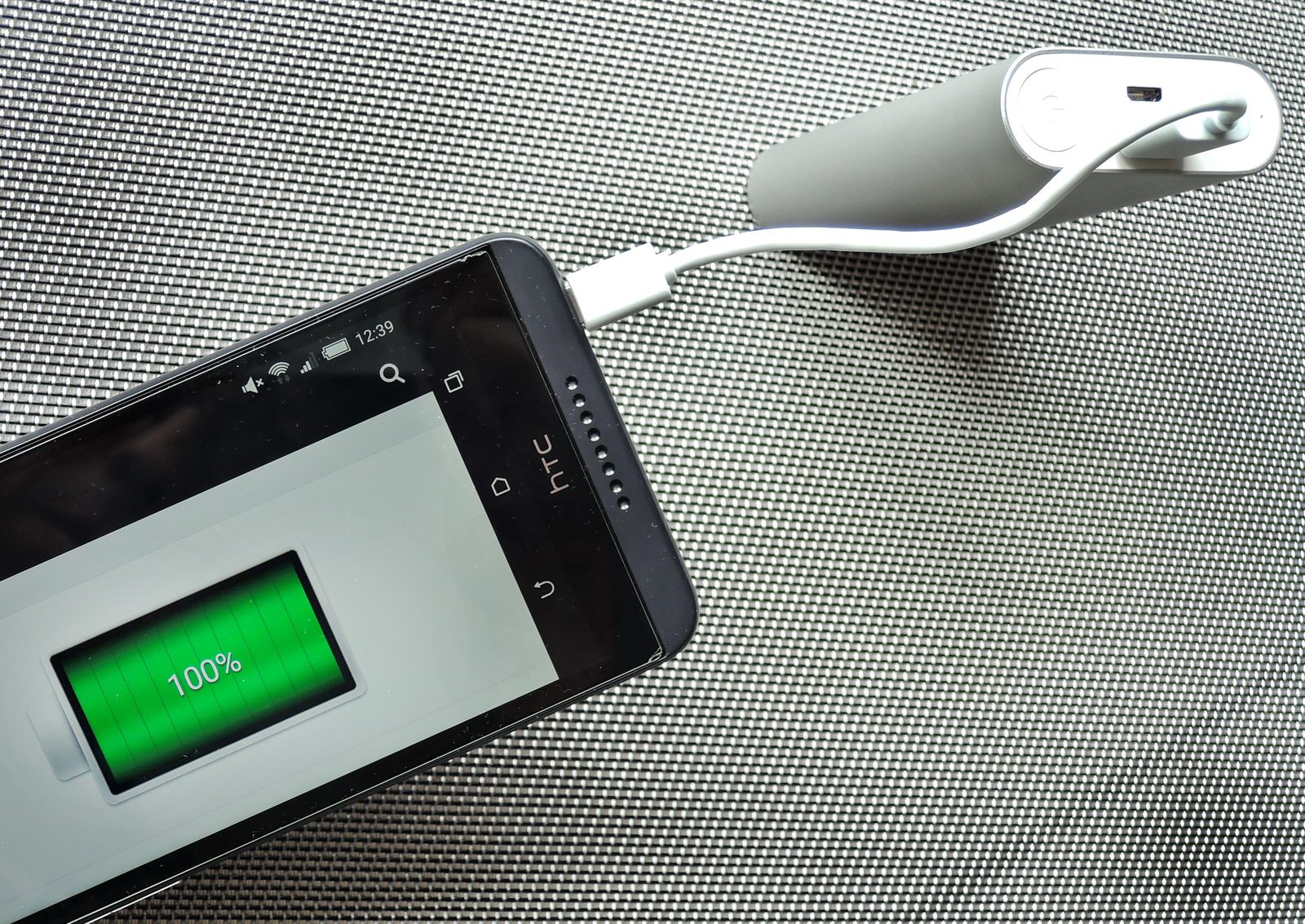
Start at the cheap end, because the cheap end is startlingly good now. INIU’s slim 10,000mAh bank sells for around £20 – often less since the spring sales – and it’s the one I’d hand to most people. It’s about the size of a stacked deck of cards, pushes 22.5W out of its USB-C port (enough to get an iPhone from flat to useful in half an hour), and has a proper numeric percentage display rather than four vague LEDs. The catch is simply capacity: two charges, give or take, and then it’s done.
The sensible default for a full weekend is a 20,000mAh bank from Anker or Belkin, which floats between £30 and £45 depending on the week. Anker’s PowerCore line has been the boring, reliable answer for a decade and still is; the 20,000mAh versions weigh around 350 to 490g depending on model – the heavier ones aren’t far off a bag of sugar, which you notice by Sunday. Belkin’s BoostCharge equivalent is much the same proposition. Neither will excite you. Both will work, which in a field in the rain is the entire brief.
And the ones to skip: the unbranded 50,000mAh specials that clog the front page of Amazon before every festival season, usually with five-figure review counts and a name in random capitals. Rated capacity on these is closer to fiction than measurement – Which? has been testing power banks for years and the gap between claimed and delivered capacity on cheap no-name units is consistently the worst in the category. Mine arrived in that annoying clamshell packaging, delivered barely half its rating, and started swelling within a couple of months. £12 wasted is still £12 wasted.
Is there a case for spending more? One, and it’s narrow. Anker’s high-wattage 24,000mAh banks – the ones pushing 100W-plus from USB-C, at £80 to £100 – exist for people charging a laptop or a mirrorless camera rig off the same brick. If you’re working the festival, filming it properly, or doing a fortnight of them back to back, fine. For a punter with a phone and a pair of earbuds, that £90 buys nothing the £35 Anker doesn’t already do, minus about 200g. Spend the difference on a decent camping chair. You’ll use the chair more.
Same logic goes for the tent, where the marketing is even worse – our guide to a family tent under £200 explains why the berth rating on the box is basically fiction.
Timing your purchase helps too. Power banks are one of the most reliably discounted categories going – the big INIU and Anker models seem to spend half the year on some form of voucher, and prices dip noticeably in the July sales window. Paying full RRP in the week before Reading is the electronics equivalent of buying a Christmas tree on the 23rd of December.
If you’re also packing a speaker for the campsite – and our garden Bluetooth speaker test covers several that survive festival duty nicely – budget its battery into your maths too. A speaker running all Saturday afternoon will come looking for your power bank by evening.

The 27,000mAh trap
Bigger numbers feel like preparedness. They’re mostly punishment.
A 25,000 to 27,000mAh bank weighs half a kilo or more, takes most of a day to recharge itself before you leave, and turns every trip to the front of the crowd into a decision about whether the brick comes too. In practice the giant bank stays in the tent, which means it’s not with you at 9pm when your phone dies trying to find your mates – the one moment the whole purchase existed for.
There’s a travel wrinkle as well. Airlines cap lithium batteries in hand luggage at 100Wh without approval, and 27,000mAh at nominal voltage sits a whisker under that line – anything bigger can be refused at the gate, and power banks can’t go in the hold at all (the gov.uk hand luggage rules spell this out). If your summer includes a flight to Primavera or a family getaway in the August peak, buying under 20,000mAh saves an argument at security.
Two 10,000mAh banks beat one 20,000mAh monster for a couple sharing a tent, incidentally. Split the weight, halve the risk, and nobody’s queuing to use the same brick.
What matters in a field (and what doesn’t)
A numeric display earns its place. Four blinking LEDs tell you almost nothing useful at 2am; “37%” tells you whether tomorrow needs rationing. Two output ports matter for the same reason – phone and mate’s phone, or phone and speaker, without taking turns.
USB-C in and out is non-negotiable in 2026. If a bank still charges via micro-USB, it’s old stock being cleared; leave it there. Fast charging (anything from 20W up) matters more than you’d think, because festival charging happens in snatched half-hours in the tent, not leisurely overnight sessions.
Cables, though, are the real point of failure. More festival charging setups die to a frayed £3 cable than to the bank itself. Pack two, and make one of them short – long cables snag, kink and end up trodden into groundsheets. A little zip pouch for the lot costs a couple of quid and keeps mud out of the ports, which is a better use of money than any rugged, IP-rated, carabiner-clipped “outdoor” power bank. Those exist mostly to charge £15 extra for rubber corners.
The built-in torch is a gimmick until the walk back across the campsite, at which point it’s the best feature on the thing. I’ll allow it.

Making it last from Thursday to Sunday
The cheapest capacity upgrade is using less. Low power mode from the moment you arrive. Airplane mode during sets, when the phone would otherwise spend an hour screaming at an overloaded mast – this alone can halve daily drain. Download the site map, the lineup and your tickets before you leave home, then let the phone stop trying to be clever.
Screen brightness is the other quiet thief. Knock it down and your battery will thank you more than any accessory purchase.
Cold matters too. Lithium cells sulk below about ten degrees, and British festival nights get there more often than the daytime forecast suggests. A power bank left in the tent porch overnight can read 20% lower by morning; keep it inside the sleeping bag with you, same as you would your phone. And top up little and often rather than running things to zero – a phone kept between 30% and 80% across the weekend is a much easier logistics problem than a dead one needing a full 90-minute rescue. Treat it like hydration: small and regular beats emergency intervention, a principle that applies to more than your phone at a festival.
Family festivals add another device to the charging pile. If you’re weighing one up for a child who isn’t getting a phone yet, our guide to the best kids smartwatch covers battery life alongside the calling and location features parents actually use.
Earbuds, vapes and cameras: the rest of the drain
The phone gets all the attention, but it’s rarely travelling alone. Wireless earbuds hold a trivial amount of charge individually, yet their cases want topping up every couple of days, and they charge happily off any bank without denting the maths. A rechargeable vape is a different story – some of the bigger ones pull a surprising amount, and at a four-day festival the vapers in your group will come for your power bank like gulls on chips. Agree terms early.
Cameras are the one that catches people out. A compact or mirrorless body chews through its own batteries fast in constant use, and while most now charge over USB-C, they do it slowly and they do it greedily – a flat camera battery can swallow the best part of a phone’s worth of capacity. If photos are the point of your weekend, either bring two spare camera batteries charged from home, or size the power bank up a class and accept the weight.
Smartwatches, by contrast, are the freeloaders of the group. A few percent here and there. Let them drink.
The general principle: count the devices before you buy, because the difference between “just my phone” and “phone, buds, watch, vape and a camera” is the difference between 10,000mAh working out fine and the Sunday-morning triage where somebody’s phone stays dead so the group’s map keeps working.
What about the charging tent anyway?
There are two situations where paying for charging still makes sense, and I’ll grant them both.
The first is the emergency – bank lost, cable snapped, weekend gone sideways. Ten pounds to be reachable again is annoying but rational, which is exactly the position the pricing is designed around. The second is the car camper. If you’ve driven, your car is a giant battery sitting in a field, and twenty minutes of engine-on charging while you fetch the next load of kit will put more into a phone than most people expect. Campervan and car-camping setups can skip a lot of this article entirely.
Everyone else is better served by the brick. The tents themselves aren’t a scam exactly – the queues are real, the security mostly fine – but they’re a solution to a problem that £20 of preparation dissolves completely. And unlike the locker, the power bank works at the next festival too, and the one after that, and on the train home when your phone’s at 4% and your ticket’s on it.
Solar chargers: save your money
Every June, the folding solar panel has its moment. It looks so plausible – free power from the sky, strapped to a rucksack, very Glastonbury. But the sums don’t survive contact with British weather. A £40 folding panel might be rated at 20W; under actual UK cloud, at the flat angle it sits on a tent, you’ll see a fraction of that, for the few hours the sun bothers. Over a whole weekend many panels deliver less usable charge than a £20 brick holds the moment you walk through the gate.
Solar has real uses – week-long expeditions, vanlife, places with actual sun. A three-day festival in Suffolk isn’t one of them. Charge a bank at home on Wednesday night. That’s it. That’s the system. Even WOMAD’s four-day return is better served by a second brick than a solar panel.
The whole category is a reminder that festival kit rewards boring choices: the £20-£40 brick, two cables, a zip pouch. Nothing there will impress anyone at the campsite. The same logic runs through the ticket itself, which is why the £125 Sunday at Reading Festival 2026 is the one we’d actually buy. Everything there will still be working when the £90 solar rig is being used as a picnic mat.
So the shopping list writes itself, and it costs less than two rounds at the bar. What’s the one piece of kit you’d never do a festival weekend without?
Flying to a festival abroad? Check the airline rules on power banks before you pack.