Celebrity Traitors Series 2: 8.9 Million Watched Episode One, and Series 1’s 14.9 Million Finale Is Now the Problem
Nobody at the BBC should be complaining about 8.9 million people watching a reality show on a Thursday night in October. And yet Celebrity Traitors series 2 arrives carrying a number that makes its own record look slightly small: 14.94 million, the finale audience of series 1.
In This Article
- Celebrity Traitors series 2 by the numbers
- The 14.9 million problem
- A cast without the sportspeople
- What the critics said, and where they split
- Two nights a week is a gamble worth taking
- The number I'd watch instead
- Uncloaked, the 3 million nobody mentions
- Is it better than the civilian version?
- What to expect over the next four weeks
That’s the problem with launching a sequel to the most-watched programme of the year.
The 75-minute opener on 1 October averaged 8.9 million, peaking just over 9 million and taking nearly 55% of everyone watching television at the time, according to Variety’s report on the ratings. That’s roughly three million more than the series 1 opener pulled. By any normal measure it’s a triumph. By the measure the show set for itself last November, it’s the starting line.

Celebrity Traitors series 2 by the numbers
Start with what’s solid. Series 1 ran from 8 October to 6 November 2025, nine episodes, averaging 13.35 million viewers. The finale, where Alan Carr walked off with £87,500 for Neuroblastoma UK, hit 14.94 million and became the most-watched UK broadcast of 2025. It later collected two BAFTAs and a National Television Award.
Series 2 has ten episodes, 21 celebrities and a top prize of up to £100,000 for charity. Claudia Winkleman is back in the Highlands, and the companion show, Ed Gamble’s Uncloaked, pulled around 3 million of its own on the opening night. The premiere is now the second most-watched non-sport programme of 2026, behind only the civilian Traitors finale.
Now the caveat, and I’m guessing here. I haven’t seen confirmation that the 8.9 million and the series 1 figures are measured the same way. Overnight numbers and consolidated numbers (which add seven days of catch-up) aren’t interchangeable, and a finale figure is always inflated by the fact that everyone who’s been watching for four weeks needs to know who won. Comparing a first night with a last night is a bit like comparing the opening scene of a thriller with its twist.
So treat 8.9 million as a very strong opener, not a prediction. The honest question is where the line sits by week three.
The 14.9 million problem
Here’s my contrarian view: the finale figure is a terrible benchmark, and the BBC knows it. It was a once-in-a-decade event built on a specific accident. Alan Carr, a man most of the country had filed under “cheerful chat show host”, turned out to be the best liar on British television, and the reveal went round every office, school gate and group chat in the country for a week.
You can’t plan that. You can’t commission it. The most you can do is leave room for it to happen again.
Series 2’s job is quieter. It has to prove series 1 wasn’t a fluke of casting, that the format itself carries the weight. The civilian Traitors has already shown it can, with a finale this year that still beat everything else on non-sport television. But celebrity versions get a different kind of scrutiny, because the audience is partly there for the people. If the people are dull, the format has to do all the lifting alone.
The prize pot deserves a mention too. Series 1 ended with £87,500 going to one charity, and series 2 advertises “up to £100,000”. It’s a small thing, but it changes the mood. Celebrities playing for a number they can see growing task by task behave differently from celebrities playing only for pride, and the production knows it. Every task that adds to the pot is also a task that gives a Traitor a reason to quietly sabotage it, which is where the real fun of the format lives.
A cast without the sportspeople
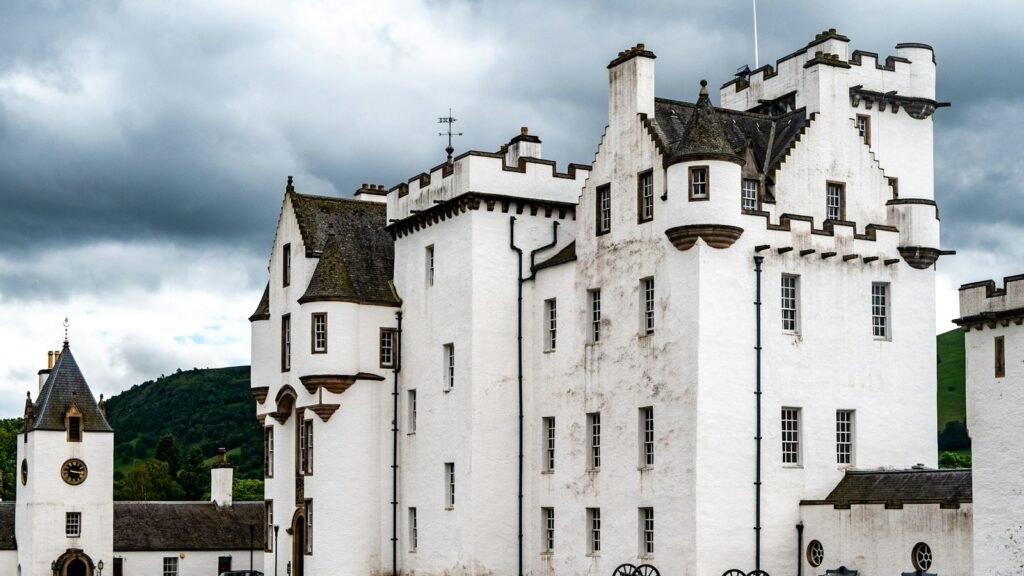
Series 1 had Tom Daley, Clare Balding and Joe Marler, who reached the final. Series 2 has none, and it’s the first thing media outlets picked up on. Instead you get Michael Sheen, Jerry Hall, Richard E Grant, Miranda Hart, Ross Kemp, James Blunt, Bella Ramsey, James Acaster and Maya Jama, with Rob Beckett and Romesh Ranganathan arriving as a pre-existing double act.
That last pairing is the smartest piece of casting on the list, and it’s also the riskiest. Friends who’ve spent a decade taking the mickey out of each other have a shorthand that’s gold on screen. They also have an obvious weakness: if one gets banished, the other has a very awkward few days. Series 1 never had a pairing like it.
Does losing the sportspeople matter? A little. Athletes are used to being watched, used to pressure, and they tend to play the game with a competitiveness that comedians and actors sometimes undercut with performance. The best Traitors moments come when someone forgets the cameras are there. Actors never quite do. Comedians barely try.

What the critics said, and where they split
The reviews were warm without being uniform, which is healthier than a chorus. The Independent’s Jessie Thompson went for five stars, saying “all the signs are that this will be another series of unmissable telly, with the episode ending on a brilliant cliffhanger”. The Times’s Carol Midgley called it “the best reality TV show in Britain”, adding that it returned “with a strange curved ball, but in great, great style”.
The Guardian’s Lucy Mangan, four stars, was the most pointed. “The cast feels slightly more muted,” she wrote. “The energy is not quite there yet. But Claudia and her clothes and attitude are.”
I think Mangan’s right, and I think it’s fixable. Casts always feel muted in episode one, because nobody’s been eliminated, nobody’s been lied to and nobody’s yet scared. What changes the energy is the first betrayal that lands properly, and the first time a Faithful starts to suspect a friend. Give it a week.
There’s one thing the critics are largely skating past, though. The show’s strongest asset is Winkleman, and it’s been her show for a while. Take her out and it’s a competent murder-mystery parlour game in a castle. Put her in and it’s an event. Whatever the cast does, she’s the reason it works.
One more thing about the Mangan quote, because it’s the line the BBC will worry about. “Muted” is a risky word for a show that sells itself on theatre. Series 1 got by on big personalities who seemed to love the game more than they loved their image, and viewers will forgive almost anything except people who look like they’re doing a publicity job. If that mood sticks past the second week, no amount of Winkleman in a spectacular coat will save it. But reality formats have a way of stripping people down after four or five nights in a cold Highland castle, and I’d bet on that happening again.
Two nights a week is a gamble worth taking
The scheduling is the quiet story. Series 2 airs Thursday and Friday at 8pm on BBC One and iPlayer through October, and that rhythm changes how you watch. Weekly drama gives you six days to forget. Two nights a week gives you one day, and one day is exactly enough time to text your mate your theory and be told you’re wrong.
It’s also the opposite of what streaming taught us. We looked at why British TV learned to wait again earlier this year, and Celebrity Traitors is the strongest evidence yet that appointment viewing still works when the thing is built for it. You can’t binge a show whose entire pleasure is not knowing. Spoilers are the enemy, and live viewing is the only defence.
That matters commercially, too. A Thursday and Friday slot keeps BBC One’s autumn schedule anchored while ITV and the streamers fight over the weekend. Strictly, the BBC’s other autumn giant, opened to a dip in viewers under its new hosting trio, so having a reliable twice-weekly hit to lean on in October won’t have escaped anyone at Broadcasting House.
The number I’d watch instead
Forget the headline average. If you want to know whether series 2 is holding up, look at two things: how far iPlayer catch-up adds to the overnight figure, and whether the Friday episode drops away from the Thursday one.
The first tells you whether people are treating it as must-see. The second tells you whether they’re treating it as a habit. A show that loses 10% between night one and night two has a problem. A show that holds is building the kind of audience that turns up for the finale in November.
The BBC’s wider position helps here. We’ve covered Netflix overtaking the BBC on viewing share, and the corporation knows that one runaway hit can paper over a lot of weaker Tuesday nights. It also knows that Celebrity Traitors is nearly the only thing in its schedule that gets a 20-year-old and a 70-year-old into the same room. That’s worth more than any single rating.
Uncloaked, the 3 million nobody mentions
Ed Gamble’s Uncloaked gets treated as an afterthought, and I think that’s a mistake. Around 3 million people stayed on after the main show to hear what had just happened explained back to them. That’s an audience most channels would kill for in a primetime slot, never mind a post-show chatter programme.
It’s also the weaker half of the evening. Not because Gamble isn’t good (he’s very good) but because the whole point of the main show is the not-knowing, and a panel dissecting the not-knowing five minutes later takes the air out slightly. Still, the habit it builds matters more than the content. Three million people who stay on for the discussion are three million people who will be watching live next Thursday.
Is it better than the civilian version?
No, and I’ll say so plainly. The ordinary Traitors, with its everyday contestants and one or two slightly terrifying retired professionals, has a bite that the celebrity edition can’t match. People who aren’t famous have nothing to protect. Stars, even likeable ones, are managing how they come across to an audience of millions, and you can feel that in every whispered turret conversation.
But the celebrity version has something the civilian one lacks: the comedy of recognition. Watching a Hollywood actor become unreasonably paranoid about a breakfast buffet is funnier than watching a stranger do it. I’d take one Michael Sheen side-eye over a dozen rounds of accusations from people I’ve never heard of.
And there’s a wider point here about who’s being asked to watch. My mate Dan, who has never once sat through a reality show and prides himself on it, told me last November that Celebrity Traitors was the only programme he’d rearranged a Thursday for. Cultural moments rely on people like Dan, not the obvious fans.
What to expect over the next four weeks
Ten episodes, two a week, wrapping up at the end of October if the schedule holds. By the end we’ll know whether the BBC has a genuine franchise or a one-off phenomenon with a good sequel.
Here’s how I’d read it. If the average sits above 10 million by week three, the format has legs and series 3 stops being a debate. If it settles around 8 to 9 million, that’s still the biggest thing on television and nobody should be disappointed, but the cultural conversation will feel quieter. Below 7 million, and the debate turns to casting.
I don’t think it’ll drop that far. Celebrity Traitors has already done something rare for British television, which is to become a shared experience on purpose rather than by accident. People have decided in advance that they’ll watch it live. That decision is harder to unmake than any critic’s quibble about energy.
There’s also the question of what the show does for the BBC’s other autumn bets. A strong Thursday lead-in is the best promotion drama launches and the documentary slots could ask for, and a weak one leaves the whole week wobbling.
For now, it’s a smash with a point to prove. The first episode proved people would come back. The next nine have to prove they’ll stay. So which number do you think tells the real story – the one on the first night, or the one on the last?