
Glucose Monitor Without Diabetes in 2026: £89 a Fortnight, No Proof It Helps – and Who Actually Needs One Before the Mince Pies
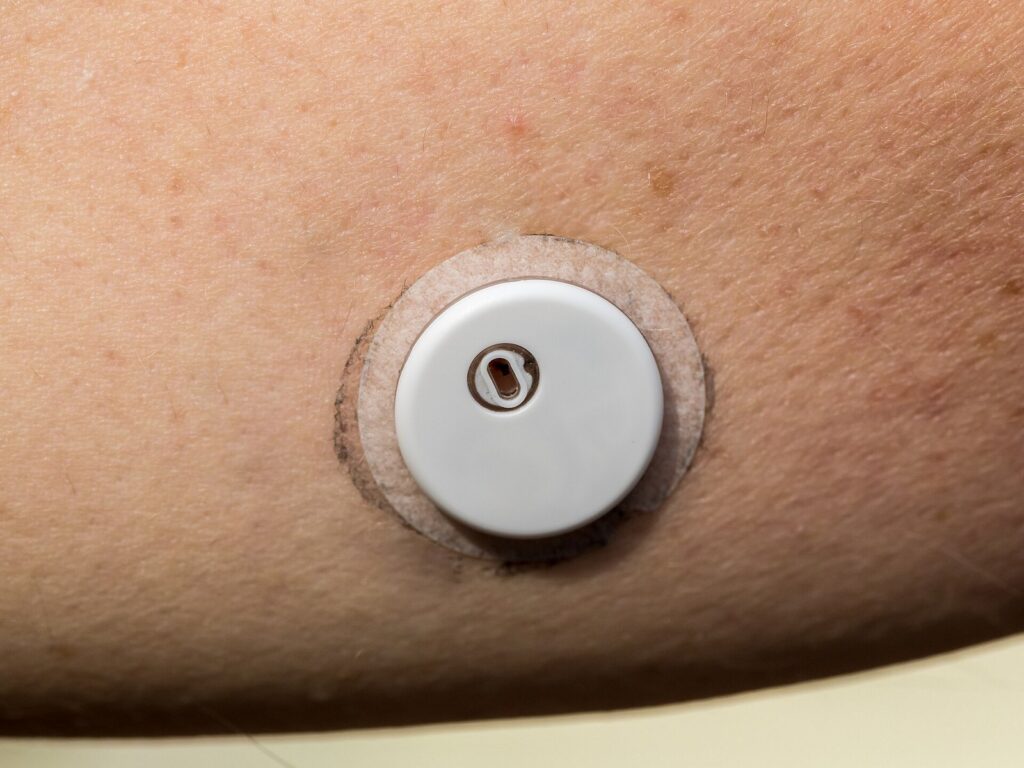
A mince pie will spike your blood sugar. So will a bowl of cornflakes, a glass of orange juice and, if you’re unlucky, a banana. If you wear a glucose monitor without diabetes this Christmas, you’ll watch all of it happen in real time on your phone, in a little red-and-green graph that looks alarming and means very little. That’s the uncomfortable finding of two separate reviews, one from UCL and one published in JAMA Internal Medicine this August: there’s no good evidence these sensors improve the health of people who don’t have diabetes.
In This Article
And yet they’re everywhere this Black Friday. Abbott’s Lingo sensor, the one most Britons will have seen on Instagram, was discounted from £109 to £92.65 at Pharmacy2U when I checked this morning. That buys you a fortnight. A year of continuous use would cost more than a decent road bike.
So who is actually getting something for the money? A smaller group than the adverts suggest.
What a glucose spike is, and why yours probably isn’t a problem
Your blood sugar is supposed to go up after you eat. That’s the whole point of eating carbohydrate. Glucose arrives in the bloodstream, the pancreas releases insulin, and within a couple of hours the level settles back down. In someone without diabetes, readings normally sit somewhere between about 3.3 and 7.8 mmol/L across a day, and a brief trip towards the top of that range after Christmas pudding is the system working, not failing.
The wellness pitch reframes that normal curve as a series of “spikes” to be flattened. It’s a clever bit of marketing because it turns something everyone does into a problem everyone has. A 2018 Stanford study of 57 people found that a standard bowl of cornflakes and milk pushed most of the participants without diabetes into what would be labelled the prediabetic range for a short while. Read one way, that’s frightening. Read another way (the way most endocrinologists read it), it tells you that short post-meal peaks are common in healthy people and that we don’t have long-term data showing they cause harm on their own.
There’s a real and interesting finding buried in all this. A 2015 study from Israel’s Weizmann Institute tracked 800 people and found that individuals reacted very differently to the same foods – one person’s toast was another person’s tomato. That’s where the idea of “personalised nutrition” comes from. But knowing that your response to a crumpet differs from your neighbour’s isn’t the same as knowing that changing it will make you live longer, and that second step is the one nobody has proved.
The accuracy problem nobody puts on the box
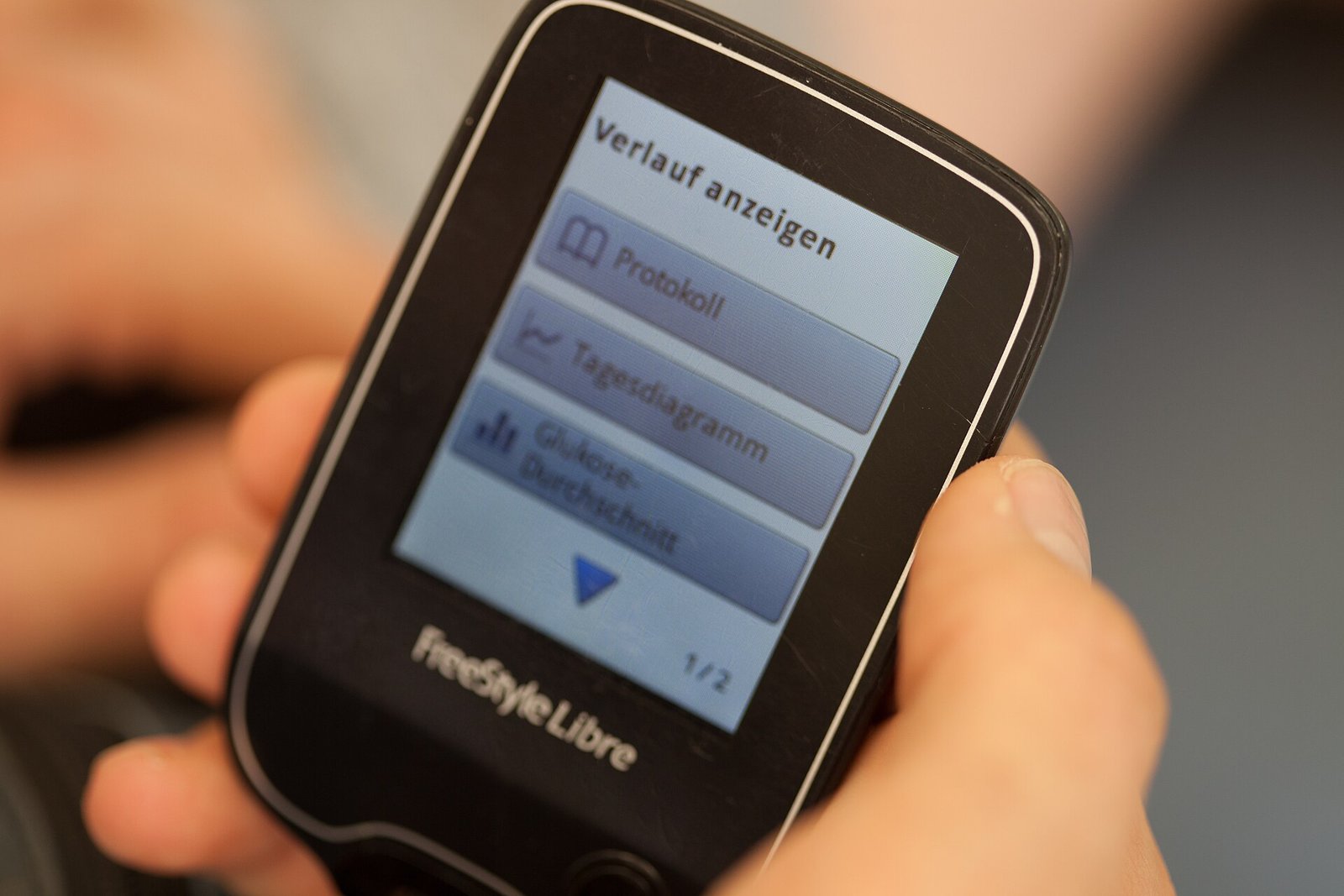
Here’s a detail that rarely makes it into the influencer videos. The sensors were built and tested for people with diabetes, whose blood sugar swings far wider than yours. The standard they’re held to is being within 20% of a lab blood reading at least 95% of the time. For someone with diabetes trying to avoid a dangerous low, that’s useful. For someone without diabetes squinting at whether porridge or granola gave them a “better” curve, it’s a problem.
The UCL team, writing in Diabetic Medicine, did the sums. A true reading anywhere in the normal 3.3 to 7.8 mmol/L band could plausibly show up as anything from 2.6 to 9.4 mmol/L on even the best devices. That’s a margin wide enough to make a perfectly healthy person think they’ve had a hypo before lunch, or that their Christmas dinner sent them into diabetic territory. Co-author John Pemberton of Birmingham Children’s Hospital said there was little reliable information on whether the sensors are accurate enough in people without diabetes at all.
Anyone who has worn one will recognise the other quirks. Sleep on the arm with the sensor and you’ll often get a false “low” at 3am, because the pressure squeezes fluid away from the filament. Readings lag behind your actual blood by several minutes. And a few users report sensors dropping out early – one Pharmacy2U reviewer said their second sensor “only lasted four hours”, which at that price stings.
What the research says about a glucose monitor without diabetes
Two reviews, two years apart, landed in the same place. In June 2024, researchers at UCL and Birmingham Children’s Hospital searched four major medical databases going back to 1980 and found 25 studies relevant to people not living with diabetes. Their conclusion was that the evidence on both accuracy and benefit wasn’t sufficient, and that the devices “could cause anxiety” and carried “a risk of developing eating disorders, such as orthorexia”. Senior author Dr Adrian Brown, a dietitian at UCL, put it plainly: “we don’t have the same health outcome data for CGM use in people not living with diabetes.”
Then in August, Minna Johansson, a GP and associate professor at Sweden’s Sahlgrenska Academy, wrote a review for JAMA Internal Medicine that went further. Her summary, as reported by the University of Gothenburg, was that “there is no scientific evidence that the technology improves health or prevents disease in healthy people”. She also had a pointed line for the industry: “I believe that companies marketing this technology should be much more transparent about the fact that there is no evidence that it improves health in people without diabetes.”
To be fair to Abbott, the small print already says something close to that. The UK launch announcement for Lingo in January 2024 states that the system “is not intended for medical use and is not intended for use in screening, diagnosis, treatment, cure, mitigation, prevention, or monitoring of diseases, including diabetes”. The same release promises help with “better sleep, mood, focus, energy”. You can’t really have it both ways. If a product can’t screen for or prevent anything, the case for it rests on how it makes you feel and what habits it nudges, and on that front the evidence is thin too – most of the user surveys doing the rounds were commissioned by the companies selling the sensors.
Short version: it’s an expensive way to learn that sugar raises blood sugar.

Why the Glucose Goddess made this a Christmas present
The consumer glucose boom in Britain owes a lot to one person. Jessie Inchauspé, the French biochemist behind the Glucose Goddess account, has sold more than a million copies of Glucose Revolution and had her own Channel 4 series in early 2025. Her advice is mostly harmless and some of it is sensible: eat your vegetables before your carbs, go for a short walk after a big meal, don’t start the day on a pastry. I’d struggle to argue with any of that.
But the framing has drawn real criticism. In June 2025 more than 40 dietitians and doctors signed an open letter raising “serious concerns” about the Channel 4 show and warning of “orthorexic tendencies” in the way it encouraged people to police every curve. Her Anti-Spike supplement has been criticised for launching without clinical trials behind it. And the problem with a glucose monitor in this context is that it turns tips into a scoreboard. You stop eating a roast potato because it’s nice and start eating it because the graph stayed green.
That’s fine if you’re the sort of person who finds data calming. Plenty of people aren’t. I spent a fortnight wearing one last winter, mostly out of professional nosiness, and the most memorable thing about it was the low-level guilt every time the app pinged me after a slice of toast. My HbA1c, measured by my GP the following spring, was completely normal. The sensor told me nothing that a blood test costing the NHS a few pounds didn’t tell me better.
Who actually needs one
There’s a group of people for whom a continuous glucose monitor is one of the best health technologies of the past decade, and they mostly don’t need to buy one on Black Friday because the NHS supplies it. NICE recommends CGM for adults with type 1 diabetes and for some people with type 2 diabetes who inject insulin several times a day. Pregnant women with type 1 diabetes are offered one too. If that’s you and you’re struggling to get one, push your diabetes team rather than your credit card.
Beyond that, the honest list is short. If you’ve got a strong family history of type 2 diabetes, are carrying extra weight around the middle, or have been told your blood sugar is “a bit high”, the first step isn’t a sensor. It’s a proper HbA1c test, which measures your average blood sugar over roughly three months and is what doctors actually use to diagnose prediabetes and diabetes. Everyone aged 40 to 74 in England without an existing condition should be invited for a free NHS Health Check every five years, and you can ask your GP if you’ve missed yours. Diabetes UK also runs a free online Know Your Risk tool that takes a couple of minutes.
Where I’ll concede ground: if you’ve been told you’re in the prediabetic range and you’re the kind of person who learns by seeing, a single two-week sensor can be a useful shock. Watching what a large glass of fruit juice does compared with a bowl of lentil soup is more persuasive than a leaflet. One sensor, once, with a clear question in mind. Not a subscription.
The same logic applies to athletes. A few endurance coaches use them for fuelling experiments on long training rides. If you’re doing that, you probably already know why. If you’re doing three parkruns a month, you don’t need one.

Who should steer clear
Anyone with a history of disordered eating should leave these well alone, and that isn’t me being cautious for the sake of it. It’s the specific risk both review teams flagged. A device that grades every mouthful in red or green is close to the worst possible gadget for someone recovering from restrictive eating, and nothing on the packaging warns you.
I’d also put health-anxious people in this category. If you’re the sort who checks a symptom online and ends up convinced it’s serious, a sensor that can read 9.4 when your real blood sugar is 7.8 will keep you up at night. Parents thinking of buying one for a teenager who’s into fitness content should think hard too. Teenagers get enough messaging about food being good or bad without a live feed of it on their arm.
And if you already have a diagnosis of diabetes, don’t swap your NHS-prescribed device for a consumer one because it was cheaper on Black Friday. Lingo isn’t licensed to monitor diabetes, it doesn’t give the alarms that medical sensors do, and the readings aren’t meant to guide insulin doses.
What I’d do with £89 instead
This is the part where I’m supposed to hedge. I won’t. For almost everyone without diabetes, a glucose monitor is a gadget that tells you what you already know, with a margin of error wide enough to mislead you, at a price that would pay for a year of most things that do work.
If you want the benefits the sensor promises, the cheaper version looks like this. Walk for ten or fifteen minutes after your biggest meal – it’s the Glucose Goddess tip with the best evidence behind it, and our piece on what actually stops Christmas weight gain covers the rest of the festive picture. Eat the sprouts before the roast potatoes if you like; it won’t hurt. Spend the money on a pair of decent walking boots, or put it towards a gym month in January. If you’re tempted by the walk-while-you-work idea, our look at whether a walking pad earns its space is worth a read before you hit buy.
Be wary of the supplements that ride the same wave, too. Berberine gets sold as a natural glucose fix, and the trials show rather less than the “Nature’s Ozempic” label suggests. The fasting crowd make similar promises about steadier blood sugar, but when Cochrane pooled the trials, intermittent fasting beat ordinary dieting by nothing. There’s a pattern with wearable health tech more broadly, which we’ve seen with smart rings and sleep tracking: the data can be impressive, but more data isn’t the same as better health.
But if you’ve got a reason to worry about your blood sugar, book the blood test. It’s free, it’s accurate, and it measures the thing doctors care about rather than a squiggle after a mince pie.
Have you worn a glucose sensor without having diabetes – and did it change a single thing you eat, six months on?