Waterstones Book of the Year 2026: Why a £22 True-Crime Hardback Won, and the Fiction Winner I’d Wrap Instead
The Waterstones Book of the Year 2026 has gone to a £22 hardback about a 19-year-old who pretended to be the son of a Russian oligarch and died after falling from a balcony on Millbank. Not a novel. Not a gift book with a fox on the cover. Patrick Radden Keefe’s London Falling beat a shortlist that held three Booker-nominated novels, a new Maggie O’Farrell and Robert Macfarlane’s seven-years-in-the-making Book of Birds, and it did so on the votes of the people who actually stand behind the till.
In This Article
- London Falling and the Waterstones Book of the Year 2026: what actually won
- A story that refuses to settle
- The critics didn't agree, and that's partly why it sold
- Only the fourth non-fiction winner in 15 years
- What happened to the Booker novels?
- The winner I'd actually wrap: Taiwan Travelogue
- Is This a Plum? and the children's book that sells itself
- How to use this shortlist before Christmas
That matters more than it sounds. Booksellers don’t vote for what they think is important. They vote for what they’ve watched customers come back in and ask for.
London Falling and the Waterstones Book of the Year 2026: what actually won
The prize was announced at one minute past midnight on Thursday, and there were three winners rather than one. London Falling took the overall title. Taiwan Travelogue by Yáng Shuāng-zǐ, translated by Lin King and published here by the tiny independent And Other Stories, was named Fiction Book of the Year. And the children’s prize went to Is This a Plum? by Dan and Finn Ojari, a Puffin picture book with holes cut through its pages.
Bea Carvalho, Waterstones’ head of books, didn’t hold back when she spoke to ITV News. “The word-of-mouth success of Patrick Radden Keefe’s London Falling has been one of the defining features of the literary year,” she said, calling it “a masterclass in investigative storytelling, at once a heartfelt tribute to one boy and his family and a searing investigation into modern youth, the city of London, and our present era.” She also said it had sparked “debate amongst readers everywhere”, which is the line that got picked up as the headline and, for once, it’s not just press-release filler.
The hardback came out from Picador on 7 April and lists at £22 at Foyles and the London Review Bookshop – the LRB shop had sold out when I checked this week, with a “more coming soon” note. Waterstones is putting out its own exclusive editions of all three winners, which is the real commercial point of this prize: it’s the shop telling you, a month before Christmas, exactly which three books it wants you to buy.
A story that refuses to settle
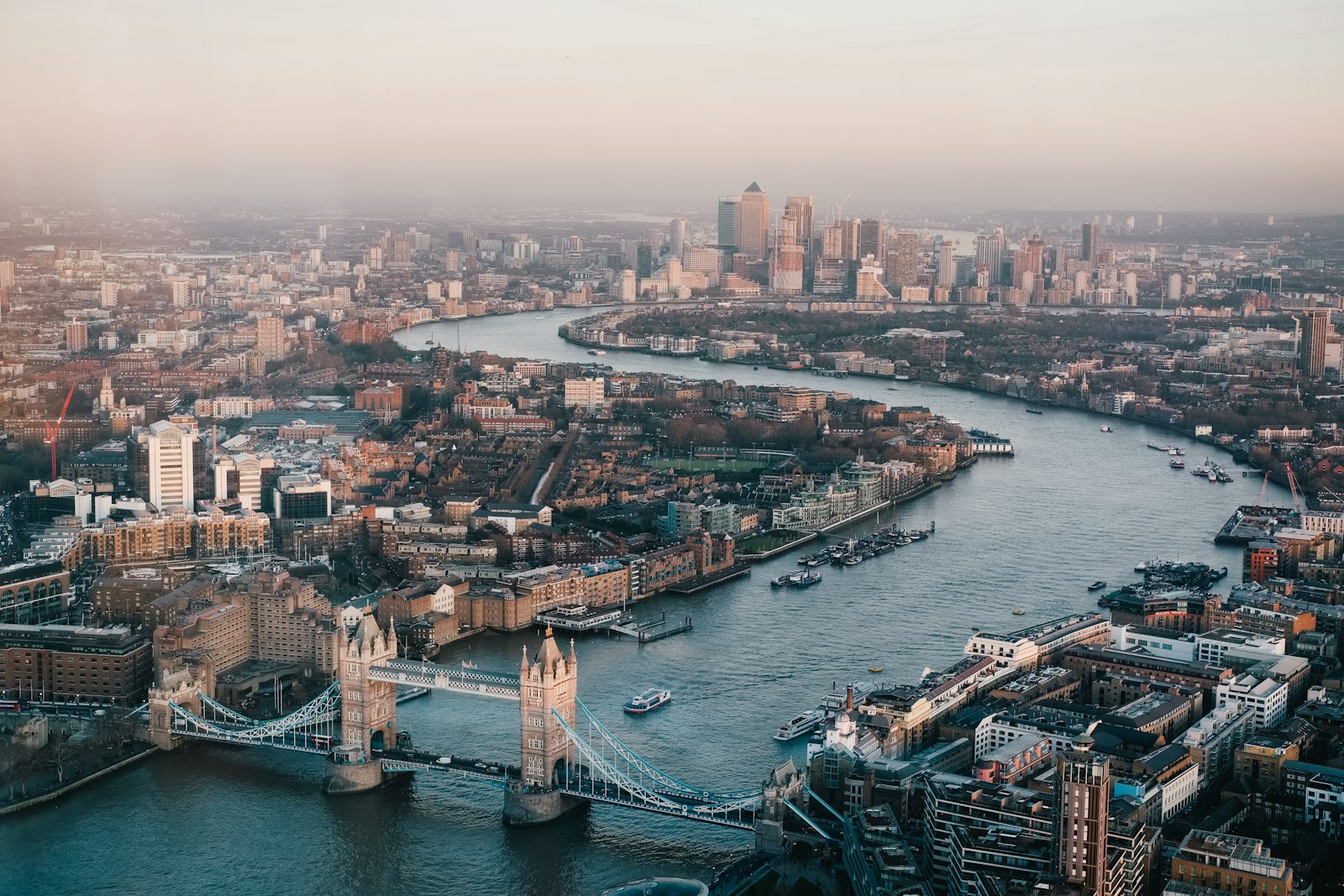
If you missed the New Yorker piece that started all this in early 2024, here’s the shape of it. Zac Brettler grew up in Maida Vale, went to Mill Hill School and was, by every outward measure, a comfortable north London kid. Somewhere along the way he started calling himself Zac Ismailov and telling people he was the heir to a Russian billionaire, poised to inherit hundreds of millions. In the early hours of 29 November 2019 he was recorded on CCTV going over the balcony of a luxury riverside flat on Millbank, a flat occupied by a man known in the London underworld as “Indian Dave”. A pathologist found a broken jaw that couldn’t be explained by the fall. Police didn’t swab the flat for blood. The inquest in December 2022 returned an open verdict, and his parents, Matthew and Rachelle, went on asking questions the system seemed happy to leave alone.
Keefe follows them. He’s done this before – Say Nothing took a single disappearance in Belfast and used it to explain the Troubles, and Empire of Pain won the Baillie Gifford Prize in 2021 by doing something similar with the Sackler family and the opioid crisis. London Falling uses one boy’s death to look at the city’s money: the empty penthouses, the shell companies, the way a teenager could convincingly play at being an oligarch because nobody in that world checks very hard.
It’s a grim book. It’s also, to be blunt, a hard sell as a Christmas present, which makes the booksellers’ choice more interesting rather than less.
The critics didn’t agree, and that’s partly why it sold
On Book Marks, which aggregates reviews, London Falling rates as a “rave” across 29 notices, with the Guardian, the LRB, the TLS and the Irish Times all in the top band. Ian Thomson in the Guardian called it “grimly absorbing from start to finish”. But the British reviews weren’t uniformly warm. Craig Brown in The Times, broadly positive, still asked of its London-as-moral-sewer framing: “Isn’t this rather overdoing it?” Philip Hensher in the Spectator was much harder on it: “This book might have had some appeal at, say, 150 pages.” It runs to 384.
Hensher isn’t entirely wrong. I’d go further than most of the raves and say the middle third does drag; Keefe is so thorough about the flat, the CCTV timings and the cast of fixers around “Indian Dave” that you lose Zac for long stretches. A student reviewer at the Harvard Crimson put it neatly in May, saying the book’s detail is “simultaneously its greatest strength and biggest obstacle”.
And yet that argument is exactly what a bookseller’s prize rewards. A novel that everyone quietly admires doesn’t bring people back into the shop. A non-fiction book your brother-in-law has strong views on does. I’ve lost count of the number of people who’ve told me they started it because someone at work wouldn’t stop talking about the balcony, the broken jaw or the open verdict – it’s become that rare thing, a true-crime book that’s discussed like a news story.
It also lost the Baillie Gifford Prize earlier this month. On 4 November the £50,000 award went to Edmund Richardson’s Alexander: God, King, Man, with chair Kirsty Lang describing the winner as “non-fiction writing at its very best: a book that, like its subject, can’t stop pressing onward”, according to the Baillie Gifford Prize announcement. So the judges picked the biography; the shop floor picked the one people were arguing about. Both decisions make sense on their own terms.
Only the fourth non-fiction winner in 15 years
Look back over the list and the pattern is obvious. Since 2012 the prize has gone to Russell Norman’s Polpo cookbook, John Williams’s Stoner, Jessie Burton’s The Miniaturist, Coralie Bickford-Smith’s The Fox and the Star, Sarah Perry’s The Essex Serpent, Philip Pullman’s La Belle Sauvage, Sally Rooney’s Normal People, Charlie Mackesy’s The Boy, the Mole, the Fox and the Horse, Maggie O’Farrell’s Hamnet, Paul McCartney’s The Lyrics, Katy Hessel’s The Story of Art Without Men, Katherine Rundell’s Impossible Creatures, Asako Yuzuki’s Butter and, last year, Lucy Steeds’s debut The Artist.
By my count that’s three non-fiction winners in 14 years – a cookbook, a Beatle and an art history – and none of them anywhere near true crime. London Falling is the first investigative book to take it.
Why now? I’m guessing here, but I think two things have shifted. Long-form podcasts have trained a big chunk of readers to sit through 10 hours of a single unexplained death, and a book like this is the hardback version of that habit. The other is that Keefe has become a brand in his own right since Say Nothing was turned into an FX series in 2024 – A24’s UK arm bought the rights to London Falling before it was even published, so expect it on a streaming service within a couple of years.
Carvalho seemed to be making a broader point when she said that “reading non-fiction is vital, enriching, gripping”. Reading between the lines, Waterstones would quite like more people buying £22 hardback non-fiction in December, and this is a nudge.
What happened to the Booker novels?
Three novels on the 20-strong shortlist had already been through the Booker mill: Douglas Stuart’s John of John, Elizabeth Strout’s The Things We Never Say and Rebecca Perry’s May We Feed the King. None of them won here, and none of them won the Booker either – that went to M John Harrison’s 198-page novel, which wasn’t on the Waterstones list at all.
Stuart hasn’t gone home empty-handed. Earlier in November John of John won Waterstones Scottish Book of the Year, making him the first author to take that award twice, as The Bookseller reported. Of the three Booker novels it’s the most readable, and it was on our Booker shortlist round-up in September for good reason. It’s the one I’d give to someone who loved Shuggie Bain but found Young Mungo hard going.
Maggie O’Farrell’s Land is the bigger surprise omission. She’s won this prize before, with Hamnet in 2020, and a sweeping Irish historical novel about father and son mapping the country after the Great Hunger has “Christmas bestseller” written all over it. It’ll sell by the pallet regardless.
The winner I’d actually wrap: Taiwan Travelogue
Here’s my contrarian bit. London Falling is the right overall winner for a booksellers’ prize, because it’s the book that’s driven the most conversation. But it isn’t the best book on the shortlist, and it isn’t the one I’d give anyone on Christmas morning.
Taiwan Travelogue is. Set in Japanese-ruled Taiwan, it presents itself as the travel memoir of a Japanese novelist touring the island and eating her way through it with her Taiwanese interpreter, and the warmth of it hides a much sharper book about who gets to tell whose story. It won the US National Book Award for translated literature in 2024, so this isn’t a hidden gem in the strict sense, but in Britain it’s a small-press book that has mostly spread by word of mouth. Carvalho called it “a delicious treat of a novel”, which undersells how clever it is.
And I like what its win says about this prize. And Other Stories is a not-for-profit publisher that works on a subscriber model; getting its book into every Waterstones window in December is worth more to it than most cash prizes. It’s the second time in three years a translated novel has been picked out here, after Butter took the whole thing in 2024.
If someone on your list read Butter and loved it, this is the obvious follow-up. If they only read thrillers, give them London Falling instead and let them argue about it at New Year.
Is This a Plum? and the children’s book that sells itself
Short verdict: buy it for anyone under six. Carvalho described it as “a simple concept, exquisitely executed to hilarious effect”, and that’s about right – the holes cut through the pages turn a very silly question into a game toddlers want to play again and again. It’s the kind of picture book that ends up chewed at the corners by February, which is the highest praise a children’s book can get.
Two other books from the children’s end of the shortlist deserve a mention. M.G. Leonard and Polly Dunbar’s The Adventures of Portly the Otter brings 10 new tales of the otter from The Wind in the Willows, and it’ll suit a grandparent who wants to read aloud something they half-remember. For older kids, Faridah Àbíké-Íyímídé’s The Heirs – five adopted prodigies, one murdered billionaire father, a ball – is the one teenagers will actually finish.
How to use this shortlist before Christmas
The honest truth about the Waterstones Book of the Year 2026 shortlist is that it’s a better shopping list than the Booker’s. The Booker exists to argue about literature. This one exists to sell books in December, and the 20 titles were nominated by booksellers in every shop putting forward the books they’d most enjoyed selling, so it covers a cookbook (Ottolenghi Simple Too), a wine guide (Dan Keeling’s Pick Your Bottles), Ben Macintyre’s MI6 spy story Redwood and David Byrne’s Sleeping Beauties, a book about why good ideas lie dormant. That’s a whole family’s worth of presents from one table.
If you’re buying for yourself and the £22 hardback feels steep, the ebook and audiobook are both out from Pan Macmillan, and a decent e-reader pays for itself quickly – see our pick of the best e-readers under £100. A paperback is on Pan Macmillan’s list too, though I’d expect that to land next year rather than in time for Christmas.
My own order of priority for the shortlist, for what it’s worth:
- Taiwan Travelogue – the best book of the 20, and the one most people haven’t read yet.
- London Falling – for the person in your life who listens to true-crime podcasts on the commute and wants to have opinions about it.
- John of John – Douglas Stuart’s best since Shuggie Bain, and a deserved Scottish winner.
- The Book of Birds – Jackie Morris’s watercolours make it the best-looking object on the list; buy it for someone who’ll leave it on the coffee table.
For something lighter to follow it all up in the new year, our best summer books of 2026 list still holds up for anyone who skipped them in July.
Waterstones’ booksellers have made their call, and for once a prize has gone to a book people argue about over dinner rather than one they nod at politely. Which would you have picked from the 20 – and is a true-crime investigation really the book of the year, or should the novel have taken the top spot?