The £399 LED Face Mask Question: What Red Light Actually Does to Skin in 2026, and the 4 Groups Who Should Keep Their Money
Somewhere in Britain right now there’s a woman sitting on the sofa at half nine wearing a glowing red hockey mask, watching Bake Off through the eye holes, and wondering whether the £399 she spent in the summer sale is doing anything. I know this because I’ve been that woman. The LED face mask has become the most expensive piece of skincare most people will ever own, and it’s sold on a mixture of decent science, thin science and marketing that quietly blurs the two. So before the Black Friday emails start (CurrentBody’s usually land in early November, Shark’s not long after), it’s worth working out which bits are real.
In This Article
- The 2014 trial every LED face mask brand quotes
- What an LED face mask actually does under the skin
- The dose problem: why a £40 mask and a £399 mask can be doing different jobs
- "FDA cleared" and "clinically proven": what the box is allowed to say
- Blue light for spots: better evidence, smaller audience
- Four groups who should keep their money
- Where an LED face mask beats the alternatives – and where it loses
- If you buy one anyway: the twelve-week rule
The short version: red light does something. The longer version is about how much, for whom, and whether the mask on your face is delivering the dose the studies used. That’s where it gets uncomfortable.
The 2014 trial every LED face mask brand quotes
Almost every product page you’ll read leans on the same study, whether it names it or not. In 2014, two German researchers, Alexander Wunsch and Karsten Matuschka, put 136 volunteers through 30 sessions of red and near-infrared light over 15 weeks and measured what happened. They didn’t rely on before-and-after selfies. They used ultrasound to measure collagen density in the skin, profilometry to measure roughness, and blinded photograph assessments. The treated groups showed a measurable increase in intradermal collagen density compared with the untreated controls, plus smoother skin and better self-reported skin feel. No serious side effects.
That’s a proper result, and it’s why dermatologists don’t laugh at red light the way they laugh at, say, jade rollers. But look at the design. Thirty sessions. Fifteen weeks. Full-body light beds, not a plastic mask with 100-odd diodes in it. And the collagen change, while statistically real, was modest – this isn’t a facelift in a box, it’s a small shift in a measurement most of us couldn’t see in a mirror.
One other detail rarely mentioned: the study found the broadband, multi-wavelength light source did no better than plain red. Worth remembering when a brand charges an extra £100 for “seven wavelengths”.
What an LED face mask actually does under the skin
The mechanism has a name – photobiomodulation – and a reasonably solid basis. Red light at around 630 to 660 nanometres, and near-infrared at around 830, is absorbed by an enzyme in your mitochondria called cytochrome c oxidase. That nudges the cell to produce more ATP, which is the energy currency fibroblasts use to make collagen and to repair. Blue light, at about 415 nanometres, works differently: it excites porphyrins produced by the acne bacterium and kills it.
Two things follow from that. First, the effect is cumulative and slow. You’re not adding collagen, you’re gently increasing the rate at which your skin makes its own, so you need weeks of regular use before anything is measurable, and it fades when you stop. Second, dose matters enormously. Light therapy follows a curve where too little does nothing and too much starts to blunt the response. The number that governs this is irradiance, measured in milliwatts per square centimetre, multiplied by time.
And this is the number most masks are cagey about.
The dose problem: why a £40 mask and a £399 mask can be doing different jobs
A paper published in PLOS One last autumn went through 27 published studies of LED therapy for skin conditions – acne, wrinkles, wound healing, psoriasis – and came to a fairly damning conclusion about the state of the research. Wavelengths, irradiances, session lengths and outcome measures were all over the place. Several studies didn’t validate the dose the patient actually received. The authors were blunt that despite influencers selling expensive home LED devices to an eager audience, the evidence for many of the claims made is markedly mixed.
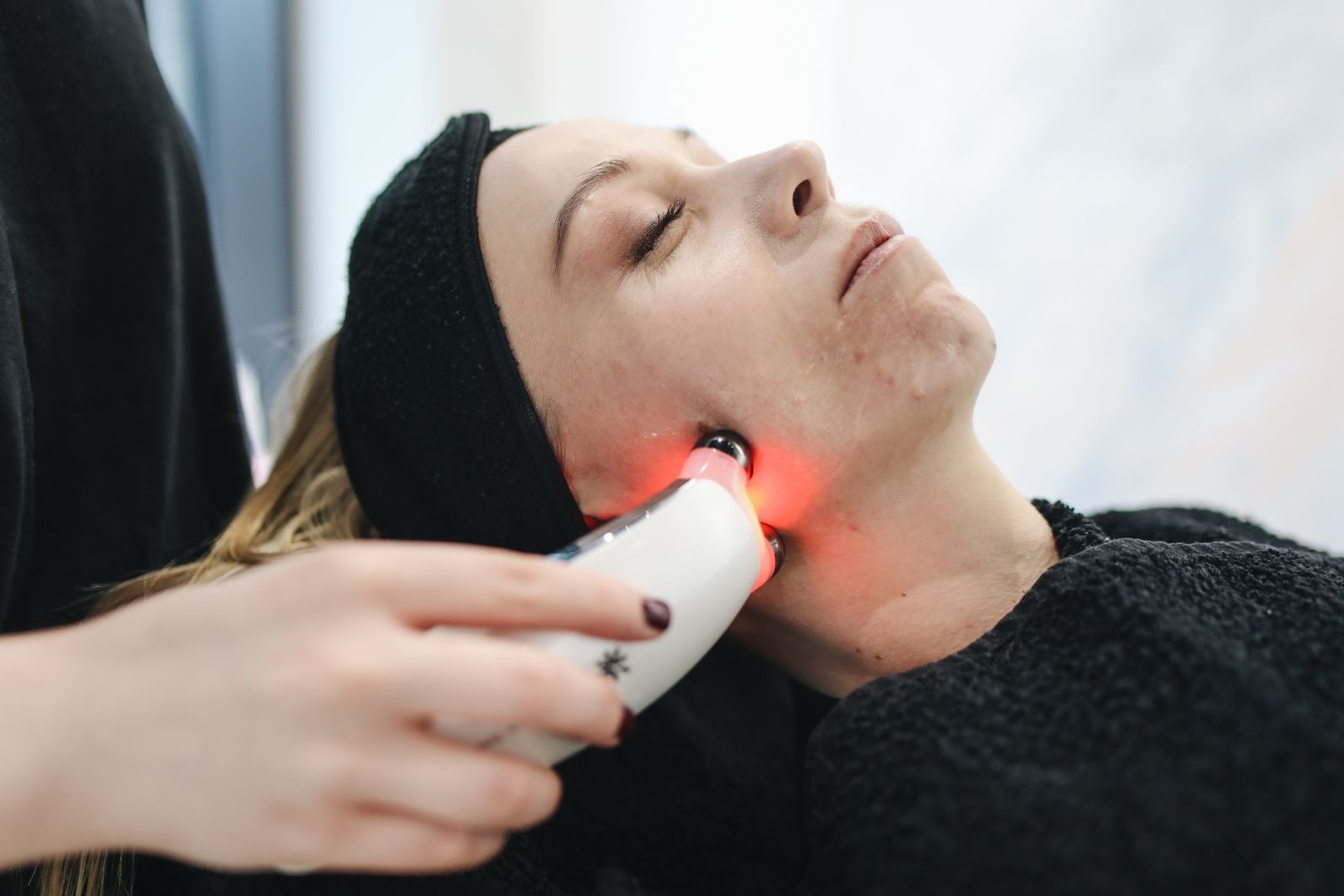
That matters for shoppers because the clinical devices in the better trials tend to run at 100 milliwatts per square centimetre or more. Home masks, where the figure is published at all, commonly sit at 20 to 40. CurrentBody quotes its Series 2 at around 30. A lot of the £30 to £50 masks on Amazon don’t publish anything, and the handful that have been measured independently have come in far lower than their marketing implies. A mask putting out 5 milliwatts is, for practical purposes, a nightlight.
So the honest answer to “is the expensive one better?” is: probably, but not because of the logo. It’s better if it’s putting a known, tested dose onto your face, with the diodes close enough to the skin and enough of them that coverage is even. The chin section and wider straps on the Series 2 aren’t fripperies – the older model floated off the lower face on anyone with a narrow jaw, and light that isn’t touching skin is light you’ve paid for and aren’t getting.
The Shark CryoGlow, at about £100 less, has a slightly different pitch: red and near-infrared for the face, blue for spots, and a chilled under-eye section that’s basically a fancy cold spoon. It ran its own 12-week trial on 59 people and reported clearer skin within four weeks. That’s a small, company-funded trial with no independent replication, so treat it as encouraging rather than proven.
“FDA cleared” and “clinically proven”: what the box is allowed to say
Every premium mask sold here carries some version of “FDA cleared” on the packaging, and it’s doing a lot of work it hasn’t earned. FDA clearance for this class of device is a safety-and-similarity process: the maker shows the product is substantially equivalent to something already on the market and doesn’t hurt anyone. The FDA itself has said the mechanism of photobiomodulation for different clinical indications isn’t fully understood. Clearance isn’t a verdict on whether the mask reduces wrinkles, and it isn’t a UK approval of anything, because the FDA has no jurisdiction here. In Britain most of these masks are sold as consumer electronics rather than registered medical devices, which means the efficacy claims sit with the Advertising Standards Authority rather than a regulator with lab access.
“Clinically proven” is looser still. It usually means the brand ran its own study, often on 30 to 60 people, unblinded, with the results measured by the brand’s chosen clinic. Those studies aren’t worthless – CurrentBody’s 35-person trial and Shark’s 59-person one at least used before-and-after imaging rather than surveys – but an unblinded, company-funded trial with no control group is the weakest kind of evidence that still counts as evidence. Nobody independent has run the two big masks head to head. Until someone does, the comparison reviews you’ll find online are one person’s face, one mask at a time.
Blue light for spots: better evidence, smaller audience
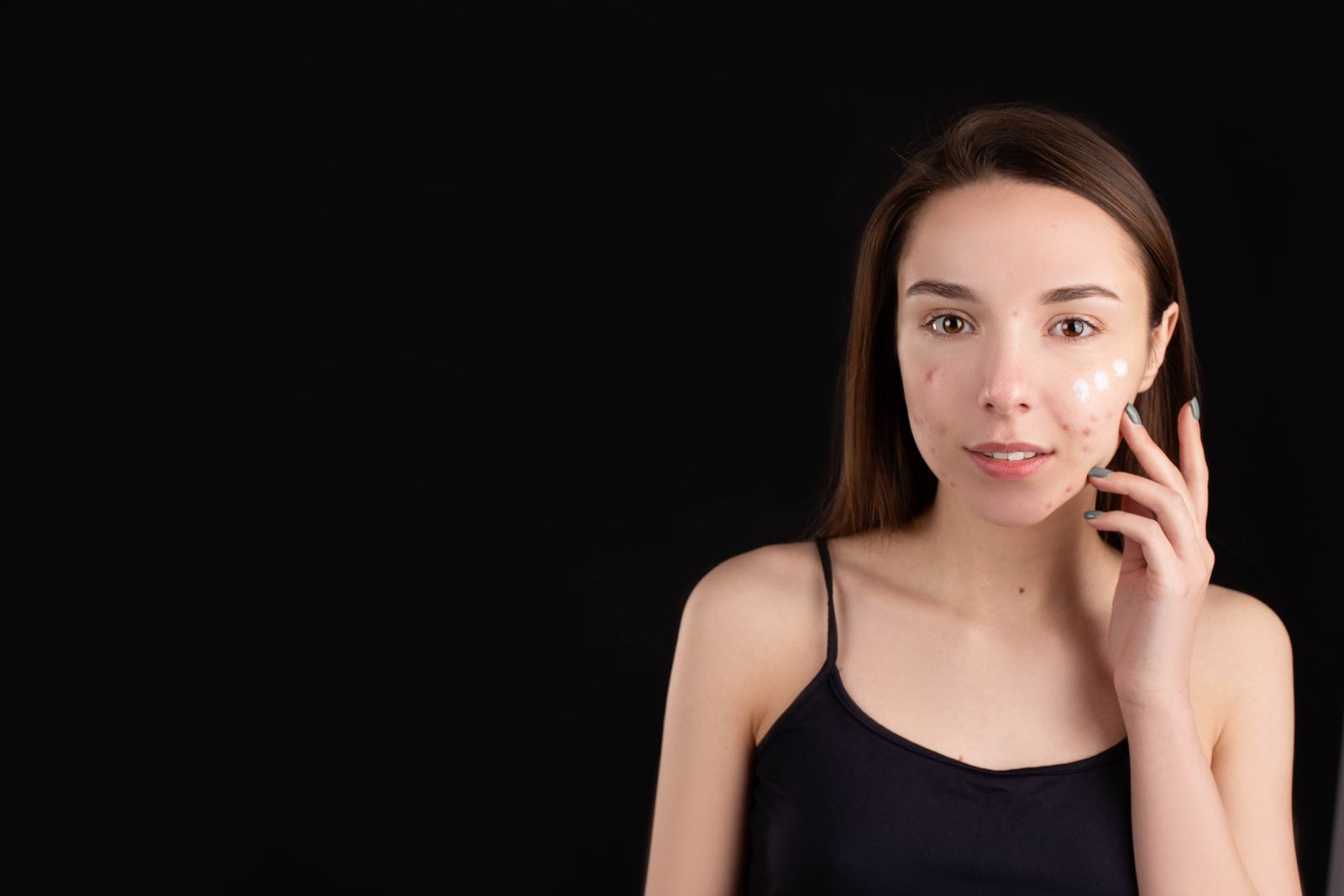
If you’re buying a mask because of breakouts rather than lines, the picture is different and in some ways clearer. Combined blue and red light for mild to moderate acne has more trials behind it than red light for ageing does, and the effect sizes in the decent studies are respectable – reductions in inflammatory spots of around a third to a half over eight to twelve weeks. The PLOS review still found the acne trials methodologically messy, but the direction is consistent.
Two caveats. Blue light doesn’t do much for the deep, painful cystic kind, and it does nothing for blackheads. And it’s competing against options that cost a fraction as much. Benzoyl peroxide is a fiver in Boots. Azelaic acid is about £15 and, unlike blue light, also tackles the marks spots leave behind – we covered it in our azelaic acid piece earlier this year. A £300 mask for spots only makes sense if you’ve tried the cheap stuff and your skin can’t tolerate it.
Four groups who should keep their money
This is the section the product pages won’t write, so I’ll do it.
Anyone with melasma or a history of dark marks. Red light on its own is probably neutral for pigmentation, and one small trial found it helped as an add-on to standard melasma treatment. But near-infrared generates heat in the skin, and heat is a known melasma trigger – dermatologists who treat pigmentation are increasingly telling patients to avoid home masks that include NIR, which is most of the premium ones. The British Skin Foundation’s melasma guidance is built around avoiding light and heat, and a mask is both. If you’re one of the many British women whose pigmentation flared after a pregnancy or on the pill, this isn’t the gadget for you.
People on photosensitising medication. Doxycycline, isotretinoin, some diuretics and a surprising number of antidepressants make skin react to light. The masks don’t emit UV, so the risk is lower than sunlight, but nobody has tested these combinations properly and “probably fine” isn’t good enough for £399. Ask your pharmacist.
Anyone under about 35 without acne. You don’t have a collagen problem yet. You have a sunscreen problem, statistically, and the money is better spent on a decent SPF you’ll actually wear. Our piece on the 20,980 melanoma diagnoses a year in the UK makes the case better than I can.
People who know they won’t do it. Every study that found an effect used the device three to five times a week for at least eight weeks. The masks I’ve seen in friends’ bathrooms get used nightly for a fortnight and then live in the drawer under the sink. If you’re honest with yourself about that, a facial every couple of months will do more.
One group I’d add with a caveat: anyone with a history of eye problems, or on a medication like hydroxychloroquine that affects the retina. The masks sold in the UK come with eye shields or opaque eye areas and the light isn’t UV, so the consensus is they’re safe with eyes closed. But the consensus is based on absence of reports rather than dedicated testing, and I’d want a chat with an optician first.
Where an LED face mask beats the alternatives – and where it loses
Here’s the contrarian bit, and I’ll stand by it: for most people over 35 who want to look a bit fresher, a prescription-strength retinoid plus daily SPF will outperform any home LED mask, at a tenth of the price. Tretinoin has three decades of trials behind it, the collagen effect is bigger and better documented, and the NHS or a private online dermatology service will prescribe it for under £30 a tube. If you’ve not done that yet, doing it first isn’t optional. It’s the baseline.
Where a mask wins is exactly where retinoids lose. Skin that can’t tolerate them – rosacea, or the sort that goes red if you look at it – gets a route to some collagen stimulation without the peeling. People going through the menopause, whose skin thins fast and gets touchy at the same time, are probably the strongest case for one; we looked at what happens to skin at that stage in our menopause skincare guide. And red light seems to calm inflammation, so people using it alongside a retinoid often find they tolerate the retinoid better. That combination, in that order, is the setup I’d back.
It’s a maintenance tool. Not a treatment.
Compared with the other things in the £300 to £400 bracket, the mask actually comes out fairly well. A course of professional LED at a clinic is £40 to £60 a session and uses higher-powered panels, so it works faster, but ten sessions costs more than the mask and then you’ve nothing to show for it. Microneedling and laser do more but hurt and need repeating. And unlike collagen supplements, which we went through in some detail last week, there’s at least a plausible route from the device to the outcome.
If you buy one anyway: the twelve-week rule
Use it as the trials did or don’t bother. That means ten minutes, four or five times a week, on clean dry skin with nothing on it – serums and moisturisers can scatter or absorb the light, and anything with a mineral SPF will block it outright. Do it before your evening routine, not after. Put the retinoid on afterwards.
Take a photo on day one in the same light you’ll use again at week twelve. Bathroom, morning, no make-up, phone at arm’s length. Memory is useless for this; everyone thinks their skin looks better after spending £399 on it, which is one reason the influencer reviews are worthless as evidence.
Don’t double up sessions to catch up after a missed week. The dose curve means more isn’t better, and several dermatologists now think daily overuse is why some people report their mask “stopped working”. Skip the wavelengths you don’t need: if you don’t have spots, running blue light is pointless and mildly drying.
And buy it in a sale. Both big brands discount heavily and predictably – 20 to 30 per cent off has been standard around Black Friday and again in January – and the models don’t change often enough that waiting eight weeks costs you anything. A £399 mask at £290 with a 12-month warranty is a much easier decision than the same mask at full price on a Tuesday in September because a video told you to.
Which leaves the question I still can’t answer with a trial: after twelve weeks with the light, and twelve weeks with a £25 tube of retinoid and a bit of discipline, would you actually be able to tell which one had done the work?