Menopause Skincare UK 2026: The Collagen Cliff Is Real. Most ‘Meno’ Creams Aren’t
Skin loses close to a third of its collagen in the five years after menopause. Not over a lifetime – in five years. After that early drop, the decline settles to roughly 2% a year, which is why dermatologists sometimes call it the collagen cliff, and why so many women describe looking in the mirror at 52 and not quite recognising the texture of their own face.
In This Article
- What oestrogen was quietly doing for your skin
- “Menopause skincare” is a marketing category, not a formula
- The price gap, product by product
- What actually helps a post-oestrogen skin barrier
- The acne nobody warned you about
- Below the jawline: the skin nobody markets to
- The oestrogen question nobody at the beauty counter will answer
- Where your money is wasted
- Four claims on the box, translated
- A note for the mid-forties reader
- A workable routine for about £30
- When it’s more than dryness
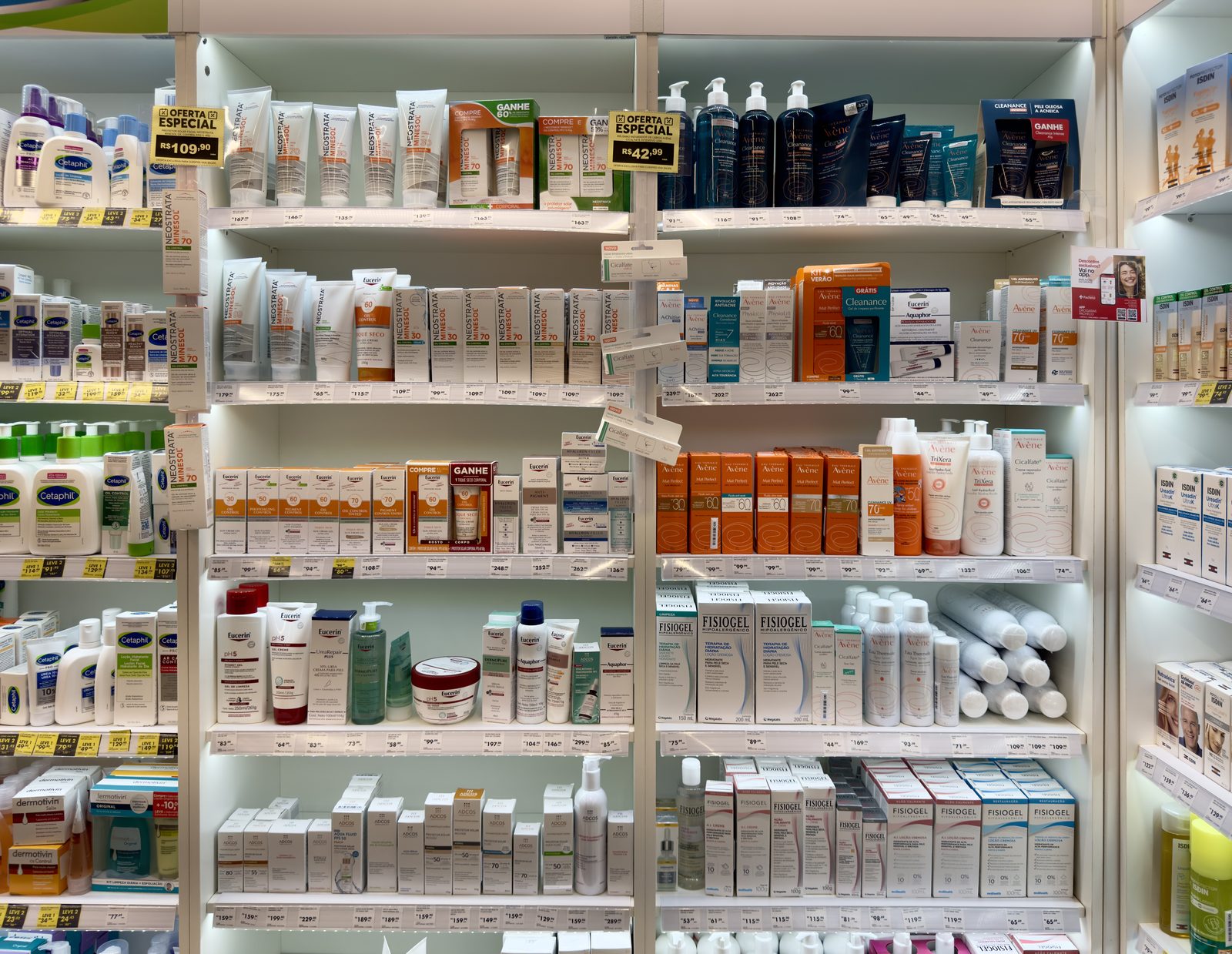
The beauty industry has noticed. Walk through any UK pharmacy in 2026 and you’ll find a shelf of menopause skincare that barely existed six years ago: serums “formulated for hormonal skin”, creams with a pale pink M on the box, most of them priced £35 to £60. The skin changes are real and measurable. Whether those products are doing anything a £12 moisturiser wouldn’t is a different question, and the honest answer will annoy several marketing departments.
What oestrogen was quietly doing for your skin
Oestrogen receptors sit all over the skin – in the cells that build collagen, the ones that hold moisture, the follicles that grow hair. While oestrogen is circulating, it keeps fibroblasts producing collagen, supports the fats that hold the skin barrier together, and helps the dermis hang on to water. It’s a maintenance contract you never see until it lapses.
When levels fall through perimenopause and beyond, the effects arrive on several fronts at once. Skin gets drier, because it loses both oil production and water-holding capacity. It gets thinner and less elastic as the collagen goes. Wounds heal more slowly. Some women get a second round of acne in their late forties, thanks to the changing ratio of oestrogen to androgens; others develop itching – sometimes a crawling sensation with the unlovely medical name of formication – that shows up in bed at night and drives them slightly mad.
This is common, not niche. A review in Clinical and Experimental Dermatology notes that as many as 64% of women attending menopause clinics report skin problems. And yet skin barely features in most NHS menopause conversations, which understandably focus on hot flushes, sleep and mood. Women end up taking the skin questions to the beauty counter instead. The beauty counter has been ready for them.
“Menopause skincare” is a marketing category, not a formula
Here’s the part the pink-M brands would rather you didn’t dwell on: there is no regulated definition of menopause skincare. None. A brand can print “developed for menopausal skin” on any moisturiser it likes. No ingredient threshold, no required trial, no standard to meet beyond ordinary cosmetics law.
Flip the boxes over and the ingredient lists confirm it. The menopause ranges are built from the same handful of workhorses as everything else in the aisle – glycerin, hyaluronic acid, ceramides, niacinamide, peptides, the odd plant oestrogen-mimic with thin evidence behind it. Good ingredients, mostly. But they’re the same ones sitting in products at a third of the price, without the M on the box, two shelves down.
I did the comparison on a recent pharmacy trip, reading glasses out, and it was almost funny. A £44 menopause night cream led with glycerin, shea butter and niacinamide; the £11 own-brand tub next to it led with glycerin, shea butter and niacinamide. The menopause version had a nicer jar, a botanical extract too far down the list to matter, and a leaflet about “your journey”. The £33 difference bought the leaflet.
Advertising watchers have a name for the broader trend: menopause-washing, the practice of relabelling ordinary products for a newly lucrative audience. Skincare is its natural habitat, because the customer is experiencing real changes, getting little guidance from anywhere official, and standing in front of a shelf that claims to understand her. It’s the same mechanism we’ve written about with cortisol face – take a genuine physiological process, then sell far past what the evidence supports.
None of this means the products are bad. Most are perfectly decent moisturisers. It means the premium is for the label, not the chemistry.
The price gap, product by product
Claims are easy to make in the abstract, so here are real shelves. Prices drift with offers, but the pattern doesn’t.
| Menopause-branded option | What’s doing the work | Unbranded equivalent | Typical saving |
|---|---|---|---|
| Vichy Neovadiol day cream, around £32 | Glycerin, shea butter, niacinamide | CeraVe Moisturising Cream, around £13 for a much bigger tub – glycerin, ceramides, no fragrance | About £19, and the tub lasts months longer |
| No7 Menopause Skincare serum, around £25 | Niacinamide-led, with hyaluronic acid | The Ordinary Niacinamide 10% + Zinc, around £6 | About £19 |
| A £45 “meno” night cream | Glycerin, shea butter, niacinamide, a botanical too far down the list to matter | Boots or Superdrug own-brand ceramide night cream, £10 to £12 | £33 or so |
| Collagen drink subscription, £30 to £60 a month | Hydrolysed collagen peptides, digested like any other protein | Eating enough protein, which you were hopefully doing anyway | The entire subscription |
One exception deserves naming. Emepelle, an American brand sold through UK skin clinics, is built around MEP, a non-hormonal molecule designed to act on the skin’s own oestrogen receptors. It’s the one product on the shelf actually engineered for oestrogen-deficient skin rather than relabelled for it. But it costs around £130 a bottle, and the published evidence so far is small and early. Interesting science; expensive bet.
What actually helps a post-oestrogen skin barrier
The dermatology advice for menopausal skin is unglamorous and consistent, and the British Association of Dermatologists’ patient hub is a better guide than any brand website. It comes down to four moves.
Swap the foaming cleanser for a cream or lotion one. The stripped, squeaky feeling you tolerated at 30 is an insult to a barrier that’s now short on lipids. A gentle cleanser from any pharmacy own-brand does this job for under a fiver.
Moisturise more heavily than feels natural, with the boring humectants – glycerin, hyaluronic acid – plus ceramides or urea if dryness is winning. The tubs that dermatologists actually name in clinic are mostly under £15 in Boots. If nights are bad, a heavier occlusive layer on top is legitimate; the logic is the same one behind slugging, minus the TikTok theatre.
Keep – or start – a retinoid. It’s the best-evidenced topical for rebuilding collagen, menopause or not. Skin that’s become thinner and drier may not tolerate the concentration it used to, so drop the strength, buffer it with moisturiser, or use it twice a week rather than nightly. If even that stings, gentler routes like bakuchiol or barrier-first ingredients such as ectoin are reasonable substitutes, if slower.
And wear SPF every day you leave the house. Ultraviolet light degrades the very collagen you’re now losing faster; sunscreen is the cheapest collagen strategy that exists. (And the SPF baked into a moisturiser usually isn’t enough on its own – we’ve tested that question.) It’s not exciting. It works.
The acne nobody warned you about
One change catches women completely off guard: spots. Perimenopausal acne is common enough that dermatologists treat it as its own presentation, and it feels like a practical joke – dry, sensitive skin on the cheeks and a crop of deep, sore breakouts along the jaw in the same week. The cause is relative, not absolute: oestrogen falls faster than androgens, and the androgens left in charge push oil production in the lower face.
The teenage playbook is exactly wrong here. Harsh foaming washes and 10% benzoyl peroxide will flatten a barrier that’s already struggling. What tends to work is the gentle-but-persistent approach: azelaic acid (which also handles the redness that often tags along), a low-strength retinoid doing double duty on spots and collagen, and a light, non-greasy moisturiser rather than none at all.
If it’s deep, painful and hormonal-looking, a GP visit beats six months of trial and error in the skincare aisle. Prescription options exist, some of them hormonal, and jawline acne in your late forties is a textbook reason to use them.
Below the jawline: the skin nobody markets to
The face gets the pink boxes, but oestrogen loss is a full-body event. Shins, forearms and backs get dry and itchy – often first, often worst – because body skin starts with fewer oil glands to lose. The fix is cheaper than anything facial: a pump bottle of urea or glycerin body lotion by the bed, applied to damp skin after showers, and turning the shower temperature down a notch. Ten-minute scalding showers are a moisture tax your skin can no longer afford.
Scalps thin out too. Around half of women notice some hair thinning after menopause, and while that’s a subject for another article, the short version is that the evidence-backed options (minoxidil, mainly) live in the pharmacy, not in £40 “densifying” shampoos.
And a word for hands and neck, the two places that broadcast skin age most reliably: everything above applies to them. Retinoid leftovers rubbed into the backs of the hands, SPF on the neck. Free, takes eight seconds, and does more than any dedicated neck cream you’ll ever be sold.
One more overlooked spot: eyes and lips. Both lose volume and moisture on the same schedule as everything else, and both respond to the cheap approach – a bland balm reapplied often beats a £38 “menopause lip treatment”, and the eye cream question has the same answer it’s always had, which is that your regular moisturiser almost certainly does the job.
The oestrogen question nobody at the beauty counter will answer
The most effective menopause skincare intervention on record isn’t a cream at all. Studies of HRT have shown measurable increases in skin collagen and dermal thickness within months of starting oestrogen – effects no cosmetic has ever demonstrated at anything like that scale. Skin, in effect, gets some of its maintenance contract renewed.
Two important brakes on that sentence. First, no UK guideline recommends starting HRT for your skin alone; it’s a medical decision about flushes, sleep, mood, bones and personal risk, taken with a GP, and the NHS menopause pages set out the trade-offs properly. Second, the topical oestrogen creams prescribed for other symptoms aren’t licensed as face products in the UK, and the “phytoestrogen” serums sold over the counter carry a fraction of the effect with a fraction of the evidence.
But if you’re already weighing HRT up for the standard reasons, it’s worth knowing the skin data points the way it does. It’s the one place where the phrase “hormonal skincare” means something concrete. Just be wary of the private clinics now advertising HRT with before-and-after face photos; a prescription decision deserves better evidence than a lighting change.
Where your money is wasted
The £45 menopause-branded moisturiser, for the reasons above. Buy the £12 ceramide one and put the difference towards literally anything else.
Collagen drinks are the other big menopause seller, and the evidence remains thin and industry-funded – small trials, subjective endpoints, effects that hover around the edge of detectability. Swallowed collagen is digested like any other protein; your body doesn’t courier it to your cheekbones. If you enjoy them, fine, but at £30 to £60 a month they’re a subscription to optimism, much the same economics as the £97 greens pouch. (Supplements aren’t all hopeless in midlife – the case for creatine in women over 40 is far stronger than anything in the collagen aisle.)
Facial tools, LED masks and “meno-facials” round out the category. The LED evidence is modest but real for some uses; the £900 salon packages built around it are not. And nothing sold as “balancing your hormones through the skin” deserves your card details.
Four claims on the box, translated
“Balances hormones.” No cream can. Cosmetics aren’t permitted systemic hormonal effects – anything that had them would be regulated as a medicine – so the phrase is legally vetted mood music.
“Clinically proven.” Proven against what? Most of the trials behind this line are small, unpublished, and compare the cream with nothing at all. Moisturised skin reliably beats unmoisturised skin. That’s a win for moisturiser, not for the M on the box.
“With phytoestrogens.” Plant compounds that bind weakly to oestrogen receptors, applied at cosmetic concentrations to skin they mostly can’t get through. The evidence they change collagen in a real face is somewhere between thin and absent.
“Boosts collagen by 78%.” In a dish, or by questionnaire. Percentages that precise almost never come from controlled human trials – and when they do, the brand puts the paper on the website, not an asterisk on the box.
A note for the mid-forties reader
The cliff doesn’t send a calendar invite. Perimenopause commonly starts in the mid-forties, sometimes earlier, and the skin changes creep in years before the last period – which is why the smart money starts the boring routine early. Barrier care and daily SPF pay in advance, and retinoid tolerance is far easier to build at 44 than at 54. We’ve covered that earlier stage separately in our perimenopause skincare guide; the products overlap almost entirely, which rather proves the point of this article.
A workable routine for about £30
Gentle cream cleanser, £4 to £6. A glycerin-and-ceramide moisturiser used morning and night, £10 to £14. A basic retinol or retinal a few nights a week, £8 to £15 from the budget actives brands. A facial SPF you’ll actually wear, £8 to £12. That’s the entire evidence-backed core, and it undercuts a single pink-M serum.
Split it sensibly across the day rather than layering everything at once. Morning is cleanser (or just water, if skin is behaving), moisturiser, SPF – three minutes, done. Evening is cleanser, then either the retinoid or a plain moisturising night, alternating until your skin tells you it can handle more. That’s it. Anyone whose routine needs a shelf of its own is doing the industry’s work for it.
Give it eight to twelve weeks before judging. Collagen remodelling is slow; the dryness should improve within days, the texture takes a season. And if you already own half of this in non-menopause packaging, you’re done shopping – the ingredients don’t know how old you are.
When it’s more than dryness
Some midlife skin changes deserve a GP rather than a new serum. Rosacea often flares or first appears around menopause and has proper prescription treatments. Persistent itch, rashes, or the crawling-skin sensation mentioned earlier are worth raising in a menopause review rather than suffering through. And any new or changing mole follows the usual rule: get it looked at, quickly.
The frustrating truth about menopause skincare in 2026 is that the biology is dramatic and the best response is mundane: gentler washing, heavier moisturiser, a retinoid, sunscreen, and an honest conversation about HRT if the wider symptoms warrant one. The industry would prefer the answer cost £58 and smelled of rose. It doesn’t. The same test sorts the gadgets from the evidence, which is why it is worth reading what LED face masks actually do before anything gets added to a basket.
Skincare is one half of the menopause shelf. The other half, the tubs and gummies, gets the same treatment in our guide to menopause supplements: the four herbs with trials behind them, the 50% placebo problem, and where the money should go instead.
So here’s the question worth taking to your own bathroom shelf: how much of what’s on it was chosen for the ingredients, and how much for the pink M – and what would you do with the £40 a month you’d claw back?
Related reading: Our CoolSculpting review for UK readers.
A newer option appearing in UK clinics and serums is PDRN – we looked at what PDRN skincare does and whether it is worth the price.