
20,980 Diagnoses in a Year: The Skin Cancer Signs That Turn Up After Summer – And Why the Mole Apps Miss Them in 2026
Twenty thousand, nine hundred and eighty. That’s how many people in the UK were told they had melanoma in a single year, according to analysis Cancer Research UK published this May – the highest figure ever recorded here. Rates have gone up by roughly 164% since the early nineties. And the projection for the late 2030s is around 26,500 cases a year, which isn’t a curve anyone is bending yet.
In This Article
- A record 20,980 diagnoses, and what that number actually hides
- The skin cancer signs worth memorising – and the letter people forget
- The melanoma that breaks the rules
- Mole-checking apps had one job
- The AI the NHS uses isn't the app on your phone
- £200 for a mole map: who it's actually for
- What actually happens when you take it to your GP
- The bits you can't see, and the person who has to look
- The sunscreen argument you've probably seen online
Late August is when the skin cancer signs stop being an abstraction. You come back from a fortnight somewhere hot, you catch yourself in the bathroom mirror, and there’s something on your shoulder that you’re fairly sure wasn’t doing that in June. Most of the time it’s nothing – a seborrhoeic keratosis, a bit of sun damage, a mole that’s darkened because you’ve been out in it. But the ones that matter are specific, they’re learnable in about four minutes, and a worrying number of people are outsourcing the job to a phone app that the evidence says can’t do it.
A record 20,980 diagnoses, and what that number actually hides
Record highs in cancer statistics are slippery things. Part of the rise is real – more UV exposure, more package holidays since the seventies, sunbeds, an ageing population carrying decades of accumulated damage. Part of it is better detection: we’re finding thin, early melanomas that would once have gone unnoticed. Both things are true at once, and anyone who tells you it’s purely one or the other is selling something.
What isn’t ambiguous is the preventable fraction. Cancer Research UK puts it at nearly nine in ten cases caused by UV from the sun or sunbeds. That’s an unusually high number for any cancer.
The other detail worth knowing is where melanoma turns up, because it isn’t random. In men it’s most often on the back or trunk. In women, the legs. Those are exactly the two areas people are worst at checking – the back because you physically can’t see it, the legs because most of us glance at them without really looking. Faces get scrutinised daily. Backs get ignored for years.
The skin cancer signs worth memorising – and the letter people forget
The ABCDE checklist is what your GP will run through, and it’s worth knowing before you get there rather than after.
A – Asymmetry. Draw an imaginary line through the middle. Do the two halves match? Ordinary moles usually do.
B – Border. Ragged, notched, blurred or scalloped edges are the concern. Benign moles tend to have a clean boundary.
C – Colour. More than one shade in the same lesion – brown with black, or patches of pink, grey, white or blue-ish tones.
D – Diameter. Larger than about 6mm, roughly the width of a pencil rubber. This one gets over-weighted; plenty of melanomas are found smaller.
E – Evolving. And this is the one that matters most, and the one everybody skips. A mole that’s changing – in size, shape, colour, or that’s started itching, crusting, bleeding or oozing – is more concerning than a mole that has simply always looked a bit odd. Stability is reassuring. Change is not.
If you take one thing from the list, take E. A dermatologist will always want to know how long it’s been like that. “It’s always been there” and “it turned up in April” are answers that lead to very different appointments.

The melanoma that breaks the rules
There’s an awkward gap in ABCDE. Nodular melanoma, a minority of cases but a disproportionate share of deaths, frequently ignores every letter of it. Nodular melanomas are often symmetrical. They often have a clean border. They’re often one uniform colour – and a decent proportion are pink or red rather than brown or black, which throws people completely, because the mental image most of us carry is “dark, irregular blotch”.
What they do instead is grow, fast, upwards. Dermatologists use a second shorthand for this: EFG. Elevated, Firm to the touch, and Growing continuously for more than a month. A raised, firm lump that’s changed noticeably over four to six weeks deserves an appointment regardless of what colour it is or how tidy its edges look. That’s the presentation people talk themselves out of, because it doesn’t match the pictures.
A red lump that keeps growing isn’t automatically a spot that’s taking its time.
Mole-checking apps had one job
Now for the contentious part. Consumer skin cancer apps – point your camera at a mole, get a risk score back – have been marketed hard in the UK, and the research on them is not good.
The most useful piece of work here is a systematic review published in The BMJ, which pooled nine studies covering six identifiable apps. One app, SkinScan, managed 0% sensitivity for melanoma in the study assessing it – it identified none of the melanomas presented to it. SkinVision, the better performer, came out at around 80% sensitivity and 78% specificity for malignant or premalignant lesions. The reviewers were blunt about the quality of the underlying studies: small, selectively recruited, with high rates of images the software couldn’t even evaluate. Their conclusion was that real-world performance would likely be worse than the published figures suggest.
Eighty percent sounds tolerable until you sit with it. One in five melanomas missed, in a disease where the difference between a 1mm lesion and a 4mm one is measured in years of life. And the false positives cause their own damage – a stream of worried people arriving at already-stretched dermatology clinics clutching a phone screenshot.
My view, and not everyone will share it: don’t use them. Not as a substitute for a GP, and not as reassurance either, because reassurance is precisely the failure mode. The app tells you it’s probably fine, you feel relieved, and you don’t book the appointment for another eight months. A free NHS appointment is a better product than a £5 monthly subscription that’s wrong a fifth of the time.

The AI the NHS uses isn’t the app on your phone
Two completely different things get conflated here, and the confusion works in the apps’ favour.
DERM, built by British company Skin Analytics, has been running inside NHS dermatology pathways for several years now – across 24 NHS hospitals, assessing more than 230,000 patients and picking up over 20,000 cancers. In 2025 it became the first such system conditionally recommended by NICE for NHS use, with a three-year window while further evidence is gathered.
But the difference between DERM and the thing on your phone isn’t the algorithm. It’s everything around it. DERM images are captured by trained NHS staff using a dermatoscope lens under controlled lighting, on patients who’ve already been referred by a GP because something looked wrong. It’s a triage tool operating inside a clinical pathway with dermatologist oversight. Your holiday snap of your own shoulder, taken at arm’s length in a hotel bathroom, is not the same input and won’t produce the same output.
The company announced a smartphone-compatible version, DERM Zero, this June, CE marked to Class III. Worth watching. Still not a consumer product you download.
£200 for a mole map: who it’s actually for
Private full-body mole mapping has become a growth industry, and the pitch is very good: high-resolution photographs of your entire skin surface, stored and compared year on year, so any new or changing lesion gets flagged. Prices in London run from roughly £150 for a single-lesion review to £400 or more for the full-body version with a follow-up.
For some people this is money well spent. If you’ve had a melanoma before, if a first-degree relative has, if you have more than about fifty moles, very fair skin that burns rather than tans, a history of blistering sunburns in childhood, or you’re on long-term immunosuppression – the surveillance is worth having, and dermatologists will often recommend it.
For everyone else? I think it’s oversold. The average-risk person with twelve unremarkable moles who books a £300 mole map after a scare has bought an afternoon of reassurance and a folder of photographs. The same money spread across four years of decent sunscreen, a wide-brimmed hat and actually staying out of the midday sun does considerably more for your odds. Prevention is dull and unglamorous and there’s no appointment to book, which is exactly why it loses to the shiny option. If you’re weighing up what you’re putting on your face each morning, our piece on SPF moisturiser versus proper sunscreen covers where the two-in-one products fall short.
What actually happens when you take it to your GP
The pathway is less daunting than people assume, and the fear of wasting somebody’s time is the single biggest reason lesions get left.
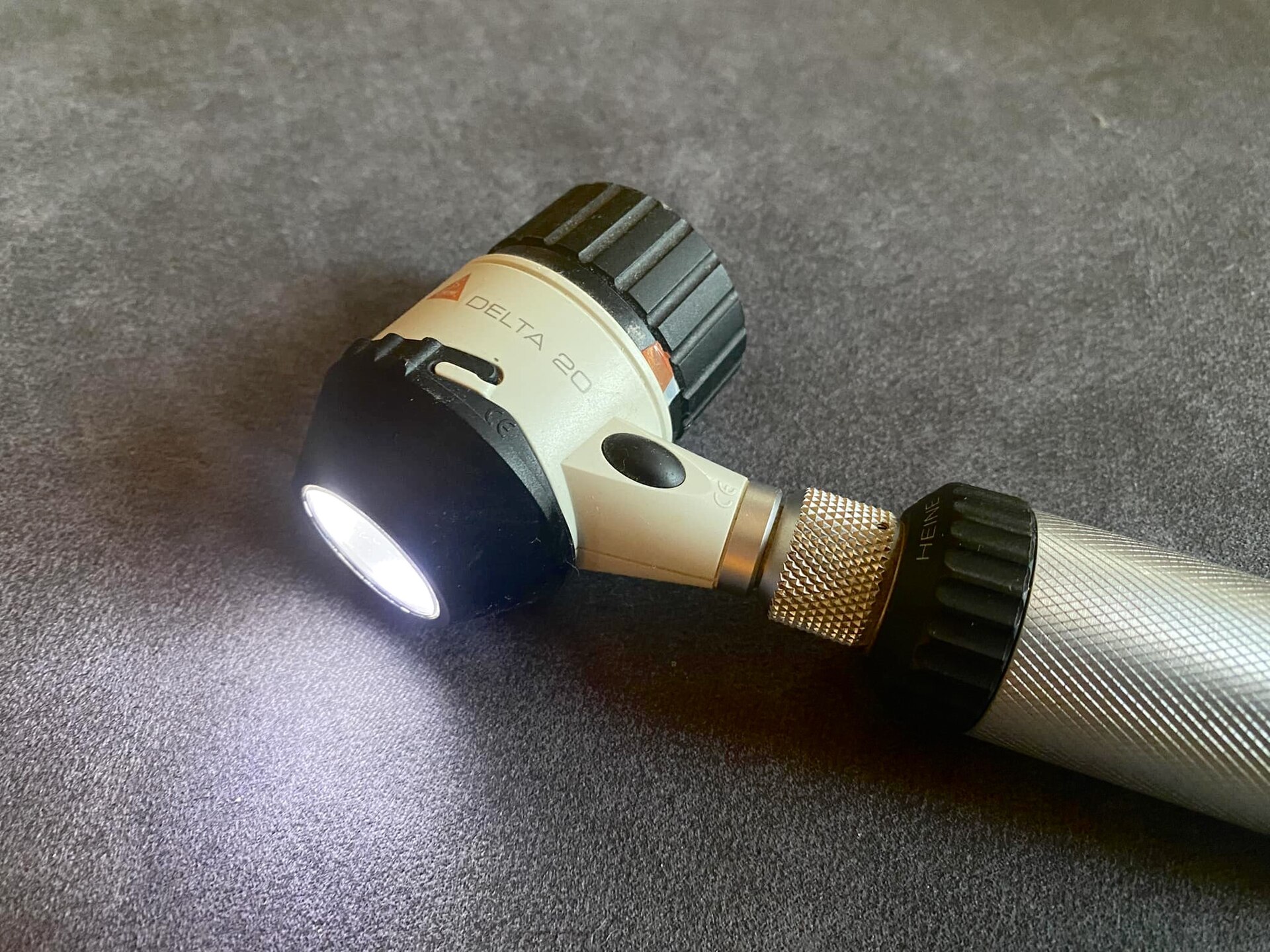
Your GP looks at it, usually with a dermatoscope. If it’s suspicious, you go onto the urgent suspected cancer pathway – the target is being seen by a specialist within two weeks, sitting inside the wider 28-day Faster Diagnosis Standard, which means a diagnosis or an all-clear within four weeks of referral. Increasingly the first “appointment” is a teledermatology one, where images go to a specialist rather than you going to a hospital.
Routine, non-urgent dermatology is a different and much bleaker story – waits of several months in a lot of English trusts. But that’s not the queue a suspicious mole joins. Worth knowing, because plenty of people see the routine waiting-list headlines and quietly decide there’s no point bothering.
Take a photo before you go, with something for scale next to it – a 5p coin does fine. If the lesion changes between booking and being seen, you’ve got evidence rather than a hazy memory.

The bits you can’t see, and the person who has to look
Self-examination gets recommended constantly and explained almost never, which is how you end up with people scrutinising their forearms every fortnight and never once looking at their own back.
Do it after a shower, in good light, once a month or so. Front and back in a full-length mirror. Arms raised, then the sides of your torso. Forearms and palms, then elbows – a hand mirror earns its keep here. Backs of the legs, soles of the feet, between the toes. Scalp, parted section by section, which is a faff on your own and much easier if someone else does it. Buttocks and the backs of the thighs, same problem.
The back and the scalp are where this falls apart solo. Partners, housemates, the person who cuts your hair – hairdressers spot things on scalps surprisingly often, since they’re the only people looking at that part of you in good light every six weeks. It’s not a medical examination. It’s someone telling you whether there’s anything up there that wasn’t there last time.
Two more places people skip entirely: under the nails, where a dark streak that’s new or widening needs checking, and the soles of the feet. Acral melanoma is rarer, but it’s diagnosed later precisely because nobody thinks to look.
The sunscreen argument you’ve probably seen online
Briefly, because it comes up every summer and it’s nonsense. The claim that sunscreen “blocks vitamin D” and therefore causes more harm than good doesn’t survive contact with how people actually apply it – which is patchily, in insufficient quantity, and not at all after the first two days of a holiday. If you’re worried about vitamin D in a British winter, take the supplement the NHS already recommends between October and March. That’s a separate problem with a separate solution.
The genuine gap in most people’s routine isn’t sunscreen versus vitamin D. It’s reapplication, and the bits everyone misses: ears, the back of the neck, the tops of the feet, the parting in your hair, and the strip of scalp that appears as your hairline moves. If you’ve been swimming outdoors all summer – and Britain’s lidos have had a record season – that’s several hours of reflected UV off water that most people don’t account for at all.
The beauty industry’s answer to sun damage tends to be a device or a serum. We’ve written before about how thin the evidence is behind LED face masks, and about the marketing around menopause-branded skincare. The pattern repeats: expensive corrective products sell far better than the cheap preventative one, which is a shame, since factor 50 costs about nine quid in Boots and works.
If something on your skin has changed since May – grown, darkened, started bleeding, developed a ragged edge, or simply looks different from everything else on you – book the appointment. Not the app. The appointment.
And if you got back from somewhere hot in the last few weeks and haven’t looked properly since, that’s a ten-minute job tonight with a mirror and a decent light. Most of what you find will be nothing. The whole point is knowing which bit isn’t.
When did you last get someone to look at your back properly – and would you actually notice if something up there had changed since last summer?