
Azelaic Acid for Rosacea: Why It’s Britain’s Quiet Summer Fix for Redness in 2026
Every June, dermatology clinics across Britain see a version of the same thing: a wave of people whose cheeks have started burning the moment the weather turns. The first proper run of warm days does it. The flush that was manageable in March suddenly sits high on the cheeks all afternoon, and the small spots that come with it refuse to settle. For the roughly one in twenty people worldwide who live with rosacea, summer is not so much a season as a provocation – and sunlight is the single most commonly reported trigger of the lot.
In This Article
- What azelaic acid for rosacea actually does to a flush
- The summer argument: an acid that doesn’t fear the sun
- Where it sits on the NHS treatment ladder
- How it compares with the other calming options
- The myths worth dropping
- How to use it without wrecking your barrier
- Who should skip it, and when to see a GP
Heat is only one of the things that sets rosacea off. Our guide to rosacea triggers ranks the rest, from wind and hot drinks to alcohol, using the largest patient survey there is.
Which is exactly why azelaic acid for rosacea has quietly become the ingredient a lot of British faces reach for between May and September. It is not new, it is not glamorous, and it has never had a viral moment the way retinol or vitamin C did. But it does something most of the trend-driven actives cannot: it calms an inflamed, reddened face without making that face any more frightened of the sun. In a climate where the problem is partly the daylight itself, that turns out to matter enormously.
This is not a ranked list of products to buy. It is a closer look at why one fairly unglamorous acid has earned its place in so many rosacea routines, what it genuinely does, what it cannot do, and how to use it without making your skin worse in the process.
What azelaic acid for rosacea actually does to a flush
Start with the mechanism, because it explains everything that follows. Azelaic acid is a dicarboxylic acid that occurs naturally in grains like wheat, rye and barley, and it is also produced on human skin by Malassezia yeast. Despite the word “acid”, it is not an exfoliating acid in the way glycolic or salicylic are. It does not strip the top layer of skin. It works on the biology of the flush itself.
Rosacea-prone skin overproduces a set of inflammatory signals. Two of the main culprits are an enzyme called kallikrein-5 (KLK5) and an antimicrobial peptide called cathelicidin, specifically a fragment known as LL-37. When KLK5 chops cathelicidin into LL-37, the skin reacts as though it is under attack: blood vessels dilate, redness rises, and inflammation follows. Research published in the Journal of Investigative Dermatology found that treating rosacea with azelaic acid 15% gel reduced both KLK5 and cathelicidin activity in patients’ skin. On top of that, azelaic acid dampens the production of reactive oxygen species by inhibiting an enzyme in neutrophils called NADPH oxidase. In plainer terms, it turns down two of the alarms that keep a rosacea face inflamed.
That anti-inflammatory action is the reason it works on the part of rosacea that bothers people most – the papules and pustules, the small inflamed bumps – rather than just masking redness. It is treating part of the cause, not painting over it. It also has a mild effect on uneven tone and the brown marks that inflamed spots leave behind, which is a useful bonus for anyone whose rosacea overlaps with pigmentation, though it is not the headline act, and a dedicated ingredient like tranexamic acid does more for stubborn pigmentation.
The summer argument: an acid that doesn’t fear the sun
Here is the part that makes azelaic acid genuinely useful in a British summer, and it is the part most people get wrong. The flagship anti-ageing actives – retinoids and the alpha-hydroxy acids like glycolic – all increase the skin’s sensitivity to UV light. You are told to use them at night and to be religious with sunscreen for a reason. For someone with rosacea, whose skin is already being set off by sun, layering on an ingredient that makes UV exposure worse is close to self-sabotage.
Azelaic acid does not do this. It is photostable and it does not raise the skin’s photosensitivity, which means it can be used in the morning without turning your face into a UV target. For a condition where the British Skin Foundation lists sun exposure, heat and hot weather among the leading triggers, an active you can wear in daylight – on the days the trigger is at its strongest – is close to ideal. You still need sunscreen, and we will come back to why that is not optional, but the active itself is not working against you.
This is also why summer is, counter-intuitively, a sensible time to start it rather than a time to put your routine on pause. A lot of people quietly drop their actives in hot weather because everything stings and the sun feels punishing. Azelaic acid is one of the few worth keeping through the warm months, precisely because the season is when a rosacea face needs the help most.
If your skin can tolerate a bit more, it’s worth knowing what else is on the shelf for brightening and pigmentation – our roundup of the best vitamin C serums for sensitive skin covers which formulas are gentle enough to sit alongside azelaic acid rather than fight it.
Where it sits on the NHS treatment ladder
Azelaic acid is not a wellness fad that escaped the lab. It is recognised UK clinical guidance. The National Institute for Health and Care Excellence (NICE) lists topical azelaic acid as a first-line treatment for mild-to-moderate papulopustular rosacea, alongside topical metronidazole and topical ivermectin. In other words, a GP can and does prescribe it, and the evidence base is the reason it sits on that first rung rather than buried further down the list.
The standard foundation underneath all of that, NICE notes, is unglamorous but essential: gentle skincare and trigger management – keeping away from the heat, alcohol, spicy food, hot drinks and harsh products that set the skin off. The cream is one part of a plan, not a substitute for the rest of it.
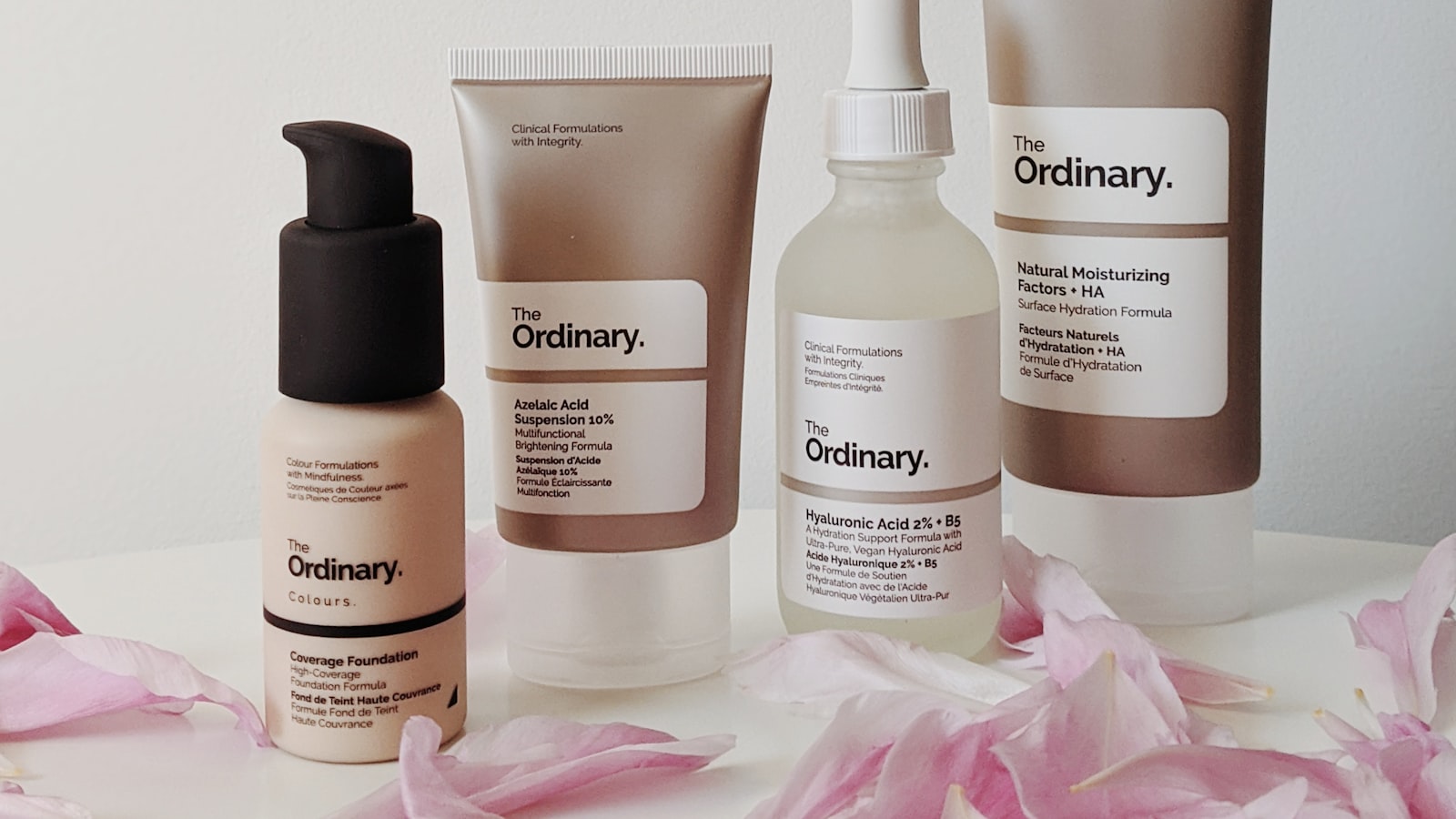
On prescription in the UK, azelaic acid usually appears as Finacea, a 15% gel, or Skinoren, a 20% cream. Over the counter, you will find it at up to 10% in serums and creams from brands like The Ordinary, Paula’s Choice and The Inkey List, typically at a fraction of the price of a private dermatology visit. The lower over-the-counter strength is not a gimmick: studies support efficacy at 10%, even if the prescription 15% gel is the more heavily trialled concentration.
It is worth being honest about the comparisons, though. A network meta-analysis found that ivermectin 1% cream produced slightly better results than azelaic acid 15% gel and metronidazole at twelve weeks, while other analyses found the three broadly comparable. So azelaic acid is not necessarily the single most powerful option a dermatologist has. What it offers is a strong, well-tolerated, sun-friendly first move that you can buy without a prescription – and for someone managing the condition at home, that combination is hard to beat.
How it compares with the other calming options
Azelaic acid does not exist in a vacuum, and it is fair to ask why you would pick it over the other ingredients marketed at red, reactive skin. Niacinamide is the gentlest of the bunch and helps with barrier support and tone, but the evidence for it calming true rosacea is thinner than the marketing suggests; it is a sensible supporting player rather than the main treatment. Plant-derived soothers such as centella and madecassoside, and the increasingly popular heartleaf extracts, can take the edge off visible redness and feel lovely on an angry face, but they comfort rather than treat – they are not going to clear inflammatory bumps the way azelaic acid can.
Among the genuinely active options, metronidazole is the long-standing prescription cream and, like azelaic acid, it is photostable and well tolerated. Ivermectin is the newer prescription favourite and works partly by reducing Demodex mites on the skin, which is why it often edges ahead in head-to-head trials. The honest summary is that azelaic acid is the strongest active you can buy without a prescription, it pairs well with the prescription options rather than competing with them, and it has the seasonal advantage none of the over-the-counter soothers can match.
The myths worth dropping
A few things get repeated about this ingredient that are simply not true, and they put people off something that would help them.
The first is that the tingling means it is working, or worse, that it means you are “purging”. Azelaic acid commonly causes a mild stinging or tingling for the first week or two, particularly on already-reactive skin. That is a tolerance issue, not a sign of deep cleansing, and it usually fades as the skin adjusts. If it is burning rather than tingling, you are using too much too fast, and the fix is to pull back, not to push through.
The second myth is that 10% is pointless and only prescription strength does anything. The clinical data does not support that. The 10% over-the-counter formulas have real evidence behind them, and for a lot of people they are enough on their own. Jumping straight to begging your GP for the 15% gel is not always necessary, and starting lower is often kinder to reactive skin anyway.
The third, and the most important, is the belief that azelaic acid will get rid of the visible little broken veins on your cheeks and nose. It will not. Those thread veins – telangiectasia – are fixed, dilated blood vessels, and no cream removes them. They respond to laser or intense pulsed light, treatments that the NHS very rarely funds for rosacea and which you would usually pay for privately. Azelaic acid calms the redness and the bumps; it does not erase established vessels. Anyone selling it to you as a cure for those is overpromising, and you should treat that promise as a reason to shop elsewhere.
How to use it without wrecking your barrier
The most common mistake is treating azelaic acid like a hero active that deserves a stack of friends. It does not. Rosacea-prone skin does best with a short routine, and the more actives you pile on, the more likely you are to trigger the exact inflammation you are trying to settle.
Keep it simple. A gentle, non-foaming cleanser, the azelaic acid, a plain moisturiser to support the barrier, and – in daylight – a high-factor sunscreen. That is a complete routine. Start the acid once a day, or even every other day if your skin is touchy, and build up to morning and evening over a few weeks. A pea-sized amount for the whole face is plenty; more does not work faster, it just stings.
Do not layer it on the same night as a strong retinoid or a glycolic acid if your skin is reactive – alternate them on different days instead. And do not bother chasing the latest barrier-repair serum to “fix” the dryness; a basic ceramide moisturiser does the job at a fraction of the cost. If your skin reacts to almost everything, it is worth understanding how a compromised skin barrier amplifies every trigger before you add anything new at all.
The sunscreen is the non-negotiable part. Azelaic acid manages the inflammation, but sun is still the trigger driving the whole cycle, so an SPF 30 or 50 every morning is doing at least half the work. Skipping it and relying on the acid alone is like bailing out a boat without plugging the hole. A gentle mineral or hybrid sunscreen tends to suit reactive skin better than a heavy chemical one, and it is worth choosing from the British sunscreen brands formulated for sensitive faces, but the best sunscreen is the one you will actually wear every day.
Who should skip it, and when to see a GP
Azelaic acid suits most people with mild-to-moderate redness and inflammatory bumps, and it has one quiet advantage worth flagging: it is generally considered safe to use in pregnancy, when retinoids are off the table – though it is still sensible to clear any pregnancy skincare with your GP or midwife first.
It is not the answer for everything, though. If your rosacea mainly shows up as flushing and visible veins with very few bumps, a cream will underwhelm you, and a conversation about laser or IPL is the more honest route. If your eyes are gritty, dry or irritated, you may have ocular rosacea, which needs a GP or optometrist rather than a face cream. And if over-the-counter azelaic acid does nothing after a couple of months of consistent use, that is your cue to see a GP about prescription options rather than keep buying ever-stronger serums online in the hope that the next one is different.
For most British faces dreading the summer flush, though, it remains one of the most sensible, least hyped things you can put on your skin. So before you spend another July hiding from the daylight and blaming your complexion: is the redness you have been treating as a cosmetic nuisance actually rosacea that deserves a proper plan?
If you’re weighing up gadgets alongside actives, our verdict on the best LED face masks in the UK covers which are worth the money and which are glorified mood lighting.
For skin that needs repair as well as calming, see our guide to PDRN skincare in the UK – the salmon DNA ingredient turning up in serums this year.
Dealing with congestion rather than redness? Salicylic acid is the better-suited acid for blackheads.