
Best Smart Thermostat Under £150 for October 2026: Gas Goes Up 8% on the 1st, the £110 Wiser That Beats a £219 Nest – And the Subscription Catch on the Box Everyone Buys
Gas is going up 8% on 1 October. Not the headline 4% figure Ofgem put out on 26 August – that’s the blended number for a dual-fuel home, softened by the government taking VAT off electricity. Strip that out and the fuel most British homes actually heat with is climbing by eight pence in the pound, just as the boilers come back on. So the question I’ve been asked four times in a fortnight is a fair one: what’s the best smart thermostat under £150, and does the cheap end of the market actually cut the bill or just put the heating on your phone?
In This Article
- What the October price cap actually changes
- The saving figure on every box is the wrong one to trust
- The four under £150, and what each one gets wrong
- Why the £219 Nest isn't on the list
- The Boiler Plus detail that might mean you already have one
- The settings that do the saving, whichever box you buy
- Where a thermostat fits with the rest of the winter kit
- What I'd actually buy this week
The short version: yes, £150 is enough, and the kit I’d buy at that price isn’t the one on the bus shelter adverts.
The longer version needs some numbers, because the smart thermostat market has quietly rearranged itself since last winter. Google has stopped launching new Nest models in the UK. Tado replaced its V3+ range with an X range that isn’t compatible with the old one. Hive split its thermostat into a full-size and a Mini. And two of the four big names now want a subscription for the features that made them clever in the first place. That last bit matters more than the hardware.
What the October price cap actually changes
Ofgem’s announcement moves the typical dual-fuel bill from £1,663 to £1,723 a year for the quarter running 1 October to 31 December. Sixty quid. Five pounds a month. On paper that’s not the kind of number that sends anyone to Screwfix.
But the split underneath is lopsided. Electricity is broadly flat because the VAT came off. Gas is up 8%, and Ofgem’s own wording is that “most of the increase in the price cap is driven by higher gas costs”. If you heat with a combi boiler, which is roughly four in five UK homes, the bit of your bill that’s rising is the bit a thermostat controls. A home that spends £900 a year on gas is looking at £70 or so extra before it turns anything on.
Ofgem also points out that fixed tariffs are sitting £100 or more below the October cap. Do that first. It’s free. Then look at the thermostat, because the two savings stack.
The saving figure on every box is the wrong one to trust
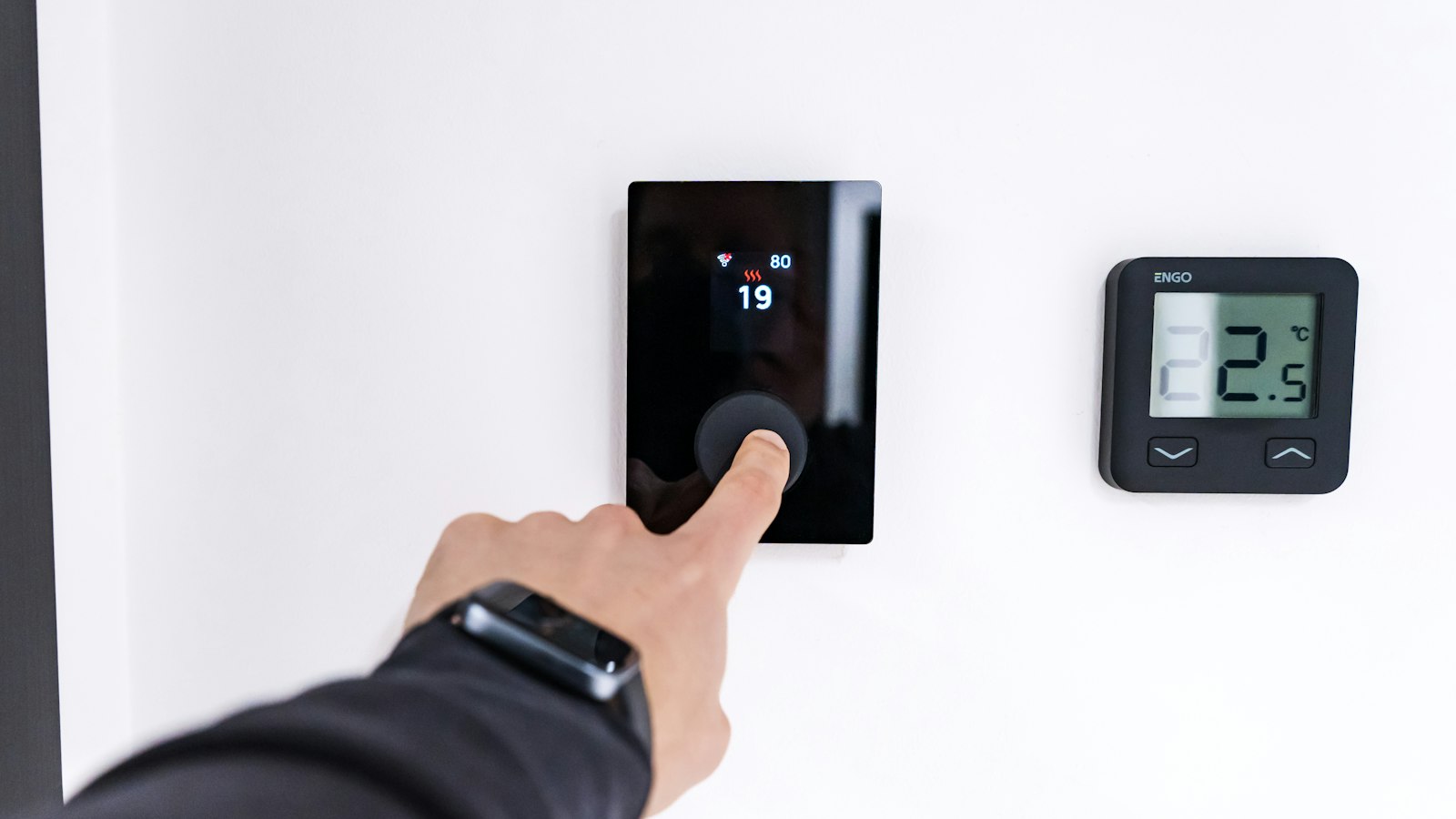
Tado says its customers save 22% a year on heating. Google says Nest cuts bills by up to 16%. The number you’ll see quoted from the Energy Saving Trust is more modest – somewhere between £70 and £150 a year for a typical home, depending on what you had before.
Here’s what nobody prints on the box: those savings come almost entirely from one thing, which is not heating the house when nobody’s in it. A smart thermostat does that with geofencing (it notices your phone has left) and with a schedule you’ll actually stick to because it’s on an app rather than a fiddly dial behind the kitchen door. If you already run a tight schedule on a £20 Honeywell timer and you’re home all day, your saving will be small. If you’ve got a 1990s dial thermostat set to 21 and a boiler that runs from 6am to 11pm regardless, you’re the person the 22% figure was written for.
And there’s a second saving that the marketing skips because it’s hard to explain in a strapline. Some thermostats talk to the boiler in a language called OpenTherm, which lets them turn the flame down rather than just on and off. A boiler that runs at 60% for an hour uses less gas than one that blasts at 100% for 20 minutes, cuts out, then blasts again. This is called modulation, and on a modern condensing combi it’s worth real money. Two of the four kits below do it. The most expensive one doesn’t.
The four under £150, and what each one gets wrong
I’ve kept this to kits that get a boiler-only home up and running for £150 or less, at the prices I could find in the second week of September. Hot water control is included on all four. Radiator valves for room-by-room zoning are extra on every system, and they’re where the real cost of smart heating hides – budget £50 to £80 per radiator whichever brand you pick.
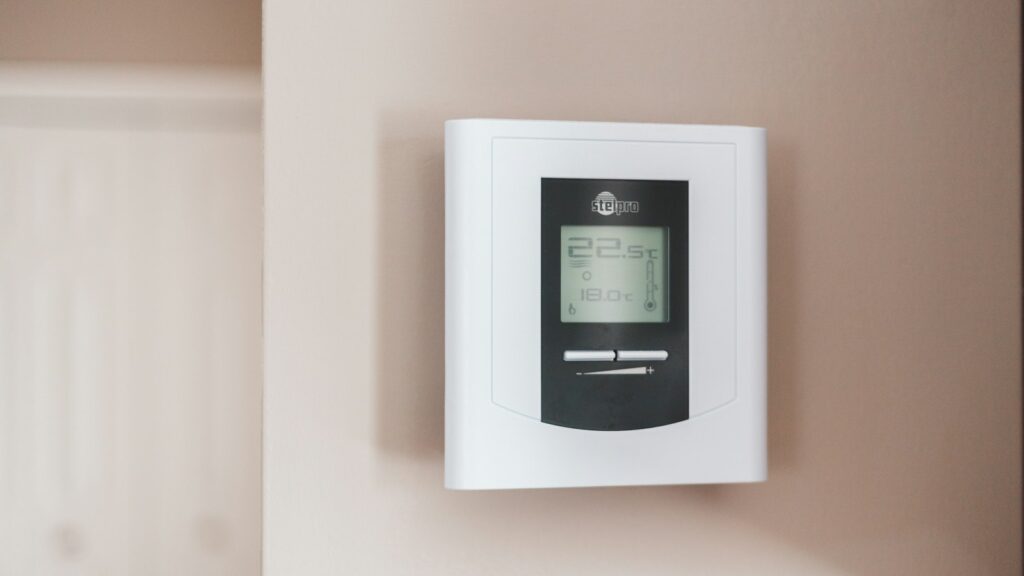
Drayton Wiser Thermostat Kit 1 – about £110 to £140. This is the one. Drayton is the Schneider Electric brand that’s been making boiler controls since before the word “smart” got attached to anything, and the Wiser kit has quietly become the best value system in the country. The hub and thermostat are in the box together, it supports OpenTherm modulation, and there’s no subscription for anything. Open-window detection, eco mode, away mode and the schedule are all free and stay free. The thermostat itself looks like a white plastic pebble, the app is functional rather than lovely, and it doesn’t do the trick of learning your habits the way Nest does. But it does everything that actually saves gas, and it charges you once. If your boiler was fitted after 2018 it almost certainly has an OpenTherm connection; check the manual before you order.
Tado Smart Thermostat X Starter Kit – £159.99 RRP, dipping to £129.99. Tado’s X kit is the best-reviewed thermostat in Britain right now and it’s easy to see why. Setup is a 30-minute DIY job, it supports Thread and Matter so it’ll work with whatever smart home platform you end up on, and the app is the best of the bunch. Two catches. First, tado has moved geofencing and open-window detection behind a subscription. On the older V3+ range it was called Auto-Assist and priced at €3.99 a month or €29.99 a year, which works out at about £25 to £30 annually in the UK; on the X range the equivalent is called AI Assist. Without it, the app tells you you’ve left the house and asks you to turn the heating off yourself, which rather misses the point. Second, X kit doesn’t work with V3+ kit, so anyone with old tado radiator valves is starting from scratch. At £129.99 with the subscription factored in, you’re at £160 in year one and £30 every year after. Still good. Not the bargain it looks.
Hive Thermostat Mini – £79, plus a £70 hub if you don’t have one. Here’s the trap. The Mini is advertised at £79 and that’s a real price, but it needs a Hive Hub, and unless you already own Hive gear you don’t have one. Bundles vary by retailer and by week; the honest total for a new customer is about £149, which is the same money as the tado deal and more than the Wiser. For that you get a small, tidy thermostat that controls up to six zones, works well with Alexa and Google, and has the simplest scheduling screen of the four – my mother-in-law uses one and has never once phoned me about it. What it doesn’t do is OpenTherm on most boilers, so it’s on-off control rather than modulation. And it lacks the physical boost button that the full-size £119 Hive Thermostat has, which sounds trivial until you’re stood in the hall at 6am in a dressing gown looking for your phone.
Tado Wireless Smart Thermostat V3+ – from about £129. The previous-generation tado, still on sale and still excellent. It has OpenTherm, Apple HomeKit support and the same DIY install as the X. The reason to buy it in 2026 is if you already own V3+ radiator valves or you find it on clearance for under £100. The reason not to is that it’s a dead-end platform; tado’s future is the X range, and the Auto-Assist subscription applies here too. I wouldn’t start a new system on it at full price.

Why the £219 Nest isn’t on the list
The Nest Learning Thermostat is still the best-looking object in this category, a brushed metal dial that makes everything else look like a fuse box. It’s also the one people ask about most, because it’s the one they’ve heard of.
Skip it. Google has said it won’t launch new Nest thermostats in the UK or Europe, blaming the tangle of heating standards on this side of the Atlantic. The 4th generation model that came out in the US never made it here. Older generations lost support in October 2025. The current UK model is still on sale and still gets updates, but you’d be paying £219 and up for a product line the manufacturer has publicly stopped investing in, and one that has no radiator zoning and no OpenTherm on most UK installs. It learns your routine beautifully. It also needs a professional to fit in most homes, which adds £100 or more to the bill.
Three years ago I’d have said buy the Nest and enjoy it. In 2026 it’s a lovely thing on a platform that’s winding down, and the Wiser does more for half the money.
The Boiler Plus detail that might mean you already have one
Since April 2018, anyone in England having a combi boiler replaced has had to fit one of four energy-saving measures alongside it: weather compensation, load compensation, flue gas heat recovery or a smart thermostat with automation and optimisation. The rules are called Boiler Plus, and installers mostly went for whichever option was cheapest on the day.
So before you spend anything, look at what’s on your wall. A surprising number of homes with a boiler fitted in the last eight years already have a Wiser, a Hive or a Honeywell T6R that the installer stuck up, connected and never explained. If there’s a white box with a temperature on it and a QR code on the back, download the app and see what happens. I did this for a friend in Reading last winter. She’d been using a £200 Wiser system as a manual dial for four years.

The settings that do the saving, whichever box you buy
The thermostat is a tool. The saving is a habit. Five things, in the order I’d do them, on the day it goes on the wall.
Set the daytime temperature to 19 and the overnight to 16. The 1 degree drop from 20 to 19 is the single biggest lever in the house; the figure commonly quoted from the Energy Saving Trust is around £90 a year for a typical home, and that’s before the thermostat does anything clever. Turn on geofencing, or if you’re paying tado’s subscription, the automatic version of it. Set the boiler flow temperature to 60 degrees or lower if you’ve got a combi and no hot water cylinder – this isn’t a thermostat setting but it’s the one that lets OpenTherm modulation actually work. Turn on open-window detection if your kit has it for free. And leave it alone for a fortnight before you start fiddling, because every one of these systems needs a week or two of data before its schedule is worth anything.
The last one’s the hardest. Everyone I know who says their smart thermostat didn’t save money reset the schedule in the first week because the house felt cold at 7am.
Where a thermostat fits with the rest of the winter kit
We’ve spent the last fortnight on the appliances Britain buys before the heating goes on, and a thermostat sits at the top of the list because it changes how much gas everything else uses. If you’ve already read our piece on the £35 electric blanket that costs 2p an hour to run, the logic is the same: heat the person, not the house, and let the thermostat drop the rest of the building a degree.
The heated clothes airer and the under-£100 air fryer both benefit from the VAT coming off electricity, which is why the case for shifting jobs from gas to electric has got stronger this month. And if you’ve been looking at column radiators for the front room, that’s exactly the room where a smart radiator valve pays for itself – a £60 valve lets you heat the one room you’re sat in and leave the rest at 16.
For the one-room approach in general, our snug room piece from Monday makes the same argument from the other direction. Close off the small room, heat the small room, let the thermostat handle the rest.
What I’d actually buy this week
Wiser Kit 1, at whatever the lowest price is between Screwfix, Toolstation and Amazon on the day you look. It’s the only one of the four that modulates the boiler, includes the hub, and never asks for another penny. It’s not the prettiest and the app won’t win awards. It’ll cut the gas bill, which is the job.
If the app matters to you, or you want Apple Home and Matter to work without a fight, the tado X at £129.99 is the better product – as long as you go in knowing the subscription is part of the price. Budget £160 for year one and don’t be cross about it in November.
The Hive Mini is fine if you already own a Hive hub. If you don’t, the £79 price is a shop window, not a bill.
And whichever you buy, fit it before 1 October rather than after. Not because the price of the thermostat changes – it won’t – but because the first cold fortnight is when the schedule gets built, and the 8% is already on the meter by then. Stuff’s smart thermostat guide updated this week reaches a similar conclusion on tado from a different starting point, if you want a second opinion before you order.
The bigger question for the winter after this one is whether the subscription model spreads. Tado has shown it can charge for geofencing and keep its top-of-the-market reviews. Hive already has a paid tier. If Drayton follows, the argument for the Wiser gets weaker and the argument for a £20 timer and a bit of discipline gets stronger. Which would you rather do – pay £30 a year for the thermostat to notice you’ve left, or remember to turn it off yourself?