
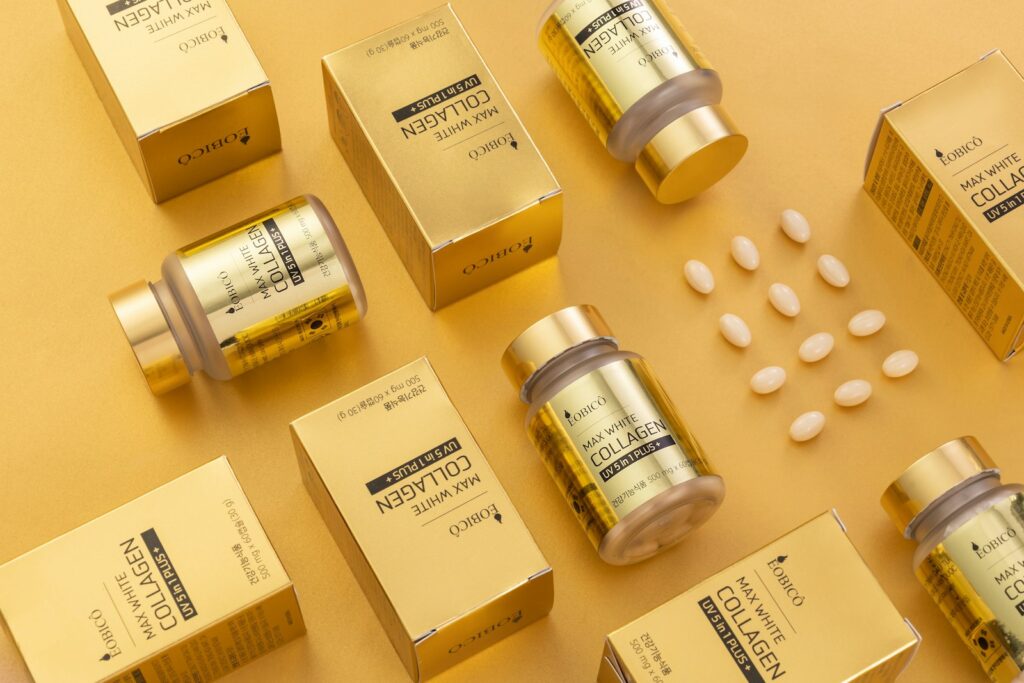
Do Collagen Supplements Work? 113 Trials Say Yes, the Independent Ones Say No – and the 4 People Who Should Actually Bother in 2026
Two reviews of the collagen evidence came out this year, and they don’t agree. One, from Anglia Ruskin University in June, pooled 113 trials and nearly 8,000 people and found collagen supplements improve skin elasticity and hydration and take the edge off osteoarthritis pain. The other, published in The American Journal of Medicine and picked up again by dermatologists in January, looked at 23 trials and found the benefit vanished the moment you stripped out studies paid for by the people selling the stuff. So do collagen supplements work? The answer depends on which pile of paper you trust, and on what you were hoping they’d do.
In This Article
- Do collagen supplements work? Depends who paid for the study
- What happens to a sachet after you swallow it
- The joints case is stronger than the skin case
- The ASA has already ruled on this, twice
- Who should actually bother
- Who should steer clear
- What the trials actually used – and what’s on the shelf
- The cheaper route to the same result
That’s an unsatisfying place to start. It’s also the only honest one.
Britain has quietly become one of the biggest collagen markets in Europe. The sachets are on the Boots shelf next to the vitamin D, the powders are in the Holland & Barrett window, and the liquid shots have their own aisle-end in Superdrug. A 14-day box of Absolute Collagen is £33.99, which is £2.43 a day, or roughly £890 a year if you take it every morning like the packet says. That’s not a trivial sum. And most of the people spending it have never read a single trial.
Do collagen supplements work? Depends who paid for the study
The 2025 paper by Seung-Kwon Myung and Yunseo Park is the one the sceptics quote, and it’s worth knowing what it actually found rather than the headline. Pooling all 23 randomised trials together, collagen did improve hydration, elasticity and wrinkle depth. The effect was there. Then the authors split the trials by funding source. In the studies with no money from a pharmaceutical or supplement company, the effect on every one of those three measures dropped to nothing. The same thing happened when they kept only the higher-quality trials. Their conclusion, which is stronger than most journal abstracts dare to be, was that there’s no clinical evidence to support collagen for skin ageing.
Dr Farah Moustafa, a dermatologist at Tufts, summed it up in January: the studies that back collagen were more likely to be low quality and industry-funded, and the high-quality independent ones found nothing.
The industry didn’t take that lying down. The Collagen Stewardship Alliance and the Gelatin Manufacturers of the World both went through the paper line by line and found real problems. Some studies had been filed as independent when they had clear commercial ties; at least one had been filed as industry-funded when it had no direct funding. Doses were misreported – one trial listed at 50g a day was closer to 5.5g. A 12-week study was written up as 16 weeks. Seventeen of the 23 trials were run in Asia at roughly 3g a day, which is a fraction of what a British sachet delivers. And the method for sorting trials into “high” and “low” quality was never published.
Those are fair hits. But they don’t make the underlying pattern go away. The trade bodies’ best counter-example, the de Miranda meta-analysis from 2021, is itself built largely on manufacturer-sponsored trials. Nobody in this argument has a stack of big, independent, well-run studies to point at, because nobody has funded them. That’s the actual finding.
What happens to a sachet after you swallow it
The marketing implies you drink collagen and it goes to your face. That isn’t how digestion works, and every dermatologist quoted on the subject says so.
Collagen is a protein. Your stomach and small intestine break it into amino acids and short chains called peptides, exactly as they would a chicken breast. Those get absorbed into the blood and used wherever the body needs them, which might be a fingernail, a tendon, or the lining of your gut. The idea that a hydrolysed collagen peptide preferentially heads for the dermis of your cheek is not supported by anything solid. What the more careful researchers argue instead is that certain peptides (glycine-proline-hydroxyproline is the usual suspect) survive digestion intact, turn up in the blood for a few hours, and may act as a signal that nudges fibroblasts to make more collagen of their own. That’s plausible. It’s also mostly demonstrated in cell cultures and mice.
Dr Tamara Griffiths, President of the British Association of Dermatologists, made a sharper point when the Anglia Ruskin review came out in February. The review claimed collagen improved hydration, which is measured in the outermost layer of skin. But skin roughness, which reflects the same layer and the same hydration, didn’t improve. If the sachet were doing what it’s supposed to, you’d expect both to move together. Her other complaint was that the trials almost never controlled for the things that actually drive skin ageing – sun, smoking, sleep, hormones – or for whether the volunteers were also using a moisturiser. When your placebo group is allowed to slap on Nivea every night, your hydration data isn’t telling you much.
Griffiths, it should be said, declared a shareholding in a skincare company and research money from Boots. Almost nobody in this field is clean.
The joints case is stronger than the skin case
Here’s where the 2026 umbrella review earns its keep. Its skin findings are the ones that got the press, but the more interesting result was in osteoarthritis. Across the pooled trials, people who took collagen for longer reported less pain and stiffness, and there were modest improvements in muscle mass and tendon structure. Professor Lee Smith at Anglia Ruskin, who co-authored it, was careful to call collagen “not a cure all” and to say the benefits were moderate. But moderate and real is more than most supplements can claim.
If I were picking a reason to spend £2.43 a day, sore knees at 55 would beat crow’s feet at 35 every time. The dermatology evidence is contested; the joint evidence is at least pointing in one direction.
The review also killed a claim the gym crowd has been repeating for a couple of years: that collagen speeds up recovery or reduces muscle soreness. It doesn’t. No meaningful effect on post-exercise recovery, none on soreness, none on the mechanical properties of tendons. If you’ve been stirring it into a post-run shake, save the money and put it towards creatine, which has a far better trial record and costs about a fifth as much.

The ASA has already ruled on this, twice
You don’t need to read a meta-analysis to know how thin the skin claims are. You can just read the advertising rulings.
In November 2023 the Advertising Standards Authority upheld a complaint against Kollo Health, a British collagen brand, over a Facebook ad calling its product the “secret to radiant, youthful-looking skin”. The ad promised improved elasticity, fewer fine lines, thicker hair, stronger nails and better joints. The ASA found the company’s evidence didn’t hold up – the trial it relied on hadn’t used a representative sample, and the product tested wasn’t even the same dose as the one being sold. The health claims weren’t authorised at all. Four years earlier, in 2019, the ASA had ordered Dermacoll to drop claims that its drink could “combat skin ageing”.
The underlying rule matters more than either case. The Great Britain register of authorised health claims contains no approved claim for collagen. None. A brand can say “contributes to normal skin” only because it’s added vitamin C or biotin to the sachet, and the claim belongs to the vitamin, not the collagen. Which is why so many collagen products come with a dose of vitamin C in them: it’s the ingredient doing the legal heavy lifting.
So when a label talks about “supporting” your skin from within, it’s using the vaguest language the Code allows. That’s not an accident.
Who should actually bother
Working through the evidence, there are four groups I’d not try to talk out of it.
People with early osteoarthritis who’ve already been told by their GP that it’s wear-and-tear and to keep moving. The pain and stiffness data is the strongest part of the whole file, and a few months’ trial is a reasonable punt, provided it sits alongside the exercise and weight management that the NHS and NICE actually recommend, rather than replacing them.
Post-menopausal women, but with a caveat. The drop in skin collagen after menopause is real and well documented, roughly 30% in the first five years, which we covered in our piece on menopause skincare and the collagen cliff. Several of the trials showing the biggest skin effects recruited women in exactly this bracket. That doesn’t prove it works for them, but it’s where the signal is strongest, and it’s where the sachet is competing with HRT and a retinoid rather than with nothing.
People who don’t eat much protein. A 10g sachet of collagen is 10g of protein, low in some amino acids but not useless. If you’re an older adult who picks at toast and soup, it’s a painless way to add a bit. The actual protein target for most of us is higher than people think, and collagen counts towards it.
And anyone who’s already tried it and is convinced it helps. I’m not being flippant. Sixteen weeks is long enough to notice your nails snapping less, and if you’ve got the money and you’ve noticed that, there’s no trial that’s going to talk you out of it, nor should it.
Everyone else is buying an expensive protein powder with a nice lemon flavour.
Who should steer clear
Anyone taking it for wrinkles in their twenties or thirties. Your own collagen production is still in decent shape, the trials barely include you, and the money would do more in a retinoid, which has decades of dermal collagen data behind it and costs a fraction of the sachets.
Anyone with a fish or shellfish allergy who’s been handed a marine collagen product. Most of the premium British brands are marine (it’s a cleaner-sounding word than “bovine hide”), and Moustafa flagged a separate issue: marine collagen carries a small risk of methylmercury contamination, and supplements aren’t tested for safety before they go on sale here or in the US. Third-party testing is rare, and the American Academy of Dermatology has said most products on the market lack it. The same warning applies to fish oil capsules, which we’ve looked at separately in our fish oil supplements guide.
Anyone on a tight budget who’s been persuaded that collagen is the missing piece. It isn’t. If you’ve £30 a month for your skin, the order is sunscreen, retinoid, moisturiser, and then, a long way behind, anything you swallow.
And anyone taking it because a fitness influencer said it helps recovery. That claim is dead as of June.
What the trials actually used – and what’s on the shelf
Dose and duration matter, and the British market largely ignores both. Across the studies that did show a skin effect, the range was 2.5g to 10g of hydrolysed collagen a day, taken for at least eight weeks and more often twelve. The 2026 review found the effect grew with time; people taking it for a few weeks saw little.
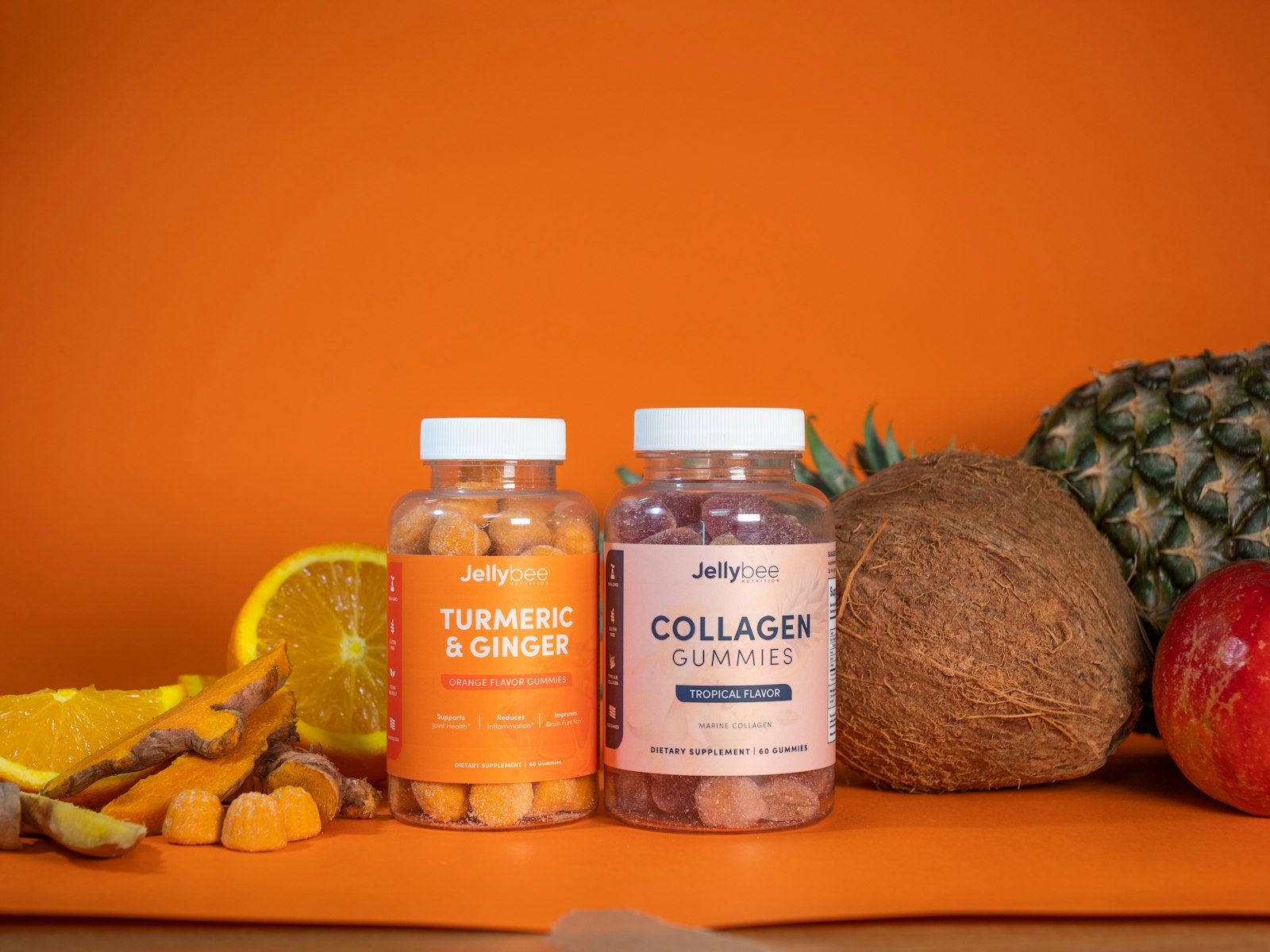
Now look at the shelf. Absolute Collagen’s liquid sachet is 8g. Vital Proteins’ tub gives you 20g for two of its enormous scoops. Some of the gummies and capsules on Amazon deliver under 1g a day, which is well below anything ever tested, and they’re often the ones with the loudest packaging. A brand that sells you a 30-day tub and tells you to expect results by day 14 is contradicting its own evidence base.
The one form I’d avoid entirely is the drink you buy chilled in a garage forecourt. Twenty-five hundred milligrams in a can, sugar to hide the taste, £2.50 a go. That’s a sports drink with a fancy label.
There’s a broader pattern here that we keep running into on this site. The greens powders that cost £97 a pouch, the immune supplements that flood the pharmacy every September, the bovine colostrum tubs at £88. The formula is the same each time: a real nutrient, a plausible mechanism, a handful of small manufacturer-funded trials, a price point ten times what the ingredient costs. Collagen is the most successful version of that formula because the mechanism sounds so obvious. Skin is collagen; eat collagen; skin improves. It’s the kind of logic that sells.
The cheaper route to the same result
If the goal is your skin’s collagen, every dermatologist in this story recommends the same short list, and it costs about a tenner a month.
Sunscreen, every day, because UV breaks collagen down faster than anything you can eat will build it back. A retinoid at night, because tretinoin and adapalene are the only topical ingredients with decades of evidence for increasing collagen in the dermis. Enough protein in your diet, so your body has the raw material. Vitamin C, which is a co-factor in collagen synthesis and is in a red pepper, an orange, or a 3p tablet. Not smoking. That’s the list. It hasn’t changed in twenty years, and no sachet has made it onto it. (On the not-smoking line: this autumn’s run on pouches as a way off cigarettes prompted us to look at whether nicotine pouches are safe.)
None of that is new, which is exactly why it doesn’t sell. A £34 box with a celebrity on the front is a better story than “wear factor 50 in September”.
So where does that leave the question we started with? Collagen supplements probably do something for joints, might do something for skin in the people who need it most, and almost certainly do nothing for recovery, wrinkles in the young, or anyone who quits after three weeks. The evidence isn’t strong enough to tell you to buy it, and it isn’t weak enough to tell you you’re a fool for trying. I’d rather see that written on the box than “radiant, youthful-looking skin”.
If you’ve been taking it for six months or more, what’s the one thing you’d swear it changed – and would you still say that if the box cost £90 a month instead of £34?
If you are weighing up skin-repair claims, our guide to PDRN skincare in the UK covers the newer, topical alternative.