Best British TV Dramas 2026: The 7 Series That Have Earned Your Evenings – And One That Hasn’t
Nobody at the BBC, Sky or Channel 4 sat down and agreed a theme for the year, but one turned up anyway. The best British TV dramas 2026 has given us so far are almost all about people who can’t leave. A prison classroom. A Greek villa nobody can really afford. A Welsh town slowly losing its argument with the sea. A trading floor. Even the year’s big literary adaptation strands its entire cast on an island. Six months in, British telly has decided that the most interesting thing you can do with a character is shut the door behind them.
In This Article
- Waiting for the Out: the one the awards are already circling
- Babies: the hardest watch of the year, and the most rewarding
- Two Weeks in August: yes, it earned the White Lotus comparisons
- Under Salt Marsh: Wales gets its own slow-burn crime epic
- Lord of the Flies: Jack Thorne makes the set text terrifying again
- Two you probably missed: Girl Taken and Industry
- Where to actually watch them: one table, no login archaeology
- The overrated one: The Night Manager series 2
- The best British TV dramas 2026 hasn’t shown us yet
And it’s working. This is the strongest half-year for homegrown drama in some time – strong enough that the usual January drought never arrived, and strong enough that a le Carré sequel with Tom Hiddleston attached somehow isn’t in the top tier.
Here’s what actually deserves your evenings, what you’ve probably missed, and the one big-name return I’d quietly skip. If you’d rather laugh than brood, our round-up of the best British comedians of 2026 has you covered instead. (Arriving too late for this list but worth your evenings anyway: ITV’s Highland thriller The Dark – our review makes the case.)
Waiting for the Out: the one the awards are already circling
BBC One opened the year with a six-part prison drama containing no shower-block stabbings, no wrongly convicted heroes and no escape plot. That should be a commercial death sentence. Instead, Waiting for the Out is the best British drama of 2026 so far, and it isn’t close.
Adapted by Dennis Kelly and Levi David Addai from Andy West’s memoir The Life Inside, it follows Dan (Josh Finan), a philosopher who takes a teaching job in a prison and finds the classroom prising open his own family history. Kelly told the Guardian before broadcast that most prison dramas fixate on violence when “the truth is that a lot of what prison is about is waiting” – and that stillness is exactly what the series trusts. Whole scenes are just men talking about Plato in a strip-lit room, and somehow you can’t look away.
The critics agreed with rare unanimity. Phil Harrison’s five-star Guardian review called it a “gripping, moving study in vulnerability and acceptance”, while Carol Midgely in the Times called it “the most original prison drama I have seen”. She’s right. Finan, previously the best thing in The Responder, plays Dan as a man permanently braced for a blow that never quite lands. If he isn’t holding a BAFTA next spring, something has gone wrong with the voting.
All six episodes are on iPlayer. Ration them if you can.
Babies: the hardest watch of the year, and the most rewarding
Stefan Golaszewski has spent his career finding enormous feeling in small rooms – Him & Her, Mum, Marriage – and his new six-parter is his heaviest subject yet: a couple enduring repeated miscarriages, played by Paapa Essiedu and Siobhán Cullen.
Written from Golaszewski’s own experience, Babies landed on iPlayer in March and quietly became the series people recommended to each other in lowered voices. It’s an unflinching watch, no point pretending otherwise. But it’s also far funnier and warmer than the premise suggests, because it understands that couples going through the worst thing in their lives still bicker about the dishwasher.
Essiedu is having a remarkable year (more on him later – he turns up again in Channel 4’s autumn slate), and Cullen matches him scene for scene. There’s a sequence in episode four, built almost entirely from silences and half-finished sentences across a kitchen table, that does more than most dramas manage in a full series.
Golaszewski’s great skill has always been writing the gap between what people feel and what they can say out loud, and here that gap is the whole show. Nothing else on this list will stay with you longer.
Two Weeks in August: yes, it earned the White Lotus comparisons
Every British ensemble drama set somewhere sunny gets called “the British White Lotus” now. It’s usually wishful thinking from a press office. This time the label roughly fits – though the BBC’s eight-parter is a sadder, more class-anxious thing than Mike White’s show, following a group of old friends whose Greek island reunion curdles over a fortnight.
Jessica Raine gives the performance of her career as the group’s people-pleaser-in-chief; Lucy Mangan’s five-star Guardian review called her “extraordinary”, and the show an “exquisite look at a holiday from hell”. These are people who can stretch to the villa but not to the life they’re performing inside it, and the series films that gap between income and image better than anything since Big Little Lies.
We reviewed it in full when it aired – here’s why we think it’s the closest BBC One has come to its own White Lotus – and a month on, it’s holding up as the summer’s defining drama. The kind of show you stick on at half ten telling yourself it’s one episode, and then it’s suddenly midnight.
Under Salt Marsh: Wales gets its own slow-burn crime epic
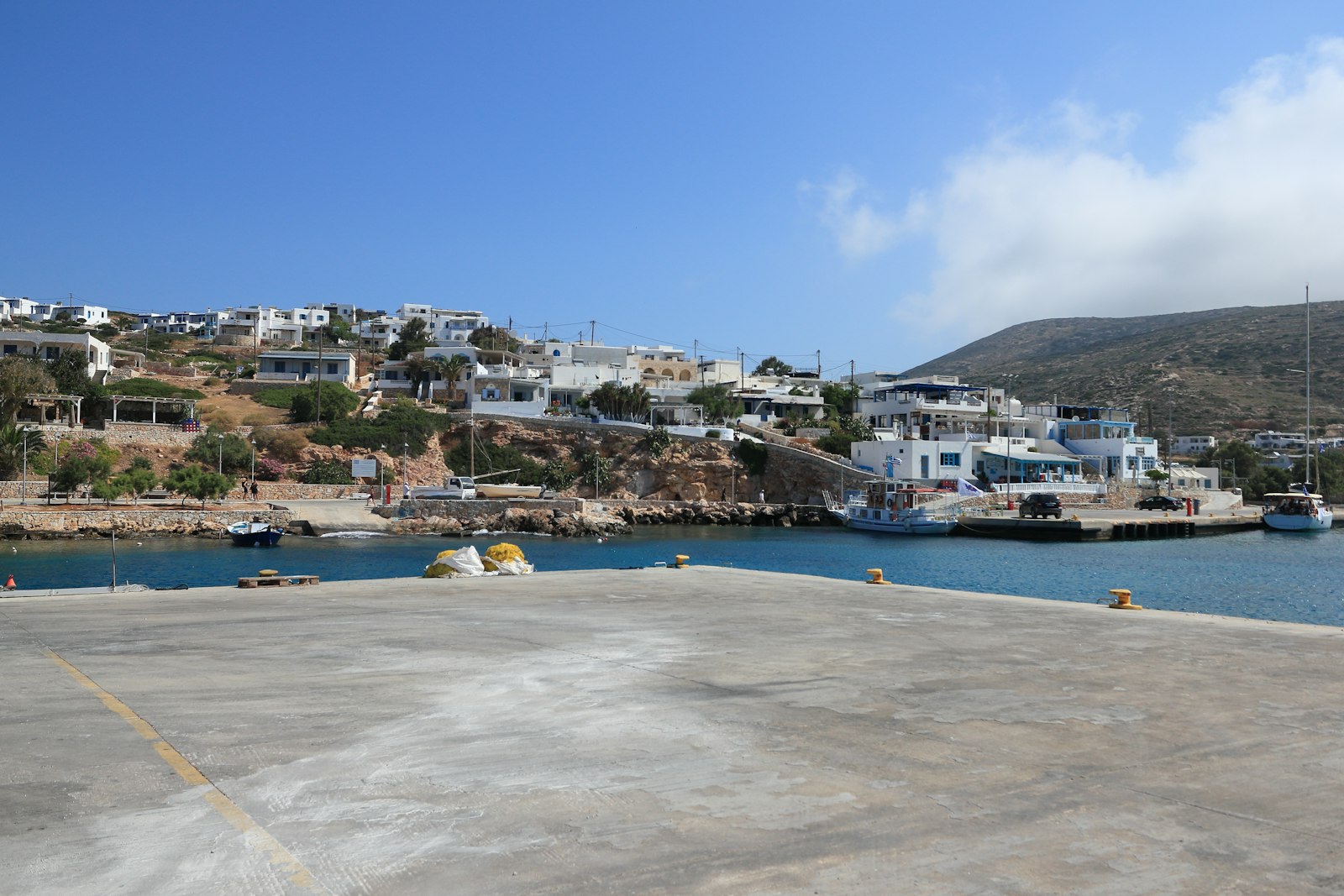
Sky Atlantic’s contribution to the year is set in Morfa Halen, a fictional Welsh coastal town wedged between mountains and a sea that wants it back. A crime fractures the community; Kelly Reilly and Rafe Spall pick through the wreckage.
On paper it’s another entry in the long line of British seaside noir, and the opening episode does make you work. Stay with it. What sets Under Salt Marsh apart is that the town’s slow-motion drowning isn’t a backdrop, it’s the point – every feud and secret in the story is shaped by the fact that the place itself is on borrowed time. Broadchurch never had to contend with a managed retreat from the coastline.
Reilly, freshly released from Yellowstone, is magnetic in a much quieter register. And Spall does his best work since The English. It’s the most cinematic thing on this list by a distance.
Lord of the Flies: Jack Thorne makes the set text terrifying again
Somehow, William Golding’s novel had never been adapted for television until this year. Jack Thorne – who did more damage to the national nervous system with Adolescence than any writer this decade – finally did it in four parts for the BBC, each episode named for one of the boys.
The cast is entirely young newcomers, which was a gamble, and it pays off precisely because you arrive with no associations. These are just boys. That’s what makes it unbearable.
Thorne resists every temptation to modernise the story into a lecture, and the themes he keeps circling – boyhood, masculinity, how quickly the rules fall away – do the work on their own. A difficult watch, and an essential one. If the year’s big screen output is more your thing, our guide to the best British films of 2026 covers what’s defined cinema’s year so far.
Two you probably missed: Girl Taken and Industry
Every strong TV year produces a couple of very good series that somehow escape the group chat. It’s partly a plumbing problem: with British drama now scattered across nine subscription services plus the terrestrial players, even committed viewers only really live on two or three of them, and anything airing outside your personal cluster might as well not exist. Word of mouth used to fix this. Now word of mouth needs a login.
This year the plumbing has swallowed two series that deserve better.
Girl Taken, on Paramount+, adapts Hollie Overton’s novel Baby Doll: twin sisters, one abducted by a trusted local teacher, and the reckoning when she escapes years later to find the world has moved on without her. Jill Halfpenny and Alfie Allen lead a cast that treats pulpy material with complete seriousness, and the result is far better than its low profile suggests. Critics liked it; almost nobody I know has seen it. Fix that.
Industry, meanwhile, returned for a fourth series and remains the best show almost nobody you know watches. The finance drama’s new run sends Harper (Myha’la) and Yasmin (Marisa Abela) into a globe-spanning game of mutually assured destruction, and it’s as sharp on money, class and self-delusion as ever. Series four is the show’s most confident yet. If you’ve been putting it off since 2020, the box set is one of the great catch-up projects in British TV.
Where to actually watch them: one table, no login archaeology
Since the plumbing problem is half the reason good series vanish, here’s the practical bit in one place. Five of the seven live on iPlayer, which is either a sign of a resurgent BBC or a warning about how much of this list disappears if you only pay for the streamers. Probably both.
| Series | Where to watch | One-line verdict |
|---|---|---|
| Waiting for the Out | BBC One / iPlayer | Best of the year – ration the six episodes |
| Babies | iPlayer | The hardest watch, and the one that stays with you |
| Two Weeks in August | BBC One / iPlayer | The summer’s defining drama |
| Under Salt Marsh | Sky Atlantic / NOW | Seaside noir where the sea is the villain |
| Lord of the Flies | BBC / iPlayer | Golding, finally on television, and terrifying |
| Girl Taken | Paramount+ | The one the group chat missed |
| Industry (series 4) | BBC One / iPlayer | Its most confident run yet |
And if the sheer number of release schedules is what’s putting you off starting any of them, we’ve made the case for why weekly episodes quietly won the argument this year – along with why half of Britain now watches all of it with the subtitles on.
The overrated one: The Night Manager series 2
Here’s the contrarian bit, and I’ll take the emails: the year’s most hyped return is its most resistible.
The original Night Manager was 2016’s glossiest pleasure and it ended properly, bow tied. Bringing Jonathan Pine back a decade later was always a risk, and the second series never quite answers the only question that matters: why? Hiddleston remains extremely good at wearing a suit near expensive glassware, and there are two or three set pieces that recapture the old crackle. But the plot is generic where the first series was specific, and the shocks feel engineered rather than earned. Variety’s verdict – a blunt “not worth the wait” – was harsher than most UK critics went, and closer to the truth than the five-star write-ups.
It’s not bad television. It’s fine. But “fine” is a strange result for the most expensive British drama of the year, and in a six-month stretch this strong, fine doesn’t make the cut.
The best British TV dramas 2026 hasn’t shown us yet
First, the pattern, because stepping back from the individual shows it’s hard to unsee. A prison. A villa. A drowning town. An island. A trading floor you can check out of but never leave. British drama didn’t use to look like this – the prestige template for years was sprawl, with timelines split, continents hopped and casts of thousands.
Part of the answer is money. The high-end TV funding squeeze that producers have been warning about since 2024 has made contained stories the sensible commission: fewer locations, smaller casts, more of the budget on screen in the writing and the performances. It’s the same economics that gave theatre its great chamber plays. Constraint, it turns out, is a style.
But I don’t think it’s only accountancy. Adolescence proved last year that the single-location pressure cooker was where British TV’s real power had moved, and commissioners clearly noticed – half this list feels like a response to it, consciously or not. After a decade of streaming sprawl, of shows with eleven point-of-view characters and a map in the opening credits, the pleasure of watching a handful of people locked in one room with their problems feels almost radical. You actually learn the faces. You notice the room.
Whether the theme survives next year’s commissioning round is an open question, because the second half of 2026 looks just as crowded. ITV’s serial-killer thriller The Dark, with Laura Donnelly as DI Monica Kennedy, arrives on 12 July – this Sunday, if you’re reading this on publication day. Channel 4 is mid-run with its Brenda Blethyn-led reimagining of A Woman of Substance, going out weekly, an old-fashioned rhythm that suits its rags-to-riches sweep. And later in the year Jack Thorne returns yet again with Falling, a Channel 4 drama starring Keeley Hawes as a nun and Paapa Essiedu (him again) as a priest caught in an impossible romance.
Honourable mentions from the first half, if you’ve cleared everything above: ITV’s spy thriller Betrayal gives Shaun Evans a strong post-Endeavour vehicle as an MI5 officer investigating a planned attack while under investigation himself, and Steal on Prime Video wrings decent tension from Sophie Turner and Archie Madekwe, even if it never quite escapes the shadow of the glossier thrillers it borrows from.
If you want the fuller argument on any of these, our review of Fallen on ITVX digs into the year’s oddest commissioning gamble. And when the telly finally loses you to the garden, the best summer books of 2026 are the same exercise for the deckchair.
The BBC’s newest swing at the form arrived after this list went up – our review of The Rapture covers whether it would have earned a place.
David Mitchell’s puzzle-setter is back for a second run, and it hasn’t changed a thing – our Ludwig series 2 review asks whether that’s a strength or a rut.
For spy drama fans, our Slow Horses season 6 review explains when to pay for Apple TV.