
Best Lidos UK 2026: Nine Open-Air Pools That Earn the Detour – And the Two Famous London Ones That Don’t
Britain built more than 300 open-air pools in a single frantic burst between the wars, then spent the next 50 years filling them in. What survived is now the hottest ticket of the summer. The best lidos in the UK are taking bookings weeks ahead this July, and the ones that don’t take bookings have queues forming before the gates open. Something odd has happened: the lido, a municipal relic your grandparents swam in for pennies, has become the most fashionable place in the country to spend a Saturday.
In This Article
- Why Britain built 300 outdoor pools – then filled most of them in
- How we chose the best lidos in the UK for 2026
- The seaside four: Saltdean, Tinside, Jubilee Pool and Stonehaven
- North of the M62: Ilkley and Hathersage
- London without the two-hour queue: Tooting Bec and Parliament Hill
- The oldest of them all: Cleveland Pools, Bath
- Before you pack a towel
This is a guide to nine that repay the effort – heated and unheated, seaside and moorland, Georgian and deco. And it’s also an argument for skipping the two famous London pools everyone posts from, because they’ve become the worst possible introduction to what a lido actually is.
Why Britain built 300 outdoor pools – then filled most of them in
The lido boom was a 1930s phenomenon, tangled up with the era’s obsession with sunbathing, fresh air and public health. Councils competed to outdo each other with modernist concrete, diving stages and sun terraces. Historic England has documented the whole strange story: by the end of that decade, somewhere north of 300 open-air pools were operating across the country, depending on who’s counting and what you count.
A season of outdoor swimming also means hours of reflected UV, so it is worth reading how to spot the skin cancer signs that turn up after summer.
Then came cheap package holidays, indoor leisure centres with wave machines, and decades of council budgets that treated an unheated outdoor pool as an indulgence. Most were demolished or quietly filled with soil and turfed over. The survivors made it through on volunteer campaigns, lottery grants and sheer local stubbornness.
Which is why swimming in one now feels different from swimming anywhere else. You’re not just doing lengths. You’re using a building that someone fought for.
How we chose the best lidos in the UK for 2026
Simple test: would you drive past a perfectly good pool to get there? The nine below all pass. Some earn it on architecture, some on setting, one purely on age. We’ve weighted year-round or full-summer opening, water you’d actually want to be in, and the stuff around the swimming – lawns, cafés, the sense of a day out rather than a transaction.
What didn’t make the cut: pools that are lovely but really only local (every county has one), and anywhere the experience is now mostly about getting a slot.
On the heated-versus-unheated argument, this list refuses to pick a side, because the two are different activities that happen to share a shape. A heated lido is an outdoor swim; an unheated one is an event, with a before and an after and a story you’ll tell at work on Monday. The purists who insist cold is the only authentic lido experience are welcome to their gasping. But it’s telling that the pools thriving hardest right now – Jubilee, Stonehaven, Hathersage – are the ones that worked out how to offer warmth without losing the sky. And if the after involves shivering, the beach sauna boxes spreading along the coast pair naturally with it – the evidence behind the sauna boom is stronger than most wellness trends can claim. Before you commit to the unheated kind, it is worth reading what the evidence actually says about cold water swimming benefits – it rests on fewer swimmers than the Instagram reels suggest.
The seaside four: Saltdean, Tinside, Jubilee Pool and Stonehaven
Saltdean Lido, just along the coast from Brighton, is the one architecture people go quiet about. A curved, white, Grade II* listed moderne building from 1938 that looks like an ocean liner run aground on the South Downs, brought back from dereliction by a community campaign that took the better part of two decades. The pool itself is a friendly crescent, good for families, and the building now holds a café and library. Go on a weekday morning if you can; the weekend crowd found it a while ago.
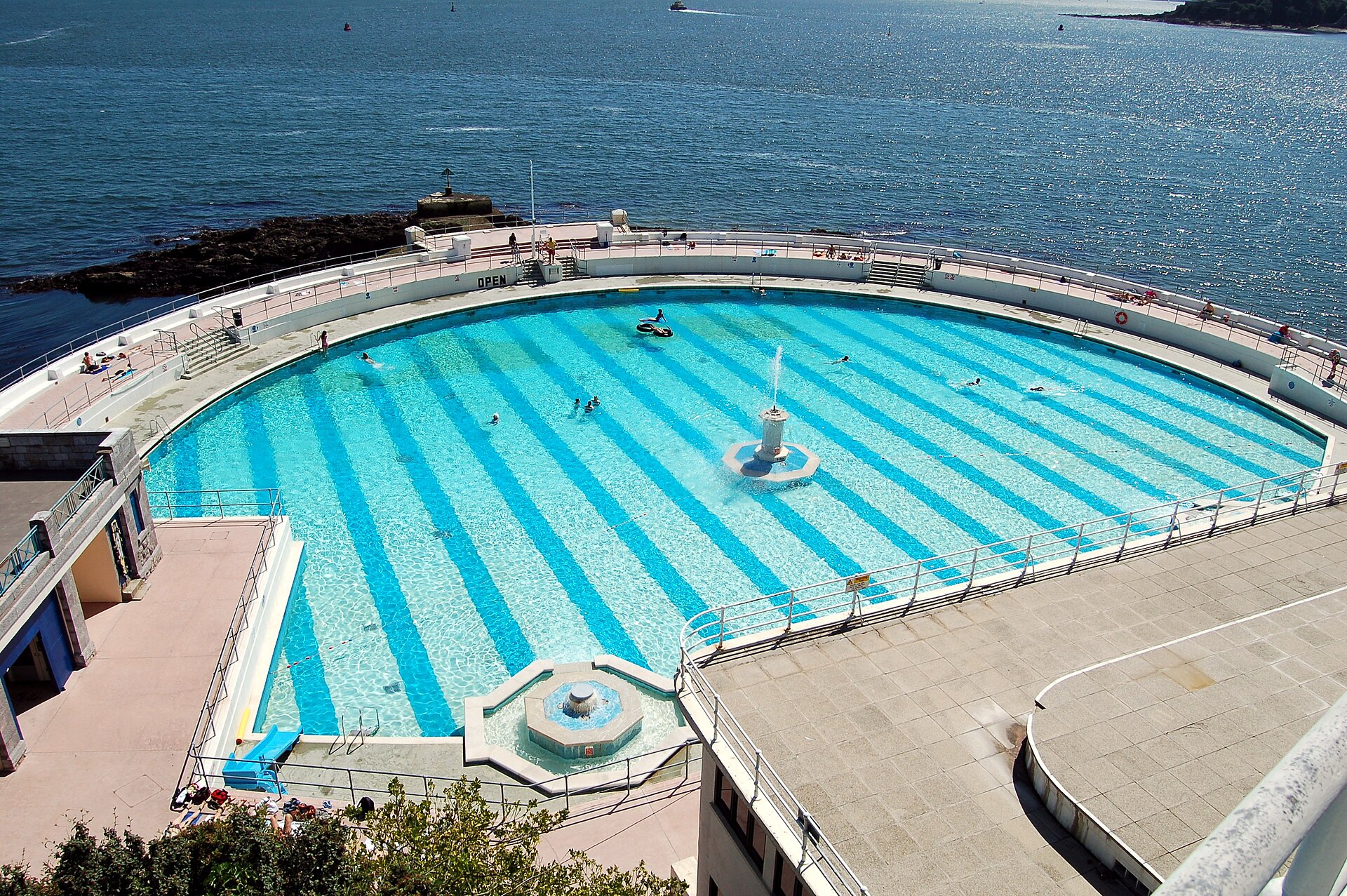
Tinside Lido in Plymouth might be the most photogenic swim in England – a 1935 semicircle jutting into the Sound at the foot of the Hoe, unheated saltwater, with three fountains and paintwork in seaside blues and creams. It’s cold. Nobody cares. You’re swimming in what’s effectively a stage set with the English Channel as backdrop.
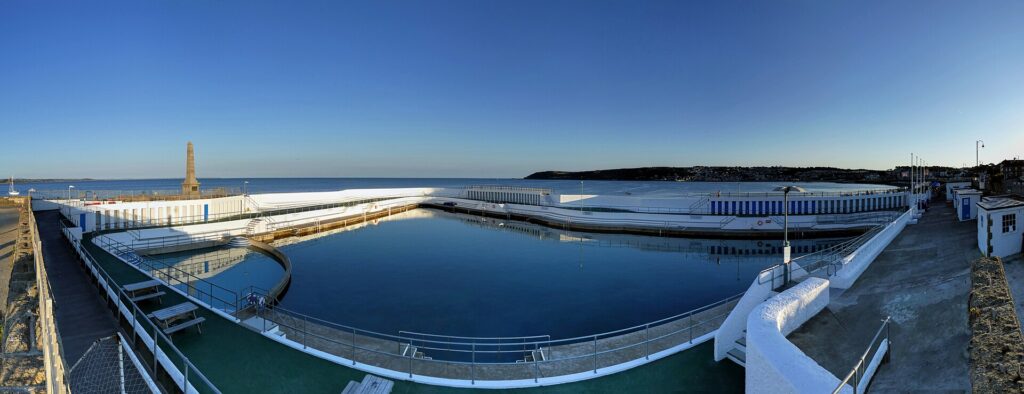
Jubilee Pool in Penzance is the clever one. A vast triangular saltwater lido from the same 1935 vintage, wedged against the harbour, now run by the community that saved it – and since 2020 one corner of it has been geothermally heated to bath-warm temperatures using water drawn from deep underground. Cold purists swim the main pool, everyone else drifts to the geothermal section and refuses to leave. Book the warm side well ahead in summer.
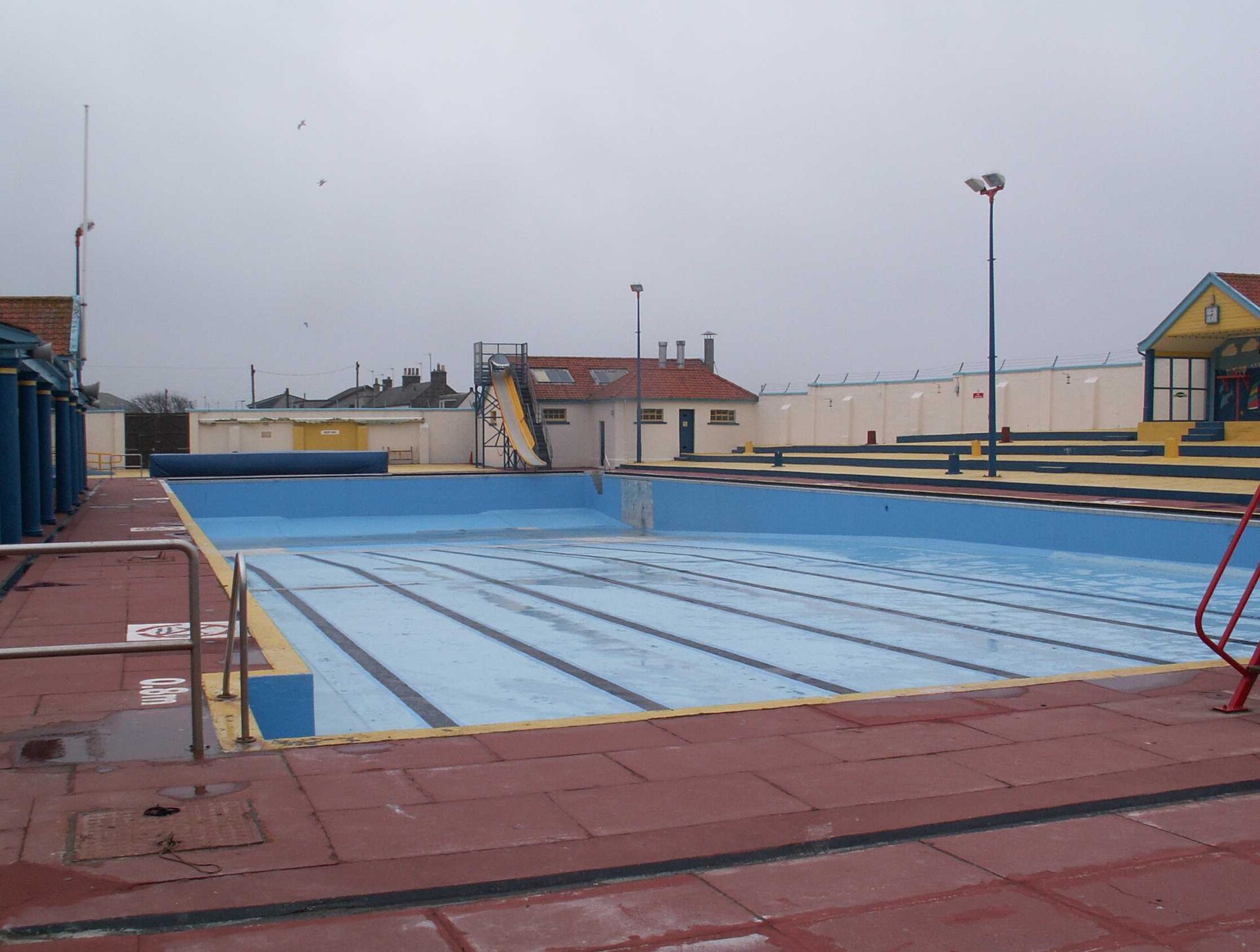
Stonehaven Open Air Pool, south of Aberdeen, is the outlier that shouldn’t work and completely does: an Olympic-length art deco pool from 1934 filled with heated, filtered seawater, in a town where the North Sea haar can roll in on an August afternoon. The water sits at bath-side-of-warm all season, and in high summer the pool runs midnight swims under floodlights. Swimming at midnight in warm seawater on the Aberdeenshire coast is one of the great strange pleasures available in this country.
If you’re building a proper coastal weekend around any of these, our guide to the best UK seaside towns for 2026 covers the surrounding territory.
North of the M62: Ilkley and Hathersage
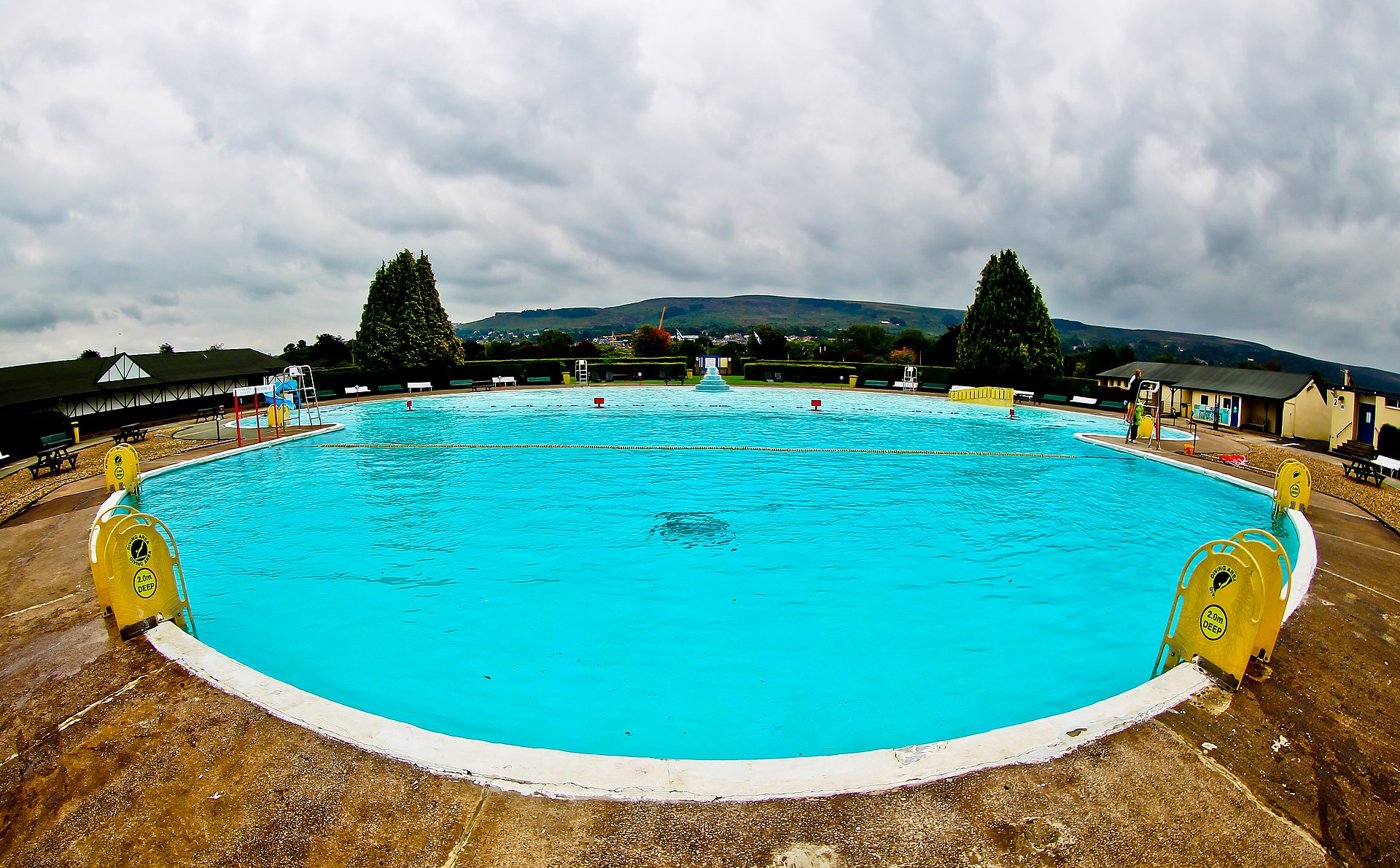
Ilkley Lido is the postcard. Opened in 1935 at the foot of the moor, it has a huge, oddly shaped pool arranged around a mushroom-shaped fountain, acres of lawn, and views up to the heather. The water comes off Yorkshire and behaves accordingly – this is an unheated pool and even in a heatwave it will make you gasp. But on a hot Saturday it’s about the happiest place in the north of England, and the adjacent indoor pool means a cold-water bail-out costs you nothing but pride.
Hathersage Swimming Pool in the Peak District takes the opposite approach: a compact 1936 village pool heated to somewhere around 28 degrees, ringed by hills, with a decent café and – on summer Sundays – a brass band playing while you swim. It sounds twee, and it doesn’t care. This is heated open-air swimming in one of the most beautiful valleys in England for less than the price of a cinema ticket, and it books out accordingly – sessions are timed, so reserve before you drive out from Sheffield rather than chancing it. Climbers coming off Stanage Edge use it as a recovery pool, which tells you something about a village facility punching a long way above its weight.
London without the two-hour queue: Tooting Bec and Parliament Hill
Here’s the opinion that will annoy people: Brockwell Lido and London Fields Lido, the two most photographed pools in Britain, are the worst places in the country to find out what lido swimming is about. Both are handsome. Both are also operating so far beyond capacity in summer that the experience is a booking app, a queue, and a pool with the personality of a rush-hour platform. If you already live on top of one of them, fine. Nobody should travel for them.
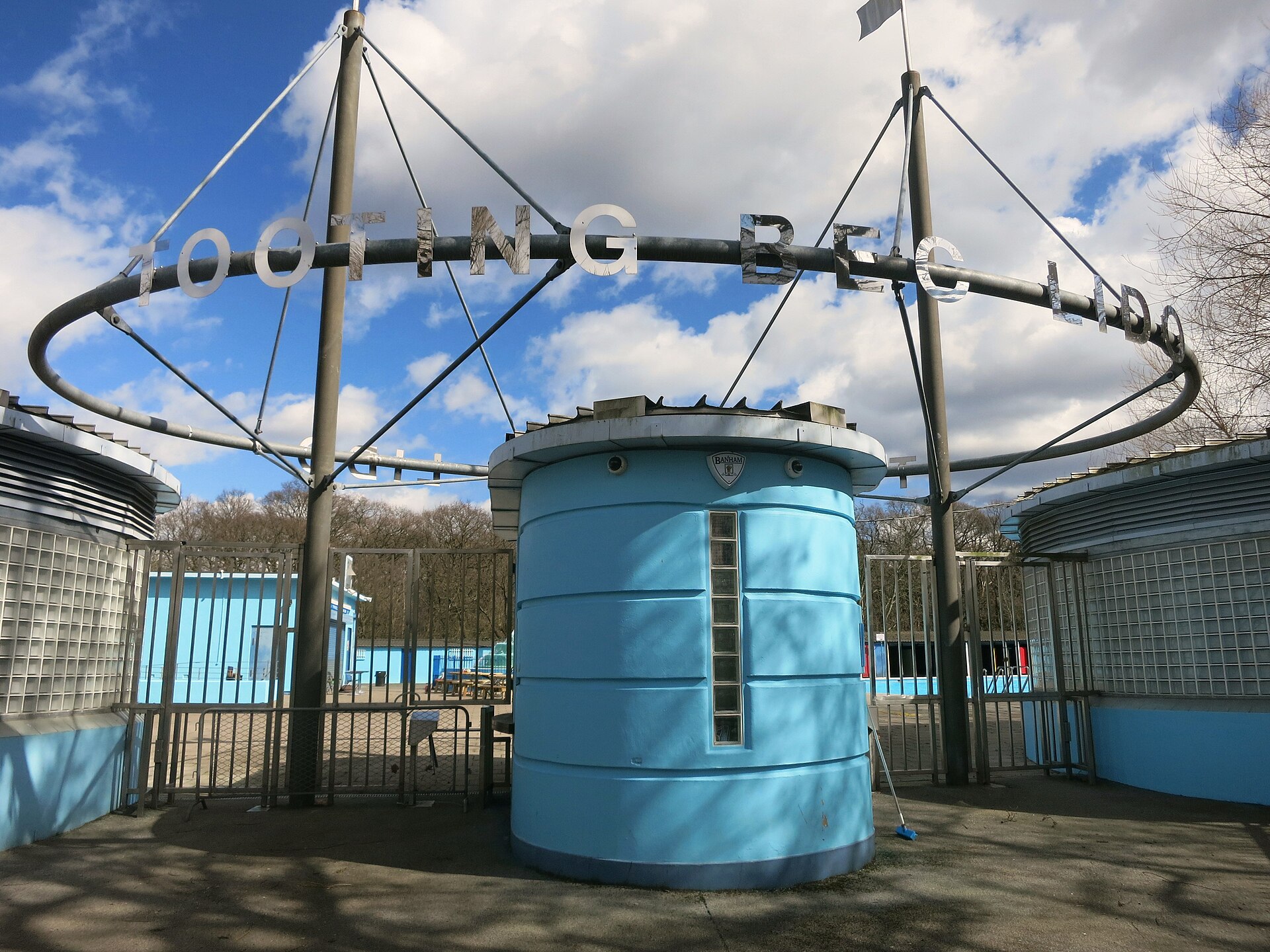
Travel instead, if you must swim in London, to Tooting Bec Lido. At 91 metres it’s one of the largest open-air freshwater pools in Europe, built in 1906, unheated, lined with cubicle doors painted in blocks of primary colour that have become the default image of British outdoor swimming. Its scale absorbs a crowd in a way the fashionable pools can’t – there is always water to swim in – and it’s been home to the South London Swimming Club for over a century, including the winter lunatics who break ice to get in.
Parliament Hill Lido on Hampstead Heath is the other one that keeps its dignity. A 1938 pool with a gleaming stainless-steel lining that turns the whole thing silver, open every single day of the year, cold as a moral lesson in winter and never truly warm even now. And that’s rather the point. Fresh from a cold plunge, walk up the Heath and the whole city looks better.
Both of these pools also keep the winter tradition alive, which matters more than it sounds. A lido that shuts in September is a seasonal attraction; one that stays open through January, with a hardy few swimming between banks of steam, is a living institution – and the year-round swimmers are usually the same people who run the campaigns that keep these places funded. If the Saturday-morning ritual appeals but the water doesn’t, Britain’s other great free weekend institution is covered in our guide to the best parkruns in the UK.
The oldest of them all: Cleveland Pools, Bath
One entry earns its place on history alone. Cleveland Pools, tucked on the bank of the Avon a short walk from Bath city centre, is Britain’s oldest surviving public open-air swimming pool – Georgian, built in 1815, with a crescent of little changing rooms that mirrors the city’s famous architecture in miniature. It spent decades derelict, was restored with lottery money, and reopened to swimmers in 2023.
Fair warning: its post-restoration life has been stop-start, with funding and flooding both causing closures, so check it’s open before you plan a trip around it. But if the gates are open, you’re swimming in the same pool as people who’d read about Waterloo in the papers. Nowhere else on this list can touch that.
Before you pack a towel
Booking is the new reality at the popular pools – most of the nine above release slots online, and warm-water sections like Jubilee’s geothermal corner go fastest. Turn up on spec at a famous lido on a hot Saturday and you’re gambling. Entry stays cheap by the standards of almost any other day out, though: expect somewhere between £4 and £8 for an adult at most of these, a little more for Jubilee’s heated section, and children usually half that.
Pack more than you would for an indoor pool. The good lidos are lawn-and-picnic places where people settle in for four or five hours, so a blanket and an actual lunch beat a rushed towel-and-goggles visit. Several of the older pools still have quirks – pound-coin lockers, cash-only ice cream kiosks, changing cubicles with doors that haven’t hung straight since the Attlee government. It’s part of the charm right up until you’re holding wet swimwear with no coin. Grass and bare legs also mean bites; our insect bite treatment guide covers what actually stops the itch.
Timing is the other trick. A grey Tuesday at a heated lido is a better day out than a scorching Saturday at a famous one, and regulars know it – the water’s the same temperature, the lawn is empty, and the café queue is four people rather than forty. British weather is the lido’s quality filter. Use it.
Take the cold seriously, pleasurable as it is. An unheated British pool sits in the high teens even in July, and the safe way into cold water – slow entry, controlled breathing, shorter swims than you think you want – is the same as we set out in our piece on UK wild swimming. The difference here is lifeguards and a ladder, which is exactly why a lido is the right place to learn what cold water does to you. And if the plunge-tub trend is what brought you here, our look at ice bath benefits sorts the evidence from the reels.
And you will burn. Water reflects UV upwards at the precise angle you’re not thinking about, so a decent SPF matters more poolside than almost anywhere else – our round-up of the best British sunscreen brands has options that survive repeated dunkings. A growing number of lidos now park a wood-fired sauna by the water too, which turns a 17-degree pool from an ordeal into a circuit; we covered why in our look at the beach-hut sauna boom.
One more practical note: the Outdoor Swimming Society keeps track of pools, campaigns and reopenings, and it’s the best single place to find the lido nearest you that we didn’t have room for. There are far more than nine that deserve a visit – Sandford Parks in Cheltenham, Portishead’s community-run pool and Plymouth’s smaller coastal pools all came close to making this list.
The lidos that survived did so because enough people refused to let them go, and every busy summer now makes the next restoration campaign a little easier to win. So the question for this month’s forecast heat is less whether you’ll swim outdoors than which decade you’d like to swim in – 1815, 1906 or 1938?