
Race Across the World BBC: Why It’s Quietly Become the UK’s Smartest Reality Show in 2026
The fifth series is barely two episodes in and already the timeline has done its usual May trick. Strangers, no phones, a paper map and a budget the size of a London weekend break. Race Across the World BBC has crept back onto iPlayer with almost no fanfare, and somehow it is the show people in the UK are actually talking about this week. While ITV throws everything it has at noisy new reality formats and Netflix loads up another forensic true-crime series, the BBC’s quietest hit just keeps doing the one thing British telly has half-forgotten how to do: trust the format and let real people get on with it.
In This Article
- Why Race Across the World BBC hits differently in 2026
- The format hasn’t changed. Britain has.
- £1,500 and a paper map: how the stakes stay honest
- Casting that actually looks like the UK
- What this series gets that Netflix travel shows don’t
- The BBC’s quiet bet on slower television
- What to watch for in the rest of the series
Why Race Across the World BBC hits differently in 2026
It is tempting to call this a comeback, but Race Across the World has not been away. It has simply been overshadowed every time a louder show launched in the same window. What changed in 2026 is the rest of the schedule. Audiences who spent the spring being shouted at by The Summit, fed Olivia Atwood’s Barcelona kitchen drama and walked through a parade of returning competition formats are arriving at the new series with their ears ringing. A show built around long silences in second-class train carriages suddenly feels like a gift.
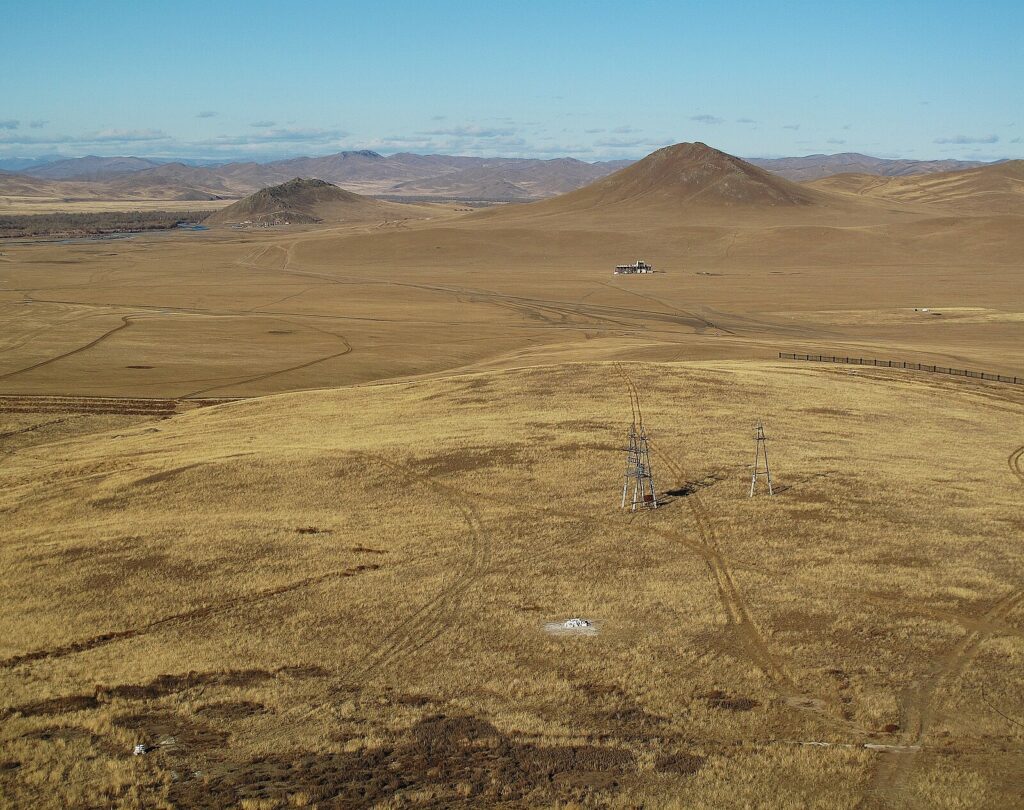
The new route from Italy through Greece, Turkey, Georgia, Kazakhstan, Uzbekistan, Kyrgyzstan and into Mongolia is the most ambitious the production has attempted. Twelve thousand kilometres, no flights, a fixed budget of around £1,500 per person, and a checkpoints structure that punishes anyone trying to be clever about it. That is the show in one paragraph. The rest is character.
The format hasn’t changed. Britain has.
It is hard to overstate how unusual Race Across the World now looks against everything around it. Most British reality television in 2026 has been pulled toward two poles: noisy maximalist formats with giant prizes and a constant edit, or earnest fly-on-the-wall documentaries with a single subject and a brooding score. Race Across the World does neither. It is a competition, but the rhythm is the rhythm of travel, which means whole sequences of standing on platforms, eating cold pastries and falling out over which bus to get on.
That patience used to be normal on British telly. Watch back early Long Way Round, or the original Coast, and you can see the same trust in the camera that Race Across the World still carries. The country, on the other hand, has changed. We watch less linear television, we expect to be hooked inside thirty seconds, and we increasingly want our reality formats to feel like a video game. The BBC has not modernised this show to meet that, and the gamble keeps paying off.
£1,500 and a paper map: how the stakes stay honest
What separates Race Across the World from its peer group is that the production refuses to inflate the stakes. There is a £20,000 prize at the end. It is not life-changing in the post-2024 sense, and the show knows it. The drama is not “will this family clear their mortgage” but “will this pair of friends still be speaking by Tbilisi”. Every choice the contestants make – hitchhiking versus a coach, a hostel versus an overnight train, working a shift in a vineyard for fifty euros versus losing a day – carries a real cost in a real budget.
That is rare in 2026. Most game formats now route money through dramatic on-screen counters and inflated final-round prizes; Graham Norton’s new street-game format on ITV will reportedly run a £250,000 jackpot. Race Across the World is going in the opposite direction. The smaller the prize feels, the more honest the choices look. It is also why the show works as a piece of writing about Britain, not just about travel. Pairs of working-class strangers and middle-class married couples make different calls. Adult children and parents make different calls again. The format does not have to explain class – it just rolls the cameras.
Casting that actually looks like the UK
Reality casting has had a flat decade. The same archetypes recur across The Apprentice, Married at First Sight UK and the various Big Brother revivals – polished, photogenic, faintly suspicious of each other. Race Across the World does the opposite. The pairings this series include a retired postman and his adult son, two friends from Sunderland who have never been abroad together, and a Bristol couple in their late sixties on their first big trip since lockdown. None of them are influencers. None of them are good at being filmed. That is the point.
Casting unknowns is the easy part. Casting unknowns who hold the screen for eight episodes is the hard part. The production team’s track record on this is now extraordinary. It is also why the show keeps producing the kind of small, accidental TV moments that travel further on social media than most prestige drama. A father telling his son he is proud of him on a Tbilisi train platform will be screen-grabbed and reposted for the next month. That is not engineered, and you can tell.
What this series gets that Netflix travel shows don’t
Netflix has spent the last two years trying to crack travel reality. Down for Love, World’s Toughest Race revivals and the various Stanley Tucci-style food-and-place hybrids all sit in the catalogue. None of them have stuck the landing in the way Race Across the World has on iPlayer. The reason is structural. Netflix’s travel formats are built around a presenter, a destination and a series of curated set pieces. Race Across the World is built around constraint. No phones, no flights, a real budget and a real clock. Constraint, it turns out, produces better television than spectacle.
This is also the show’s quiet political content. Netflix can fly you to anywhere on earth, but it cannot show you what it feels like to sleep on a Turkish train because you missed the connection at Edirne. Race Across the World can, and does, and that texture is the entire product. It is the closest thing British TV has in 2026 to the slow travel writing that magazines were doing twenty years ago, and it works for exactly the same reasons.
The BBC’s quiet bet on slower television
It would be easy to read all of this as nostalgia. It isn’t. The BBC is making a real production bet here, and the bet keeps coming off. Race Across the World is now the corporation’s most consistent reality export, sold into territories that rejected most of its other competition formats outright. The Australian and New Zealand local versions have brought back ratings the broadcasters there had given up on. Studio Lambert, the production company behind it, has built almost a decade of work on this single idea, and the show has not had a weak series yet.
That sits alongside a wider shift in what the BBC is choosing to back. The corporation’s drama strategy has tightened around the six-episode limited series, its entertainment strategy is leaning back into classic game-show formats, and even its long-running serial output, as we wrote about in our piece on the survival of UK soaps, is being quietly defended rather than reinvented. The throughline is patience. Race Across the World, more than any other current title, is the show that proves the strategy is right.
What to watch for in the rest of the series
Two things to keep an eye on. The first is the Georgia-Kazakhstan border stretch, which production sources have already hinted will be the toughest sequence of any series so far. The second is the editing pace once contestants get into the Kyrgyz section: the show has historically slowed down here, on purpose, and that is when its best emotional moments arrive. As the BBC’s own iPlayer hub for the series notes, contestants will move between days at 30°C and lows of -20°C, and the production has built the route around moments where the wheels are designed to come off.
Critically, the show is also leaning a little more into one-on-one interviews this year. The first two episodes have already given more space to the contestants talking directly to camera about each other, in a way that recalls the best Race Across the World moments from series two. The Guardian’s TV desk picked up on the same shift, calling it the most emotionally honest reality show on British television – and they were not wrong.
The risk with a show like this is always the second-screen problem. Reality formats that work on patience get cut down for short-form, and the short-form clips get treated as the show. That is already happening on TikTok, where the contestant-pair confessionals are being repackaged into thirty-second emotional beats. The danger is not the clips. The danger is what the clips encourage commissioners to do next time, which is to start cutting for the clip rather than the hour. Race Across the World BBC will be a worse show the moment that happens, and it would be a quietly important loss.
For now, none of that has actually changed. The show is still the show. It is still better than almost anything else airing on a Tuesday night in May, and it is still doing the thing British television does best when it remembers to: putting recognisable people into a structured situation and letting them be themselves on camera.
So, a question to leave you with. When was the last time a UK reality show made you actually want to ring someone the next day to talk about it – and what did the show have that the rest of the schedule does not?
If gentle, character-led television is what you are after, our roundup of the best British cosy crime of 2026 covers the genre having its breakout year.



Couldn’t agree more about the silence. Watched the first two episodes back to back on Sunday and what struck me was how much room the show gives the contestants just to be tired or bored or quietly fall out. Most reality TV would cut all of that. The Kazakhstan stretch looks brutal on paper. Curious whether you think the BBC will keep the format honest if it grows much bigger, or do they water it down like they did with The Apprentice?