

Best British Cosy Crime 2026: The Shows Defining the Genre’s Breakout Year
Just under ten million people in Britain sat down to watch a group of pensioners solve a murder. When The Thursday Murder Club landed on Netflix in late August 2025, BARB’s 28-day consolidated figures clocked it at 9.96 million UK viewers – comfortably ahead of every scripted rival that month. There were no superheroes, no serial killers stalking a rain-slicked dockside, no antihero with a drink problem and a dead partner. There was a retirement village, a flask of tea and a body. Welcome to cosy crime 2026, the genre that has quietly become the most reliable thing on British television.
In This Article
- What cosy crime 2026 actually means
- Ludwig: the flagship the BBC did not see coming
- The Marlow Murder Club: a publishing machine on screen
- Death Valley: the one that divides the room
- Bookish: Mark Gatiss bends the rules
- The Thursday Murder Club: the film that proved the market
- The publishing deal is now the commission
- The stalwarts still holding the line
- Why cosy crime works now – and not by accident
- The risk: when cosy curdles into complacent
This is not a fringe interest dressed up as a trend piece. Cosy crime now anchors BBC One Sunday nights, drives the UKTV streaming app U, and gives Netflix its most bankable British export since the costume drama. If you want to understand what Britain actually watches in 2026 – as opposed to what it tells pollsters it watches – the gentle whodunnit is the place to start.
What cosy crime 2026 actually means
The phrase gets thrown around loosely, so it is worth pinning down. Cosy crime is murder with the menace turned almost all the way down. There is a death, usually early, usually offscreen or bloodless. There is an amateur or semi-amateur sleuth, often older, often underestimated. There is a closed community – a village, a retirement complex, a small Welsh town – where everyone knows everyone and the killer is therefore someone we have already met. And there is, above all, a restoration of order: by the closing titles, the world makes sense again.
The lineage runs straight back to Agatha Christie and forward through Midsomer Murders and Death in Paradise, but the current wave has a distinct flavour. It is funnier, more self-aware, and increasingly built from bestselling novels rather than original scripts. The comfort is the point, not an accident of tone. Where prestige crime asks you to stare into the abyss, cosy crime hands you a cushion and tells you the abyss will be tidied up by nine o’clock.

Ludwig: the flagship the BBC did not see coming
If one show explains the genre’s confidence in 2026, it is Ludwig. David Mitchell plays John Taylor, a reclusive puzzle-setter who reluctantly impersonates his missing detective twin, James, and turns out to be rather good at catching killers by treating each case as a logic problem. It should not work. Mitchell is a panel-show contrarian, not an obvious leading man, and the central conceit is preposterous. Yet the series arrived in 2024 with one of the strongest debuts the BBC had managed for a new drama in years and a near-perfect Rotten Tomatoes score to match the ratings.
Series two returns to BBC One and iPlayer in summer 2026, with Taylor now working semi-officially as a Crime Scene Consultant and the overarching mystery of his brother’s disappearance still pulling at the seams. In its first-look teaser, the tone is unchanged: warm, witty, more interested in how a clever, anxious man navigates other people than in gore. Ludwig is the proof that cosy crime can be smart without being cynical, and it is the show every commissioner is now trying to clone.
The Marlow Murder Club: a publishing machine on screen
Robert Thorogood created Death in Paradise, so he understands the economics of a returnable mystery better than almost anyone. The Marlow Murder Club, adapted from his novels for U&Drama and co-produced with America’s Masterpiece, stars Samantha Bond as Judith Potts – a crossword-setter and wild swimmer who assembles an unlikely team of amateur detectives in a well-heeled Thames-side town. It is cosy crime in its purest commercial form: a recognisable star, a pretty setting, and a book on the shelf for every series ordered.
The third run, built around an adaptation of Thorogood’s novel The Queen of Poisons, reached screens in March 2026, structured as three two-part cases – the format the show has settled into. The series was renewed well ahead of broadcast, a sign of how confident broadcasters now are in the genre’s loyalty. Bond is the engine: brisk, slightly imperious, the kind of woman who would correct your grammar at a crime scene. The mysteries are rarely difficult, but difficulty was never the contract.

Death Valley: the one that divides the room
Not every entry in cosy crime 2026 is a triumph, and pretending otherwise would be the genre’s own worst instinct. Death Valley, filmed entirely in Wales, gives Timothy Spall one of his more enjoyable late-career roles as John Chapel, a retired actor who once played a television detective named Caesar and now finds himself absorbed, absurdly, into a real police investigation alongside Gwyneth Keyworth’s socially awkward DS Janie Mallowan.
Spall is, as ever, magnificent, and the Welsh landscape does a great deal of quiet work. But the show splits viewers. The premise – a fictional sleuth wandering into actual policing and being tolerated by everyone – is so flimsy that one critic memorably dismissed it as less cosy crime than comatose crime. There is a version of this format that mistakes gentleness for inertia, and Death Valley flirts with it. That it returned for a second series in May 2026 anyway tells you something about the appetite: even mid-tier cosy crime now finds an audience that prestige drama would envy. Whether that is healthy for the genre is a question worth holding onto.
Bookish: Mark Gatiss bends the rules
The most interesting recent arrival is the one that pushes hardest against the template. Bookish, created by and starring Mark Gatiss for U&Alibi, is set in the rubble of post-war London and follows Gabriel Book, a waspish bookshop owner whose peculiar government connections grant him access to crime scenes. It debuted in July 2025 to warm reviews and an immediate renewal, and it works because Gatiss understands the genre’s machinery well enough to play with it – the period detail is richer, the melancholy is allowed to linger, and the wit has an edge that pure comfort viewing usually sands away.
Bookish matters because it shows the ceiling is higher than the format’s reputation suggests. Cosy crime does not have to be wallpaper. In the right hands it can carry real grief, real history, and a point of view, while still delivering the weekly puzzle that keeps people coming back. It is the same instinct driving the best of British comedy right now, the kind of careful, character-first writing that also powers shows like Nicola Walker’s Alice and Steve.
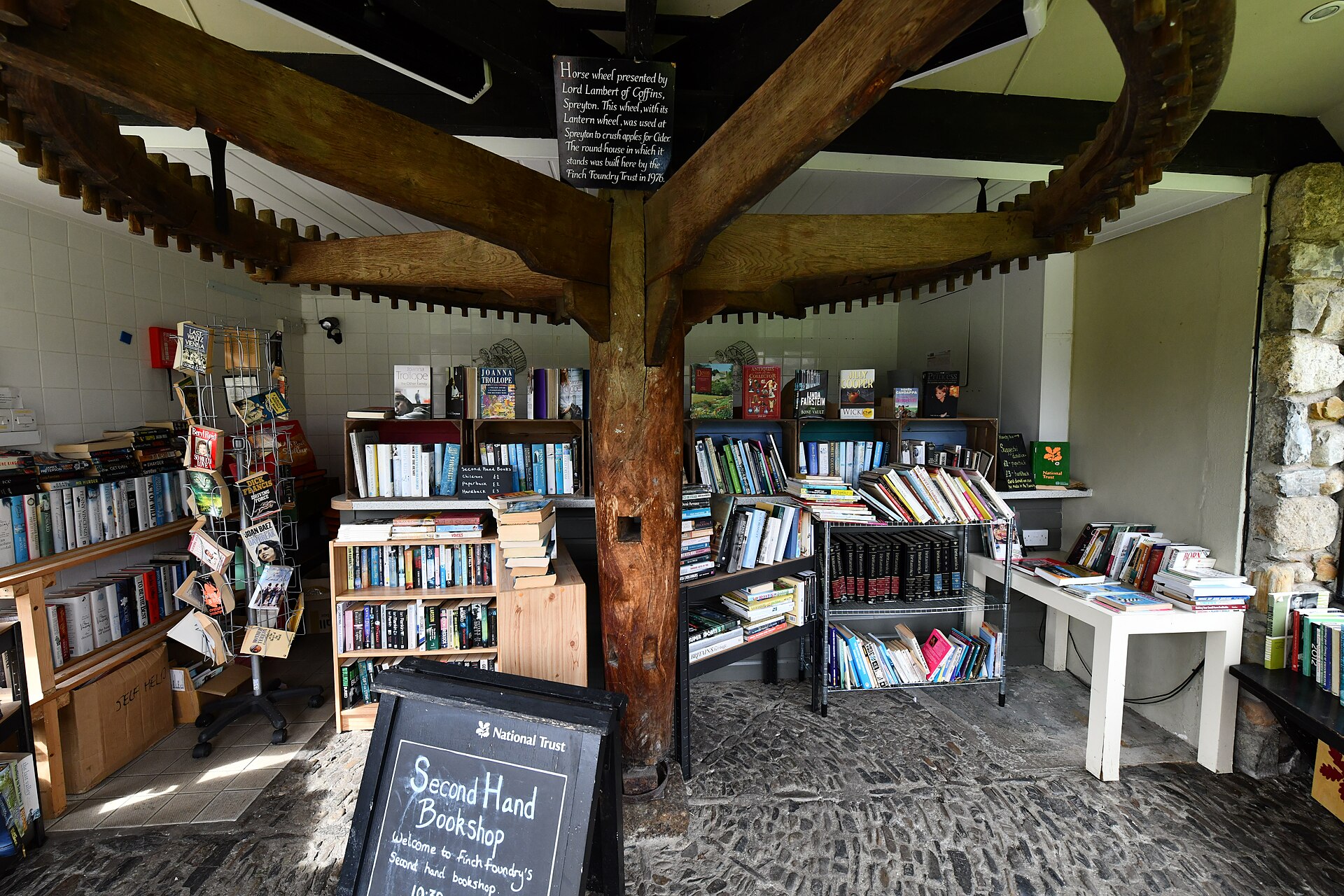
The Thursday Murder Club: the film that proved the market
Then there is the title that turned a domestic genre into a global asset. Richard Osman’s The Thursday Murder Club sold in numbers that embarrassed most literary fiction, and the Netflix adaptation – directed by Chris Columbus, starring Helen Mirren, Pierce Brosnan, Ben Kingsley and Celia Imrie – converted that following into one of the streamer’s biggest films of the year. Beyond its UK figure, it drew 24.7 million views worldwide in its opening week and charted in the top ten in more than ninety countries.
The significance is not the star wattage; it is the demographic. Streaming spent a decade chasing teenagers and twenty-somethings. The Thursday Murder Club proved that the audience studios had quietly written off – viewers over fifty, the people who never stopped watching scheduled television – will turn out in their millions for the right material. That is a structural shift, and it is why a sequel and a wave of imitators are already in motion. It also explains why British screen output in 2026, surveyed across our round-up of the year’s defining films, leans so heavily on comfort and craft over spectacle.
The publishing deal is now the commission
What separates this wave from the cosy crime of twenty years ago is where it starts. Midsomer Murders grew from a single Caroline Graham novel and then ran free; today the relationship is inverted. Broadcasters increasingly commission the screen version before the ink is dry on the book deal, treating a strong-selling crime series as a pre-validated audience they can simply switch on. Thorogood’s Marlow novels arrive roughly in step with their adaptations. Osman writes knowing a film or series is the realistic endpoint, not a distant hope. Gatiss built Bookish as a screen property first.
This is efficient, and it is also a quiet risk. When the commission depends on a proven book, the genre narrows towards what already sells: amateur sleuths, picturesque settings, a returnable format with a guaranteed second instalment. Originality becomes the expensive option. It is no accident that the two freshest shows here – Ludwig and Bookish – are the ones with the strongest individual authorial voice rather than the biggest pre-existing fanbase. The pipeline rewards safety, and the genre’s best work keeps coming from the people willing to spend their credibility pushing against it.
The stalwarts still holding the line
None of this displaced the workhorses. Death in Paradise and its spin-offs continue to pull large, faithful audiences; Father Brown and Sister Boniface remain quietly enormous in BBC daytime, exported to dozens of territories and watched far more widely than their gentle reputations suggest. These are the shows that built the runway. The 2026 wave is flashier and better-reviewed, but it is standing on two decades of unglamorous, dependable cosy crime that never went anywhere because its audience never left.
Why cosy crime works now – and not by accident
It is tempting to read the boom as pure escapism, but that undersells it. The appeal of the form, as the novelist Ross Montgomery has argued, is the promise that a terrible event has exactly one logical explanation, and that the explanation will be found. In a decade of genuine disorder, a story where intelligence and fairness reliably win is not a guilty pleasure so much as a small act of reassurance. Order is restored not because the world is gentle but because, for once, someone is paying attention.
There is a class dimension too, and a national one. Cosy crime is overwhelmingly set in an idealised Britain of villages, tea rooms and amateur experts – a country that is part memory, part fantasy, and increasingly part export brand. The same comfort-first instinct now shapes huge swathes of British viewing, from the warm competitive ribbing of our biggest game shows to the gentler corners of the festival circuit captured in this year’s Edinburgh Fringe programme. We are, collectively, reaching for the soft option, and there is no shame in admitting it.
It is worth noting who is watching, too. The cosy crime audience skews older, more female and more loyal than almost any other in British television, and for years that made it unfashionable in commissioning meetings obsessed with the under-35s. The 2026 boom is partly a correction: an admission that the most valuable viewer is not the one streaming chases hardest but the one who actually shows up, week after week, and stays to the end. Cosy crime never had to win that audience back, because it never lost it.
The risk: when cosy curdles into complacent
Here is the worry. A genre this dependable is a genre under pressure to repeat itself, and the gap between Ludwig or Bookish at the top and the formulaic filler accumulating beneath them is widening. Commissioners have learned that almost any pretty location plus a likeable older lead plus a body will return a respectable number, which is precisely the logic that produces lazy television. The best cosy crime – tight plotting, real character, a genuine puzzle – takes craft. The worst simply takes a churchyard and a recognisable face, and trusts the audience’s loyalty to do the rest.
If the genre has a 2027 problem, it will be self-inflicted: too many orders, too little care, the comfort blanket worn thin. For now, though, 2026 is the strongest year cosy crime has had, precisely because the standouts are taking the form seriously enough to be good rather than merely soothing. So when you next reach past the prestige box sets for something that ends with order restored and a cup of tea, the question is not whether you should – it is which of these you reach for first?
And if you want something with more edge than a gentle whodunnit, Heated Rivalry is the sports drama UK viewers have been streaming on Sky and NOW.
If you want something with more bite than a cosy whodunnit, our Beef season 2 review looks at whether Netflix’s anthology hit still lands.
Cosy crime is only part of the schedule. For the wider spread, our best iPlayer box sets for 2026 pulls together nine British dramas worth a weekend.
And if you fancy something with a harder edge than cosy crime, the best British TV dramas of 2026 rounds up the seven series earning their evenings this year.