
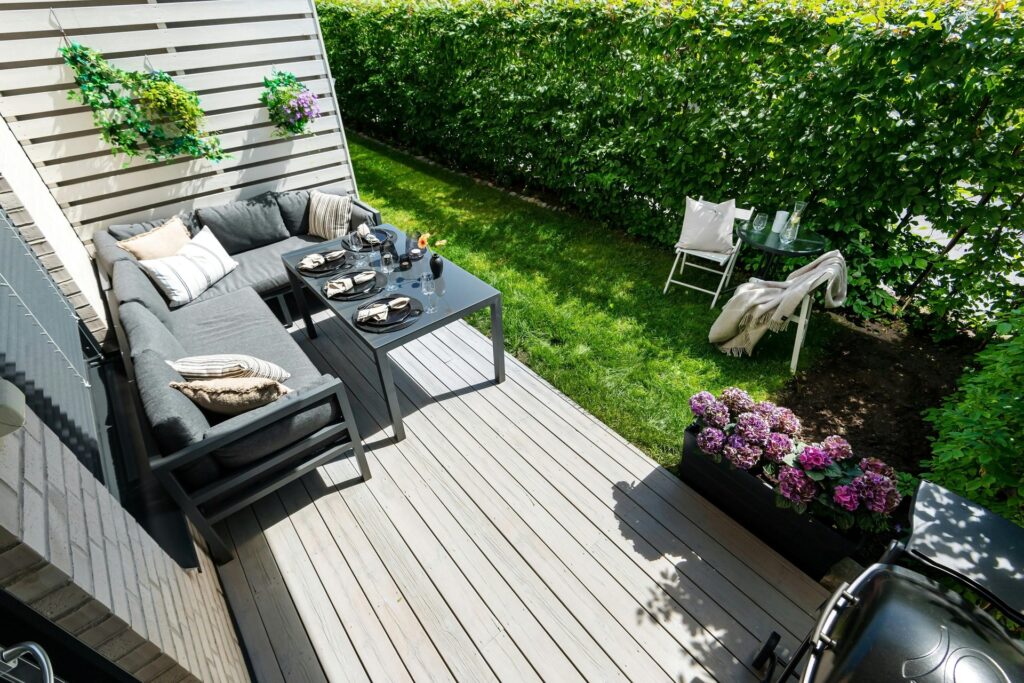
Garden Sofa UK 2026: Why The Outdoor Lounge Is Replacing The Patio Set In British Gardens
The garden sofa UK buyers are eyeing this spring tells a quieter story than most furniture trends. Walk through any of the big retailers’ showrooms – John Lewis, Heal’s, Habitat, Made-in-Britain stalwarts like Bridgman – and the four-seater patio dining set that defined British gardens for two decades is getting noticeably less floor space. In its place: low-slung outdoor sofas, modular corner units, and lounge sets that look, by design, like an extension of the living room.
In This Article
- Why The Patio Dining Set Is Losing Ground
- Garden Sofa UK Categories: What You're Actually Buying In 2026
- The Weather Question, Honestly
- Modular Vs Fixed: And The Materials That Determine How Long Either Lasts
- What To Pair Your Garden Sofa With
- Budget Realism: What £500, £1,200 And £2,500 Actually Buy
- The Question Worth Sitting With
This is not just a styling shift. It reflects a change in how British households actually use their gardens. Hybrid working has made the outdoor space a second living room rather than a once-a-week dining venue. Streaming, takeaway nights, evening calls, and the slow-growing acceptance that British weather is workable for more weeks of the year than we used to assume have all nudged the centrepiece purchase away from the formal table-and-six-chairs and towards something you can flop onto in shorts at 7pm.
Why The Patio Dining Set Is Losing Ground
For years, the patio set was the assumed default. A round or rectangular table, a parasol, four to six chairs, sometimes a lazy Susan in the middle – and it earned its keep two or three weekends a year when the weather held and someone fired up the barbecue. The rest of the time, it sat under a cover.
The garden sofa earns its keep more often. A two- or three-seater outdoor sofa with a coffee table and a couple of armchairs gets used for breakfast on Saturday, an hour with a book on Wednesday evening, a glass of wine on Friday night, and the actual dinner party when one comes along. It folds into how people already spend their time, which is also why the kitchen sofa or banquette has been quietly displacing the formal dining table indoors. The pattern outside is the same.
Industry coverage backs this up. Recent reporting from House & Garden has tracked rising sales of modular outdoor seating against flat or falling patio dining set sales since 2023. The traditional set hasn’t disappeared – it has been demoted from anchor purchase to accessory.
Garden Sofa UK Categories: What You’re Actually Buying In 2026
Worth being precise here, because the category has spread. A garden sofa UK retailers currently sell typically falls into one of three groups.
The first is the rope-and-aluminium lounge sofa – a low frame, taut woven rope or webbing back, deep seat cushions. Often modular. Inspired by Mediterranean villa furniture and built to sit out year-round. Price range starts around £700 for a two-seater and climbs past £3,000 for full corner units.
The second is the all-weather wicker or polyrattan sofa – thick synthetic weave, powder-coated steel frame, fabric cushions that come off for storage. Mid-market, durable, and what most large retailers default to. Around £400 to £1,500 for a sofa.
The third is the upholstered outdoor sofa with proper weather-grade fabric – Sunbrella, Crypton, or similar performance textiles – on a teak, aluminium, or recycled-plastic-composite frame. The most expensive of the three and the most living-room-like in feel. Built for covered patios, garden rooms, and households who genuinely want a piece that reads as furniture rather than garden kit.
The Weather Question, Honestly
The single biggest objection to a garden sofa in the UK is rain. Reasonable concern. Most outdoor sofas sold in 2026 are rated for “year-round outdoor use”, but that claim does different work for different products.
Rope and aluminium frames generally handle wet British winters without complaint. The frame won’t rust, the rope is UV- and mildew-resistant on quality products, and the seat cushions are usually quick-dry foam with drainage channels. They can sit outside under a basic cover.
Polyrattan is fine for the frame, less convincing for the cushions. The cushions on most mid-market sets are not waterproof and need to come indoors or into a storage box when it rains. Plan for that – a cushion storage box, either bench-style or under-seat, is worth budgeting for at the same time as the sofa.
Upholstered outdoor sofas, even with Sunbrella, do better under cover. Pergolas, garden rooms, and verandas have grown alongside this trend for a reason. If you don’t have cover, expect to either store cushions or accept some weathering.
Modular Vs Fixed: And The Materials That Determine How Long Either Lasts
Modular is winning the argument in 2026, and for the kind of household this article is written for – the one trying to make a small or medium UK garden work hard – it usually is the right call. A modular outdoor sofa lets you reconfigure for different uses: pull two units apart for an L-shape around a fire pit in the evening, push them flush for a sofa-and-coffee-table layout in the morning, add or remove a corner piece when guests arrive. The downside is that the joins between modules collect water and grit, and the units can drift apart on uneven paving. Worth checking that the modules have purpose-built connectors rather than relying on weight alone.
Fixed-frame sofas – one piece, no rearranging – are sturdier, generally cheaper for the same dimensions, and a better fit for households who know exactly where the sofa is going and won’t move it. They also tend to look more architectural, which suits formal garden designs.
On materials, skip untreated teak unless you understand the silvering. It happens within months and many buyers don’t expect it. Treated teak needs an annual oil. Both are heavy. Aluminium frames – powder-coated – are the lowest-maintenance metal option. They won’t rust, they’re light enough to move, and the modern finishes (warm taupe, bone, dark olive) read as design objects rather than garden centre seconds. Recycled plastic composites – the polywood-style boards – have come a long way and are now a credible alternative to wood: won’t rot, won’t fade, no maintenance. Polyrattan quality varies enormously. The cheap stuff brittles in two summers. The better stuff lasts a decade. The honest test is to lift the cushion and look at the underside of the weave – quality polyrattan is consistent thickness, no obvious joins, and the strands stay flexible cold.
What To Pair Your Garden Sofa With
A garden sofa rarely sits alone. The complete outdoor lounge usually involves a low coffee table, one or two armchairs or a single lounge chair, a side table or two, lighting, and – increasingly – shade.
The shade question has changed. Cantilever parasols are giving way to either built-in pergolas or proper retractable awnings, partly because the parasol gets in the way of the sofa silhouette and partly because British summers now include enough genuinely hot afternoons that proper shade matters. If a permanent structure isn’t on the table, a freestanding cantilever with a heavy base is the next best thing.
Lighting is the other piece. A garden sofa used into the evening needs light that isn’t from the kitchen window. We covered the practical options for cable-free outdoor lighting in our Garden Solar Lights UK 2026 guide, and the same logic applies here: layered low-level lighting around the sofa zone reads warmer than a single overhead.
For households who’ve already invested in an outdoor cooking setup – the trend our Outdoor Pizza Ovens UK 2026 piece covered earlier this month – the sofa is the natural completion of a proper outdoor room. The pattern emerging in well-designed British gardens this year is a clear three-zone layout: cook, eat, lounge. The sofa anchors the lounge zone.
Budget Realism: What £500, £1,200 And £2,500 Actually Buy
At £500 you’re in entry-level polyrattan territory. A two-seater sofa, two armchairs, and a coffee table from a high street retailer’s own brand. It will look fine for two or three summers if you store the cushions.
At £1,200 you can get into the credible mid-market. A larger corner sofa or a sofa-plus-armchairs set, with better cushion fabric, properly engineered frame, and the option to buy a brand-matched cushion box. This is the bracket most readers will end up in, and it’s where the sweet spot lives.
At £2,500 and up you’re buying for the long haul – rope-and-aluminium, designer brands, or modular systems you can extend over time. These pieces tend to hold value, often retain a resale market, and the better ones look intentional rather than disposable.
For sanity-checking, Which?’s garden furniture testing tends to do the durability legwork at the mid-market. If the wider outdoor space is also up for rethinking, our Garden Office UK 2026 guide covers the year-round usability side – pair it with this piece to plan a coherent layout rather than buying in fragments.
The Question Worth Sitting With
A patio dining set says: I will sit here on six occasions this summer, formally, with company. A garden sofa says: I will sit here whenever the weather is doing anything other than actively raining, often alone, often in shorts. They imply different relationships with the garden.
Before you spend £1,000 or more on either, the question worth asking is the one most buyers skip: in the last twelve months, did you actually eat dinner outside more than four times, or did you mostly sit out for a drink, a phone call, or an hour with the dog? Which answer best describes your garden last year – and does the furniture you’re about to buy match that, or the version of summer you’d like to believe in?
One last thought: if the honest answer involves feeding people, the same money might do more in a pizza oven than in a second armchair.





This matches what we did last spring. Sold our six-seater dining set on Facebook Marketplace and replaced it with a modular corner sofa from Bridgman, and we genuinely use the garden three or four evenings a week now rather than just for the odd barbecue. The cost-per-use maths makes a lot more sense. Question for you or other readers – has anyone found a cover that actually keeps water out without ballooning in the wind? Ours has been the weak point.